Published: 07 July 2026. The English Chronicle Desk. The English Chronicle Online.
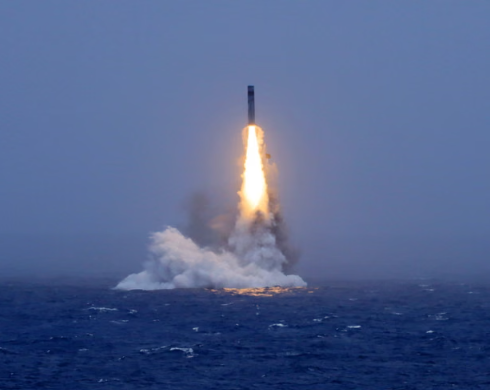
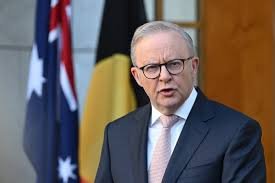
Australian Prime Minister Anthony Albanese has voiced deep alarm regarding China’s recent missile test. He stated that the firing of an intercontinental ballistic missile risks fuelling dangerous nuclear proliferation. The weapon was launched on Monday and is capable of causing considerable damage if ever weaponised. International condemnation has grown rapidly after China’s state news agency reported the unusual event. Xinhua reported that a strategic missile carrying a dummy warhead was launched from a submarine. This occurred during a visit by the Australian leader to the nearby Solomon Islands nation. Albanese said he was very concerned that this test could undermine peace across the Pacific. The test was conducted right in the wake of a significant new Pacific treaty alliance. Regional leaders have expressed their unease about the sudden increase in military activity nearby today.
The leader of the Solomon Islands, Matthew Wale, described the incident as a major concern. He suggested this provides further evidence for the need for a strong regional security pact. Beijing has been seeking to expand its influence across the Pacific region for many years. Albanese noted that Australia would continue to express strong concerns to China over such moves. He added that any action that destabilises the region is fundamentally bad for global peace. The prime minister highlighted that the test involved a nuclear-capable intercontinental ballistic missile yesterday. He expressed that the world needs fewer nuclear weapons, rather than seeing any more appear. Part of the concern is the sheer capacity of this weapon to reach long ranges. It could clearly cause massive damage were it to be successfully weaponised in the future.
Albanese spoke after attending Independence Day celebrations in the capital city of Honiara this week. He is now preparing to host a trio of Pacific leaders in Brisbane this Wednesday. Wale said he had already registered a strong protest directly to China’s ambassador regarding this. He spoke in his capacity as the current chair of the Pacific Islands Forum group. Wale mentioned that China is considered a good friend to the Solomon Islands generally. However, he insisted that this is not something a true friend would ever actually do. They do not want to see any more countries testing their missiles in the region. The bottom line for the Pacific leaders is to be friends without any open threats.
Officials in Australia and the United States stated that the test broke international law. They also argued it was conducted with insufficient notice provided to all the nearby countries. Growing international condemnation is now following these reports from across the vast Pacific ocean area. However, a Chinese government spokesperson claimed the test was safe and part of routine training. They told all international critics not to over-interpret the significance of this missile launch. China’s foreign ministry spokesperson, Mao Ning, said the test was a routine annual military activity. She insisted it was conducted in accordance with international law and standard naval practice. The spokesperson added that the activity was not directed against any specific country or target.
Relevant countries were apparently notified in advance according to the statement from the Chinese government. They maintain that the launch activity was conducted safely, systematically, and professionally throughout the day. China hopes that relevant countries will not continue to over-interpret the recent military event. Australian cabinet minister Pat Conroy pushed back strongly on these claims from the Chinese side. He is the minister for both the defence industry and Pacific Island Affairs today. When asked about these claims, Conroy stated that the summary was not actually correct. He believes this has been a destabilising event for countries in the Pacific and Asia. It is not consistent with The Hague Convention on ballistic missile testing, he noted.
That convention would require more notice and greater information provided to all affected countries. Australia will continue to call on China to abide by The Hague Convention standards. This convention provides necessary guidance on how to conduct these sensitive types of tests properly. Conroy would not confirm if Australia had raised formal objections at a ministerial level. However, he did note that the two countries have communicated about the incident already. He also criticised China for what he called insufficient notice of the actual test. The warning notice reportedly came only hours before the launch was fully confirmed yesterday. Government ministers Penny Wong and Richard Marles provided public confirmation shortly before the launch.
Xinhua reported the navy statement that the missile was launched toward the high seas. It stated that the weapon landed precisely within the designated waters in the Pacific Ocean. They did not, however, provide a specific location for where the missile landed yesterday. Joseph Wu, secretary-general of Taiwan’s national security council, posted a map on social media. The map purported to show the missile’s path travelling south-east from the Chinese coast. It appeared to go over the Philippines and passed near Micronesia and Palau yesterday. The missile ultimately landed somewhere to the south of the nation of Nauru today. Wu described it as a provocation that actively destabilises the entire Indo-Pacific region now. He wrote that China just proved itself again to be a bully on the block.
Tommy Pigott, a US state department spokesperson, also provided a statement on the situation. He said the US wanted China to engage in more meaningful arms control discussions. They want Beijing to commit to a regularized notification arrangement for all long-range launches. The rapid and opaque nuclear weapons buildup is of great concern to the whole world. Marles declined to say what specific information Australia had about the test’s location. He did say it was not particularly close to the Australian mainland at all. He also raised serious concerns about the ongoing development of China’s military capabilities.
We are seeing a long-range missile test from China which is clearly nuclear capable. The launch from a submarine also has major strategic implications for the whole region. This is China demonstrating a much greater range for deploying a nuclear weapon today. The fundamental issue for Australia is seeing a dramatic military buildup by China lately. There is no clear explanation as to why they are building these specific capabilities. This action is viewed by the Australian government as being fundamentally destabilising for everyone. Moving forward, the Pacific nations are seeking clarity and peace in their shared waters. The international community remains watchful of how China will respond to these serious concerns.
Related News:
 UK Prepares Aircraft Carrier for Middle East Crisis
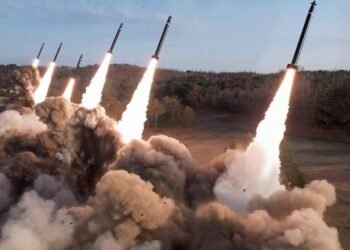 North Korea Fires Missiles Amid US-South Korea Drills
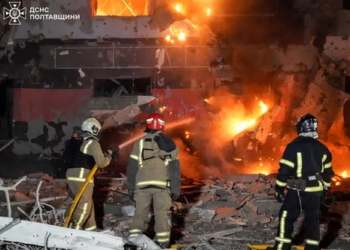 Russia Drone Attack Intensifies Ukraine War Pressure
 China’s Secret Mountain Ruins Rise Again in New Cold War
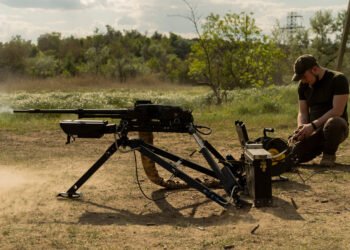 ‘The frontline is like Terminator’: Ukraine’s fighting robots
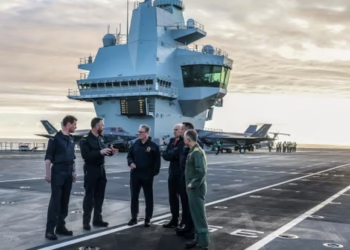 Is Britain Ready? Experts Warn of ‘Bizarre’ Military Delay
 RAF Typhoons scrambled amid Russian drone threat near Nato
 USS Gerald R Ford Ends Record Naval Deployment
 Trump orders US troop pullout from Germany
 Ukraine strikes Tuapse as oil disaster worsens
 Trump likens US Navy actions to ‘pirates’
 Putin Declares Russia Victory at Scaled Victory Day Parade
 Zelenskyy warns over Oreshnik threat as Kyiv hit
 Discontent grows around Putin amid war strain
 Russian Frigate Fires Warning Shots Near British Yacht
 Starmer Faces Fierce Backlash From Senior Defence Figures
 Trump Questions Future of US Role in Nato Alliance
 Infrastructure Cuts to Cost 10,000 UK Jobs
 Starmer Faces Nato Heat on Spending
 Trump dismisses concerns over 250-day carrier deployment
 UK Banks Granted Reprieve as BoE Delays Basel III Capital Rules Until 2028
 Singapore Corruption Scandal: Details Emerge on Iswaran’s Luxury Flight and Ties to Tycoon Ong Beng Seng
 Corfu Beyond the Crowds: Discovering Serenity in Southern Villages and Hidden Taverns
 Peter Andre Praises Son Junior’s ‘Quiet Season’ Amid Ongoing Family Dispute
 Massive 641-Mile Storm Set to Batter UK with 15 Hours of Rain and Strong Winds
 Jeremy Clarkson’s Pub: A Sunday Lunch Like No Other
 Federal Immigration Shift: Officers Leave Louisiana for Minneapolis
 Fatal Bolton Taxi Crash Claims Three Teens and Driver
 Australia grants Asio powers to designate hate groups under new laws
 Friedman Uninvited From 2024 Adelaide Writers’ Week
 ScottishPower Tops List of Worst UK Energy Suppliers
 Judi Dench Champions Fight to Save London’s Green Spaces
 Crowborough Camp Welcomes First Asylum Seekers
 BBC Funding Crisis: Tim Davie Warns of Jeopardy Ahead
 ABC Facebook Page Briefly Hacked, Adult Photos Posted
 Artificial intelligence will cost jobs, admits Liz Kendall
 Older Women Vanish from BBC Screens, Review Confirms Bias
 Meta trial over child exploitation claims begins
 Streeting moves on doctor pay to end strike dispute
 Ben Stokes injury joke after brutal ball strike
 UK and US Drop in Global Corruption Index Rankings
 Send spending gap leaves deprived areas behind
 Hidden Crisis: Domestic Abuse Suicide Toll in UK
 UK Unemployment Rate Climbs to 5.2% Peak
 Canberra Poster Seizure Sparks Free Speech Row
 BBC World Cup Presenting Duties Shared Among Trio
 Wales Approves Assisted Dying Bill Consent
 CPS Updates Guidance on Honour-Based and Dowry Abuse
 Stewart Brand on Musk, Bezos and a Life of Long Thinking
 English Cricket Faces Moral Crisis Over Indian Investment
 Jacinda Ardern Move Sparks Kiwi Reflection
 Middle East Airspace Crisis Strands Thousands
 Kelly Wilkinson Inquest Reveals Bail Failure
 Asylum Seekers to Work After Year-Long Wait
 Princess Eugenie steps down as patron of anti-slavery charity
 New Zealand Covid Response Praised Despite Lingering Scars
 Injured Mojtaba Khamenei Elevated as Iran Leader
 The Kill Line: A Shifting Vision of the American Dream
 Inquiry into HMRC child benefit errors launched by NAO
 Family of Alleged Bondi Gunman Seeks Name Suppression
 Rising Costs Force Families to Rethink Days Out
 Air Canada CEO Faces Outcry Over Recent Language Misstep
 Extreme Weather: Europe Shivers as Cyclone Narelle Hits
 Scott Mills Sacked by BBC Over Personal Conduct Claims
 Palantir Boss Defends NHS Deal Amid Government Break Clause
 Trump Signs Landmark Iran Accord in Versailles
 Grief and Devotion Amidst the Rubble of Nabatieh
 Stirchley Community Housing Scheme Faces Crisis
 Watchdog Warns Ministers to Pause Impending HS2 Reset
 EU Slashes Steel Quotas But Grants UK Favourable Rates
 Trump Faces Backlash Over $2bn Earnings Since Return
 Starling Bank Trims Jobs for AI Future
 England Triumph in Azteca World Cup Thriller
 US Airman Avoids British Court in Indecent Exposure Case
 Britain’s Mini Fan Craze Sparks Major Waste Crisis
 Trump Swaps Planes Amid Iran Tensions
 Ann Widdecombe, Formidable Political Figure, Dies at 78
 UK Schools Struggle as Classrooms Top 40C
 Yemen Accuses Iran of Violating National Sovereignty
 Houthis Strike Saudi Arabia as Middle East Tensions Rise