Published: ৩০ July 2026 | The English Chronicle Desk | The English Chronicle Online
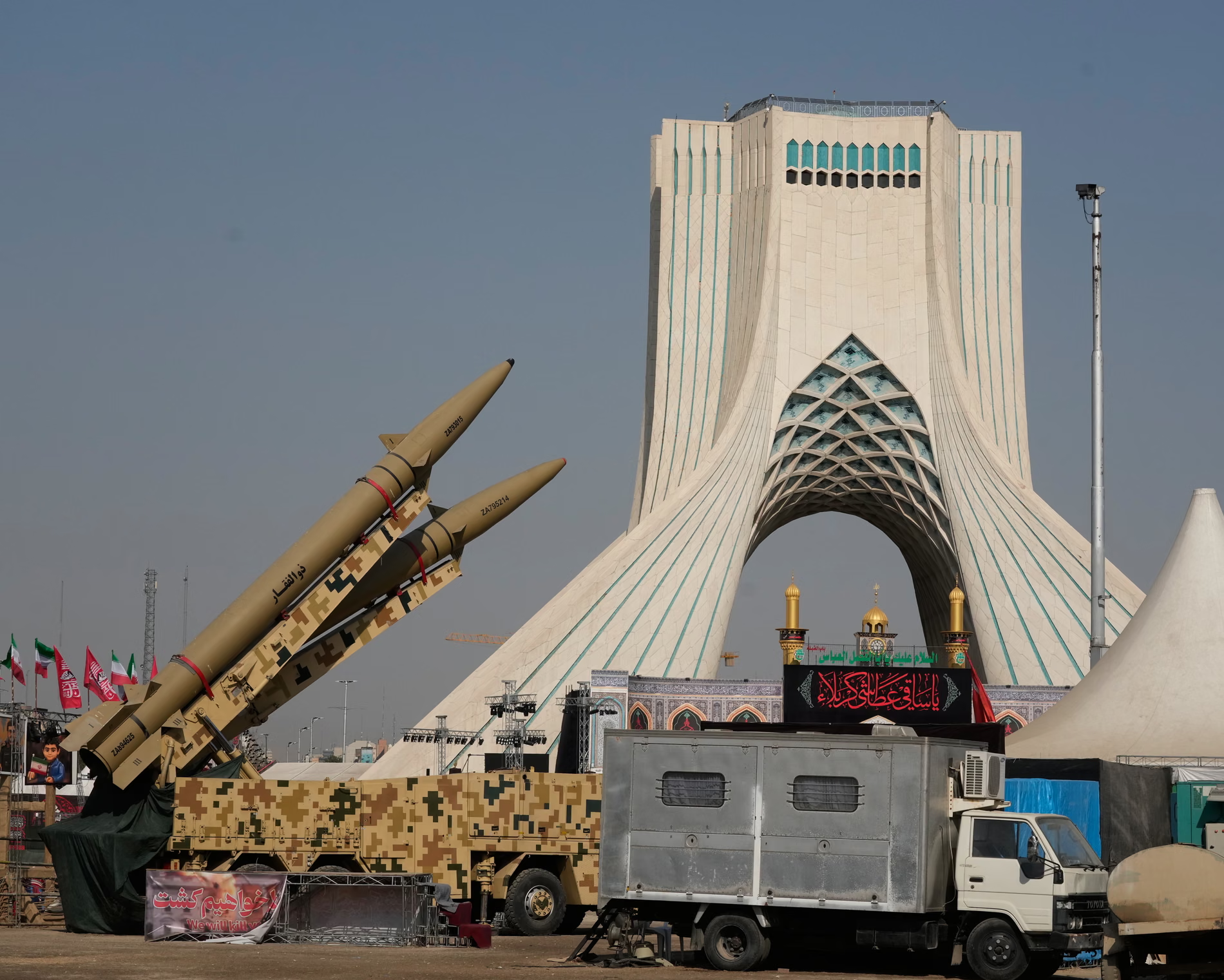
Jordan has announced that its air defence forces intercepted missiles that crossed into its airspace during a fresh escalation between Iran and the United States, as Washington resumed what officials described as “heavy” military strikes against Iranian targets following a short operational pause.
The developments mark another dangerous chapter in the widening Middle East conflict, raising fears that the confrontation could spread beyond its original battlegrounds and draw additional regional powers into the crisis.
Jordanian authorities said the interceptions were carried out to protect the country’s sovereignty and civilian population, while US officials stated that renewed military operations were aimed at degrading Iran’s military capabilities after diplomatic efforts failed to produce lasting progress.
The latest exchange has intensified international concerns about regional stability, global energy security and the possibility of a broader conflict involving multiple countries.
Jordan’s armed forces confirmed that air defence systems were activated after missiles entered or approached the kingdom’s airspace during the latest wave of regional hostilities.

Military officials said the interceptions were conducted solely for defensive purposes and stressed that Jordan remains committed to protecting its territory without becoming a direct participant in the conflict.
The government has repeatedly stated that it will not allow its airspace to be used for attacks against neighbouring countries or permit any actions that endanger Jordanian citizens.
Residents in several parts of the country reported hearing explosions as air defence systems engaged incoming projectiles.
Authorities urged the public to remain calm and follow official guidance while security forces monitored the situation.
The interceptions came shortly after the United States resumed extensive air operations against Iranian military facilities following a temporary pause in strikes.
American officials said the renewed campaign targeted infrastructure believed to support missile production, military command centres and other strategic assets.
According to Washington, the strikes were intended to weaken Iran’s ability to conduct future attacks and protect US personnel and allies stationed across the Middle East.
The brief pause in operations had fuelled hopes that diplomatic negotiations might reduce tensions, but those expectations faded as military activity resumed.
US defence officials described the latest attacks as part of a broader strategy designed to deter further aggression while maintaining pressure on Tehran.
Iran strongly criticised the renewed US strikes, describing them as violations of international law and national sovereignty.
Officials in Tehran accused Washington of escalating the conflict and warned that continued military action would have consequences for regional security.
Iran has consistently argued that its military actions are defensive and has rejected accusations that it is responsible for destabilising the region.
Government representatives called on international organisations to condemn what they described as foreign aggression.
Iranian state media reported damage in several locations, although authorities did not immediately provide a comprehensive assessment of casualties or infrastructure losses.
The latest exchange has heightened fears that the conflict could spread across the Middle East.
Several countries in the region host US military personnel or maintain strategic partnerships with Washington, making them potential flashpoints if hostilities continue.
Neighbouring governments have increased security measures, strengthened border monitoring and reviewed emergency response plans.
Regional airlines have also adjusted flight routes to avoid conflict zones, while shipping companies continue to monitor security conditions in key maritime corridors.
Diplomatic observers warn that even limited military exchanges carry the risk of unintended escalation if neighbouring countries become directly affected.
Jordan has long sought to maintain balanced relations with regional and international partners while avoiding direct involvement in armed conflicts.
The kingdom shares borders with several countries affected by regional instability and has frequently played a diplomatic role during periods of tension.
Its strategic location makes the protection of national airspace a critical security priority.
Jordanian officials have repeatedly emphasised that any military action taken by its armed forces is intended solely to defend the country’s sovereignty and safeguard civilians.
Analysts say the government’s careful approach reflects both security concerns and its desire to avoid becoming entangled in a wider regional war.
Despite the renewed fighting, international diplomatic efforts have not completely ceased.
The United Nations, European governments and several Middle Eastern countries continue urging restraint and renewed dialogue between Washington and Tehran.
World leaders have expressed concern that further escalation could destabilise the region, disrupt global trade and increase humanitarian suffering.
Calls for an immediate reduction in hostilities have intensified as governments seek to prevent additional military confrontation.
However, analysts note that diplomatic negotiations face significant challenges while active military operations continue.
The renewed conflict has also affected global financial markets.
Oil prices have remained volatile amid concerns that prolonged instability in the Middle East could disrupt energy supplies.
Investors are closely monitoring developments because the region plays a vital role in global oil production and maritime trade.
Higher energy prices could contribute to inflationary pressures in many countries, affecting businesses and consumers alike.
Economists warn that an extended conflict could create broader economic uncertainty beyond the region.
Humanitarian organisations have expressed growing concern about the impact of continued fighting on civilian populations.
Aid agencies warn that escalating military operations increase the risk of displacement, infrastructure damage and reduced access to essential services.
Medical organisations have urged all parties to respect international humanitarian law and ensure the protection of civilians.
Relief agencies are also preparing contingency plans should the conflict expand into additional areas.
Governments around the world have responded cautiously to the latest developments.
Several countries reiterated support for diplomatic solutions while calling on all sides to avoid actions that could worsen the crisis.
Some allies expressed support for Jordan’s efforts to defend its airspace, while others emphasised the importance of preventing regional escalation.

Security analysts believe international cooperation will be essential in reducing tensions and preventing further military confrontation.
The renewed exchange between the United States and Iran, combined with Jordan’s interception of missiles, illustrates the fragile security situation across the Middle East.
Although both military and diplomatic efforts continue simultaneously, the risk of further escalation remains significant.
For Jordan, maintaining national security while avoiding direct involvement in the conflict will remain a delicate balancing act.
For the wider region, the coming days may prove critical in determining whether the current confrontation evolves into a broader regional conflict or returns to diplomatic negotiations.
As military operations continue and international pressure for restraint grows, the Middle East once again finds itself at the centre of global attention.
Related News:
 ‘I Would Scream in My Sleep’: Alawite Women from Syria Tell of Kidnap and Rape
 Iran Says ‘Guiding Principles’ Agreed With US at Nuclear Talks
 US Urges Iran to Make Deal as Military Presence Rises
 Middle East Flights Halted After Iran Strikes
 Iran’s Regime Still Intact — Coming Days Will Test Its Survival
 Allies of US in the Gulf Bear Brunt of Iran Attacks
 Hopes and Fears as US Iranians Take to Streets After Toppling of Supreme Leader
 Iran, the US, and a World Cup That Starts in Three Months
 In Maps: Strikes Across Iran and the Middle East
 Months of Planning Behind US‑Israeli Mission to Target Iran’s Supreme Leader
 Cooper: Joining US Strikes on Iran ‘Not in Britain’s Interest’
 US Iran Operation: Sixth Service Member Killed
 Hezbollah Anger Erupts as War Returns to Beirut
 Did Trump Declare War and Did Congress Approve Iran Attacks? What to Know
 The Third Day of the US‑Israeli War With Iran
 Limited Flights Leave UAE But Disruption Continues Amid Iran Strikes
 Why the US and Israel attacked Iran
 Israel Launches Fresh Strikes on Tehran & Beirut; US Warns “Hardest Hits” Ahead
 Three Days In, This War’s End Is Still Unclear
 Israel Launches Fresh Strikes on Tehran and Beirut on Day Four
 Israel’s New Airstrikes on Tehran & Beirut After US Embassy in Riyadh Is Hit
 Israel Launches Ground Invasion of Lebanon Amid Widening Middle East War
 Trump Underestimated the Iranian Regime’s Will to Survive
 U.S. Tells Citizens to Leave Israel Now as Regional Conflict Escalates
 Civilian Deaths in Iran Pass 700 Amid Fear of Bombs and Regime Clampdown
 Middle East attacks intensify as Trump rejects Iran talks
 Iran-Iraq border airstrikes spark new tensions
 US Senate Backs Trump War Powers Amid Iran Missile Barrage
 Macron Finds ‘Freedom Fries’ Redemption in Iran Crisis
 ‘We Must Finish This’: Israelis Rally Behind War Effort as Iran Strikes Tel Aviv
 UK Prepares Aircraft Carrier for Middle East Crisis
 Nine Days of Strikes Reshape the Middle East
 Trump Threatens Iran With ‘Twenty Times Harder’ Oil Strike
 Iran’s New Leader Faces Existential Test
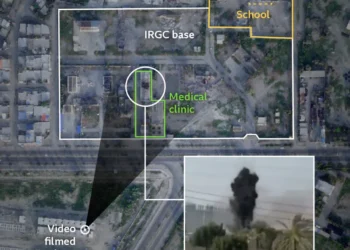 Video Analysis Suggests US Missile Hit Base Near Iran School
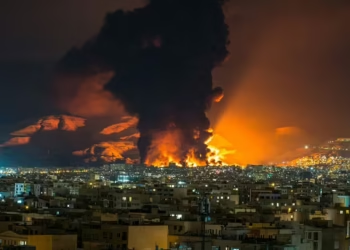 Iran Rejects Ceasefire, Warns Trump With Chilling Message
 Ancient Heritage Sites Damaged in Recent Airstrikes
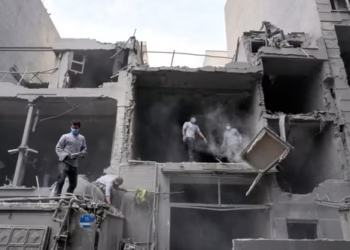 Trump Iran War Stance Hardens as Conflict Widens
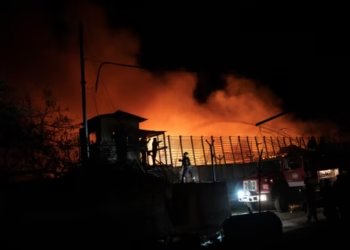 Kabul hospital strike sparks deadly blame row
 Israel Says Iran Security Chief Larijani ‘Killed’
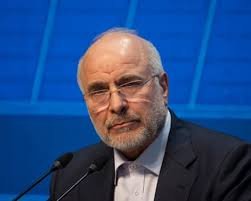 Ghalibaf Iran: Survivor Emerges in Shifting Power Game
 Gulf Distrust Grows Over Rumoured US-Iran Peace Talks
 WHO Warns of Health Crisis Unfolding in Middle East
 Saudi Arabia Urging US to Keep Up Iran Attacks
 Iran Warns of US Ground Assault Amid Rising War Tension
 Trump Threatens Iran With Total Infrastructure Destruction
 Archbishop Prays for Middle East Peace in First Easter Sermon
 Middle East Analysis: The Cost of a Fragile Peace
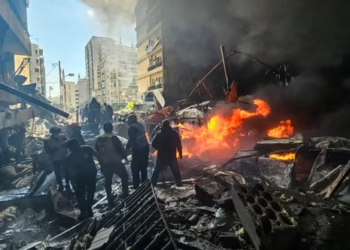 Israel Launches Massive Airstrikes Across Lebanon
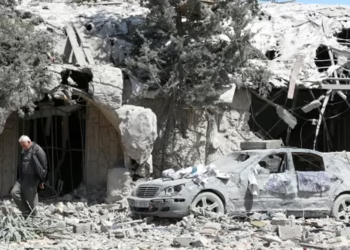 Netanyahu Vows Continued Lebanon Strikes Amid Peace Talks
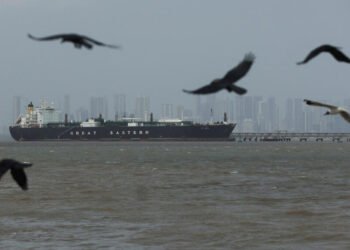 US and Iran Pursue Extension of Ceasefire via Pakistan
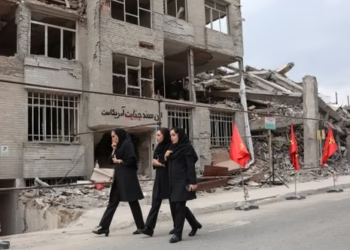 Uncertain Peace: Tehran Residents Face a Ruined Capital
 “The Trading Bonanza”: Shell Profits Soar to $6.9 Billion Amid Iran War ‘Volatility’
 “The Peace Dividend”: Oil Prices Plunge and Global Stocks Surge on Reports of Iran Ceasefire Deal
 Tensions Emerge in Netanyahu-Trump Alliance
 “The Desecrated Grave”: West Bank Settlers Force Palestinian Family to Exhume Father’s Body
 Gulf Crisis Deepens After Drone Attack Near Nuclear Facility
 “Hold Off”: Trump Pauses ‘Scheduled’ Strike After 11th-Hour Appeal From Gulf Allies
 Former ICC prosecutor condemns US sanctions
 US Strikes Iranian Sites Amid Shaky Ceasefire Talks
 Israel Intensifies Lebanon Strikes to Crush Hezbollah
 Trump’s Iran Deal Plan Sparks Intense Alarm Across Israel
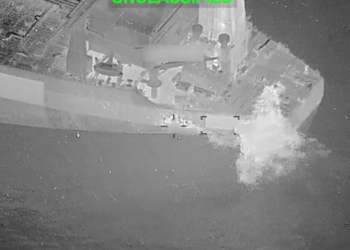 US and Iran Trade Fresh Strikes, Threatening Ceasefire
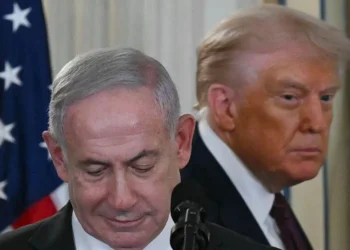 Trump-Netanyahu Call Fuels Iran Talk Crisis
 Ex-Wife of Dubai Royal Relative Held in Custody
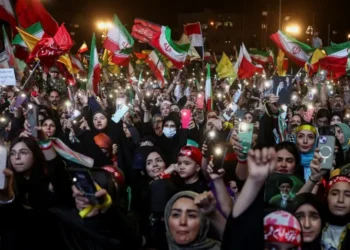 Israel Strikes Iran After Missile Attack
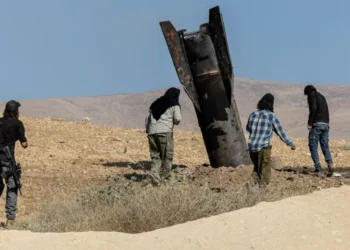 Iran and Israel Pause Strikes but Warn Retaliation Will Follow Any New Breach
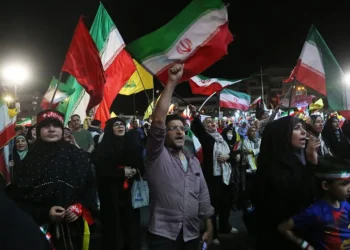 Israel-Iran Escalation May Strengthen Tehran’s Position in Future Negotiations
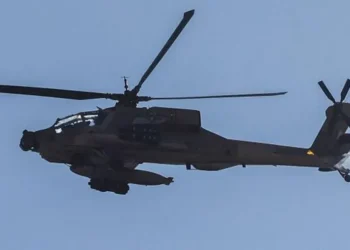 US Launches Strikes on Iran After Military Helicopter Downed Near Strait of Hormuz
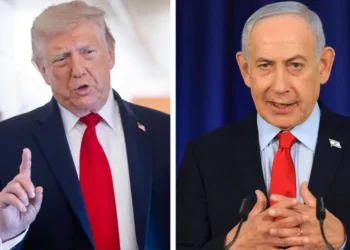 Efforts to Reshape Middle East Risk Creating Long-Term Regional Crisis, Analysts Warn
 Three Indian Sailors Killed in US Strike on Tanker Near Oman as US–Iran Conflict Escalates
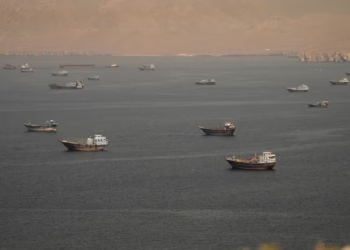 Iran To Propose New Shipping Fees In Strait Of Hormuz
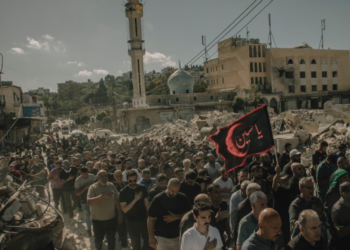 Grief and Devotion Amidst the Rubble of Nabatieh
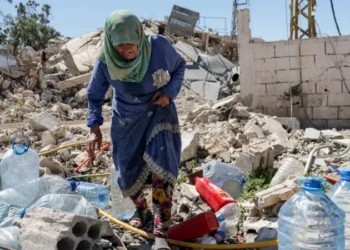 Lebanon Reports 18 Killed in Israeli Strikes as Israel Announces Deaths of Four Soldiers
 Trump’s Hormuz U-Turn Raises Doubts Over Iran Strategy
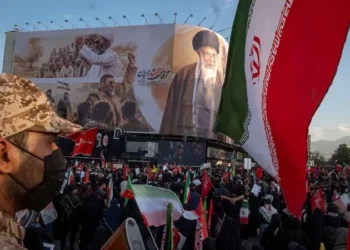 US Launches New Strikes on Iran as Trump Issues Stark Warning to Tehran
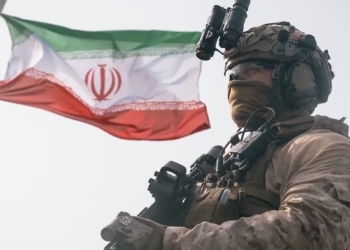 Iranian Airport and Bridges Hit as US Forces Board Ship Amid Ports Blockade
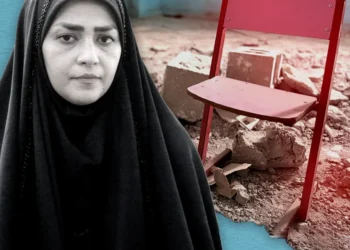 ‘What Was Their Crime?’: Inside the Iranian School Where Strike Killed 120 Children
 US Signs Landmark Nuclear Deal With Saudi Arabia in Major Strategic Agreement
 Trump Hosts Zelensky and Netanyahu as Ukraine and Iran Conflicts Shape Global Agenda