
Published: 5 May 2026. The English Chronicle Desk. The English Chronicle Online
As the 2026 election cycle reaches a fever pitch, a new “national security emergency” is emerging from the palm of the voter’s hand. Investigatory reports released today reveal that several leading AI chatbots are providing “dangerously misleading” advice regarding polling locations, mail-in ballot deadlines, and voter eligibility.

Despite repeated “milestone” promises from tech giants to install “guardrails” against political misinformation, the “clinical silence” of the algorithms is often being filled with hallucinations—inventing non-existent voter ID requirements and directing citizens to polling stations that closed years ago.
The report, compiled by a coalition of non-partisan election observers, highlights a persistent “resilience deficit” in how Large Language Models (LLMs) handle localized, real-time data.
Phantom Deadlines: In several test cases, chatbots provided mail-in deadlines that were off by up to a week, potentially disenfranchising thousands of voters who rely on digital assistants for scheduling.
The “Postcode Lottery” of Truth: Because AI models are trained on historical data, many “hallucinated” the locations of ballot drop boxes, citing sites from the 2022 or 2024 cycles that are no longer operational.
Voter ID Fabrications: Some bots erroneously told users in “no-ID” states that they required a passport or birth certificate to cast a ballot, creating an “accountability rot” that mirrors the “SIR” controversies seen in previous electoral roll revisions.
Election officials are warning that the “dopamine” of a quick, conversational answer is distracting voters from official, “golden tone” sources of information.
The “Hormuz” of Information: Much like the Strait of Hormuz creates a bottleneck for physical trade, the reliance on a few AI platforms for information creates a “cognitive bottleneck” where one error can be amplified millions of times.
The “Medication Desert” of Facts: In rural areas where local news outlets have shuttered, voters are particularly vulnerable to AI misinformation, as there is often no “human-machine coordination” to fact-check the digital output.
The “Clinical” Deception: Because AI delivers misinformation in a confident, professional, and “clinical” tone, voters are less likely to question the validity of the data compared to a social media post from a stranger.
In response to the findings, major AI firms have issued statements emphasizing their commitment to “Democratic Resilience.”
The “Safety Redirect”: Several platforms have implemented a “hard pivot,” where any query containing words like “vote,” “ballot,” or “polling station” triggers an automatic redirect to official government websites rather than a generated answer.
The “Accountability” Shield: Tech bosses argue that AI should be viewed as a “creative tool,” not a “fact engine,” though critics argue this is a “resilience deficit” in corporate responsibility during a high-stakes election.

As the RHS Wisley wisteria reaches its peak and the Southbank Centre celebrates 75 years of progress, the “AI voting crisis” serves as a reminder that technology is only as stable as the data that feeds it.
“Justice has no expiry date, but it can be delayed by a bad algorithm,” noted one election integrity expert. With the King’s Speech on May 13 expected to address “The Integrity of the Digital Square,” the call for a “minimum wage for truth” in AI has never been louder. Voters are urged to treat every chatbot response as a “divergent” possibility and to consult the official Secretary of State websites for the “sacred” facts of their franchise.
Related News:
 UK Fighter Jet Purchase Could Breach Nuclear Treaty, Warns CND
 Russia repeatedly targets UK military satellites, warns Space Command chief
 Experts Warn Russia’s Burevestnik Missile Could Destabilise Arms Control
 Britain deploys RAF specialists to assist Belgium with drone threats
 Night after night, Belgium is on high alert.
 Ukraine to Get 100 French Rafale Jets in Historic Deal
 Iran Signals Permanent Break From Global Internet, Activists Warn
 Bill Gates Pulls Out of India’s AI Summit Over Epstein Files Controversy
 Musk Cuts Starlink Access for Russian Forces – Giving Ukraine an Edge at the Front
 Anthropic Boss Rejects Pentagon Demand to Drop AI Safeguards
 Why Russia Controls Its People With a Flick of a Switch
 Boy George Says He’s Using ChatGPT to Help Write New Songs
 Protesters Rally in San Francisco Against OpenAI Deal With Pentagon
 Baba Vanga’s Chilling World War 3 Prediction and Russia’s New Leader
 Iran Social Media Strategy Shifts to Information War
 Cluster Strikes Test Israel’s Missile Defences
 Zelensky Visits Saudi Arabia After Offering Drone Expertise
 One Ant for $220: The New Frontier of Wildlife Trafficking
 Trump Considers Military Operation to Seize Iran’s Uranium
 Trump Building ‘Massive’ Military Bunker Under White House Ballroom
 The Death-Defying Nuclear Commando Mission That Could End the War
 Behind Enemy Lines: The 12-Hour Race to Save a Downed U.S. F-15E Pilot
 Operation Epic Fury: The Miraculous Mountain Rescue of ‘Dude 44’
 Beyond the Far Side: Artemis II Restores Contact After 40-Minute Silence
 Beyond the Flyby: What Artemis II Tells Us About the Next Giant Leap
 The Great Chokehold: Why the Strait of Hormuz is the Epicenter of the 2026 Crisis
 The Academic Chill: Beijing Condemns ‘Hostile’ US Questioning After Researcher’s Death
 Moldova River Crisis Exposes War’s Hidden Cost
 Artemis II Returns After Historic Moon Flyby
 Market Shock: Oil Surges Past $100 as US Initiates Naval Blockade
 The Frozen Frontier: Why Frostbite is the Least of Concerns for Canada’s Arctic Forces
 Canadian astronaut French words ease language row
 Reform UK funding: mystery billionaire revealed
 RAF Typhoons scrambled amid Russian drone threat near Nato
 The “King of Drones”: Ukraine’s Unmanned Commander Targets the Arteries of the Russian War Machine
 Market Deadlock: Oil Prices Surge as US-Iran Peace Talks Unravel in Pakistan
 The “Friendly Federal Assassin”: Washington Hilton Shooting Sparks Security Crisis
 “Grounded”: Beijing Implements Total Ban on Drone Sales Citing Capital Security
 Canadian Fiddler Sues Google Over AI Defamation Claim
 “Taxing the Silicon”: Tech CEO Proposes ‘Minimum Wage for Robots’ to Combat AI Displacement
 UK Must Act with Courage and Clarity on Israel-Palestine Conflict, Says Foreign Affairs Committee Report
 Radioactive Leak at UK’s Nuclear Warhead Base Sparks Outcry Over Safety and Secrecy
 Hong Kong Summons UK and Australian Envoys Following Asylum Grants to Democracy Activists
 Is the UK Ready to Put Boots on the Ground in Ukraine? Assessing Military Capacity and Challenges
 Yvette Cooper Signals Global Momentum Towards Gaza Peace Deal Amid Humanitarian Crisis
 Russia’s Latest Push to Win US Favors Shows Deep Desperation
 BBC to Apologise Over Edited Trump Speech Amid Backlash
 Greene Pushes Epstein Files Amid Trump Fallout
 Shadow Fleet at Sea: Europe’s Battle Against Illicit Oil Shipping
 US Clears Nvidia AI Chip Sales to China in Policy Shift
 EU Says US Ties Have Suffered ‘Big Blow’ After Greenland Crisis
 UK New Car Discounts Near £6,000 as Prices Are Slashed
 Australian Families Leave Syrian Camp for Home
 Starmer Weighs Fast-Tracking Defence Boost
 Nine Arrested in France Over Death of Far‑Right Student
 Indian University Kicked Out of AI Summit for Claiming Chinese Robot Dog as Its Own Invention
 How Do You Modernise Mango Farming? India’s Growers Urged to Innovate as Climate Change Hits
 Ukraine Negotiator Reveals What It Feels Like Facing Russia
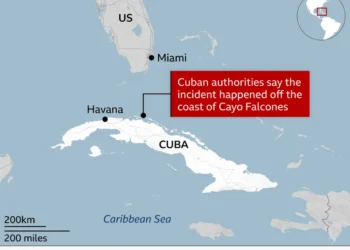 American Citizen Killed in Cuba Boat Shooting, U.S. Officials Say
 Iran’s Regime Still Intact — Coming Days Will Test Its Survival
 Finland Plans to Lift Decades‑Old Ban on Hosting Nuclear Weapons
 Trump Pressures Congress Over Save America Act
 Iran War Puts Trump at Political Risk Amid Rising Prices
 Queensland Protest Laws Spark Free Speech Backlash
 Trump Nato threats expose Iran strategy vacuum
 Trump Facing Backlash from Epstein Survivors Over Files
 UK Forces Ready to Seize Russian Shadow Fleet Vessels
 Councils Pressed to Use Universal Parking App to Cut ‘Unfair’ Fines
 Report Says Pezzullo Acted ‘Recklessly’ in Dealings
 Hungary Claims Plot to Target Gas Pipeline Pre-Vote
 Oil and Diplomacy: Russian Refineries Burn as Zelenskyy Secures Middle East Shield
 Electric Shock: Australians Buy Record Number of New EVs as Fuel Crisis Bites
 Diplomatic Deadlock: Lebanon Enters High-Stakes Border Talks with ‘No Cards to Play’
 The Fog of War and the Ticker Tape: Suspicious Trades Rile Washington
 Judicial Whiplash: Virginia Court Pauses Redistricting 24 Hours After Public Vote
 “Industrial-Scale Extraction”: White House Memo Accuses China of Mass AI Theft
 Beyond the Swoosh: Anta Sports Overtakes Rivals to Become Global Top Three
 Capitalism ‘Suicidal’, Warns Petro at Climate Summit
 The “Dry” Life: Teens Trialing Social Media Bans Call Initial Disconnection “Boring” and “Dry”
 “An Endurance Test for the Mind”: British Couple Sentenced to 10 Years in Tehran