Published: 28 May 2026. The English Chronicle Desk. The English Chronicle Online
In a rapidly escalating sequence of events, the United States military carried out a fresh round of strikes against Iranian military targets late Wednesday night, marking the second time in three days that American forces have engaged Iranian assets near the strategic Strait of Hormuz. The strikes, which reportedly targeted a ground control station and drone operation facilities in the port city of Bandar Abbas, were described by U.S. officials as “measured” and “purely defensive.” This latest flare-up occurs against the backdrop of a teetering ceasefire that has been in place since early April, and even as both Washington and Tehran continue to assert that a negotiated peace deal remains the ultimate goal of their respective administrations.

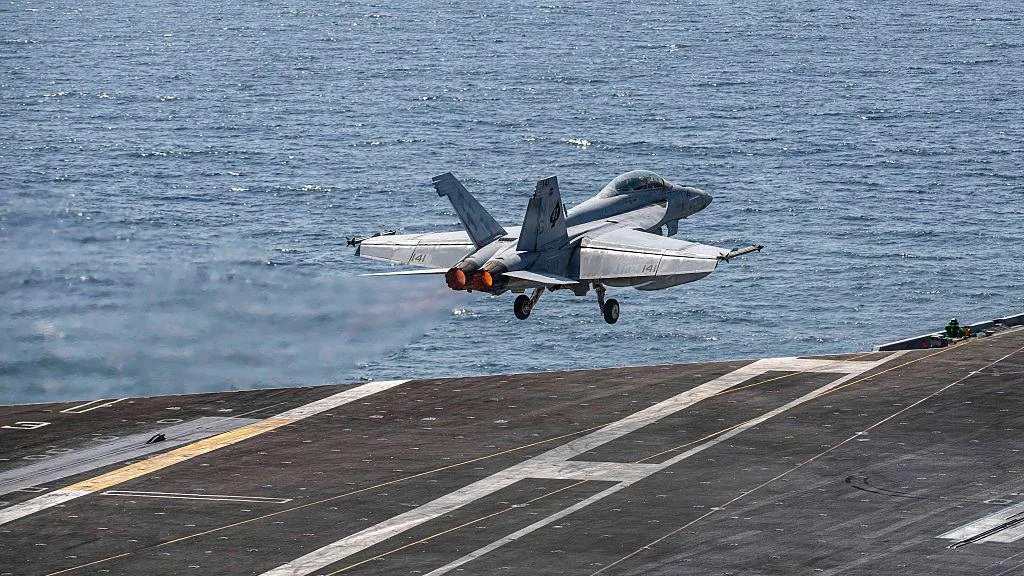
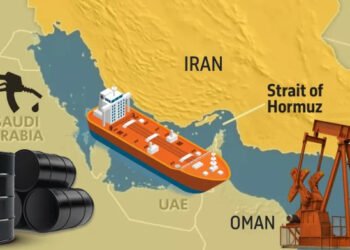
The Wednesday operation followed a tense series of skirmishes in the vicinity of the Strait, a critical maritime chokepoint through which a significant portion of the world’s energy supply must pass. According to U.S. Central Command, the military action was prompted by the launch of four Iranian attack drones that appeared to pose an immediate threat to U.S. forces and commercial shipping in the area. In response, U.S. fighter aircraft intercepted and neutralized the incoming threats before conducting a precision strike on the suspected ground control facility in Bandar Abbas. These actions followed a separate engagement just 48 hours prior, on May 25, during which the U.S. Navy sunk two Islamic Revolutionary Guard Corps vessels that were reportedly in the process of laying naval mines.
The persistence of these exchanges—sporadic, intense, and geographically concentrated near the Strait—has created a “clinical” yet volatile environment. For the residents of Bandar Abbas, the sounds of explosions have become a grim, “nasty” rhythm of daily life, as blasts near the city’s military port and dual-use airport continue to punctuate the air. Yet, despite the recurring military friction, the diplomatic track has not fully collapsed. Iranian officials, while predictably denouncing the strikes as an “act of bad faith” and a “definitive violation” of the ceasefire, have notably refrained from announcing any major, retaliatory military campaigns. This “speechless determination” from Tehran to keep the talks alive suggests that the regime in Iran is heavily invested in securing a political milestone that it intends to frame as a victory of “resistance.”
This diplomatic tightrope is similarly precarious on the U.S. side. President Donald Trump, while facing intense scrutiny over the trajectory of the war and the perceived “disastrous” nature of the proposed peace framework, continues to maintain that negotiations are “proceeding nicely.” The White House has consistently pushed back against reports of a solidified deal, preferring to frame the current military actions as the necessary “cost of enforcement” for a ceasefire that both sides are struggling to uphold. For the international community, the “resilience deficit” is growing; as the U.S. and Iran remain locked in this cycle of strikes and counter-strikes, the global energy markets remain in a state of high-alert, reacting with sharp swings to every headline emanating from the Strait of Hormuz.
The broader geopolitical implications are increasingly stark. Analysts from the Institute for the Study of War have highlighted that the Iranian regime continues to frame its control over the Strait not merely as a tactical advantage, but as a core element of its national identity and strategic deterrence. Tehran’s insistence that it will eventually “reopen” the waterway under “Iranian arrangements” remains a fundamental point of contention that directly contradicts the U.S. demand for freedom of navigation. This “asymmetric” disagreement is more than a diplomatic hurdle; it is the central reason for the continued military presence and the recurring skirmishes. Any arrangement that grants Iran veto power over maritime traffic is seen by Washington as a dangerous precedent that would undermine decades of international maritime law.

As the conflict stretches into its fourth month, the “accountability rot” of the current stalemate is becoming apparent. The domestic economic cost for Iran, characterized by soaring prices for basic staples like meat and fuel, is placing increasing pressure on the regime. Simultaneously, the U.S. administration faces growing skepticism from its own ranks and the public regarding the viability of a peace deal that has yet to materialize. The “clinical” precision of the U.S. strikes, designed to degrade Iranian capabilities without triggering a full-scale regional war, is a strategy that depends entirely on the assumption that both sides retain a rational interest in avoiding the “point of no return.” Whether this “fragile brink” can hold long enough for a breakthrough—or whether the next round of strikes will finally shatter the ceasefire—is the defining question of the week. For now, the Strait of Hormuz remains a powder keg, guarded by U.S. destroyers and Iranian missile batteries, with the world watching in anticipation of a diplomatic move that remains just out of reach.
Related News:
 Saudi Arabia Urging US to Keep Up Iran Attacks
 Netanyahu Vows Continued Lebanon Strikes Amid Peace Talks
 US and Iran Pursue Extension of Ceasefire via Pakistan
 Global order shifts amid Trump-era turmoil
 Middle East Crisis Escalates as Oil Routes Shake Markets
 Tensions Emerge in Netanyahu-Trump Alliance
 Netanyahu Calls Early Election Amid Coalition Turmoil
 “The Fragile Truce Shatters”: Israeli Airstrikes Kill 19 in Southern Lebanon as Clashes Escalate
 Israeli Strikes in Lebanon Kill 10 Amid Ceasefire Strain
 Hunger increasingly weaponised in global conflicts
 Former ICC prosecutor condemns US sanctions
 “A Fragile Ceasefire Shattered”: The Escalating Humanitarian and Security Crisis in Southern Lebanon
 US Citizens Warned to Venezuela Flee Amid Paramilitary Threats
 Gulf states warn Trump Iran strikes risk wider Middle East war
 Machado Trump medal gesture reshapes Venezuela power struggle
 Greenland defence seen as shared Nato duty amid troop arrivals
 Trump Receives Machado’s Nobel Medal in White House Meeting
 Syria President Declares Victory as Ceasefire Reached with SDF
 US Considers Asylum for British Jews Amid Rising Antisemitism
 Russia Strikes Kyiv and Kharkiv as Peace Talks Enter Day Two
 Christchurch Shooter Seeks to Overturn Guilty Plea in Appeals Court
 Iran Says ‘Guiding Principles’ Agreed With US at Nuclear Talks
 Middle East Flights Halted After Iran Strikes
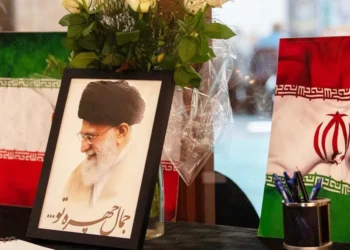 Months of Planning Behind US‑Israeli Mission to Target Iran’s Supreme Leader
 Cooper: Joining US Strikes on Iran ‘Not in Britain’s Interest’
 US Iran Operation: Sixth Service Member Killed
 Hezbollah Anger Erupts as War Returns to Beirut
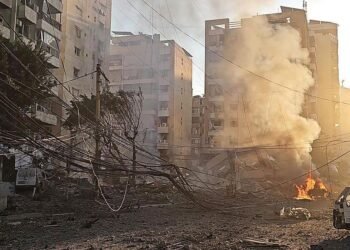 Israel Launches Fresh Strikes on Tehran & Beirut; US Warns “Hardest Hits” Ahead
 Middle East attacks intensify as Trump rejects Iran talks
 Iran-Iraq border airstrikes spark new tensions
 UK Prepares Aircraft Carrier for Middle East Crisis
 Ukraine Sends Drone Experts to Defend US Bases in Jordan
 Ancient Heritage Sites Damaged in Recent Airstrikes
 Yvette Cooper: UK Must Follow Principles, Not US Pressure
 Trump Iran War Stance Hardens as Conflict Widens
 Kabul hospital strike sparks deadly blame row
 Ghalibaf Iran: Survivor Emerges in Shifting Power Game
 Gulf Distrust Grows Over Rumoured US-Iran Peace Talks
 WHO Warns of Health Crisis Unfolding in Middle East
 Iran Warns of US Ground Assault Amid Rising War Tension
 Trump Threatens Iran With Total Infrastructure Destruction
 Washington Enlists Musk to Battle Global Hostility Online
 Trump Slams Europe as Transatlantic Tensions Boil Over
 Trump Issues Stark Warning After Strike On Iran’s Largest Bridge
 Macron Urges Stability as Trump Jolts Nato and Iran
 Trump Address Sparks Global Backlash Over Iran War Tactics
 Macron Rebukes Trump Following Mockery of His Marriage
 Hope and Fear as Iranians Flee Across the Turkish Border
 Tragic End to Outback Search as Floods Claim a Life
 Ben Roberts-Smith Arrested Over Alleged War Crimes
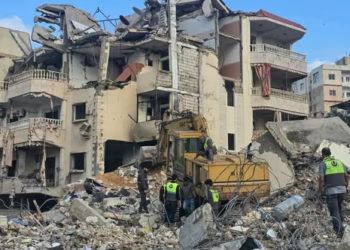 Israel Defies Ceasefire as Lebanon Operations Persist
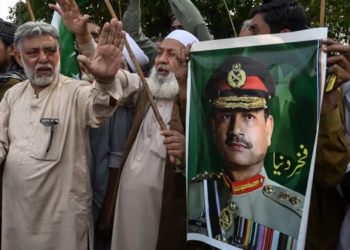 Pakistan Brokers Historic Peace Deal Amid Rising Tensions
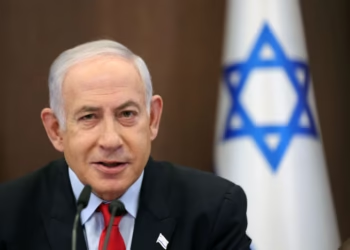 Middle East Analysis: The Cost of a Fragile Peace
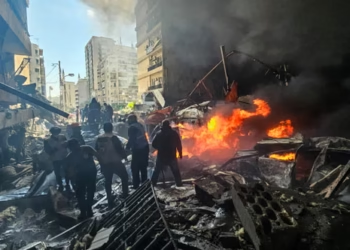 Israel Launches Massive Airstrikes Across Lebanon
 Reeves Slams Trump Over Iran War Lack Of Exit Plan
 Trump’s Islamabad Gamble: The High Stakes of a New Iran Deal
 Pope Leo Calls for Global Unity Following Trump Criticism
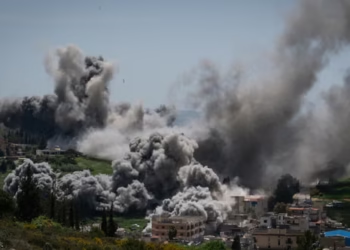 Trump Brokers Ten Day Ceasefire to Halt Lebanon Conflict
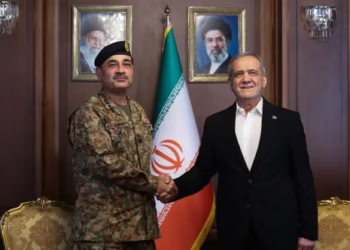 The General’s Gambit: Pakistan’s New Role in Global Peace
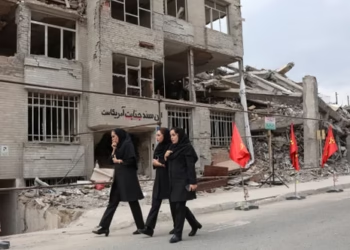 Uncertain Peace: Tehran Residents Face a Ruined Capital
 Mexico, Spain and Brazil call for Cuba dialogue amid crisis
 Ukraine Urges UK to Seize Russian Oil Tankers
 US Calls Australia Media Law “Foreign Extortion”
 Questions Remain Over The Tragic Bondi Massacre
 Ukraine strikes Tuapse as oil disaster worsens
 US and Mexico Face Heatwave as Floods Batter South Africa
 The Long Way Home: Australia’s High-Stakes Virus Mission
 Trump Warns Iran Ceasefire Is Now on Life Support
 Putin Signals War End as Russian Momentum Stalls
 Philippine Senator Flees After Days Under Senate Siege
 Plea for Mercy: The Battle to Bring Ahmed al-Doush Home
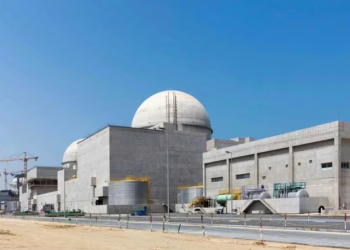 Gulf Crisis Deepens After Drone Attack Near Nuclear Facility
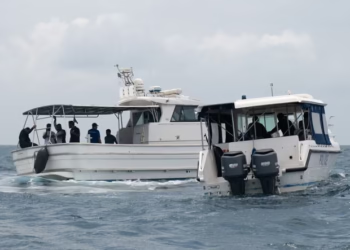 Tragedy in the Maldives: Inside the Deep Sea Rescue
 US Ebola Case Sparks Urgent Global Screening Measures
 Global Outrage After Israeli Minister Mocks Bound Activists
 The Hunt for Bato: Inside the Hunt for the Fugitive Senator
 Discontent grows around Putin amid war strain
 US Strikes Iranian Sites Amid Shaky Ceasefire Talks
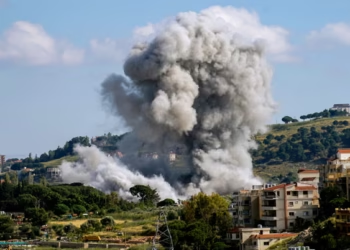 Israel Intensifies Lebanon Strikes to Crush Hezbollah
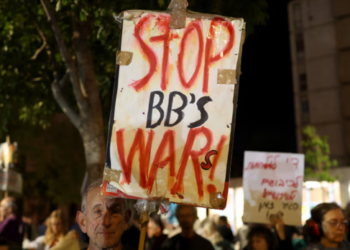 Trump’s Iran Deal Plan Sparks Intense Alarm Across Israel