Published: 16 June 2026. The English Chronicle Desk. The English Chronicle Online.
A wave of intense political maneuvering and deep tragedy has redefined the global landscape this week, drawing urgent attention from international observers and British citizens alike. As world leaders gather for the annual G7 summit in France, declarations of unexpected peace treaties compete with domestic political warfare in Washington and devastating military accidents on American soil. The fast-moving events show how quickly international alliances and internal national stability can shift in an increasingly unpredictable world.
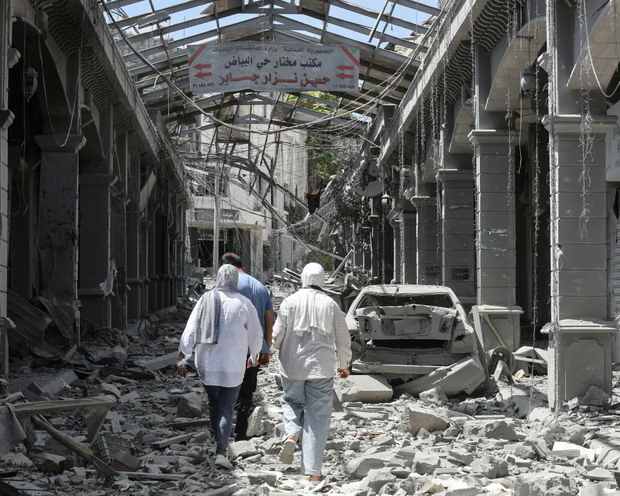
The most dramatic geopolitical development emerged directly from the tarmac of the G7 summit, where US President Donald Trump confidently announced an impending end to months of brutal conflict in the Middle East. Arriving at the high-profile gathering, Trump boldly declared that the heavily contested Strait of Hormuz will be completely open for international maritime shipping by the coming Friday. According to the American president, a comprehensive peace deal with Tehran has already been fully signed and finalized, paving the way for immediate regional stabilization. He expressed massive optimism about the future of the Middle East while highlighting a simultaneous drop in global oil prices and a major surge in western stock markets.
Central to this proclaimed breakthrough is an absolute commitment regarding the future of the sensitive nuclear program in the Iranian nation. Trump insisted that the core achievement of the negotiations is a strict guarantee that Iran will never possess a functional nuclear weapon. He assured fellow world leaders that the agreement includes powerful policing mechanisms designed to monitor compliance and prevent hidden atomic development. The news brought immediate relief to financial sectors that have spent the last three months dealing with the volatile economic consequences of a destructive regional war.
However, independent diplomatic experts and seasoned international analysts are viewing these triumphant statements with an immense degree of caution and skepticism. Close inspection of the situation on the ground suggests that the American president may be celebrating far too early. No formal peace agreement has actually been finalized, and no comprehensive nuclear treaty has been ratified by the respective legislative bodies. Furthermore, the vital Strait of Hormuz remains heavily mined after months of open maritime warfare, presenting an immediate danger to shipping vessels despite the grand promises of instant freedom of navigation.
The underlying fragility of the situation is further exposed by ongoing friction between other major actors in the volatile region. Continued Israeli military breaches of the current ceasefire in Lebanon have threatened to destabilize the diplomatic progress before it even begins. Simultaneously, Iranian officials have complicated matters by asserting their sovereign right to charge hefty transit fees for any vessels traveling through the strategic waterway. While a formal memorandum of understanding is scheduled for a symbolic signing ceremony in Geneva this Friday, the heavy technical discussions led by US Vice President JD Vance face a mountain of unresolved issues.
The reaction within Israel has been notably complicated, marked by a growing sense of domestic political vulnerability for the current leadership. Political analysts in Jerusalem have quickly pointed out that none of the grand military objectives promised by Benjamin Netanyahu have been achieved. The total destruction of the Iranian nuclear framework and the forced removal of the regime in Tehran have both failed to materialize. While Netanyahu chose not to openly condemn the American peace initiative, he explicitly distanced his administration from the talks and firmly stated that Israeli forces will not withdraw from occupied Lebanese territory.
As the G7 leaders attempt to process the sudden Middle Eastern developments, they must also confront the ongoing challenge of maintaining Western unity regarding the war in Eastern Europe. The summit participants are working hard to reinforce American commitment to Ukraine, which has shown signs of wavering under the current political climate. British Prime Minister Keir Starmer has taken a leading role in these discussions, promising to choke off vital Russian revenue streams through much tougher economic sanctions. The United Kingdom has also committed hundreds of millions of pounds in direct energy infrastructure support to help the Ukrainian people survive the ongoing conflict.
Away from the high-level diplomacy of Europe, the American military is mourning a catastrophic aviation disaster in the desert of Southern California. An eight-engine B-52 Stratofortress strategic bomber crashed violently into the earth shortly after taking off from Edwards Air Force Base. The devastating impact occurred during a routine test mission in the Mojave Desert, resulting in the presumed deaths of all eight individuals on board. The victims of the tragic accident included active military personnel, government civilian employees, and private defense contractors working together on an advanced technological modernization project.
Military officials have closed the airfield to conduct a thorough recovery operation and have withheld the identities of the deceased until all next of kin are formally notified. Aviation safety experts suspecting a catastrophic flight-control failure noted that the heavy bomber plunged toward the desert floor at an incredibly high rate of speed. The tragedy highlights the inherent risks of testing cutting-edge digital radar systems on a legendary aircraft design that has been flying for seven decades. The loss is a heavy blow to the tightly knit experimental aviation community tasked with keeping these massive Cold War era bombers operational for the future.
Meanwhile, a bitter domestic political feud has erupted in California, where Governor Gavin Newsom has leveled shocking accusations against the American president. Newsom claimed that Trump has actively weaponized the United States Department of Justice by ordering a targeted criminal investigation into his personal life and his family. The prominent Democratic governor revealed that federal agents have been knocking on the doors of close family friends and former state employees. He characterized the intense scrutiny as an illegal fishing expedition designed to uncover a crime where absolutely none exists.
The governor firmly believes the aggressive investigation is a direct result of his public opposition to the administration and his potential aspirations for the presidency. Sources close to the matter have confirmed that several federal inquiries into the California governor have been quietly active for roughly a year. These ongoing investigations include a specific review of the tax filings of his wife, Jennifer Siebel Newsom, alongside an existing fraud case involving his former chief of staff. While federal law enforcement agencies have declined to comment, the escalating conflict represents a dangerous new chapter in American political polarization.
In wider international news, US Health Secretary Robert F Kennedy Jr is facing intense criticism from the global scientific community. The controversy erupted after Kennedy sent an aggressive letter to a respected medical journal that had recently retracted a deeply flawed study regarding vaccine safety. Simultaneously, the state of Florida has launched a massive lawsuit against the social media platform TikTok, accusing the company of violating strict youth privacy laws. This legal action comes as British ministers actively lobby Washington to prevent economic retaliation after the UK announced its own strict social media ban for children under sixteen.
Amidst these heavy political battles, a major global report from Unicef has delivered a sobering reminder of the mounting environmental dangers facing the next generation. The United Nations agency revealed that half of the children across the globe are currently exposed to at least three overlapping climate hazards. Millions of young lives are being continuously upended by the destructive combination of extreme heatwaves, intense wildfires, prolonged droughts, and catastrophic flooding. The data emphasizes that environmental degradation is no longer a distant threat but a harsh daily reality shaping the health and education of the world’s youth.
In response to these existential threats, botanists at the Royal Botanic Gardens in Kew have turned to advanced technology to save the planet’s biodiversity. Experts believe that the rapid rise of artificial intelligence and digital mapping could provide a vital turning point in the urgent race against plant extinction. By utilizing machine learning algorithms, scientists can identify and protect rare botanical species before they vanish forever due to human activity. This innovative approach offers a rare glimmer of hope as the international community reflects on the fragile resilience of life on Earth.
Related News:
 Saudi Officials Report Zubaidi Flee Before Yemen Peace Talks
 UK Targets in New York Bomb Threat Hoax: Man Jailed
 Gambia Supreme Court Hears Case to Overturn FGM Ban
 Trump targets Iran trade with 25% tariff warning
 US Senate rejects resolution limiting Trump military powers
 Gulf states warn Trump Iran strikes risk wider Middle East war
 Machado Trump medal gesture reshapes Venezuela power struggle
 Geopolitical football: Iran, Trump and the World Cup clash
 Shinzo Abe’s killer receives life sentence in Japan
 China General Under Investigation Amid Leadership Purge
 Philippines ferry disaster leaves 15 dead, dozens missing
 Cambridge Faces Scrutiny Over Arms Investment Transparency
 Concerns rise for Canberra boy amid Iran detention fears
 Ukraine Sends Drone Experts to Defend US Bases in Jordan
 Abramovich Chelsea Sale Cash Faces Jersey Probe
 Yvette Cooper: UK Must Follow Principles, Not US Pressure
 Jury Rules Meta and YouTube Liable for Addictive Design
 The Woman Guarding Earth From the Threat of Asteroids
 Exiled Tycoon Warns of New Russian Attacks on UK Soil
 LA 2028: Millions of Affordable Olympic Tickets Announced
 Trump Slams Europe as Transatlantic Tensions Boil Over
 Inside the Deceptive Machine: A Former Producer Speaks Out
 Spain Faces Backlash Over Xenophobic Chants in Egypt Draw
 A Global Voice For Justice: Stephen Lewis Dies At Age 88
 Hope and Fear as Iranians Flee Across the Turkish Border
 Reform UK Pledges To Halt Visas Over Reparations Demands
 US and Iran Agree to Two-Week Provisional Ceasefire
 Starmer visits Gulf as US and Iran agree ceasefire
 Pakistan Brokers Historic Peace Deal Amid Rising Tensions
 Trump Signals Hope for New Iran Talks as Ceasefire Fades
 US and Iran Pursue Extension of Ceasefire via Pakistan
 Trump’s Islamabad Gamble: The High Stakes of a New Iran Deal
 The General’s Gambit: Pakistan’s New Role in Global Peace
 Mexico, Spain and Brazil call for Cuba dialogue amid crisis
 Pakistan’s Ambitious Bid for Middle East Peace
 Israeli Soldiers Jailed Over Vandalism of Lebanese Statue
 Trump Weighs Sending Afghan Allies to the Congo
 Trump Threatens UK With Big Tariff Over Tech Tax
 Prominent Voices Challenge Palestine Action Ban
 Security Scrutiny After Washington Shooting Incident
 Merz Criticises US Approach in Iran Conflict
 UK Envoy Sparks Controversy Over Special Relationship Claims
 Ukraine Urges UK to Seize Russian Oil Tankers
 US Calls Australia Media Law “Foreign Extortion”
 The Billionaire’s Secretary and the £1m Fraud
 Ukraine strikes Tuapse as oil disaster worsens
 Brewing Tension: Taiwan Baristas Rebrand for World Stage
 Tensions Emerge in Netanyahu-Trump Alliance
 Mission to the World’s Edge: A Heroic Rescue in Tristan
 US and Mexico Face Heatwave as Floods Batter South Africa
 Mexico’s Missing: State Complicity in a Growing Crisis
 French Patient Told Hantavirus Was Just Anxiety
 The Long Way Home: Australia’s High-Stakes Virus Mission
 Putin Signals War End as Russian Momentum Stalls
 Romania’s Judicial Crisis: A System Under Siege
 Lee Lai Makes History with Landmark Stella Prize Victory
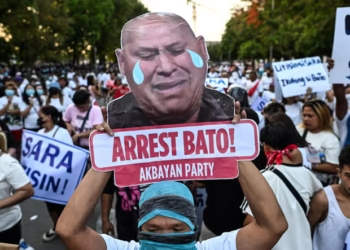 Philippine Senator Flees After Days Under Senate Siege
 Alberta Separatist Bid Blocked by Canadian Court
 Big Tobacco Under Fire Over Controversial New Ad Campaign
 Bolsonaro Son Tape Scandal Sparks Massive Brazil Backlash
 Court Upholds Landmark Win for Transgender Rights
 Liberal Senator Criticises Immigration Rhetoric
 Senate Moves to Restrict Trump’s War Powers on Iran
 ICC Arrest Warrant Threat Sparks West Bank Retaliation
 Taliban Codifies Strict New Marriage and Divorce Legislation
 Tony Abbott Returns as New Liberal Party President
 Tulsi Gabbard exits after turbulent intelligence tenure
 Discontent grows around Putin amid war strain
 Trump Diplomacy Faces Hurdles from Tehran to Tbilisi
 Trump Faces Legal Blow Over Global Tariffs
 Washington Brokerage Sparking Hope Amid Regional Firestorms
 New York Consumer Watchdog Tackles Corporate Lawbreaking
 Global Tech Giants Face Off Against Australia Over Media Levies
 Ukraine Turning the Tide: Zelenskyy Reclaims the Initiative Against Isolated Russia
 Millions in British Charity Funds Linked to Illegal Settlements
 Firearm Fine for Missing Boy’s Grandmother
 Historic Peace Deal Reached Between United States and Iran
 A New Era of Diplomacy Sparks Confusion on the World Stage
 AI to Help Botanists Win the Critical Race Against Extinction
 Battle for Washington: Mayoral Race Braces for Trump