Published: 17 June 2026. The English Chronicle Desk. The English Chronicle Online.
A Decade of Disconnection
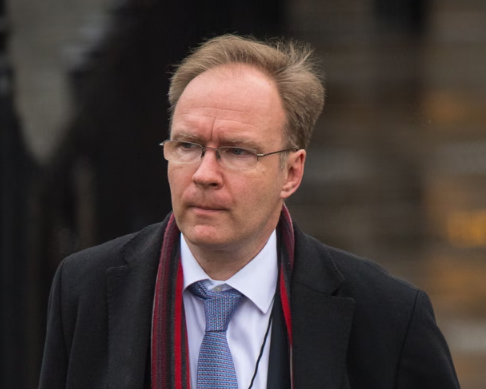
A decade has now passed since the historic British vote to leave the European Union. Yet the contemporary political landscape in Westminster remains deeply entangled in the complex web of Brexit. A former British ambassador to Brussels has delivered a very stark warning to the government. Sir Ivan Rogers claims that Labour assumed national power without a coherent strategy for Europe. The current administration clearly lacks a grand vision for rebuilding long-term relations with the continent. Instead, the prime minister is relying entirely on a collection of minor policy adjustments. These modest proposals fail to address the massive geopolitical challenges facing the country today. The experienced diplomat believes these minor changes will not fix the national economy. His critical remarks have sparked intense debate across the British political spectrum this week. Analysts are now questioning the long-term direction of UK foreign policy under Labour. The government must find a way to navigate these turbulent international waters successfully.
The experienced diplomat served as Britain’s EU ambassador from 2013 until early 2017. He possesses extensive inside knowledge of how European leaders approach complex global trade negotiations. In a recent interview, he described Labour’s manifesto as a mere ragbag of issues. These small measures do not remotely measure up to the massive global challenges. They will make no measurable difference to the broader UK macroeconomy over time. Keir Starmer has previously acknowledged the severe economic damage caused by leaving the bloc. Chancellor Rachel Reeves has also spoken frequently about the deep economic costs of Brexit. However, Rogers strongly argues that their current actions do not match their bleak diagnosis. The government claims to inherit a botched Brexit from the previous Conservative administration. Yet Ministers have failed to provide a coherent punchline to their structural analysis. This fundamental contradiction leaves British businesses in a state of prolonged economic uncertainty.
The Ghost of Chequers
The diplomat finds the current approach of the prime minister close to incomprehensible. Keir Starmer previously served as the shadow Brexit secretary for the Labour party. He should understand that the European Union fiercely protects its single market principles. Nevertheless, the government recently sent a senior official to Brussels to negotiate terms. This official sought access to the single market for goods without free movement. European officials immediately likened this approach to Theresa May’s doomed Chequers plan directly. The EU is bound to reject any proposal that crosses its established red lines. Brussels will not allow the UK to cherry-pick benefits without accepting equivalent responsibilities. Rogers notes that European leaders will not tolerate this familiar British negotiation style. The current government is repeating the exact mistakes made by its political predecessors. This tactical error demonstrates a fundamental misunderstanding of European Union legal structures clearly.
Labour has established very strict red lines regarding any future relationship with Europe. The prime minister has ruled out joining the single market or customs union. These self-imposed restrictions massively constrain what the UK can ever realistically deliver now. Britain remains isolated from its key trading and investment partners across the Channel. The government has proposed a veterinary agreement to ease complex border checks successfully. They also want to help touring artists travel more easily across European borders. Ministers are seeking mutual recognition of professional qualifications to boost domestic service sectors. Rogers describes these proposals as worthy but ultimately minor technocratic achievements always. They are largely irrelevant to the bigger questions that truly interest European leaders. Continental politicians want to know where Britain truly sees itself in the next decade. They wonder if the Labour vision differs significantly from previous Conservative approaches.
Institutional Resistance
The European Union has stated its willingness to consider a different relationship model. Brussels would welcome British membership in the European Economic Area under specific rules. This arrangement includes non-EU nations like Norway within the internal single market smoothly. However, this option presents severe political and economic challenges for any British government. The politics surrounding the free movement of people remain incredibly complex and sensitive. Furthermore, British financial institutions would strongly oppose becoming passive rule takers in Europe. The Treasury and the Bank of England would fight against this arrangement fiercely. They would die in a thousand ditches before accepting the specific Norwegian model. Under that framework, financial regulations would be set entirely by the European Union. Britain would have absolutely no representation in either the Council or the Parliament. This structural reality makes the Norwegian option completely impossible for British leaders today.
Sir Ivan Rogers has a long history of delivering uncomfortable truths to politicians. He resigned in January 2017 following a severe Conservative party backlash over advice. He advised ministers about the harsh realities of Brexit negotiations during his tenure. He later criticized Theresa May for failing to explain complex economic trade-offs properly. He also condemned the diplomatic amateurism displayed during the premiership of Boris Johnson. Rogers recalled being rightly regarded as the gloomiest person near the prime minister. He had warned his European counterparts about Brexit risks as early as 2011. On the day after the referendum, Whitehall was in complete shock back then. Meanwhile, officials in Brussels were entirely ready to roll with their prepared response. No one in London was listening to the experts during that critical period. This historical pattern of institutional denial seems to be repeating itself today.
Breaking the Cycle
The former ambassador expressed profound sympathy for former prime minister David Cameron recently. Cameron had to attend an intense European summit immediately after losing the vote. He was obliged to put on a brave face before his international colleagues. The prime minister knew that he had just shredded his entire political career. At that June 2016 summit, European leaders agreed on their core red lines. Those fundamental principles remain completely fixed even now, a full decade later. Rogers finds it deeply depressing that Britain is still trapped in this loop. The country is experiencing the same misunderstandings that defined the original Brexit debates. Political leaders are failing to grasp how the European Union actually functions. This lack of institutional memory hinders the development of effective foreign policy. Only an honest assessment of reality can break this decade-long political deadlock permanently.
Related News:
 High-speed Spain train crash leaves nation in mourning
 EU weighs response amid Greenland tariff crisis with Trump
 EU Says US Ties Have Suffered ‘Big Blow’ After Greenland Crisis
 EU launches Grok AI probe into X over explicit images
 Scotland–France Ferry Revival Tied to Dunkirk’s Green Rebirth
 Thousands Left Without Heating in Ukraine Amid Russia Strikes
 Russia sanctions hit economy hard, says EU envoy
 TikTok Design Faces EU Crackdown Over Addictive Features
 Italy Arrests Protesters Amid Milan Olympic Chaos
 Portugal Election Delivers Socialist Win as Far Right Surges
 UK and Germany urge rearmament drive
 Bodø/Glimt stun Inter in unforgettable Champions League triumph
 Cees Nooteboom, Dutch Writer, Dies Aged 92
 Champions League Thrills as Atalanta and Galatasaray Advance
 Mandelson Faces EU Inquiry Over Epstein Links
 Hungary Faces Political Tension Over the Ukraine Crisis
 Romania Gambling Crackdown: Cities Can Ban Betting Shops
 Cyprus Drone Strike Sparks Europe’s Strong Response
 ‘Earthquake for France’: Marseille May Vote Far-Right
 Explosion Damages Jewish School in Amsterdam
 Spain Shuts Airspace to US Military Over Iran Conflict
 Italy Faces Third Successive World Cup Absence After Loss
 Spain Faces Backlash Over Xenophobic Chants in Egypt Draw
 Italian Town Buys Mussolini Villa to Keep Away Fascist Fans
 Sporting’s New Star Luis Suárez Ready to Sink Arsenal
 Hungary election: Orbán faces biggest test amid scandal
 Atlético Madrid Outlast Barcelona in Epic European Clash
 Rat Poison Found in Baby Food Sparks Major Recall Row
 Meta Faces Landmark EU Breach Over Child Safety Rules
 Border Chaos: UK Travellers Face Massive EU Delays
 Frenkie de Jong on Barcelona loyalty and World Cup pain
 Ukraine strikes Tuapse as oil disaster worsens
 Alex Zanardi dies at 59, a symbol of resilience
 Asylum deal sparks fears over Syria deportations
 Global order shifts amid Trump-era turmoil
 Arteta urges Arsenal to step up in Atlético semi-final
 Ceasefire Standoff Deepens in Ukraine War
 France Faces Record Presidential Crowded Race Amid Far-Right Surge
 Norway Doubles Down on Oil and Gas for Europe Energy Security
 Bad Weather Threatens Hantavirus Cruise Ship Evacuation
 Putin Declares Russia Victory at Scaled Victory Day Parade
 Greece Probes Mystery Explosive Drone in Ionian Waters
 Ex-Chief of Staff Named in Major Ukraine Corruption Probe
 Macron Reimagines African Ties at Landmark Kenya Summit
 Romania’s Judicial Crisis: A System Under Siege
 Chaos at Valdebebas: Florentino Pérez Calls for Elections
 UEFA Resists FIFA’s New Red Card Rules for Next Season
 Hybrid village stores fight rural decline
 Bernardo Silva Leaves Manchester City After Iconic Era
 Pope Meets Families in Italy Toxic Waste Zone
 Zelenskyy warns over Oreshnik threat as Kyiv hit
 Cannes filmmakers split over AI’s role in cinema
 Former ICC prosecutor condemns US sanctions
 Irish Gangland Figure Fails in Dublin Election Bid
 Russia Hits Kyiv With Hypersonic Ballistic Missile
 Europe Swept by Historic May Heatwave
 EU Debate Looms Over Restricting New Member Veto Rights
 Hungary Targets Oligarchs with Proposed Landmark Wealth Tax
 Deadly Russian Air Raids Strike Across Ukraine
 EU Leadership Gathers in Tivat to Renew Balkan Ties
 Papal Visit Offers Political Lifeline to Spanish Premier
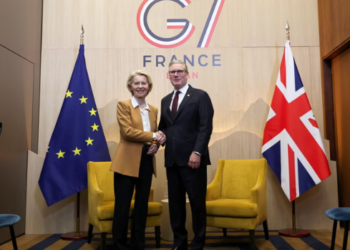 EU and UK Set July Date for Critical Post-Brexit Summit
 Lib Dems Demand Bold EU Reset to Salvage British Economy
 UK Banks Granted Reprieve as BoE Delays Basel III Capital Rules Until 2028
 Singapore Corruption Scandal: Details Emerge on Iswaran’s Luxury Flight and Ties to Tycoon Ong Beng Seng
 Corfu Beyond the Crowds: Discovering Serenity in Southern Villages and Hidden Taverns
 US Dollar Hits Four-Year Low Amid Market Turmoil
 AI breast screening cuts later cancer diagnoses by 12%, study finds
 Police Doubt Fugitive Dezi Freeman Survived Bushland
 Most Statin Side-Effects Are Not Caused by Drugs, Study Confirms
 Australia’s Opposition Coalition Reunites After Rift
 Send spending gap leaves deprived areas behind
 Australian Families Leave Syrian Camp for Home
 School Plate Revolution: England Bans Fried Menu Classics
 Is Britain Ready? Experts Warn of ‘Bizarre’ Military Delay
 Benjamin Field Murder Conviction Overturned by Appeal Court
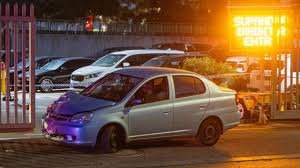 Tragedy Strikes Outside Melbourne Comic Con
 Premier League Clubs Tense Over Regulator Costs
 Governments Fail Murray-Darling River Projects
 Prominent Voices Challenge Palestine Action Ban