Published: 3 July 2026
The English Chronicle Desk
The English Chronicle Online
The return of Donald Trump to the White House has revived one of the oldest and most fundamental debates in American politics: how much power should a president have?
Nearly 250 years after the United States was founded, legal scholars, politicians and voters are once again examining the balance between presidential authority and the constitutional safeguards designed to prevent any single branch of government from becoming too powerful.
Supporters argue that a strong executive is essential for delivering campaign promises, responding quickly to national challenges and overcoming political gridlock. Critics, however, warn that expanding presidential powers risks weakening democratic institutions and upsetting the system of checks and balances that has defined American government since its creation.
As Trump’s second presidency unfolds, questions about executive authority have become central to national political debate, extending beyond one administration to the broader future of the presidency itself.

The discussion over presidential power dates back to the drafting of the US Constitution in 1787.
America’s founders had recently fought a revolution against British monarchy and were determined to avoid concentrating excessive authority in the hands of one leader. At the same time, they recognised that the young nation needed an executive capable of governing effectively.
The result was a constitutional system that deliberately divided power among three branches of government: the presidency, Congress and the judiciary.
Each branch was given specific responsibilities while also possessing mechanisms to limit the powers of the others.
This structure—commonly known as the system of checks and balances—remains at the heart of American democracy.
Although the Constitution outlines presidential powers, historians note that nearly every administration has tested or expanded those boundaries.
During times of war, economic crises or national emergencies, presidents have often exercised broader executive authority.
Over the decades, executive orders, emergency declarations and administrative actions have become increasingly important tools for implementing policy, particularly when Congress is politically divided.
Critics argue that these developments have gradually strengthened the presidency beyond what the founders originally envisioned.
Supporters counter that modern government requires flexibility to respond quickly to increasingly complex domestic and international challenges.
Donald Trump’s return to office has placed renewed attention on executive power because of his pledge to act swiftly on major policy priorities.
His administration has emphasised the importance of decisive leadership, arguing that voters elected him to implement significant changes across immigration, trade, national security and the federal government.
Supporters believe presidents should have sufficient authority to fulfil the promises on which they were elected.
They argue that excessive legal or bureaucratic obstacles can prevent democratic mandates from being carried out effectively.
Opponents, however, contend that rapid executive action must remain subject to constitutional oversight and judicial review.
They argue that preserving institutional checks is essential regardless of which political party controls the White House.
The American political system gives Congress the power to pass legislation, approve spending and oversee executive actions.
Meanwhile, federal courts—including the Supreme Court—can determine whether presidential actions comply with the Constitution.
In recent years, these institutions have increasingly become arenas for disputes over executive authority.
Executive orders, immigration policies, regulatory decisions and emergency declarations have frequently faced legal challenges.
Court rulings have sometimes upheld presidential actions while limiting or blocking others, illustrating the ongoing balance between executive initiative and judicial oversight.
Executive orders have become one of the most visible symbols of presidential authority.
They allow presidents to direct federal agencies without requiring new legislation from Congress.
Every modern president has relied on executive orders to varying degrees, though their use often increases during periods of political division.
Supporters argue they provide an efficient way to manage the executive branch.
Critics respond that major policy changes should primarily come through legislation rather than unilateral presidential action.
The debate is likely to continue whenever administrations use executive orders to advance significant policy objectives.
Another area attracting renewed attention is the use of presidential emergency powers.
Federal law grants presidents special authorities during declared national emergencies, enabling faster responses to crises ranging from natural disasters to national security threats.
Legal scholars acknowledge that these powers can be vital during genuine emergencies.
However, some argue that emergency declarations should be carefully limited to prevent extraordinary powers from becoming routine governing tools.
The challenge lies in balancing national security with democratic accountability.
Public opinion remains sharply divided over the appropriate scope of presidential authority.
Many voters favour strong executive leadership when it advances policies they support.
Others worry that expanding presidential powers could eventually be used by future administrations in ways they oppose.
Political scientists note that attitudes toward executive authority often change depending on which party occupies the White House.
This shifting perspective demonstrates that debates over presidential power extend beyond individual leaders and reflect broader questions about constitutional government.
Throughout American history, moments of national crisis have often reshaped perceptions of presidential authority.
From the Civil War and the Great Depression to the Second World War and the aftermath of the September 11 attacks, presidents have exercised expanded powers in response to extraordinary circumstances.
Some of those measures later became permanent features of government, while others were reduced once emergencies passed.
Historians say these precedents continue to influence contemporary discussions about executive power.
Each generation must decide how to balance effective leadership with constitutional safeguards.
The American presidency remains one of the world’s most influential political offices.
Decisions made in Washington affect global security, international trade, financial markets and diplomatic relations.
Consequently, debates about presidential authority are followed closely not only within the United States but also by governments and observers around the world.
International allies often seek predictable decision-making, while rivals closely monitor shifts in American governance and foreign policy.
As a result, discussions about executive power have implications extending far beyond US borders.
Legal experts emphasise that the central issue is not simply whether a president should be powerful, but how that power is limited.
The Constitution intentionally creates tension between effective government and institutional restraint.
That tension is not viewed as a flaw but as a defining characteristic of the American political system.
Supporters of a stronger presidency argue that modern challenges require faster and more decisive leadership.
Advocates of stricter limits respond that democratic institutions exist precisely to prevent excessive concentration of power, regardless of who occupies the White House.
As Donald Trump’s presidency continues, disputes over executive authority are expected to remain at the forefront of American political life.

Future court decisions, congressional oversight and electoral outcomes will all shape how presidential powers evolve in the years ahead.
Whatever one’s political perspective, the debate reflects questions that have existed since the nation’s founding: how can a government be strong enough to govern effectively while remaining accountable to the people?
Nearly two and a half centuries after the Constitution was written, Americans continue to wrestle with that balance.
The outcome of today’s debates may influence not only the remainder of Trump’s presidency but also the powers available to every future president, making this discussion one of the most consequential constitutional questions facing the United States.
Related News:
 Trump to Recheck Green Cards from 19 Nations After DC Attack
 Russia losses Ukraine war peace talks intensify amid rising deaths
 Trump Escalates Minnesota Immigration Surge Amid Rising Tensions
 Trump: US Stands Ready to Help Iran Find Freedom Amid Widespread Unrest
 Trump Administration Probe of Fed’s Powell Draws Pushback
 Greenland Faces Pivotal Summit Over Arctic Power Struggle
 Trump Threatens Strong Action If Iran Executes Protesters
 Trump Receives Machado’s Nobel Medal in White House Meeting
 Greenland Crisis Forces Europe to Draw a Line With Trump
 Iran Cannot Be Bombed Into Democracy, Only Helped There
 Historic Abu Dhabi Talks Bring US, Ukraine and Russia Together
 Trump Pulls Canada from His Controversial ‘Board of Peace’ Plan
 EU Says US Ties Have Suffered ‘Big Blow’ After Greenland Crisis
 Thousands Protest ICE Operations in Nationwide US Day of Action
 Epstein Files Reveal Trump Officials’ Emails with Financier
 Trump Praises ‘Terrific’ Petro After White House Talks
 Fears of New Arms Race as US-Russia Nuclear Weapons Treaty Expires
 New Nuclear Talks Between US and Iran Begin in Geneva
 ‘He Did It for Us’: US Soldier Recalls Jesse Jackson’s Efforts to Free Him and Two Other POWs
 Stephen Colbert Says CBS Spiked Interview With Democrat Over FCC Fears
 US Urges Iran to Make Deal as Military Presence Rises
 Billionaire Les Wexner Tells US Lawmakers He Was ‘Naive’ and ‘Conned’ by Epstein
 Inside Kyiv’s resolve as conflict nears five‑year mark
 What to Watch for During Trump’s State of the Union Address
 Clinton Testimony Erupts in Fiery Exchange
 American Citizen Killed in Cuba Boat Shooting, U.S. Officials Say
 Hillary Clinton Tells House Panel She ‘Had No Idea’ of Epstein’s Crimes
 Hopes and Fears as US Iranians Take to Streets After Toppling of Supreme Leader
 Iran, the US, and a World Cup That Starts in Three Months
 Britain’s Position and Trump Vows to Press On in Iran Conflict
 Trump Faces Questions Over Iran Conflict Plan
 Trump’s Iran Endgame Unclear After Mixed Messaging on War Aims
 Rubio Responds to Reported Strike on Iranian School
 US Senate Backs Trump War Powers Amid Iran Missile Barrage
 Six US Soldiers Killed in Iran-Linked Kuwait Strike
 US Senate Vote Fails to Rein in Trump War Powers on Iran
 Trump Removes Kristi Noem From Homeland Security Role
 US and Venezuela Agree to Resume Diplomatic Ties After Maduro Capture
 UK Prepares Aircraft Carrier for Middle East Crisis
 Pete Hegseth Iran War Remarks Spark Alarm
 Iran War Puts Trump at Political Risk Amid Rising Prices
 Iran Rejects Ceasefire, Warns Trump With Chilling Message
 Georgia Race to Replace Greene Heads to Runoff
 Trump’s Confidence Undimmed — But Every Iran Option Carries Risk
 Fox News Cut In Over Trump King Charles Claim
 Trump Seeks to Delay Meeting With Xi
 Trump Faces New Warning Signs as Iran War Hits Home
 Trump’s Harsh Rhetoric on Iran Sparks Global Alarm
 Tectonic Tension: Trump Blasts NATO Costs as Rutte Admits to ‘Very Frank’ Exchange
 The Academic Chill: Beijing Condemns ‘Hostile’ US Questioning After Researcher’s Death
 Midnight Fire: Israel and Hezbollah Exchange Strikes as Trump Lashes Out at Tehran
 Charles Faces Trump Test in High-Stakes US Visit
 US Court Ruling Reshapes Voting Rights Landscape
 US states redraw maps after voting rights ruling
 Trump orders US troop pullout from Germany
 Trump likens US Navy actions to ‘pirates’
 Trump approval plunges amid Iran war fears
 Giuliani hospitalised in critical condition
 Ohio’s Battle for Trust: Democrats Vying to Flip the Buckeye State
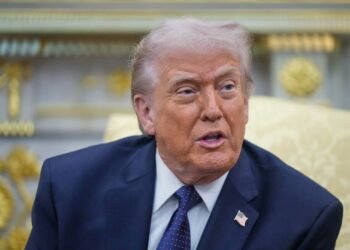 Trump Threatens UN Budget Cuts as US Pushes ‘Trade Over Aid’ Agenda
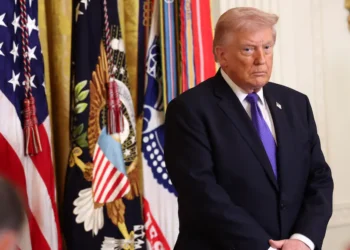 Trump warns Iran as Middle East tensions surge again
 US ‘Narco Boat’ Strikes Draw Global Outcry
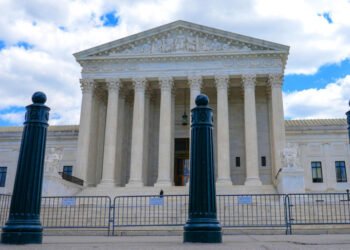 US Court Restores Abortion Pill Access Temporarily
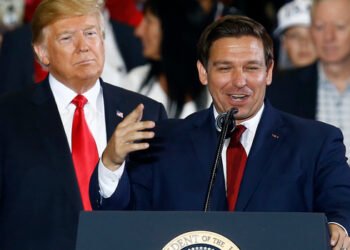 Ohio Primaries Set Stage for Crucial Midterms
 Afghan Families Left in Limbo Face Risk of Deportation
 Tensions Emerge in Netanyahu-Trump Alliance
 US Awaits Iran Reply on New Ceasefire Proposal
 “The Maverick’s Gambit”: Donald Trump’s High-Stakes Endorsement of Ken Paxton in Texas Primary
 Hormuz Talks Near Critical Stage
 Trump’s Revenge Drive Deepens GOP Divide
 Former ICC prosecutor condemns US sanctions
 Gunman Killed After White House Security Shootout
 Trump Claims Iran Peace Deal Near Completion
 US Midterm Primaries: Democrats Target Key Republican Seats
 House Curbs Trump’s War Powers in Rare Rebellion
 Trump-Netanyahu Call Fuels Iran Talk Crisis
 Can World Cup Hosts Overcome Deep Divisions?
 Zelensky Invites Putin to Direct Peace Talks
 Republicans Defy Trump on Ukraine Aid Bill
 Israel Strikes Iran After Missile Attack