Published: 07 July 2026. The English Chronicle Desk. The English Chronicle Online.
The raw reality of conflict often escapes those living far from the front lines of violence. Distant reports frequently lack the visceral truth found only by those standing inside the active disaster. A powerful new documentary titled Life Support provides a stark look at this tragic ongoing reality. The film follows medical professionals who have volunteered their time to work within the Gaza Strip. Their accounts offer a perspective that is both deeply personal and historically significant for our world. These doctors, known for their calm demeanour, struggle to describe the immense horrors they have witnessed. Their stories act as a bridge between the clinical world of medicine and the chaos of war.
Canadian paediatric intensive care doctor Tanya Haj-Hassan leads the emotional core of this moving feature film. She explains that dying children and grieving parents unfortunately represent a standard fact of her daily work. However, she notes that Gaza has become a place where such tragedies occur continuously without any break. While speaking about these events, she pauses to wipe away a tear during the candid interview. Haj-Hassan is just one of several dedicated doctors featured in Daniele Rugo’s compelling new documentary project. This film examines their separate medical missions undertaken within the region since the escalation in October 2023.
Medical professionals are typically very careful with their specific choice of words in any formal setting. They generally avoid reaching for overstatement or dramatic exaggeration when discussing the patients under their immediate care. Yet, the measured accounts they provide here regarding this hell on earth are truly staggering to behold. These testimonies are supported by grainy clips taken from their own personal video diaries while on ground. These combined elements make the documentary a profoundly difficult experience that is almost impossible to watch comfortably. The viewer feels the weight of every sentence spoken by these brave and highly skilled clinicians.
Israel maintains strict control over the borders and does not allow foreign reporters inside Gaza easily. Journalists are usually restricted from entering unless they are placed under a tight military escort for safety. Because of this policy, these medical professionals have become uniquely valuable as independent witnesses to the conflict. Nick Maynard, an experienced gastrointestinal surgeon, has been visiting the region regularly since the year 2010. He acknowledges that he has always witnessed significant destruction in Gaza during his previous long professional visits. He admits, however, that the situation after October 2023 reached an entirely different and terrifying scale.
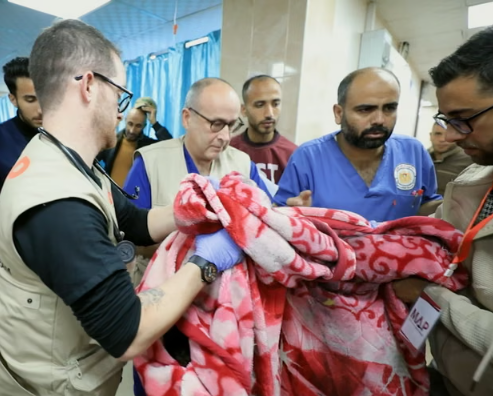
The testimonies provided by these visiting doctors paint a bleak picture of a healthcare system under pressure. ER doctor James Smith describes his first night in the area as a surreal, waking nightmare. He attempted to count the number of explosions occurring around him but eventually lost all tracking ability. He lost his count after the total number of blasts reached several hundred throughout that single night. Reconstructive surgeon Victoria Rose arrived with twenty-three suitcases of supplies after a massive local fundraising effort. She had sent a call to UK plastic surgeons who donated essential equipment for her mission abroad. During a later return visit, the authorities permitted her to cross the border with only one suitcase.
The visiting medical teams consistently pay deep tribute to the extraordinary heroism displayed by their Palestinian colleagues. These local doctors work marathon shifts while simultaneously grieving over their own profound and personal family losses. Maynard describes one specific Palestinian surgeon who had to take sitting breaks during a major operation. The doctor was trying to avoid blacking out completely because he was suffering from extreme, persistent hunger. Another Palestinian doctor makes the heartbreaking decision to bring her own teenage children to her workplace. She reasons that if they are going to die, they should at least die together there.
The geopolitical context of this crisis remains intensely polarized with very little room for any neutral discourse. Israel has consistently accused Hamas of using civilian hospitals as secret command centres for their military operations. They also claim that these medical facilities are used to hide weapons, a charge that Hamas denies. The doctors featured in this film provide a very different narrative focused on the destruction of infrastructure. They speak at length about the systematic targeting of essential medical facilities throughout the entire Gaza Strip. They report that the region’s only cancer hospital has been completely destroyed by the ongoing heavy bombardment. Even a specialized IVF clinic has been lost, taking with it all the embryos stored inside.
Watching this documentary is a profound challenge, yet it remains a piece of work that is impossible to ignore. The film forces the audience to confront the human cost of a war that often feels distant. It captures the intersection of medical ethics and the brutal reality of modern conflict in a small territory. The stories told by these doctors serve as an urgent reminder of our shared responsibility for humanity. They have walked through the ruins and have chosen to share what they saw with the world. We are left to reflect on the immense fragility of life in the face of absolute despair. This work stands as an essential, if devastating, record of a medical community struggling to hold everything together. As the film concludes, one is left with a sense of the immense resilience shown by medical staff. The images of their struggle will undoubtedly linger with anyone who chooses to view this important documentary.
Related News:
 Ebola outbreak in DRC overwhelms health system as cases surge
 The diet that can significantly ease symptoms of IBS
 Europe, North America face early wave of bird flu
 Grief, Fear and Fury: Mothers Unite to End Israeli-Palestinian Violence
 Iran Leader Blames Protesters, Says They Serve Trump
 Thousands Protest ICE in New York Against Trump Deportation Campaign
 Australian Women in Syrian Camp Offer Separation Deal
 Tick Bite Tragedy Claims Teen in Meat Allergy Case
 Tribunal Rules Burgertory Founder’s Chant Incited Hatred
 Hospital Fungal Outbreak Sparks Major Cover-Up Claims
 Tehran Diary: Dark Days Under Relentless Bombardment
 Canada Plasma Deaths Raise Safety Concerns After Two Donors Die
 Hong Kong Bookstore Arrests Spark New Freedom Concerns
 Death, displacement and military duties: children plunged into crisis
 ICE Detains Soldier’s Bride Days After Louisiana Wedding
 Bondi Nanny Adriana Rivas to Face Extradition to Chile
 “I was fighting two wars”: Ukraine soldiers’ addiction crisis
 Aid Crisis Grows as Hormuz War Disrupts Supply
 Judge halts deportation of Yemeni refugees in US
 Activists allege abuse after Gaza flotilla seizure
 Giuliani hospitalised in critical condition
 US Court Restores Abortion Pill Access Temporarily
 Alice Springs Murder Case: Justice Begins for Little Baby
 Afghan Families Left in Limbo Face Risk of Deportation
 Hantavirus Cruise: Britons Face 45-Day Isolation Order
 Three Australian Women Detained Over Islamic State Links
 Trump Announces 3-Day Russia–Ukraine Ceasefire Deal
 Bad Weather Threatens Hantavirus Cruise Ship Evacuation
 Crisis in the Canary Islands as Cruise Ship Evacuated
 Cruisers Face Perth Quarantine After Hantavirus Outbreak
 WHO Declares Ebola Outbreak a Global Emergency
 Deadly Ebola Outbreak Surges as Western Aid Vanishes
 Israeli Strikes in Lebanon Kill 10 Amid Ceasefire Strain
 China mine blast death toll rises to 90
 Maldives Cave Diving Tragedy Raises Safety Alarm
 Pope Meets Families in Italy Toxic Waste Zone
 Former ICC prosecutor condemns US sanctions
 Preserving the Fragile Memories of Tiananmen Square
 Sydney Protest Trial: Twenty-Five Activists to Face Joint Hearing
 New Footage Revives Peter Falconio Mystery
 Ukraine Creates Long-Range Strike Command
 Dreyfus Statue Finally Gets Permanent Paris Home
 Mystery Grows Over Mitch McConnell’s Health
 Taliban global ties grow as rights fears mount
 Israeli Strike in Southern Lebanon Kills Seven
 Five Years of Taliban Rule Leave Afghanistan in Crisis
 BBC to Apologise Over Edited Trump Speech Amid Backlash
 Reeves rejects £1bn plea for NHS redundancy payouts
 Greene Pushes Epstein Files Amid Trump Fallout
 Zelenskyy Signs Fighter Jet Deal Amid Russian Drone Attacks
 Shadow Fleet at Sea: Europe’s Battle Against Illicit Oil Shipping
 US Suspends Afghan Immigration After White House Shooting
 ‘Extinct’ Antelope Returns to Sahara, Bringing Hope
 Irish Beach Tragedy: Irish Drown at Whitehaven Beach in Australia
 Streeting moves on doctor pay to end strike dispute
 UK and US Drop in Global Corruption Index Rankings
 Canberra Poster Seizure Sparks Free Speech Row
 Jacinda Ardern Move Sparks Kiwi Reflection
 Middle East Airspace Crisis Strands Thousands
 Kelly Wilkinson Inquest Reveals Bail Failure
 New Zealand Covid Response Praised Despite Lingering Scars
 Injured Mojtaba Khamenei Elevated as Iran Leader
 The Kill Line: A Shifting Vision of the American Dream
 Air Canada CEO Faces Outcry Over Recent Language Misstep
 Extreme Weather: Europe Shivers as Cyclone Narelle Hits
 Palantir Boss Defends NHS Deal Amid Government Break Clause
 Asia Turns Back to Coal Amid Middle East Energy Crisis
 Relationship with Trump may be beyond repair, Starmer warned
 Trump’s Six-Week Iranian War: The High Cost of Ignorance
 Ben Roberts-Smith Denies War Crime Allegations in First Statement
 Crisis in NHS Surgery Scheduling Hits Patients Hard
 RFU Backs Borthwick Despite England’s Poor Six Nations
 Trump Rejects Tehran Peace Plan as Regional Truce Crumbles
 Wes Streeting faces narrow road to Labour members’ favour
 Britain’s Crowning Butterfly Takes the Nation by Storm
 Fifa Official Under Investigation Over Hand Gesture Controversy
 Grief and Devotion Amidst the Rubble of Nabatieh
 Breakthrough NHS Tests for Endometriosis Patients
 UK Schools Struggle as Classrooms Top 40C
 Houthis Strike Saudi Arabia as Middle East Tensions Rise