Published: 15 July 2026 | The English Chronicle Desk | The English Chronicle Online
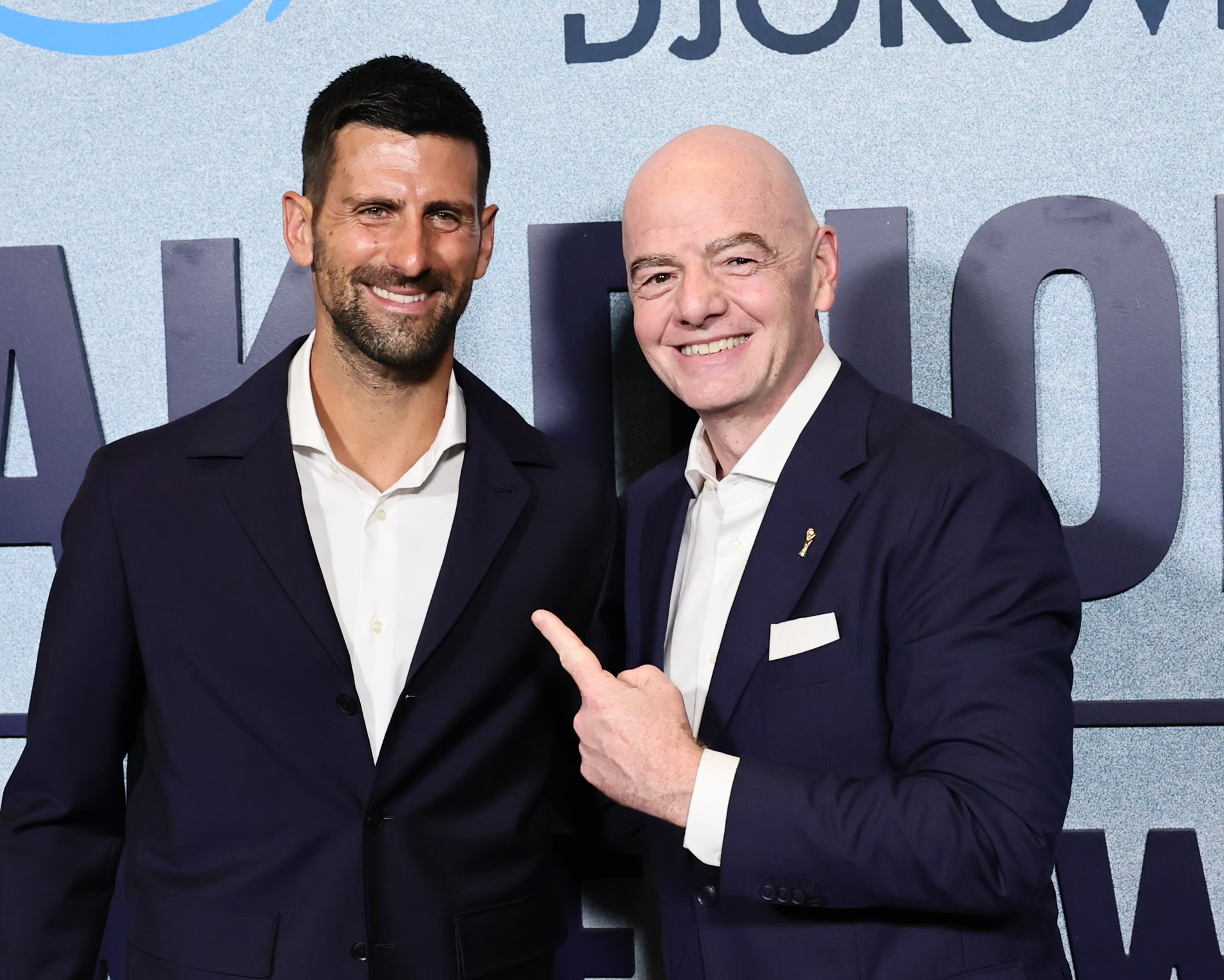
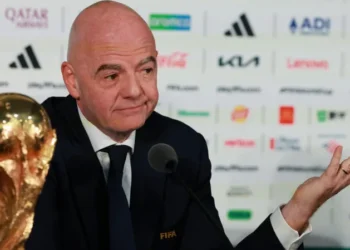
FIFA President Gianni Infantino has secured the backing of more than 200 national football associations for a fourth term at the helm of world football, despite continuing controversy surrounding the so-called Balogun scandal.
The overwhelming endorsement demonstrates Infantino’s strong political support within FIFA, even as criticism over governance, transparency and the handling of recent allegations continues to cast a shadow over the organisation.
The vote is expected to pave the way for Infantino to remain in charge of global football, extending a presidency that has already lasted more than a decade.
FIFA is made up of more than 200 member associations representing countries and territories from every continent.

Support from such a large majority reflects Infantino’s considerable influence within the governing body and his continued popularity among many national football federations.
Officials backing his candidacy have praised his leadership during a period of financial growth, expansion of international competitions and increased investment in football development programmes.
Many associations argue that FIFA has become financially stronger under his leadership and has expanded opportunities for smaller football nations.
Despite the strong endorsement, Infantino’s re-election campaign has been overshadowed by controversy linked to the Balogun scandal.
The issue has attracted widespread media attention and prompted renewed scrutiny of FIFA’s governance standards.
Critics have questioned whether the organisation responded appropriately to the allegations and whether enough has been done to ensure transparency and accountability.
While the details of the controversy remain the subject of ongoing discussion, opponents argue that FIFA should take stronger action whenever concerns arise involving senior officials or individuals connected to the organisation.
Speaking after receiving broad support from member associations, Infantino highlighted FIFA’s recent achievements and defended the organisation’s commitment to reform.
He pointed to record revenues from international tournaments, increased funding for football development and the expansion of global competitions as evidence of progress during his presidency.
Supporters also credit him with overseeing the expansion of the FIFA World Cup, increasing investment in women’s football and introducing financial support programmes for national associations.
They argue that his leadership has helped strengthen football in developing nations.
Not everyone has welcomed the endorsement.
Governance experts and some football observers believe FIFA must continue improving its systems for oversight, ethics and transparency.
They argue that sporting success and financial growth should not overshadow concerns about institutional accountability.
Some critics say controversies involving senior figures risk damaging public confidence in football’s governing body if they are not handled openly and independently.
They have called for stronger ethics procedures and greater external oversight.
Since becoming FIFA president in 2016, Infantino has overseen a period of significant change.
The organisation has expanded the men’s World Cup, increased the number of participating nations and launched new international competitions.
Development funding has also increased, allowing many smaller football associations to improve infrastructure, coaching and youth programmes.
Supporters argue these initiatives have strengthened football worldwide by providing greater opportunities beyond traditional powerhouse nations.
Leadership elections within FIFA are often influenced by relationships with member associations across Africa, Asia, Europe, Oceania and the Americas.
Every member association receives one vote regardless of its size or footballing success.
This structure means maintaining strong diplomatic relationships with smaller federations can be just as important as securing support from the sport’s biggest nations.
Analysts say Infantino has invested heavily in maintaining those relationships through regular engagement and expanded development funding.
FIFA has spent years attempting to rebuild its reputation following corruption scandals that shook world football during the previous decade.
The organisation introduced governance reforms, ethics procedures and financial transparency measures aimed at restoring public confidence.
However, every new controversy places those reforms under renewed examination.
Observers note that maintaining credibility requires consistent application of ethical standards regardless of the individuals involved.
Reaction to Infantino’s expected fourth term has been divided.
Many football administrators have welcomed continuity, arguing that stable leadership is important as the sport continues expanding globally.
Others believe fresh leadership could bring new ideas and stronger governance reforms.
Fans have also expressed mixed opinions, with discussions focusing on FIFA’s commercial growth, tournament expansion and ongoing concerns over transparency.
If confirmed for another term, Infantino will face several major challenges.
FIFA must continue managing the rapid growth of international competitions while addressing concerns over player welfare, fixture congestion and financial sustainability.
The organisation will also need to maintain confidence in its governance structures as scrutiny from governments, clubs, players and supporters continues.

Successfully balancing commercial growth with sporting integrity will remain one of the defining tasks of FIFA’s leadership.
The endorsement of more than 200 member associations places Gianni Infantino firmly on course for a fourth term as FIFA president.
While the backing reflects strong confidence among national football federations, the continuing attention surrounding the Balogun scandal ensures questions about governance and accountability remain part of the conversation.
As FIFA prepares for another chapter under familiar leadership, the organisation will face continued pressure to demonstrate that sporting success, financial strength and ethical responsibility can progress together.
Related News:
 Rising World Cup Ticket Prices Spark Concern
 Scotland Branded “Unprofessional” in World Cup Fallout as England Build Momentum
 Chinese Football Fans Embrace Referee as Unexpected World Cup Figure
 Referee Controversy Raises Questions Over FIFA’s Control of the World Cup
 Nike Charges Fans Most for World Cup Replica Shirts
 Saka Playing Through Pain As England World Cup Campaign Looms
 England Cruise Past Costa Rica as World Cup Warm-Up Sharpens Tuchel’s Vision
 ‘We all love him’: Henderson backs Bellingham for England success
 Can France Escape the Ghosts of their 2002 World Cup Nightmare?
 Deschamps Shields Mbappé From Fierce Political Storm
 Messi Equals World Cup Record In Masterclass Victory
 Erling Haaland Double Fires Norway To Victory On Debut
 Iran Files Official Fifa Complaint Over World Cup Travel
 Historic Victory for Canada as They Defeat Nine-Man Qatar
 Heartbreak for Canada as Koné Suffers Horrific Injury
 Declan Rice Facing Burnout as Tuchel Confronts Midfield Crisis
 Rodrygo Reflects On World Cup Pressure And Social Media
 How ‘Little Scotland’ Is Embracing the World Cup Spirit
 Cape Verde Hold Uruguay in Dramatic World Cup Clash
 World Cup 2026: Reclaiming the American Dream
 The Forgotten Hosts Making World Cup History Behind the Scenes
 Great Stories, Little Jeopardy – Does the New World Cup Format Really Work?
 Martinelli Strikes Late as Brazil Edge Past Brave Japan
 Paraguay Shock Germany in Historic Penalty Shootout
 Morocco Beat Dutch in Wild World Cup Penalty Drama
 England Fans Praised for ‘Excellent’ Behaviour During World Cup Campaign
 France Dominate Sweden as Deschamps’ New Era Takes Shape
 Haaland Heroics Send Norway Into Historic Last 16 Knockout
 Kane Saves Tuchel as England Survive Dramatic Exit
 Ramos Sends Portugal into the Last 16
 Swiss Star Manzambi Shines in World Cup Victory
 Trump Helps Clear Balogun for Belgium World Cup Clash
 Norway’s Stunning World Cup Victory Over Brazil
 England Triumph in Azteca World Cup Thriller
 Trump’s Red-Card Intervention Hurts the US World Cup
 Trump Intervenes in Fifa World Cup Balogun Ban
 Haaland Makes History as England Prepare for Biggest Test
 England’s 10 Men Hold Firm in World Cup Thriller
 USA World Cup Heartbreak: Belgium Ends Their Dream
 Spanish Late Winner Sends Ronaldo Into Final Sunset
 Belgium Thrashes USA After Red Card Controversy
 Balogun Drama Overshadows USA’s World Cup Exit
 Messi’s Tears and Triumph in Epic World Cup Escape
 Switzerland Advance in Penalty Thriller
 Egyptian Fury After Argentina World Cup Heartbreak
 World Cup 2026 Power Rankings: England on the Rise
 Mbappé Brilliance Leads France Into Semi-Finals
 Belgium Draws Global Support Before Spain Showdown
 Golden Boot Battle Reaches World Cup Boiling Point
 Rollercoaster Semi-Final Leaves Fans Breathless
 Haaland and Bellingham: A Dortmund Bond Tested
 Rice Poised for England Semi-Final Clash Against Argentina
 Teamwork Over Talent: How Spain Outclassed France to Reach the World Cup Final
 Tuchel: England Ready for Historic Argentina Clash
 Tuchel Backs England Stars to Overcome Messi’s Argentina
 Argentina End England’s World Cup Dream With Semi-Final Victory
 Argentina Face FIFA Investigation After Players Display Falklands Banner Following World Cup Victory
 Did Thomas Tuchel’s Defensive Approach Cost England? Tactical Questions Emerge After World Cup Exit
 The Financial Winners and Losers From the World Cup
 England Missing Final Piece of Jigsaw Despite Progress, Says Kane
 Why You Should Care About the World Cup Third-Place Play-Off
 World Cup Stars Who Could Move This Summer
 Who Am I? Guess World Cup Star No 40 – The Mystery Player Captivating Football Fans
 Sir David Beckham Consoled by Victoria After Heartbreaking World Cup Defeat
 World Cup Rings for Winners as Trump Attendance Confirmed
 Thousands of Tickets Still Available for England v France Clash
 Fans Bring Flags and Fire to World Cup Scenes
 11 EFL Stars Ready to Shine at World Cup
 Fans Invited to Share Scotland World Cup Stories
 Iran Team Arrives in Mexico Amid US Visa Dispute
 “My Drinking Days Are Over” — How to Enjoy an Alcohol-Free World Cup
 Football Regulator Contacts West Ham Over “Serious Allegations” Linked to Sullivan
 Tuchel’s England Mission Goes Beyond Football Success
 US Advance Past Bosnia in World Cup Thriller
 Paul Seixas: French Cycling’s Teenage Hope at the Tour
 Trump Helps Clear Balogun for Belgium World Cup Clash
 Ronaldo Says Farewell to the World Cup Stage
 Kane vs Haaland: Which Striker Would You Choose?
 Bryne Backs Haaland Before England World Cup Clash
 Lamine Yamal’s Birthday: Football, Fame, and France