Published: 10 August 2026. The English Chronicle Desk. The English Chronicle Online
The murder of a senior South African police detective investigating an alleged military abduction has raised serious questions about the conduct of the country’s special forces, after evidence shared with the BBC appeared to link members of the military unit to his killing.
Lieutenant Colonel Frans Mathipa, a highly regarded detective with South Africa’s elite Hawks crime-fighting unit, was shot dead in August 2023 as he drove home on a motorway outside Pretoria. He had been investigating the disappearance of an Ethiopian national and was attempting to obtain further information that could potentially connect South African special forces to the case.
Seven members of the country’s special forces and a military police officer have now been charged in connection with Mathipa’s murder. All deny the allegations.
The case has become particularly contentious because there is still no trial date, while several of the accused have allegedly refused to comply with a court order requiring them to return to custody after their bail was revoked. Three of those facing the order remain members of the military’s special forces, and one has since been promoted.
The BBC has been given access to hundreds of pages of confidential police and court documents relating to the investigation. Together with interviews with people who knew Mathipa and individuals involved in the original investigation, the material provides a detailed account of the events surrounding his death.
The documents contain evidence that investigators believe connects special forces personnel and vehicles to both the earlier disappearance Mathipa was investigating and the circumstances immediately preceding his murder.
One of the most significant pieces of evidence concerns a black BMW that police say followed Mathipa shortly before he was shot.
According to investigators, the vehicle was registered to Peters Communications Trust, or PCT, a company described in police documents as a front company linked to South Africa’s special forces. Tracking information recovered from the vehicle allegedly placed it near the scene of Mathipa’s killing.
Police also say motorway toll-camera footage showed Major Sunnybooi Wambi among the occupants of the BMW.
Wambi is among the military personnel charged in connection with the case. He has denied the allegations.
The connection between PCT and the military had already emerged during an earlier investigation into the disappearance of Ethiopian national Abdella Abadigga.
Abadigga had reportedly been living in South Africa after receiving temporary asylum. He was arrested abroad in 2017 before allegedly being brought back to South Africa through arrangements involving military and immigration authorities.
According to Colonel Tollie Vreudenburg, the former head of counter-terrorism within the Hawks, Abadigga had subsequently become an intelligence asset but eventually went “rogue”.
He was accused of extorting members of Johannesburg’s Ethiopian community, with US authorities alleging that money raised through such activity helped finance Islamic State.
In 2022, Abadigga disappeared along with his bodyguard, Kadir Abotese. His brother, Ameen Abadigga, subsequently opened a missing-person investigation.
CCTV footage obtained from the Mall of Africa became central to that investigation. The recordings showed Abadigga and Abotese moving through the shopping centre shortly before they disappeared. Investigators also identified a man in a blue top following them.
The footage showed several vehicles whose number plates were visible. Police later established that the vehicles were registered to PCT.
At the time, PCT’s directors reportedly included Major General Herbert Mashego, who was then commander of the 5 Special Forces Regiment.
Special forces acknowledged that their personnel and vehicles had been at the shopping centre on the day Abadigga disappeared. However, they said the soldiers were there for a training exercise and denied any involvement in his disappearance.
They identified the man seen wearing blue as Major Wambi, describing him as the exercise commander.
The explanation did not settle the investigation. A local police investigator and Abadigga’s brother subsequently pursued legal action, while Mathipa was assigned to investigate the case.
Mathipa knew that the special forces were potentially connected to the disappearance. His task was to establish what had happened and obtain evidence that could withstand legal scrutiny.
He issued a subpoena requiring the special forces to provide detailed information about the alleged training exercise, including the personnel involved.
According to Brigadier Paulina Sekgobela, Mathipa’s commanding officer, the detective became increasingly concerned about the potential consequences of his investigation.
Sekgobela told the BBC that Mathipa had warned her that he feared he would be killed.
“When [Mathipa] left my office he said: ‘Brigadier, you know, these people – they are going to kill me. I’m going to die’,” she recalled.
The documents indicate that Mathipa eventually received information that the material he had been seeking would be made available.
Two days later, he was dead.
On the day of his killing, Mathipa reportedly received a telephone call from a man calling himself Tebogo. According to Mathipa’s daughter, Basetsana, the caller claimed to have information connected to the investigation.
The two arranged to meet at a petrol station in Pretoria.
The meeting never happened. After waiting, Mathipa drove away and continued along the motorway.
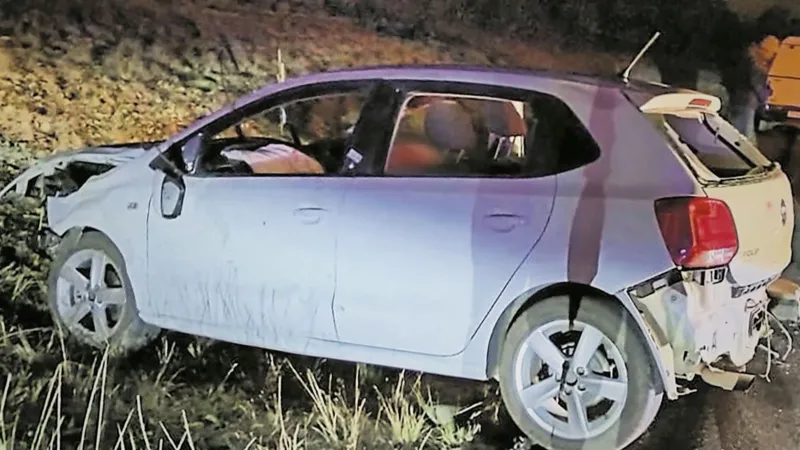
Police say a black BMW followed him.
Investigators allege that Mathipa was then shot with high-velocity ammunition as he drove. Police have said the type of weapons involved would have been available to members of special forces.
The BMW allegedly continued in the area around the time of the shooting, and investigators later linked the vehicle to PCT.
The alleged connections do not, by themselves, establish guilt. The accused have the right to defend themselves in court, and no conviction has been secured.
But the evidence has intensified concerns about the relationship between South Africa’s military and civilian law-enforcement institutions.
The situation became even more troubling for investigators after Mathipa’s death.
According to police documents, a warning was allegedly passed to the Hawks through the Criminal Intelligence division. The message was chilling: “You can appoint 10 investigating officers; we will kill all of them.”
The alleged threat has become a central part of concerns surrounding the investigation and the safety of detectives attempting to pursue the case.
Twelve members of the South African military have been arrested in connection with the wider investigations. The charges vary and include allegations relating to the abduction and killing of Abadigga and Abotese, Mathipa’s murder, fraud and obstruction.
Among those accused are Wambi and Brigadier General Solomon Lechoenyo, who has since become head of South Africa’s special forces. Both deny the allegations.
The case has also raised concerns about accountability because some of the accused have remained within the military despite the serious allegations against them.
Six accused had their bail revoked and were ordered to surrender themselves to authorities. Three, including Wambi, have reportedly failed to do so. Their lawyers have cited mental-health treatment as a reason for their absence.
The military has refused to hand them over, according to the material provided to the BBC.
No trial date has yet been scheduled, almost three years after Mathipa was killed.
The unresolved case has left his family facing a painful wait for answers. His daughter, Basetsana, has continued to call for justice, saying her father was killed while carrying out his duty.
For Mathipa’s former colleagues, the case represents more than the death of one detective. It raises fundamental questions about whether civilian investigators can safely investigate allegations involving powerful security institutions.
The whereabouts of Abadigga’s body remain unknown. The circumstances of Abotese’s alleged disappearance and death are also part of the wider investigation.
For Mathipa’s family, however, the central question is painfully simple: why was a police officer who was investigating a sensitive case killed while doing his job?
The answer may ultimately depend on whether the South African justice system can bring the accused before a court and allow the evidence to be tested publicly.
Until that happens, the allegations against the special forces personnel remain allegations. But the documents, tracking records, CCTV footage and witness accounts examined by investigators have created a case that continues to demand answers about the boundaries of military power, police independence and accountability in one of Africa’s most established democracies.
Related News:
 Cartel crackdown raises fears of fresh violence
 UK Charity Watchdog Probes Settlement Donations
 Father’s Tip Leads to Arrest in Charlie Kirk Murder Case
 Charlie Kirk Killing Used to Mobilise UK’s Largest Far-Right Rally in Decades
 Jailed Georgian Opposition Leaders Warn UK of Iranian Links to Ruling Party
 Emails Show Epstein Funded Mandelson’s Husband After Jail
 Nine Arrested in France Over Death of Far‑Right Student
 How Much Could Andrew’s Arrest Hurt the Royal Family?
 Inside Kyiv’s resolve as conflict nears five‑year mark
 After Mugabe: Family Feuds and Legal Battles
 Epstein Used Modelling Agent to Recruit Girls, BBC Told
 Ecuador Deploys 75,000 Forces in Anti-Gang Drive
 Children’s Author Convicted in Husband Poisoning Case
 Belarus Leader Gifts Rifle to Kim Jong Un
 Justice in Limbo: Top Australian Soldier to Remain on Remand for War Crimes
 Ben Roberts-Smith Denies War Crime Allegations in First Statement
 The “Friendly Federal Assassin”: 31-Year-Old Californian Identified in Press Dinner Attack
 US Charges Sinaloa Governor in Major Cartel Case
 US states redraw maps after voting rights ruling
 “A Town on the Edge”: Violence Erupts in Alice Springs Following Arrest in Murder Case
 US ‘Narco Boat’ Strikes Draw Global Outcry
 “The Eagle’s Catch”: Fugitive Former Power Minister Saleh Mamman Apprehended in Pre-Dawn Raid
 Ebola outbreak in DRC overwhelms health system as cases surge
 Gunman Killed After White House Security Shootout
 Irish Gangland Figure Fails in Dublin Election Bid
 Zelensky Invites Putin to Direct Peace Talks
 Nearly 50 Die of Thirst in Sahara Desert
 Ex-Wife of Dubai Royal Relative Held in Custody
 Bondi Points to Blanche Over Epstein File Release
 South Africa Launches Illegal Migration Crackdown
 Teen Among Arrests at Nowak Protest as Three Charged
 Six More to Appear in Court Over Henry Nowak Protest Arrests
 South Africa Tightens Borders in New Migration Crackdown
 Watchdog Says MI5 Knew Agent’s Violent Misogynistic Views
 Democrats Urge Maine Senate Candidate to Leave Race
 Ukrainian Suspect Alters Account in Monaco Murder Case
 Murder Probe Continues After Arrest Release
 New Footage Revives Peter Falconio Mystery
 Alleged Head of Fake Government Agency Arrested in Nigeria After Weeks on the Run
 Uncle of Man Arrested in Ann Widdecombe Investigation Says Family Was Left ‘Shocked’ by News
 Ecuador Police Battle Gangs in Growing Drugs War
 Armed Man Arrested Near Trump Golf Course
 Burnham Considers Inquiry Into Epstein UK Connections
 Harper Widow Fights Early Release of Killer’s
 Trump Renews Push to End Birthright Citizenship
 Thai School Shooting Leaves Nation Demanding Answers
 Murkowski Opposes Trump Attorney General Pick
 Northern Ireland Family of Three Shot Dead in Maguiresbridge Home Incident
 Channel Crossings Surge: Over 1,000 People Arrive in the UK in Small Boats in a Single Day
 French Taxi Driver Cleared in David Lammy Theft Case After Fare Dispute
 Trump Urges Herzog to Grant Netanyahu Full Pardon
 Indian authorities demolish Kashmir home linked to Red Fort blast
 Greene Pushes Epstein Files Amid Trump Fallout
 Epstein Eyed Record Label Investment to Access Women, Files Suggest
 Chad Shuts Border With Sudan in Bid to Stop Conflict Spreading
 American Citizen Killed in Cuba Boat Shooting, U.S. Officials Say
 Kidnapping of Foreigners Soars in Africa’s Lawless Sahel Region
 Labour MP’s Partner Arrested on Suspicion of Spying for China
 Police Scotland Pays £8m Compensation to Staff
 Queensland Protest Laws Spark Free Speech Backlash
 Mandelson’s Phone Messages Requested in Files Release
 “The Monster of Hull”: Funeral Director Admits to Preventing 30 Burials and Stealing Charity Cash
 Report Says Pezzullo Acted ‘Recklessly’ in Dealings
 The Fallen Icon: Ben Roberts-Smith Charged with Five War-Crime Murders
 The Frozen Frontier: Why Frostbite is the Least of Concerns for Canada’s Arctic Forces
 The ‘Big Fish’ Lands: Marcos Confirms Arrest of Key Figure in Flood-Control Scandal
 Justice and Deceit: High Court Convicts Woman in Hong Kong Blackmail Plot
 Judicial Whiplash: Virginia Court Pauses Redistricting 24 Hours After Public Vote
 Tragedy in the Red Centre: Outback Search Ends in Discovery of Missing Girl’s Body
 “The Cost of Conviction”: Palestine Action Activists Found Guilty Over ‘Clinical’ Factory Damage
 Israel, Lebanon Agree on Fragile Ceasefire Deal
 UK Faces Most Dangerous Era, Military Chief Warns
 Son Urges Iran Prisoner Exchange for Jailed British Pair
 Trump’s Major Recruitment Drive Targets Border Patrol Growth
 Le Pen’s Popularity Holds Despite Conviction
 Police Rule Out Political Motive in Widdecombe Killing
 Berlin Pride Attack Suspect Killed in Police Raid
 Burnham Reaffirms Support for Ukraine During Zelensky Visit
 Two Held After Woman Found Dead in Liverpool Hotel