Published: 13 August 2026. The English Chronicle Desk. The English Chronicle Online
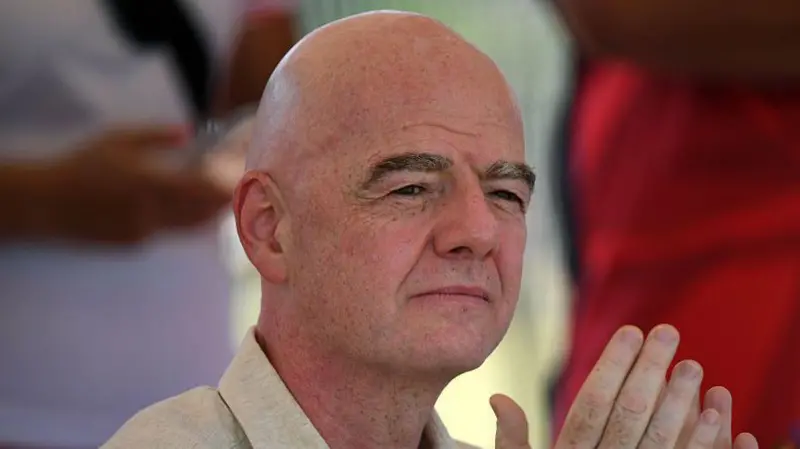
The crisis surrounding FIFA president Gianni Infantino has deepened after the Football Association of Ireland (FAI) formally withdrew its support for his re-election, while the Irish Football Association (IFA) has aligned itself with UEFA’s position amid an increasingly public dispute over football governance, transparency and the commercial future of the World Cup.
The FAI confirmed that it had rescinded a letter of support previously issued for Infantino’s candidacy. The decision follows growing criticism of the FIFA president after a controversial proposal to bring private investment into FIFA’s commercial operations triggered opposition from major football confederations and national associations.
The Irish development is significant because it adds another European football body to the list of associations distancing themselves from Infantino at a time when his previously strong position ahead of next year’s FIFA presidential election has come under pressure.

The FAI said its board had decided to withdraw the support it had supplied earlier this year and had subsequently written to FIFA explaining its reasoning. The organisation pointed specifically to concerns about governance, transparency and what it described as a lack of meaningful consultation.
“Considering the governance challenges that the FAI has had to overcome in recent years,” the association said, it felt a particular responsibility to promote and uphold best practice.
The decision does not amount to a rejection of FIFA itself. The FAI also acknowledged the support that the global governing body provides to Irish football. Instead, its position represents a loss of confidence in Infantino’s leadership and in the way major decisions have recently been handled.
That distinction is important as football authorities attempt to separate their ongoing participation in FIFA competitions from the increasingly contentious question of who should lead world football.
The IFA, which governs football in Northern Ireland, has taken a slightly different position. It has not formally withdrawn its previous support for Infantino but has explicitly backed UEFA’s current stance.
An IFA spokesperson said the association took its responsibilities as a member of both UEFA and FIFA seriously and supported UEFA’s position on the matter. The body said it was aware of wider concerns within the football community and would continue to engage through established governance structures.
The two Irish associations therefore find themselves broadly aligned on the central governance dispute, although their formal positions are different. The FAI has rescinded its endorsement, while the IFA has stopped short of doing so.
Their decisions follow an extraordinary backlash against Infantino’s attempt to reshape the commercial structure surrounding FIFA’s major competitions.
The controversy erupted after plans emerged for FIFA to create a new commercial subsidiary that would potentially allow private investors to acquire a stake in the business responsible for major competitions, including the World Cup. The proposal was subsequently abandoned, but its political consequences have continued to grow.
UEFA, the Asian Football Confederation (AFC) and Concacaf have accused Infantino of damaging trust by pursuing the proposal without sufficient consultation. In an open letter, the three confederations criticised what they saw as unilateral decision-making and demanded stronger safeguards over FIFA’s governance.
The dispute is not simply about a financial transaction. At its centre is a wider argument over who should control the commercial value generated by international football and how decisions affecting the sport should be made.
UEFA and its allies have argued that the World Cup and FIFA’s competitions are collectively owned assets of world football rather than commercial properties that can be reorganised without broad agreement from the game’s stakeholders.
The controversy has also raised questions about Infantino’s political position inside FIFA.
Before the dispute, the FIFA president appeared to be in a strong position to seek another term. The next presidential election is scheduled for March 2027, and Infantino had previously enjoyed considerable support among FIFA’s 211 member associations.
That position now looks considerably more complicated.
Several European associations have moved away from their previous support. Wales was the first of the British and Irish home nations to withdraw backing, followed by the Football Association in England. The FAI has now joined them. Serbia has also withdrawn its support, citing damage to FIFA’s image and reputation and calling for greater transparency, dialogue and consultation.
The opposition is not confined to Europe, however. Reuters reported this week that six Arab football associations, including Qatar and Morocco, have publicly reaffirmed their support for Infantino. The Confederation of African Football also remains supportive, demonstrating that the controversy has not produced a universal revolt against the FIFA president.
That division could become increasingly important as the election approaches.
Infantino needs substantial support among FIFA’s member associations to secure another term, meaning the balance between European opposition and support from associations elsewhere in the world will be closely watched.
The dispute has also exposed deeper concerns about the centralisation of power within FIFA.
FIFPRO Europe president David Terrier has argued that the organisation needs fundamental governance reform rather than simply a debate over whether Infantino should remain in office. He described the current situation as evidence of a serious breakdown in trust and warned that FIFA must address structural concerns if it wants to restore credibility.
For the FAI, those governance questions carry particular significance.
Irish football has undergone its own difficult period of institutional reform, making the association especially conscious of the importance of transparency and accountability. Its decision to withdraw support therefore reflects not only the immediate controversy surrounding FIFA but also its own stated commitment to improving governance.
The FAI’s decision could also strengthen the political pressure on other national associations that have previously backed Infantino.
The question now is whether more football associations will follow.
UEFA has already taken an unusually confrontational position. European football officials have warned that the commercialisation of the sport must not come at the expense of football’s wider interests. European associations have even discussed boycotting FIFA competitions if sufficient assurances are not provided over future commercial plans.
The dispute has therefore evolved from a disagreement over a proposed investment structure into a broader debate about the direction of global football.
For supporters, the argument may appear distant from the pitch. But the decisions made by FIFA have direct consequences for national associations, tournament structures, revenue distribution and the future organisation of international football.
The controversy also comes at a sensitive moment. FIFA has just completed the expanded 2026 World Cup, while preparations for future tournaments are already under way. The governing body’s ability to maintain unity among its confederations and national associations will be crucial as it manages the next phase of international football.
Infantino has defended the underlying principle of increasing investment and distributing more resources to FIFA’s members. FIFA has maintained that its commercial proposals were intended to create additional revenue for football development and that any private investment would be subject to safeguards.
Critics, however, say the problem was not simply the potential financial benefits but the process through which the proposal was developed.
That distinction appears to have been central to the FAI’s decision.
By withdrawing its support, Ireland’s football authority has made clear that financial support for the game does not override concerns about how football’s governing institutions operate.
The IFA’s decision to back UEFA’s position without formally withdrawing its own endorsement adds another layer to the situation. It signals concern while preserving room for further engagement with FIFA.
Whether that position changes in the months ahead will depend partly on how the governing body responds to calls for greater consultation and transparency.

For Infantino, the immediate challenge is therefore larger than replacing one withdrawn endorsement. He must rebuild trust with associations that once supported his leadership and persuade critics that FIFA’s governance can accommodate meaningful consultation.
The FAI’s decision demonstrates that the controversy has already crossed another important threshold. What began as a dispute over FIFA’s commercial strategy is now influencing national associations’ decisions over the future leadership of world football.
With the 2027 presidential election approaching, every withdrawal of support could carry political significance.
The Irish football authorities’ positions underline the central issue confronting FIFA: whether its leadership can restore confidence among the organisations that make up the global game.
For now, the answer remains uncertain. But the growing number of associations questioning Infantino’s leadership suggests that the debate over FIFA’s future is unlikely to disappear soon.
Related News:
 Football Nomad Thomas Reflects on 39 Career Moves
 Debt Relief or Drop in the Ocean? UK Caps Student Loan Interest at 6%
 The ‘Shredder’ Syndrome: Why the 2026 Job Market is Breaking Entry-Level Spirits
 The Kitchen Table Crisis: How the 2026 Iran War Hits Your Wallet
 “A Zero-Value Home”: Seven Years of Sinkhole Stagnation Leaves Family Trapped
 “Three-Wheeled Triumph”: Mayor of Erewash Completes 2,000-Mile European Charity Run
 Rising World Cup Ticket Prices Spark Concern
 Rivalry That Changed Modern Football Forever
 Can Vinicius Win Over Brazil at Last?
 Fifa Faces Backlash Over Ticket Payment Demand
 Fans Bring Flags and Fire to World Cup Scenes
 Arsenal Trio Named on Player of the Year List
 Three Arsenal Stars Make Award Shortlist
 Fans Invited to Share Scotland World Cup Stories
 Mexico’s World Cup Run Brings Joy After ICE Raids
 Bryne Backs Haaland Before England World Cup Clash
 World Cup Fever Set to Boost UK Economy by £500m
 England and Norway Fans Turn Miami Into World Cup Carnival
 Why Wimbledon Is Embracing Indian Flavours and Bollywood Beats
 Barcelona Lead Real Madrid in Rodri Transfer Race
 FIFA Eyes Biennial Club World Cup from 2029, Plans Possible Expansion
 Shein UK Faces Allegations of Shifting Majority of Profits to Singapore to Reduce UK Tax
 British AI Startup Outshines Human Forecasters in Global Prediction Contest
 Liverpool Vs outhampton Set for Carabao Cup Clash at Anfield
 UK New Car Discounts Near £6,000 as Prices Are Slashed
 Royal Mail Blames Poor Weather and Sickness for Delayed Deliveries
 Snow and Rain Warnings as Cold Snap Continues in the UK
 US Will Not Back Out of Tariff Deals with UK and Others, Says Trump Trade Representative
 Sarah Ferguson Loses Another £1.5m Amid Financial Struggles
 Courier Firm Bust After 14 Years as Evri Deliveries Face ‘Temporary Disruption’
 ‘Heating Oil Suppliers Are Holding Us to Ransom’ as Prices and Cancellations Surge
 UK Wage Growth Slows as Jobs Market Holds Firm
 English Football’s Managerial Merry-Go-Round Has Become a Circus
 Tottenham Ramp Up Roberto De Zerbi Pursuit with Blockbuster Five-Year Offer
 ‘Better Off Not Planting’: UK Farmers Face 36% Fertiliser Spike as Gulf Crisis Bites
 ‘The Final Word’: Kathleen Stock’s Polemic Against Assisted Dying Reshapes the UK Debate
 The ‘Career Ceiling’: One in Five High Earners Say £100k Tax Trap is ‘Ruining’ Their Ambition
 The $100 Billion Peace: Trump’s ‘Grand Bargain’ Ends Iran Conflict at a Staggering Cost
 The Hidden Hurdle: Breaking the Silence on Athletic Incontinence
 The Pre-School Lottery: Families Left in ‘Holding Pattern’ as Local Places Vanish
 Relief at the Pump: Irish PM Unveils €505m Package to Stem Fuel Crisis
 The Waiting Ward: ‘Month of Worry’ as Doctor Strikes Trigger Seismic Surgery Delays
 The ‘War Tax’: How the Iran Conflict is Siphoning Your Bank Account
 ‘Words Are Not Enough’: Quinton Byfield Urges Concrete Action as Hockey Faces New Racism Row
 ‘The £100,000 Hammer’: War in Iran Forces UK Businesses to Absorb Historic Fuel Hikes
 ‘Economic Sandbags’: UK Retailers Activate Price Rise Contingency Plans as Supply Chain Strains Mount
 “Jobs Will Go”: Rishi Sunak Warns AI is Already Eroding Entry-Level Opportunities
 Human Capital for AI Infrastructure: Meta Cuts 8,000 Staff to Fuel $135bn Bet
 Beyond the Swoosh: Anta Sports Overtakes Rivals to Become Global Top Three
 The “Cancer Commute”: Patient Warns of Breaking Point Over 40-Mile Treatment Trek
 Breaking the “Glass Turnstile”: Bradford City Leads Charge for Greater Gender Diversity
 Ukraine Urges UK to Seize Russian Oil Tankers
 The “Charles Charm” Offensive: Did the Royals Find Their Mojo in D.C.?
 $13bn World Cup Set to Break All Revenue Records
 Reality Check on Reform: Minister Says Outright Abolition of Leasehold “Impossible”
 End of the “Beefeater” Era: Whitbread to Cut 3,800 Jobs in Radical Strategic Reset
 The £3,000 License: Learners “Held Hostage” by Cancelled Tests and Shifting Goalposts
 Premier League drama defines crucial weekend
 Farage and Reform UK Reshape British Politics
 11 EFL Stars Ready to Shine at World Cup
 Iran Team Arrives in Mexico Amid US Visa Dispute
 Spain Tourism Surges as Travellers Avoid Middle East
 Widow Distressed by Nine-Month Delay to Husband’s Pension Payment
 “My Drinking Days Are Over” — How to Enjoy an Alcohol-Free World Cup
 Sinkhole Outside Chip Shop “Has Cut Trade in Half”, Owner Says
 Spain Sees Tourism Boom as Travellers Shift Away From Middle East
 Scotland Branded “Unprofessional” in World Cup Fallout as England Build Momentum
 England Cruise Past Costa Rica as World Cup Warm-Up Sharpens Tuchel’s Vision
 Morocco Beat Dutch in Wild World Cup Penalty Drama
 Former Employee Alleges Sexual Assault by Business Founder as Investigation Draws Attention
 Trump Helps Clear Balogun for Belgium World Cup Clash
 England’s 10 Men Hold Firm in World Cup Thriller
 Kane vs Haaland: Which Striker Would You Choose?
 Lamine Yamal’s Birthday: Football, Fame, and France
 Argentina End England’s World Cup Dream With Semi-Final Victory
 Zidane Confirmed as France Head Coach After Long Wait
 Avalanche Claims Nepal’s Greatest Mountain Guides
 Tennessee Town Backs Trump as War Fuels Its Economy
 Incheon Airport Overtakes Heathrow as World’s Busiest
 UK Economy Grows 0.4% as Growth Faces Fresh Challenges