Published: 14 August 2026 | The English Chronicle Desk | The English Chronicle Online
Fire crews in the West Midlands are continuing to tackle stubborn hotspots after fast-moving wildfires caused extensive destruction, damaged homes and forced residents from their properties during one of the UK’s hottest days of the year.
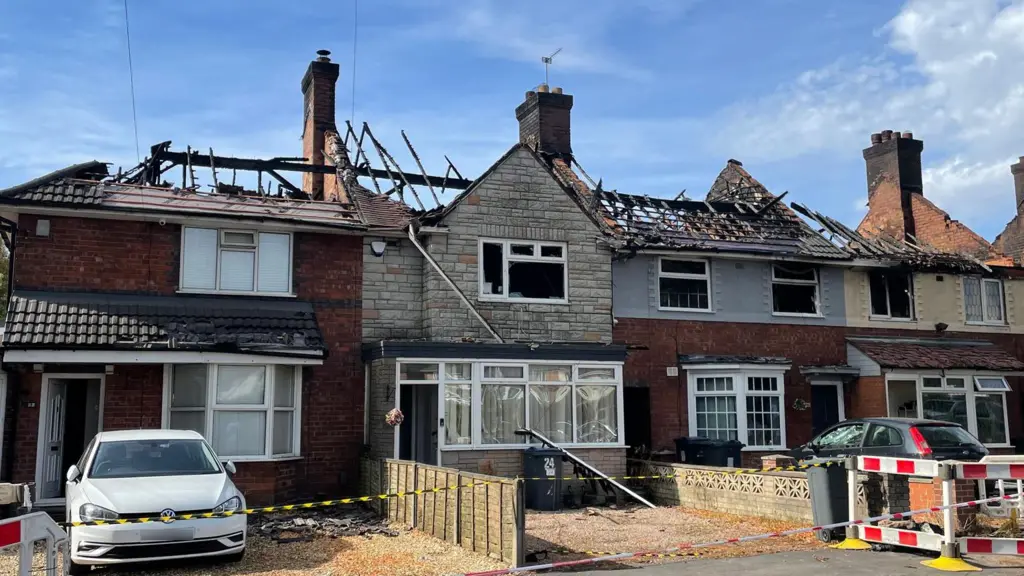
The largest blaze, near a golf course in Stourbridge, has left several homes badly damaged or destroyed and prompted a major emergency response involving more than 100 firefighters. Crews have made progress in containing the fire, but emergency officials have warned that the operation could continue for days as firefighters work through areas where heat and flames remain active.
For residents whose homes survived the fire, the immediate priority is the prospect of returning safely. For those whose properties were destroyed, however, there is little to return to. The scale of the devastation has left communities facing the difficult task of assessing damage, finding temporary accommodation and beginning the long process of recovery.

West Midlands Fire Service said firefighters were working across several parts of the Stourbridge site, using main jets to tackle hotspots and prevent the blaze from reigniting. The service has continued to urge residents and members of the public to stay away from affected areas while emergency operations remain under way.
Chief Fire Officer Simon Tuhill described the incident as one of the most significant that the regional fire service has attended. He said the combination of extremely dry conditions and intense heat had created exceptionally challenging circumstances for crews.
The Stourbridge fire began shortly before 13:30 BST on Thursday, when temperatures across parts of England were approaching record levels. Around 40 acres of grassland and woodland were affected, with flames spreading rapidly towards residential properties. Images released by the fire service showed fire moving across vegetation and threatening houses, while thermal imagery illustrated the intensity of the blaze.
Several properties were damaged, with ITV reporting that six homes were destroyed. Other reports described buildings reduced to charred shells, highlighting how quickly the fire moved from open land into residential areas.
The human cost has also been significant. Three firefighters and a child were taken to hospital following the Stourbridge incident, while several members of the public were treated for smoke inhalation. Across the wider West Midlands, the ambulance service reported that a larger number of people required hospital treatment as multiple fires developed during the extreme heat.
For people living close to the affected areas, the experience has been frightening and disorientating. Residents described seeing smoke intensify rapidly and watching emergency vehicles arrive in large numbers. Some households prepared bags containing essential belongings in case they were ordered to leave.
Stourbridge Town Hall was opened as a respite and support centre for people displaced by the fire. Local authorities have also been working to arrange accommodation and other assistance for residents who cannot safely return to their properties. Care-home residents were among those evacuated as emergency services assessed the risks.
The disruption has extended beyond homes. Roads around Stourbridge have been closed because of the fire, smoke and unsafe conditions, while rail services have also been affected. Emergency authorities have asked people not to travel into the area unless necessary, both to protect the public and to allow firefighters and other emergency workers to operate safely.
The Stourbridge incident was part of a much wider pattern of fires across the region. Separate blazes affected areas of Staffordshire, Worcestershire and Warwickshire as the heatwave reached its peak.
In Pershore, Worcestershire, around 30 properties were evacuated following a fire that damaged homes and affected local infrastructure. Around 200 properties were reported to have experienced power problems, while one person received treatment for smoke inhalation.
In Salford Priors, Warwickshire, the fire and rescue service declared a major incident as crews tackled another large blaze. A separate fire in the Goldenhill area of Stoke-on-Trent also affected properties and gardens.
The fires placed additional pressure on essential services. Severn Trent warned that some customers could experience reduced water pressure, interruptions to supply or discoloured water while emergency services used the water network to fight the fires. The M6 was also temporarily affected by smoke from a separate incident, creating serious traffic disruption.
The conditions under which the fires developed have raised wider concerns about the UK’s vulnerability to extreme heat and wildfire.
Thursday saw a provisional temperature of 38.1C recorded at Kew Gardens in London, making it the hottest day of 2026 so far. Dozens of locations across central and southern England recorded temperatures of at least 36C. The extreme heat came after a prolonged period of dry weather, leaving vegetation exceptionally dry and capable of burning rapidly.
Experts say the combination of prolonged dryness and exceptional temperatures can produce fire behaviour that is unusual for Britain. Dr Thomas Smith, an associate professor of environmental geography at the London School of Economics, said the destruction of homes by wildfires was a deeply concerning indication of increasingly extreme fire behaviour.
The immediate focus, however, remains on controlling the existing fires rather than debating their longer-term causes.
Firefighters are continuing to search for and extinguish hotspots because apparently contained areas can reignite when dry vegetation, woodland or structures retain enough heat. This is one reason residents cannot simply return as soon as visible flames disappear.
Structural safety is another concern. The fire service has established exclusion zones around buildings considered unsafe, meaning some residents may have to wait longer before being allowed back into their homes.
That uncertainty is particularly difficult for families who were forced to leave with little warning. For those whose properties remain standing, returning home will depend not only on whether the fire has been extinguished but also on whether buildings, roads, utilities and surrounding land have been declared safe.
For families who have lost their homes entirely, the situation is considerably more difficult. The immediate need for accommodation will eventually be followed by questions about insurance, rebuilding, replacing possessions and dealing with the emotional impact of seeing a family home destroyed.
Local communities have already responded with offers of shelter, clothing, food and practical assistance. Churches and community facilities have opened their doors, while local authorities and emergency services continue to coordinate support for displaced residents.
The response has also prompted political attention. Prime Minister Andy Burnham said he was in contact with local leaders and emergency services and that additional support would be made available if required. West Midlands Mayor Richard Parker has also said he is working with authorities to determine what further assistance the region needs.
For the firefighters still working through the aftermath, the challenge is far from over. Even as the most dramatic flames disappear, pockets of heat can remain hidden in vegetation and damaged structures.
The West Midlands Fire Service has therefore stressed that people should follow official instructions and avoid affected areas until emergency services confirm that they are safe.
The events in Stourbridge have left a community confronting a landscape that changed dramatically within hours. Roads that were familiar have become exclusion zones, homes have been reduced to ruins and families are waiting to discover when, or whether, they can return.

For those fortunate enough to have homes still standing, the eventual return will be accompanied by inspections and uncertainty. For those who lost everything, the recovery will take far longer than the firefighting operation.
As crews continue tackling hotspots across the West Midlands, the fires have become a stark reminder that extreme heat and prolonged dry conditions can transform a familiar summer landscape into a serious threat to homes and communities.
The priority now is containment, safety and support. But once the smoke clears, the region will face the much longer task of rebuilding lives and homes damaged by one of the most severe wildfire emergencies West Midlands firefighters have experienced.
Related News:
 UK Winter Nowhere Near a Record Breaker Despite Floods and Storms
 UK Records Warmest Day of the Year as Temperatures Exceed 18 °C
 UK Heatwave Set to End as Cooler Weekend Arrives
 Dozens of Flood Warnings in England After Days of Non-Stop Rain
 UP IN FLAMES: Huge Blaze Rips Through Odeon Cinema, Students Evacuated
 Snow and Rain Warnings as Cold Snap Continues in the UK
 Flooding May Worsen Before It Improves as More Rain Forecast for the UK
 Break from Wintry Weather as UK Temperatures to Climb to 14 °C
 ‘Mountain Rescue Gives Incredible Satisfaction’
 Spring‑Like Warmth to Peak on Wednesday with 18 °C Forecast
 Conservation Budgets Hit by Increased Fly‑Tipping Costs
 Community farm appeal to cover thousands in repairs
 Sycamore Gap tree sapling takes root in Manchester
 Travel Chaos on M8 and M74 Amid 70 mph Gales as Trains Also Cancelled
 Met Office Issues 9‑Hour Now Warning for 5 UK Regions on Friday – Full List
 UK Households Urged to Buy Batteries and Charge Phones as Snow Forecast
 Scots in Five Areas Braced for 10 cm Snow and Travel Chaos as Met Office Issues Yellow Warning
 Spring Awakening: Temperatures to Hit 17°C as Britain Bathes in Sunshine
 Storm Dave Disrupts Travel but Conditions Set to Ease
 Tractor Breakdown Tests Lincolnshire Farmers
 Britons Build Emergency Supplies Amid Rising Fears
 Sycamore Gap Artwork Chosen After Public Vote
 Family Says Heatwave Drownings Reopen Grief
 Keeping a 125-Year-Old Pier Alive
 Temperatures Set to Fall This Week, But Forecasters Warn Heat Could Return Soon
 UK Braces for Prolonged Heatwave as Amber Alerts Issued
 ‘Extreme’ Marine Heatwave Forecast for UK Waters
 Parents Fundraise to Cool Overheated School Classrooms
 Hospital Urges Public Never to Leave Dogs in Hot Cars
 UK Schools Struggle as Classrooms Top 40C
 London Tube Heat Reaches Dangerous Levels
 UK Heatwaves May Have Claimed Thousands of Lives
 UK Heatwave Nears Two-Week Milestone as High Temperatures Continue Across the Country
 Rain Forecast to Return This Weekend as Parts of UK Edge Closer to Drought Conditions
 Three-Quarters of England’s Riverbanks Still Off Limits
 Fourth Heatwave Brings 35C Temperatures to UK
 French Firefighters Battle ‘David vs Goliath’ Wildfire
 Amber Heat Health Alerts Issued as UK Heatwave Set to Reach 35C Peak
 Heatwave-Linked Excess Deaths in England Nearly Double Compared with Last Year, New Analysis Suggests
 Storms Set to End UK Heatwave with Flood Warnings
 Calls Grow to Ban Toxic Pet Flea Treatments
 Heatwave Leaves UK Veg Looking Wonkier Than Ever
 South Africa’s Garden Route Gem Faces Looming Water Crisis
 Labour Utterly Humiliated by Straight-Talking Mum Who Cut Through Keir Starmer’s Insanity
 Draft Severe Weather Plan Following Storm Flooding
 What is Groundwater Flooding and Why Dorset is Seeing ‘Historical Highs’
 Renters Furious as Decent Homes Standard Delayed Until 2035
 Motorists Could Face ‘Mandatory’ Driving Ban for Road Offences Under Tougher Laws
 Storm Hernando: Edinburgh Airport Flights Cancelled in US Travel Chaos
 UK’s First Geothermal Plant Powers 10,000 Homes
 Calls Grow to Remove Billboard Following Lyra McKee Graffiti
 Father Dies by Suicide Weeks After Wedding in Clitheroe
 Teen Wins Payout After TRNSMT Crush Horror
 ‘Heating Oil Suppliers Are Holding Us to Ransom’ as Prices and Cancellations Surge
 The High Cost of Survival: How the 2026 Fiscal Outlook is Redefining British Life
 US Lawmaker Demands Testimony Over Sarah Ferguson’s ‘Close Epstein Ties’
 ‘Eye in the Sky’ Blinded: Photos Reveal Destroyed US Radar Jet at Saudi Base
 Woman Deported from China Over Manx Passport Mix-Up
 ‘My Hatred of Dogs is Ruining My Love Life’
 Paws on the Wheel: Driver Facing Fine After Dog Photographed on Lap
 The Miracle of Phoenix: ‘Half Dead’ Rescue Dog Defies the Odds in Worcestershire
 Moldova River Crisis Exposes War’s Hidden Cost
 The Waiting Ward: ‘Month of Worry’ as Doctor Strikes Trigger Seismic Surgery Delays
 ‘The Last of the Greatest’: UK’s Oldest WWII Veteran Passes Away Aged 109
 Crackdown Backfires on UK Climate Protesters
 “Three-Wheeled Triumph”: Mayor of Erewash Completes 2,000-Mile European Charity Run
 Reality Check on Reform: Minister Says Outright Abolition of Leasehold “Impossible”
 The “Dry” Life: Teens Trialing Social Media Bans Call Initial Disconnection “Boring” and “Dry”
 Pope Meets Families in Italy Toxic Waste Zone
 Widow Distressed by Nine-Month Delay to Husband’s Pension Payment
 Sinkhole Outside Chip Shop “Has Cut Trade in Half”, Owner Says
 Man Praised for Saving Neighbours After Lightning Strike Sparks House Fire
 Prince George Set to Begin Studies at Eton This September
 Former Employee Alleges Sexual Assault by Business Founder as Investigation Draws Attention
 Jewish Students Describe Rising Antisemitism on UK Campuses
 Wildfires Intensify in South-West France as Region Braces for 40C Heatwave
 Two Killed as Firefighting Helicopters Collide During Greece Wildfire Mission
 Burnham Considers Inquiry Into Epstein UK Connections
 Tories Pledge Social Housing Ban for Foreign Nationals
 FAI Withdraws Infantino Backing as IFA Backs Uefa