Published: 07 September 2026. The English Chronicle Desk. The English Chronicle Online.
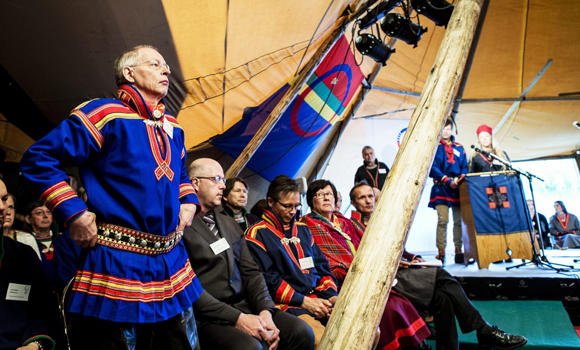
Sweden’s drive to expand mining and secure access to strategically important minerals has opened a growing political dispute over the rights of the country’s Indigenous Sami population, with reindeer herders in the northern town of Kiruna warning that industrial expansion could threaten both their traditional livelihoods and the cultural practices that have sustained their communities for generations.
The dispute has intensified ahead of Sweden’s 13 September elections, after senior politicians publicly questioned the economic importance of reindeer husbandry and called for changes to the protections that Sami communities have traditionally relied upon when competing for land with mining, infrastructure and other development projects.
At the centre of the controversy is the vast iron ore operation near Kiruna, owned by state-controlled mining company LKAB. The company is examining plans to expand mining activity into the Per Geijer deposit, an area containing what is regarded as Europe’s largest known reserve of rare-earth elements. Those minerals are increasingly viewed as strategically important as Sweden and the wider European Union seek to reduce their dependence on imports from China and strengthen domestic supply chains for technologies linked to the energy transition.

For the Sami communities whose traditional territories overlap with these mineral resources, however, the mining ambitions present a far more complicated picture. They fear that the economic and geopolitical importance attached to rare-earth minerals could result in their rights being treated as an obstacle to national development rather than as an essential part of Sweden’s legal and cultural responsibilities.
The political debate became particularly sharp in recent months after Deputy Prime Minister and Energy Minister Ebba Busch, leader of the Christian Democrats, publicly criticised aspects of the existing system governing reindeer husbandry. She argued that reindeer herding covers extensive areas while making a relatively limited contribution to the national economy.
Her party has called for reductions in reindeer numbers, questioned whether reindeer husbandry should continue to receive “national interest” status and argued that the state should take greater responsibility for land currently used by herders.
The proposals have alarmed Sami representatives, who say the language being used by politicians marks a significant change in the national debate. Åsa Larsson Blind, a Sami politician and member of the Sami parliament, described the recent rhetoric as unusually direct and said it appeared to portray one Indigenous community as standing in the way of Sweden’s economic development.
For Sami representatives, the issue goes far beyond the number of reindeer that can be kept on the land. Reindeer husbandry is deeply connected to Sami identity, culture, traditional knowledge and relationships with the landscape. Herding routes depend on access to seasonal grazing areas, migration corridors, calving grounds and forests. Industrial developments that fragment those areas can therefore have consequences that are difficult to measure purely in economic terms.
The Gabna Sami community, whose traditional herding territory surrounds Kiruna, has already experienced the effects of mining and other development. Anna-Karin Niia, a Gabna herder, said the community felt increasingly ignored by political decision-makers in Stockholm. She argued that Sami people should be regarded as constitutional protectors of the land and that decisions affecting their traditional territories could not simply be justified by economic or electoral arguments.
The planned expansion toward the Per Geijer deposit is particularly sensitive because of its potential impact on the landscape used by Gabna herders. Community leader Lars-Marcus Kuhmunen has warned that the project could sever important connections between calving grounds and the mountain and forest areas used by reindeer.
He has described the potential consequences as existential for the local Sami community and warned that approval of the project could encourage further industrialisation across northern Sweden. In his view, the implications would not stop with one community or one mine, but could affect Sami villages across the country.
The dispute also illustrates the difficult transformation taking place in Kiruna itself. The town has already been forced to move because decades of iron-ore mining caused cracks and ground instability beneath parts of the settlement. Buildings and infrastructure have been affected by subsidence, while sections of the town have gradually been relocated to a new and more stable site.
The relocation became an international symbol of the extraordinary scale of the mining operation. One of Kiruna’s most recognisable landmarks, its distinctive red wooden church, was moved several kilometres to its new location after years of planning.
Yet while the relocation has demonstrated Sweden’s willingness to reshape an entire town around mining, Sami residents argue that the same willingness has not always been extended to protecting Indigenous interests.
Nils-Johan Labba, a master craftsman and Sami parliament politician, said the relocation had left the community dealing with disruption in areas ranging from transportation to education. He questioned why political leaders were concentrating so heavily on criticism of minorities instead of addressing the social and practical difficulties created by the transformation of Kiruna.
The political stakes are rising because the issue has moved beyond local disputes and become part of Sweden’s national election debate. The Christian Democrats have promised to address conflicts between reindeer husbandry and industrial development while also promoting broader public access to state-owned land.
The far-right Sweden Democrats have taken an increasingly prominent position on the issue as well. Their election platform has placed reindeer herders in opposition to industrial development, tourism and the interests of the wider Swedish population, while also questioning aspects of Sami land rights.
That approach has generated concern among Sami representatives, who fear that anti-Sami political rhetoric could become increasingly acceptable. Larsson Blind said the current debate had exposed a divide that had existed for years but had previously been expressed more cautiously.
The broader economic argument is nevertheless significant. Sweden possesses major mineral resources, and European policymakers increasingly see domestic extraction as part of a strategy to build more secure supply chains for electric vehicles, renewable energy systems, batteries and other advanced technologies.
Rare-earth elements are particularly important because of their role in many modern technologies and because Europe remains heavily dependent on external suppliers. The push for greater domestic production has therefore given northern Sweden renewed strategic importance.
But environmental and Indigenous concerns have created a fundamental question for policymakers: how far should a government go in exploiting resources considered essential to national and European security when doing so risks damaging traditional land use?
The Christian Democrats have argued that Sweden has a responsibility to protect Sami rights while also maintaining the ability to balance those rights against other public interests. Party representative Peter Kullgren said mineral resources were strategically important for both Sweden and Europe and that the state had to be able to make decisions when different interests came into conflict.
LKAB, meanwhile, has stressed that the proposed expansion remains at an early stage. The company says its application is being reviewed by Sweden’s mining authorities and that consultation with affected parties is continuing. It has also submitted an assessment examining the potential impact of the proposed development on reindeer herding and outlined measures intended to reduce those effects.
The company has said it does not intend to dismiss Sami concerns and wants to find long-term solutions that can protect reindeer husbandry while allowing consideration of the mineral deposit to continue.

For the Sami communities around Kiruna, however, the issue is about more than consultation procedures. Their concern is that once strategic mineral resources become tied to national security, energy policy and Europe’s economic interests, the pressure to approve mining projects could become increasingly difficult to resist.
The outcome of Sweden’s election could therefore influence more than the immediate future of the Per Geijer deposit. It could help define how the country balances Indigenous rights, environmental protection and resource security at a time when demand for critical minerals is rising rapidly.
The debate also reflects a wider challenge facing Arctic and northern regions, where governments are seeking new economic opportunities while Indigenous communities continue to defend traditional relationships with land and nature.
For the Sami, the central message remains that economic development cannot be separated from the people who have lived with and depended upon these landscapes for centuries. As Sweden considers how aggressively to pursue its mineral wealth, the conflict around Kiruna is becoming a test of whether strategic resource ambitions can coexist with meaningful Indigenous rights and sustainable land use.
Related News:
 Trump to Deploy “God Squad” Over Gulf Wildlife Protections
 Capitalism ‘Suicidal’, Warns Petro at Climate Summit
 UK Pushes for New EU Goods Trade Deal
 Reeves Fights to Keep Treasury Role Amid Labour Turmoil
 Trump Hardens Canada Trade Stance as Talks Stall
 Canada Passes Carney’s First Budget in Tight Parliamentary Vote
 India’s Labour Law Overhaul Sparks Fierce Debate
 Carney’s Alberta Pipeline Deal Sparks Immediate Pushback
 Mark Carney Walks Diplomatic Tightrope on China Visit
 The Truth Behind Rising Energy Costs and Fossil Fuel Myths
 UK Wage Growth Slows as Jobs Market Holds Firm
 UK Doubles Steel Tariffs to 50% to Protect Domestic Plants
 Trump Slams UK Ties and Threatens To Rewrite Trade Deal
 Trump Faces Crisis as Iran Reopens Hormuz Tensions
 Iran Reimposes Strait of Hormuz Restrictions Amid Tension
 Athens Mayor Moves to Tackle Overtourism Crisis
 Southeast Asia Turns to Russia Amid Energy Crisis
 US Calls Australia Media Law “Foreign Extortion”
 Oil Prices Surge Above $120 Amid Iran Blockade Fears
 BBC News Faces Deep Cuts in 2,000 Job Plan
 Trump likens US Navy actions to ‘pirates’
 Trump approval plunges amid Iran war fears
 Ohio’s Battle for Trust: Democrats Vying to Flip the Buckeye State
 Trump Threatens UN Budget Cuts as US Pushes ‘Trade Over Aid’ Agenda
 Middle East Crisis Escalates as Oil Routes Shake Markets
 Norway Doubles Down on Oil and Gas for Europe Energy Security
 US Awaits Iran Reply on New Ceasefire Proposal
 Beijing Becomes Centerstage for Global Diplomatic Ballet
 Kevin Warsh sworn in as Fed chair amid economic backlash
 Hormuz Talks Near Critical Stage
 Albanese Defends Tax Reforms Amid Emotional Speech
 Discontent grows around Putin amid war strain
 Trump Claims Iran Peace Deal Near Completion
 Europe Weighs Hormuz Navigation Fee Plan
 Ukraine Creates Long-Range Strike Command
 Labour MPs Urge Burnham to Revive UK Aid Target
 Canada to Match Trump’s 50% Tariffs Dollar for Dollar
 Firms on both sides fear damage from US-Canada trade war
 Trump orders US to rename Lake Ontario ‘Lake America’
 Trump announces major US oil deal with Venezuela
 Europe Faces Winter Gas Supply Anxiety
 Burnham Faces Mounting Budget Challenges
 Dutch Bank Moves 86 Tonnes of Gold to London
 Green Leader Targets Starmer’s Former Seat
 Trump Calls Iran War ‘Small Potatoes’ Despite US Deaths
 Ukraine Moves to Seize Water Company
 Trump’s UK Ambassador Urges North Sea Drilling to Strengthen US Ties
BBC to Apologise Over Edited Trump Speech Amid Backlash
Trump’s UK Ambassador Urges North Sea Drilling to Strengthen US Ties
BBC to Apologise Over Edited Trump Speech Amid Backlash
 Britain deploys RAF specialists to assist Belgium with drone threats
 Millionaires group urge Reeves to introduce wealth tax to ‘lift kids out of poverty’
 Greene Pushes Epstein Files Amid Trump Fallout
 December Run-Off in Chile as Election Produces No Winner
 Shadow Fleet at Sea: Europe’s Battle Against Illicit Oil Shipping
 Georgians Defy Government Crackdown After Year of Protests
 Starmer Says Labour’s Economic Plan Needs Years to Deliver
 ‘Extinct’ Antelope Returns to Sahara, Bringing Hope
 Trump Fed bid heads to Supreme Court
 Pentagon Signals Reduced Role in Deterring North Korea
 UK and US Drop in Global Corruption Index Rankings
 Canberra Poster Seizure Sparks Free Speech Row
 Evo Morales Returns After Mysterious Absence
 Greenpeace $345m Ruling Sparks Appeal Battle
 Jacinda Ardern Moves To Australia Following Her US Fellowships
 Jacinda Ardern Move Sparks Kiwi Reflection
 Nick Greiner Warns Over Election Review Fallout
 Injured Mojtaba Khamenei Elevated as Iran Leader
 Gordon Brown urges court for crimes against children
 Oil Prices Jump After Trump Claims Iran Oil Hub Destroyed
 Pakistan Targets Militant Hideouts in Afghanistan
 Air Canada CEO Faces Outcry Over Recent Language Misstep
 Extreme Weather: Europe Shivers as Cyclone Narelle Hits
 Relationship with Trump may be beyond repair, Starmer warned
 Unions Raise Concerns Over Doctors’ Pay Dispute
 Trump Brokers Landmark Lebanon Ceasefire Amid Regional Hopes
 UK Stands Firm on Falklands Amid US Rift
 Silent Tracks: Rail Line Without Passengers
 Trump Announces 3-Day Russia–Ukraine Ceasefire Deal
 Trump Faces Backlash Over $2bn Earnings Since Return
 Unions Warn Labour Over Zero-Hours Contract Reforms
 Bayeux Tapestry Revives Franco-British Ties