Published: 15 September 2026. The English Chronicle Desk. The English Chronicle Online.
Fugitive property developer Jean Nassif launched an extraordinary series of accusations during a tense appearance before New South Wales’ corruption watchdog, declaring that he was not corrupt, defending his family and threatening to pursue legal action against the Australian government from overseas.
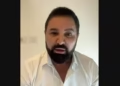
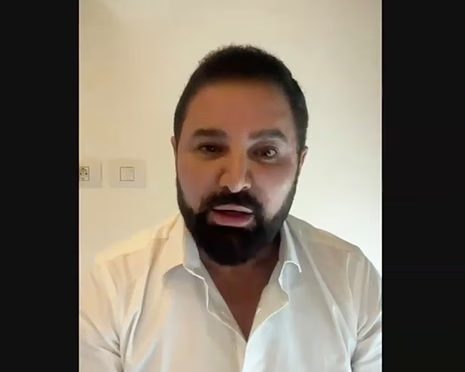
Nassif, 58, gave evidence to the NSW Independent Commission Against Corruption (ICAC) from his bedroom in Beirut, Lebanon, where he has remained after leaving Australia in late 2022. During the hearing, he repeatedly challenged questions from counsel assisting the inquiry and accused politicians, officials and others of unfairly targeting him and his family.
The appearance formed part of an ICAC investigation into allegations involving individuals associated with the NSW Liberal Party. The inquiry is examining whether Liberal figures anticipated receiving $2m in prohibited political donations from Nassif in return for political outcomes, including efforts that allegedly could have affected the careers of former NSW Liberal minister David Elliott and former building commissioner David Chandler.
Nassif strongly rejected the characterisation of himself as corrupt and insisted that he intended to return to Australia once he had cleared his name.

His evidence became increasingly confrontational as Peggy Dwyer SC, counsel assisting ICAC, questioned him about his decision to leave Australia. Dwyer asked whether Nassif had departed the country in December 2022 to avoid giving evidence at a parliamentary inquiry.
Nassif rejected that suggestion. He said he had initially travelled overseas to accept an international award and later decided to remain abroad after receiving what he described as threatening messages.
He said he intended to take his grievances to international legal authorities, including the International Court of Justice in The Hague, although the precise legal basis for such a case was not established during the hearing.
Nassif said he would assemble a legal team to challenge politicians and clear his name before eventually returning to Australia. He also expressed fears for his safety if he came back.
His comments reflected the intense frustration that has surrounded the inquiry and his family’s legal difficulties. Nassif said he had “lost his mind” after what he described as attacks on his family by politicians and the media.
He also promised to pursue those he believes were responsible for the treatment of his family, saying he wanted them held accountable.
A central part of his testimony concerned his daughter, Ashlyn Nassif, who is 32. She was sentenced earlier in September to a six-month community corrections order after pleading guilty to providing false or misleading information in an attempt to obtain a $150m construction loan from Westpac.
Her legal team had argued that she had been placed under pressure by her father when the documents were falsified.
Nassif disputed the circumstances surrounding the guilty plea, claiming his daughter had been forced to plead guilty to bring the case to an end. He maintained that authorities had not obtained evidence proving wrongdoing on her part.
The allegations made by Nassif during the ICAC hearing were his own claims and were not established as facts by the inquiry. The proceedings are examining allegations and evidence rather than confirming every accusation made by witnesses.
As the hearing continued, Nassif broadened his criticism to include the NSW political system and the construction industry. He accused Elliott of delaying approvals in an attempt to put pressure on him and alleged that the former building commissioner had lied about defects involving his buildings.
Those claims were also disputed allegations raised by Nassif during his evidence.
The developer’s increasingly emotional testimony repeatedly interrupted the questioning. Dwyer attempted to continue with her questions and asked him to remain calm, while Nassif objected to what he believed was an unfair portrayal of his evidence.
At one point, he held handwritten notes up to the camera and accused the counsel assisting the inquiry of putting words into his mouth.
Nassif insisted that the hearing was public and said he believed it was being used to portray him as corrupt. He repeatedly rejected that description.
The exchange prompted assistant commissioner Fabian Gleeson SC to intervene. Gleeson told Nassif to take a breath and reminded him that the purpose of the inquiry was to establish the truth surrounding the allegations before it.
Gleeson also told Nassif that the hearing was not an appropriate forum for attacking other people, although he acknowledged that the developer could express his views passionately.
Nassif remained defiant. He said nobody could make him stop speaking and threatened to withdraw from giving evidence if the commission would not accept what he described as the underlying problems.
The confrontation illustrated the difficulty of taking evidence from a witness who is participating remotely from outside Australia and who has repeatedly challenged the allegations surrounding him.
Nassif had initially appeared before ICAC on Monday. His participation followed an earlier scheduled appearance that he had been excused from after producing a medical certificate.
His decision to remain outside Australia has become an important issue in the inquiry. Dwyer’s questions about his departure were aimed at understanding whether his absence was connected to efforts to avoid scrutiny from Australian authorities.
Nassif, however, presented a different account, saying his reasons for staying overseas were connected to threats and his desire to protect himself while pursuing ways to clear his reputation.
The ICAC investigation comes against a broader backdrop of scrutiny of political influence, development approvals and relationships between business figures and politicians in NSW.
The allegations under examination are particularly significant because prohibited political donations are subject to strict rules in Australia. Questions about whether developers or other commercial interests sought political influence through financial contributions have repeatedly attracted regulatory and public attention.
The inquiry’s examination of Nassif’s alleged connections with political figures therefore extends beyond his personal disputes. It is also concerned with whether political decisions or appointments may have been influenced by financial interests.
Among the matters being examined are allegations concerning potential political outcomes involving Elliott and Chandler. Nassif’s own testimony, including his criticisms of government officials, provides one perspective on those relationships, but the inquiry must assess the wider body of evidence before reaching conclusions.
His appearance also comes as authorities continue to deal with the consequences of allegations surrounding the construction sector. Nassif’s claims about building approvals and alleged defects have added another dimension to proceedings already involving questions about political influence and financial dealings.
Throughout the hearing, however, Nassif remained focused on what he described as an effort to damage his reputation. His repeated insistence that he was not corrupt was central to his testimony.
The emotional nature of his evidence contrasted with the formal purpose of the ICAC proceedings. The commission’s role is to investigate allegations of corrupt conduct and examine evidence rather than determine cases through political argument or personal confrontation.
For Nassif, the hearing represented an opportunity to present his version of events while remaining outside Australia. For the commission, his evidence forms part of a wider investigation in which claims made by witnesses must be tested against documents, testimony and other available evidence.

The inquiry is likely to remain closely watched as it examines the relationships between property development, political influence and alleged prohibited donations in NSW.
Nassif’s testimony has added a highly personal dimension to those proceedings. His accusations against politicians and officials, his defence of his daughter and his stated intention to return to Australia all underline the depth of the dispute surrounding the case.
Whether those claims withstand scrutiny will depend on the evidence considered by ICAC. For now, the inquiry continues to examine the allegations and the conduct of the individuals connected to them.
The extraordinary hearing from Beirut has nevertheless highlighted the challenges facing investigators when a central figure remains overseas and strongly disputes the allegations under examination. Nassif’s combative appearance ensured that his own account became a major part of the proceedings, even as the commission continued to focus on its central task: determining whether the alleged political and financial relationships amounted to corrupt conduct.
Related News:
 Cartel crackdown raises fears of fresh violence
 Israel Accused of Undermining Palestinian Life
 Father’s Tip Leads to Arrest in Charlie Kirk Murder Case
 Charlie Kirk Killing Used to Mobilise UK’s Largest Far-Right Rally in Decades
 Jailed Georgian Opposition Leaders Warn UK of Iranian Links to Ruling Party
 Emails Show Epstein Funded Mandelson’s Husband After Jail
 California fireworks blast: murder charges filed in case
 Ben Roberts-Smith Denies War Crime Allegations in First Statement
 US Charges Sinaloa Governor in Major Cartel Case
 US states redraw maps after voting rights ruling
 US ‘Narco Boat’ Strikes Draw Global Outcry
 Search Intensifies for Missing Hiker on WA Bibbulmun Track
 China mine blast death toll rises to 90
 Gunman Killed After White House Security Shootout
 Irish Gangland Figure Fails in Dublin Election Bid
 Murder Probe Continues After Arrest Release
 New Footage Revives Peter Falconio Mystery
 Ukraine Creates Long-Range Strike Command
 Israeli Strike in Southern Lebanon Kills Seven
 US immigration arrests hit record high in July
 Ukraine Villagers Demand Answers After Deadly Arms Depot Strike
 Argentina Orders Return of Nazi-Looted Painting
 Trump Calls Iran War ‘Small Potatoes’ Despite US Deaths
 UN expert urges UK to rethink Israel policy
 UK plans tougher Israel stance with settlement trade ban
 Councils spend £125m on illegal children’s care
 Miliband Rejects Chief Rabbi’s West Bank Warning
 Patriot Platform Raises Concern Across Britain
 Trump Administration Dismisses 17 Immigration Judges, Sparking Debate Over Judicial Independence
 Modi’s London Visit Seals Historic UK-India Trade Pact Amid Global Tensions
 Tasers Introduced in UK Prisons to Combat Rising Violence and Protect Staff
 Northern Ireland Family of Three Shot Dead in Maguiresbridge Home Incident
 Channel Crossings Surge: Over 1,000 People Arrive in the UK in Small Boats in a Single Day
 Kosovo agrees to host Britain’s refused asylum seekers
 Johnson Approved China’s London ‘Super-Embassy’ in 2018
 French Taxi Driver Cleared in David Lammy Theft Case After Fare Dispute
 Just Stop Oil Protesters Convicted Amid Climate Defence Row
 Trump Urges Herzog to Grant Netanyahu Full Pardon
 US Justice Department Files Lawsuit Against California Over Partisan Voting Maps
 Oklahoma Governor Grants Last-Minute Clemency to Death Row Inmate
 Indian authorities demolish Kashmir home linked to Red Fort blast
 Greene Pushes Epstein Files Amid Trump Fallout
 Trump Deploys DHS to Charlotte in Major Arrest Operation
 Canada Passes Carney’s First Budget in Tight Parliamentary Vote
 Venezuela Threatens Nobel Winner Machado with Fugitive Status
 India’s Labour Law Overhaul Sparks Fierce Debate
 Guterres Warns Global Cooperation Under Threat at UN’s 80th Year
 South Korea Jails Ex-President in Martial Law Ruling
 ‘Repatriate the Gold’: Germany Debates Bringing Reserves Home
 Thousands Protest ICE Operations in Nationwide US Day of Action
 Trump to Deploy “God Squad” Over Gulf Wildlife Protections
 Report Says Pezzullo Acted ‘Recklessly’ in Dealings
 Hungary election: Orbán faces biggest test amid scandal
 Suspected Plot Targets Pipeline Before Hungary Vote
 Trump Slams UK Ties and Threatens To Rewrite Trade Deal
 Learner Driver Charged After Expo Tragedy
 Ukraine Urges UK to Seize Russian Oil Tankers
 Capitalism ‘Suicidal’, Warns Petro at Climate Summit
 Oil Prices Surge Above $120 Amid Iran Blockade Fears
 Judge halts deportation of Yemeni refugees in US
 Trump approval plunges amid Iran war fears
 Barrister Criticises Trial After Suicide Case Verdict
 US Awaits Iran Reply on New Ceasefire Proposal
 Immigration Judges Fear Pressure in Trump Era
 Le Pen’s Popularity Holds Despite Conviction
 Trump Refuses to Sign Housing Bill, But Law Takes Effect
 Westminster Council Threatens Charing Cross Soup Kitchen
 BBC Warned About Missing Clothes of Murder Victim
 Unions Warn Labour Over Zero-Hours Contract Reforms
 Ghent Professors Questioned Cofnas Appointment
 Liberals Sweep Three Seats in Boost for Carney
 Trump Hardens Canada Trade Stance as Talks Stall
 Reform Faces Fresh Financial Controversy
 Swedish Mining Push Puts Sami Land Rights Under Pressure
 Abusive ex used Tesla to control and harass former partner
 Europe’s democracies face a growing far-right threat
 New Mexico Takes Facebook to Trial Over Data Scandal
 Saudi Arabia Shuts Oil Pipeline After Drone Attack
 Royal Crown Branded Enslaved Africans in Britain’s Slave Trade
 Farage Threatens Union Funding Ban Over Reform Donations