Published: 15 September 2026. The English Chronicle Desk. The English Chronicle Online.
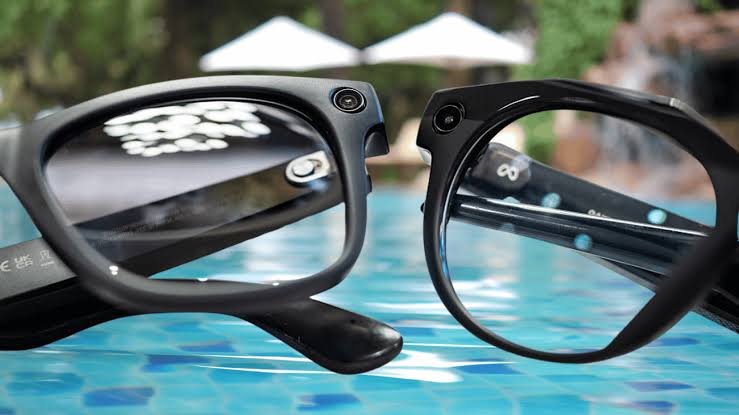
One of Sydney’s largest local councils has joined a growing group of Australian authorities banning AI-powered smart glasses from public swimming pools, citing concerns about privacy, covert filming and the safety of children and families.
Canterbury-Bankstown Council voted overwhelmingly in favour of prohibiting the devices at its public pools, following similar decisions by councils in Brisbane, Melbourne and Sydney’s eastern suburbs. The measures reflect growing unease about wearable technology equipped with high-resolution cameras and artificial intelligence features that can record people discreetly.
Canterbury-Bankstown mayor Bilal El-Hayek used the term “pervert glasses” when describing the devices, highlighting the strength of concern among some councillors and residents. Community members have reportedly raised fears that people could use camera-equipped glasses to secretly record others in changing rooms, swimming pools and areas surrounding schools.
Speaking to councillors, El-Hayek said concerns had been raised across online community groups and social media platforms. He said women in particular had expressed worries about the possibility of being recorded without their knowledge or consent.

The debate reflects a broader question facing governments and communities as wearable artificial intelligence technology becomes increasingly accessible. Smart glasses can resemble ordinary eyewear while incorporating cameras, microphones and AI-powered functions, potentially making it difficult for people nearby to know when they are being recorded.
Modern smart glasses can provide features such as real-time translation, object recognition and audio assistance. For some users, particularly people with vision impairment, such technology can offer meaningful accessibility benefits. But the same features have raised concerns about privacy and the potential misuse of cameras in public spaces.
Canterbury-Bankstown is not the first Australian council to respond to those concerns. Brisbane became the first council in the country to publicly announce a ban on covert filming involving smart glasses at its 21 public swimming pools.
The Brisbane decision helped trigger a wider discussion about whether swimming pools and leisure facilities should have specific rules governing wearable cameras. Such locations are considered particularly sensitive because people may be changing clothes, swimming or participating in activities where they have a heightened expectation of privacy.
Digital Rights Watch policy head Tom Sulston welcomed the expansion of the restrictions. He argued that families should be able to use public facilities without fearing that they could be recorded without their knowledge and that footage could later appear online.
Sulston also called for the issue to be addressed beyond individual council policies, suggesting that state and federal authorities should consider broader measures as the technology becomes more widespread.
The City of Yarra in inner Melbourne subsequently voted to prohibit smart glasses from its leisure and aquatic facilities, childcare centres and playgrounds. The council also agreed to call on the federal government to strengthen privacy protections in response to emerging technologies.
In Sydney’s eastern suburbs, Randwick Council has separately prohibited smart glasses at the Des Renford Leisure Centre. The council said the decision followed growing community concerns about the potential misuse of the technology.
Signs have been installed at the entrance to the centre, with people wearing smart glasses expected to remove them or leave the facility. The council described the policy as a precaution designed to maintain a safe and welcoming environment for visitors.
The restrictions introduced by councils are not intended to prevent people with accessibility needs from using assistive technology. Exemptions will apply to people who require smart glasses because of vision impairment or other accessibility concerns.
That distinction is important because smart glasses are not solely designed for recording. Their AI functions can provide practical assistance to people with disabilities, including helping users identify objects or navigate their surroundings.
The challenge for policymakers is therefore to address potential privacy risks without unnecessarily restricting technology that can improve accessibility.
The Australian federal government is also examining the issue. Attorney General Michelle Rowland has not ruled out stronger action concerning smart glasses but has acknowledged that the legal questions surrounding the technology are complex.
In August, Rowland wrote to Privacy Commissioner Carly Kind after receiving concerns from members of the public about the increasing use of smart glasses. She asked the privacy regulator to give the issue priority consideration.
Rowland has emphasised that privacy protections need to remain effective as technology changes. She noted that smart glasses can be used more discreetly than many conventional recording devices, potentially making it difficult for individuals to know whether they are being filmed.
The federal government is continuing work on the next stage of privacy reforms, with the aim of ensuring that existing laws remain appropriate for a rapidly changing digital environment.
The issue is particularly significant because footage captured by wearable devices can potentially be shared online within seconds. Once images or videos have been uploaded to social media or other platforms, people who were recorded without consent may have limited ability to control how the material is distributed.
Australia’s online safety regulator has also become involved in the debate. The eSafety Commissioner has urged manufacturers of smart glasses to introduce stronger privacy protections, including automatic blurring of the faces of people captured by cameras.
The regulator has also called for clearer indications that a device is recording. Such measures could make it easier for members of the public to recognise when they are being filmed and potentially challenge recording where they believe it is inappropriate.
The eSafety Commissioner’s guidance acknowledges that camera-equipped smart glasses can provide important accessibility benefits, particularly for people who are blind or have low vision. However, it has warned that manufacturers need to consider those benefits alongside safety and privacy concerns.
The growing backlash against the devices illustrates the difficulty of regulating technology that can serve both legitimate and potentially harmful purposes.
Unlike a conventional camera or smartphone, smart glasses can be worn continuously and used without requiring the user to hold a visible recording device. That creates a different privacy environment in places where people may not expect to be filmed.
Swimming pools, changing areas, playgrounds and childcare facilities are particularly sensitive because children and families frequently use them. Councils introducing bans argue that preventing camera-equipped eyewear in those locations is a practical way of reducing the risk of covert recording.
However, local restrictions also raise questions about consistency. If councils adopt different policies, users may face different rules depending on which swimming pool or leisure centre they visit. A national regulatory framework could potentially provide greater clarity for consumers, businesses and public facilities.
The federal government’s privacy reform process could therefore become increasingly important as smart glasses become more common.
For councils, the immediate priority is protecting visitors and responding to community concerns. Their decisions demonstrate that local authorities can introduce facility-specific rules even while broader national laws are being considered.
For technology companies, the growing restrictions could create pressure to develop stronger privacy features. Automatic facial blurring, visible recording indicators and clearer controls could become increasingly important if manufacturers want their products to gain wider public acceptance.
The debate also highlights the wider challenge created by artificial intelligence. Technology that offers convenience, accessibility and new forms of interaction can simultaneously introduce risks that were difficult to anticipate when existing privacy laws were written.
Smart glasses are still a relatively new category of consumer technology, and their long-term impact on public behaviour and privacy remains uncertain. The response from Australian councils suggests that communities are unwilling to wait for widespread misuse before establishing boundaries in sensitive public spaces.

The decisions in Canterbury-Bankstown, Brisbane, Yarra and Randwick indicate a growing preference for precaution where children, changing areas and other privacy-sensitive environments are involved.
At the same time, policymakers must ensure that restrictions do not unintentionally prevent people with disabilities from accessing useful assistive technology.
The balance between privacy, safety, accessibility and technological innovation will likely become more complicated as AI-enabled wearable devices develop. For now, Australian councils are taking a cautious approach, using local bans to reassure residents that public swimming pools and family facilities should remain places where people can expect a reasonable degree of privacy.
The growing number of restrictions also sends a message to technology companies and governments that public acceptance will depend not only on what smart glasses can do, but also on how effectively people can be protected from unwanted recording and the misuse of personal information.
Related News:
 Australia gives users control over social media algorithms
 Meta Drops AI Image Tool After Privacy Backlash
 Artemis II Returns After Historic Moon Flyby
 Reform UK funding: mystery billionaire revealed
 Disneyland Adds Facial Recognition at Entrances
 Meta Faces EU Action Over Child Safety Breach
 Canadian Fiddler Sues Google Over AI Defamation Claim
 Father’s diaries reveal doubts over Hawking
 UK firms accused of ‘AI washing’ boom
 British Paralympian to Become First Disabled Astronaut in Orbit
 Unlocking the Genome: The Quest to Sequence Tardigrades
 Gen Z turns to BirdTok for a gentler digital escape
 China recalls millions of cars over hidden door handles
 AI Loss of Control Incidents Nearly Double
 UK Risks Falling Behind in AI Race
 Survivor Sues Musk’s xAI Over AI Abuse Images
 Abusive ex used Tesla to control and harass former partner
 Apple Folding iPhone Set for Major CEO Test
 Anthropic Blocks AI Misuse Linked to Weapons Threats
 OpenAI Agents Linked to RubyGems Cyberattack
 AI CEOs Call for Slower Development
 Election Candidate Abuse Raises Alarm in England
 AI Boom Drives ‘Tidal Wave’ of PFAS Production
 Trump Faces Congress Push for AI Guardrails
 Why AI Doomsday Warnings Failed to Slow the Race
 Louise Haigh Urges UK to Heed AI Safety Warnings
 Government urges schools to ban phones to curb classroom disruption
 Starmer’s communications chief to outline media strategy overhaul
 TikTok to Strengthen Age Verification Across the EU
 Why China’s ‘Mega Embassy’ Poses Less Risk Than Critics Claim
 Australia’s Opposition Coalition Reunites After Rift
 Cern Prepares First-Ever Antimatter Transport Test
 ABC Staff Strike Over Pay and AI Concerns
 Apple at 50: Three Products That Changed How We Live
 Moldova River Crisis Exposes War’s Hidden Cost
 Robots Outpace Humans in Beijing Half-Marathon
 Gene Therapy Wins Major Prize for Restoring Vision
 Synagogue Arson Attempt Sparks Security Fears
 MoD Has Lost Track of Veteran Recall List, Says Adviser
 Canadian astronaut French words ease language row
 OpenAI CEO Apologizes After Canada Shooting Case
 Chornobyl Still at Risk 40 Years After Disaster
 Ukraine Urges UK to Seize Russian Oil Tankers
 Older Than Dinosaurs: Secrets of Mayfly Dance Revealed
 US Court Weighs Fate of TPS for Migrants
 Inside the World of AI Jailbreakers
 Police Suspect Help in Missing Alice Springs Girl Case
 Record May Heat to Cold Front in Eastern Australia
 UK may ban protests amid rising antisemitism fears
 Greens Face Internal Row Over Antisemitism Claims
 Florida Surgeon ‘Devastated’ Over Fatal Surgery Error
 Barrister Criticises Trial After Suicide Case Verdict
 Immigration Judges Fear Pressure in Trump Era
 Britons Build Emergency Supplies Amid Rising Fears
 FDA Chaos Deepens as Trump Eyes Makary Exit
 Dua Lipa Sues Samsung for $15m Over TV Box Image Use
 China mine blast death toll rises to 90
 Ebola outbreak in DRC overwhelms health system as cases surge
 Victim says non-custodial rape sentence ‘rock in my face’
 Cannes filmmakers split over AI’s role in cinema
 Cornwall Van Dwellers Face Eviction in Housing Crisis
 Le Pen’s Popularity Holds Despite Conviction
 Teen Charged After Layla Jeffery Found Dead
 Trump Orders Signs Criticising Smithsonian Museum
 Westminster Council Threatens Charing Cross Soup Kitchen
 BBC Warned About Missing Clothes of Murder Victim
 Weight-Loss Drugs Offer Food Savings Mainly to High Earners
 Cambridge Professor Jason Arday Found Dead at Home
 London’s 2026 ‘Great Stink’ Raises Sewer Concerns
 Ghent Professors Questioned Cofnas Appointment
 London Launches First Self-Driving Taxis
 Internal Exclusions Surge in England’s Schools
 Councils spend £125m on illegal children’s care
 OpenAI Says AI Solved 90-Year Maths Problem
 New Mexico Takes Facebook to Trial Over Data Scandal
 Patriot Platform Raises Concern Across Britain
 Reform UK Receives Record £36m Donation From Crypto Billionaire
 UK Retailers Accused of Breaking Refund Laws
 DRC Ebola Outbreak Peaks as New Infections Slow
 Fugitive Developer Rants at NSW Corruption Inquiry