Published: 25 May 2026. The English Chronicle Desk. The English Chronicle Online.
The United States and Iran are rapidly moving toward a significant diplomatic breakthrough. President Donald Trump faces intense pressure from conservative hawks within his own political party. The current administration appears on the very brink of finalizing a historic peace agreement. This crucial diplomatic development aims to bring a definitive end to the ongoing war.
Republican critics have aggressively targeted the White House over these fast-paced peace negotiations. Internal party opposition has grown increasingly vocal since the initial reports surfaced online. Republican lawmakers are openly questioning why the American president initiated this conflict originally. Prominent conservative voices have already labeled the tentative agreement an absolute disaster.
The American president vigorously defended his diplomatic strategy on social media platforms yesterday. Donald Trump asserted that his negotiated pact differs significantly from previous administrations. He claimed his current proposal is the exact opposite of the Obama agreement. The president famously withdrew the United States from that previous international deal. That controversial foreign policy decision occurred during his first term back in 2018.
The White House insists it is not rushing the delicate negotiation process. Diplomatic officials emphasize that both nations must take their time to ensure success. Every single clause within the complex legal framework requires meticulous attention. The administration believes there is absolutely no room for error at this stage.
The ongoing American naval blockade remains a central point of leverage for Washington. This strict maritime operation will continue in full force for the foreseeable future. The restrictions will only lift once a final agreement is fully signed. The president noted that outside critics have not actually seen the specific details. He claimed that opponents currently know nothing about the secret terms under discussion.
The president dismissed the mounting wave of domestic criticism from conservative political circles. Donald Trump confidently told social media followers that he simply does not make bad deals. The proposed framework reportedly offers Iran substantial relief from heavy international economic sanctions. The deal could also unlock up to twenty billion dollars in frozen assets.
In return, Tehran must immediately reopen the vital and strategic Strait of Hormuz. The Iranian government must also agree to formal negotiations regarding its nuclear capabilities. These critical diplomatic talks are scheduled to last for a maximum of sixty days. The historic international summit is set to begin next week in Pakistan.
The specific details regarding the final points of dispute remain strictly confidential. A significant portion of the frozen financial assets is currently held in Qatar. The United States demands that these Qatari funds remain locked for now. The release of money depends entirely on verified progress regarding enriched uranium.
The comprehensive deal requires an immediate cessation of hostilities across the entire region. This mandatory ceasefire applies to both major superpowers and their local regional allies. The sweeping terms also demand that Israel conclude its current offensive in Lebanon. White House officials suggest that final confirmation could still take several days.
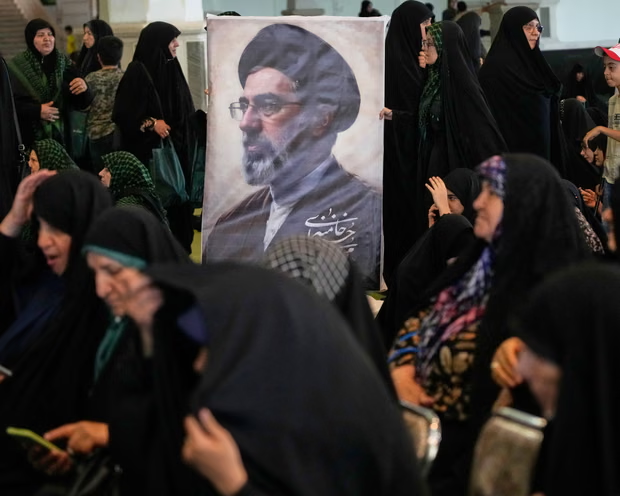
The supreme leadership in Tehran must formally approve the entire proposed peace pact. The Iranian National Security Council must also ratify the document before execution. Local officials confirmed that a few remaining clauses still require additional clarification. This important diplomatic feedback was recently communicated directly to the helpful Pakistani mediators.
The political atmosphere within the Iranian capital appears exceptionally triumphant and celebratory. Government officials are preparing to claim a historic victory over their traditional adversaries. Iranian President Masoud Pezeshkian praised the immense solidarity of his domestic population. He stated that national unity has successfully guaranteed the long-term stability of Iran.
The American president held a vital telephone conversation with the Israeli prime minister. Donald Trump spoke directly with Benjamin Netanyahu to reassure him about ceasefire terms. The Israeli leader originally served as a primary advocate for this military campaign. That devastating conflict initially commenced with widespread international shock earlier this year.
The Israeli prime minister wants to maintain total military freedom within neighboring Lebanon. Benjamin Netanyahu intends to continue targeting hostile Hezbollah forces operating across the border. Iran firmly insists that the prospective ceasefire must apply to every active front. Israeli forces continued striking southern and eastern Lebanon despite the ongoing peace talks.
The Israeli leader shared his specific perspective via an official social media update. Benjamin Netanyahu emphasized that any final deal must eliminate the Iranian nuclear threat. He stated that the American president firmly supports the inherent right of self-defense. The Israeli government feels immense pressure to accept this sweeping executive decision.
The military conflict remains highly unpopular with the general American voting public. The continuous fighting has also severely crippled the fragile health of the global economy. Rising international inflation and critical supply shortages are causing widespread financial distress worldwide. Multiple regional leaders previously urged the American president to abandon further bombing campaigns.
The leaders of Turkey, Egypt, and the Gulf states held telephone calls. They warned that further airstrikes would trigger severe and unpredictable Iranian military reprisals. Such aggressive military action would fail to topple the deeply entrenched Tehran regime. The American president canceled plans to attend his own son’s weekend wedding ceremony. He explicitly cited the complex situation in Washington as his primary reason.
The Western powers remain absolutely resolute regarding international maritime transit regulations. The United States insists that Iran cannot impose arbitrary tolls on global shipping. Iranian state media conversely stated that the strategic strait will remain under local control. The powerful Islamic Revolutionary Guard Corps insists on maintaining absolute monopoly over passage.
The Iranian government did agree to restore normal shipping volumes quite rapidly. Commercial traffic through the vital waterway should return to prewar levels within a month. The future governance of the strait remains a private matter for local nations. Iranian officials believe the United States has no legitimate right to involve itself.
The Iranian foreign ministry clarified that its negotiation commitment is strictly time-limited. Tehran has only agreed to discuss nuclear issues for the next two months. The country has made no advance promises regarding the eventual outcome of talks. The current situation largely reverts to the diplomatic positions held in late February.
The temporary agreement allows Iran to resume lucrative oil sales almost immediately. The country can also export valuable petrochemicals without facing immediate economic penalties. The United States will concurrently dismantle its defensive counter-blockade of major Iranian ports. The American Secretary of State discussed these complex developments while traveling through India.
Marco Rubio stated that international partners have made genuine progress over two days. The administration believes the emerging outline could leave the vital shipping lane open. The strategy also intends to address the historical nuclear weapons ambitions of Tehran. The Secretary of State firmly rejected the intense wave of domestic political criticism.
Marco Rubio called the idea that the president would weaken America absurd. He emphasized that the administration prefers to resolve this dangerous crisis through diplomacy. The prospect of an imminent deal triggered deep dismay among traditional Republican hawks. These conservative figures have spent years demanding direct American military action against Iran.
Former administration officials have openly denounced the current diplomatic framework on social media. They argue that the proposed terms closely resemble the controversial 2015 nuclear deal. Critics claim the agreement effectively provides financial assistance to dangerous regional paramilitary organizations. Opponents prefer a strategy of denying Iran access to any global financial resources.
The White House communications team responded to these domestic critics with aggressive language. Officials told former cabinet members to remain silent and trust the professional negotiators. They asserted that outside commentators do not possess accurate data regarding the talks. Senior senators warned that a temporary ceasefire would prove to be an absolute disaster.
Democratic commentators countered that previous military operations accomplished very little of substance. They argue that prior aggressive strategies merely increased the local power of Iranian radicals. Texas Senator Ted Cruz warned against sending billions of dollars to an Islamist regime. He believes allowing uranium enrichment would represent a disastrous mistake for Western security.
Other key congressional allies warned that America might appear weak to foreign adversaries. They fear that Iran will emerge as the dominant force within the region. The global community now watches Washington and Tehran with intense anticipation and hope. A finalized deal could reshape the geopolitical landscape of the Middle East forever.
Related News:
 Capitol Attack Anniversary Sparks Deep Political Divide
 Saudi Officials Report Zubaidi Flee Before Yemen Peace Talks
 UK Targets in New York Bomb Threat Hoax: Man Jailed
 Gambia Supreme Court Hears Case to Overturn FGM Ban
 Trump targets Iran trade with 25% tariff warning
 US Senate rejects resolution limiting Trump military powers
 Gulf states warn Trump Iran strikes risk wider Middle East war
 Machado Trump medal gesture reshapes Venezuela power struggle
 Geopolitical football: Iran, Trump and the World Cup clash
 Canada-China trade gains momentum in new strategic partnership
 Syria President Declares Victory as Ceasefire Reached with SDF
 Shinzo Abe’s killer receives life sentence in Japan
 China General Under Investigation Amid Leadership Purge
 Philippines ferry disaster leaves 15 dead, dozens missing
 Cambridge Faces Scrutiny Over Arms Investment Transparency
 Concerns rise for Canberra boy amid Iran detention fears
 Ukraine Sends Drone Experts to Defend US Bases in Jordan
 Abramovich Chelsea Sale Cash Faces Jersey Probe
 Yvette Cooper: UK Must Follow Principles, Not US Pressure
 Jury Rules Meta and YouTube Liable for Addictive Design
 Saudi Arabia Urging US to Keep Up Iran Attacks
 The Woman Guarding Earth From the Threat of Asteroids
 Germany Grapples With AI Abuse Following TV Star Scandal
 Exiled Tycoon Warns of New Russian Attacks on UK Soil
 LA 2028: Millions of Affordable Olympic Tickets Announced
 Trump Slams Europe as Transatlantic Tensions Boil Over
 Inside the Deceptive Machine: A Former Producer Speaks Out
 Spain Faces Backlash Over Xenophobic Chants in Egypt Draw
 A Global Voice For Justice: Stephen Lewis Dies At Age 88
 Hope and Fear as Iranians Flee Across the Turkish Border
 Reform UK Pledges To Halt Visas Over Reparations Demands
 US and Iran Agree to Two-Week Provisional Ceasefire
 Starmer visits Gulf as US and Iran agree ceasefire
 Gaza Child Arrives in UK for Life-Changing Care
 Pakistan Brokers Historic Peace Deal Amid Rising Tensions
 UK Holds Firm on Strait of Hormuz Amid Trump Pressure
 Trump Signals Hope for New Iran Talks as Ceasefire Fades
 Reeves Slams Trump Over Iran War Lack Of Exit Plan
 US and Iran Pursue Extension of Ceasefire via Pakistan
 Trump’s Islamabad Gamble: The High Stakes of a New Iran Deal
 The General’s Gambit: Pakistan’s New Role in Global Peace
 Mexico, Spain and Brazil call for Cuba dialogue amid crisis
 Pakistan’s Ambitious Bid for Middle East Peace
 Israeli Soldiers Jailed Over Vandalism of Lebanese Statue
 Trump Weighs Sending Afghan Allies to the Congo
 Trump Threatens UK With Big Tariff Over Tech Tax
 Prominent Voices Challenge Palestine Action Ban
 Security Scrutiny After Washington Shooting Incident
 Merz Criticises US Approach in Iran Conflict
 UK Envoy Sparks Controversy Over Special Relationship Claims
 Ukraine Urges UK to Seize Russian Oil Tankers
 US Calls Australia Media Law “Foreign Extortion”
 The Billionaire’s Secretary and the £1m Fraud
 Ukraine strikes Tuapse as oil disaster worsens
 Brewing Tension: Taiwan Baristas Rebrand for World Stage
 Tensions Emerge in Netanyahu-Trump Alliance
 Mission to the World’s Edge: A Heroic Rescue in Tristan
 US and Mexico Face Heatwave as Floods Batter South Africa
 Mexico’s Missing: State Complicity in a Growing Crisis
 French Patient Told Hantavirus Was Just Anxiety
 The Long Way Home: Australia’s High-Stakes Virus Mission
 Putin Signals War End as Russian Momentum Stalls
 Romania’s Judicial Crisis: A System Under Siege
 Lee Lai Makes History with Landmark Stella Prize Victory
 Philippine Senator Flees After Days Under Senate Siege
 Alberta Separatist Bid Blocked by Canadian Court
 Canadian Court Blocks Alberta Independence Referendum Bid
 Big Tobacco Under Fire Over Controversial New Ad Campaign
 Bolsonaro Son Tape Scandal Sparks Massive Brazil Backlash
 Court Upholds Landmark Win for Transgender Rights
 Tragedy in the Maldives: Inside the Deep Sea Rescue
 Liberal Senator Criticises Immigration Rhetoric
 Senate Moves to Restrict Trump’s War Powers on Iran
 ICC Arrest Warrant Threat Sparks West Bank Retaliation
 Uefa Transforms Men’s Major Tournament Qualification
 Taliban Codifies Strict New Marriage and Divorce Legislation
 Tony Abbott Returns as New Liberal Party President
 Tiger Escape Shatters Peace in Germany
 Tulsi Gabbard exits after turbulent intelligence tenure
 Discontent grows around Putin amid war strain