Published: 03 June 2026. The English Chronicle Desk. The English Chronicle Online.
A controversial proposal by the United States government has sparked widespread fury across Kenya recently. The American administration intends to establish a specialized medical isolation unit within an East African country. This facility would house American citizens who have been exposed to the deadly Ebola virus. Local residents near the proposed site have strongly condemned the international arrangement with intense anger. They firmly believe the project unfairly exposes their vulnerable local communities to a catastrophic biological hazard. Many citizens argue that the decision clearly reflects deep structural inequalities between Western nations and Africa.
The designated location for this controversial medical installation is the strategic Laikipia Air Base. This prominent military installation sits outside Nanyuki, roughly one hundred and twenty miles from Nairobi. Nanyuki functions as a bustling agricultural hub positioned almost directly upon the Earth’s geographical equator. The lively town currently serves as a home to over seventy thousand local residents. The area also hosts a permanent training unit utilized regularly by the British armed forces. News of the impending American medical development has deeply unsettled the close-knit regional population.
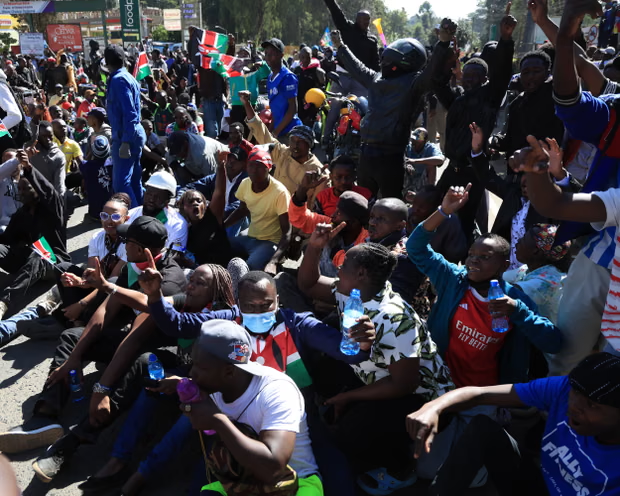
Tensions surrounding the proposed isolation facility have escalated into violent physical confrontations in recent days. Local authorities confirmed that two demonstrators were tragically killed during a turbulent street protest. The fatal clash occurred within the quiet agricultural town during a volatile demonstration on Monday. Citizens are actively channeling their growing collective anxieties into fierce resistance against their national government. The sudden loss of human life has significantly intensified the national debate over foreign policy. Public outrage continues to mount as more information about the secretive bilateral agreement emerges.
Local business owners in Nanyuki have voiced deep resentment regarding the underlying ethics involved. A souvenir vendor named David Mulinge expressed profound shock at the American strategy this week. He stated that the United States refuses to allow infected citizens onto domestic soil. Instead, Washington prefers to transport potentially contagious individuals directly to a developing African nation. Mulinge noted that such decisions make local people feel viewed as lesser human beings. His sentiments are widely shared by thousands of concerned citizens throughout the volatile region.
The surrounding regional health crisis makes the local population particularly sensitive to biological threats. Medical authorities in Uganda and the Democratic Republic of the Congo face severe challenges today. Health workers are currently fighting a major outbreak of the dangerous hemorrhagic virus within Central Africa. This specific outbreak was officially declared by international medical agencies on the fifteenth of May. However, epidemiologists believe the lethal pathogen circulated completely undetected for several weeks before declaration. The geographic proximity of the ongoing regional crisis fuels deep anxieties among Kenyan borders.
The World Health Organization has officially designated this current outbreak a global public health emergency. This serious classification reflects the high potential for international transmission across highly porous regional borders. The specific epidemic is caused by the exceptionally rare and lethal Bundibugyo virus strain. Medical researchers have not yet developed any approved vaccine or effective treatment for this strain. The complete absence of standard medical countermeasures makes the situation exceptionally hazardous for local populations. Consequently, the prospect of hosting exposed individuals terrifies the unprotected residents of Nanyuki.
The latest statistical data released by the international health agency illustrates a grim reality. The organization reported sixty deaths and three hundred and forty-four confirmed cases within Congo. Meanwhile, neighboring Uganda has officially recorded one related fatality and nine confirmed active infections. Fortunately, medical authorities have not detected any active cases of the virus inside Kenya. Local residents are determined to keep their nation entirely free from the deadly African pathogen. They view the American proposal as an unnecessary risk to their current infection-free status.
The United States government intends to deploy thirty specialized military medical personnel to Kenya. These foreign professionals would fully staff the specialized facility if the project moves forward. The planned isolation compound is designed to hold fifty patient beds for incoming citizens. Historically, the United States has always repatriated infected citizens back to domestic American hospitals. This sudden shift in standard medical evacuation protocols has perplexed international public health analysts. The departure from established historical precedent has generated significant suspicion among local Kenyan political commentators.
Senior American political figures have openly defended the strict policy of absolute domestic exclusion. US Secretary of State Marco Rubio explained the official Washington perspective late last month. He stated authoritatively that the United States must keep potential patients outside national borders. Rubio emphasized that Washington will not allow any Ebola cases to enter the country. These firm remarks were delivered during a high-level cabinet meeting in the American capital. The explicit statement confirmed to many Kenyans that Washington prioritizes its own safety entirely.
The strict exclusion policy stands in sharp contrast to recent international medical evacuation procedures. Last month, an American doctor contracted the dangerous virus while working inside Congolese territory. The infected physician was promptly flown to Germany to receive specialized advanced medical attention. His wife and four young children accompanied the medical professional on the evacuation flight. This specific incident demonstrated that Western nations utilize European facilities rather than American homeland infrastructure. Such actions reinforce perceptions of double standards regarding global health management among African observers.
The controversial proposal has ignited massive political outrage among prominent Kenyan medical professional syndicates. Dr Davji Atellah released a fierce public statement on behalf of his national union. He represents the influential Kenya Medical Practitioners, Pharmacists and Dentists Union in the capital city. Atellah declared that professional medical workers would never allow Kenya to become a containment colony. He argued that if the disease is too dangerous for America, it is likewise dangerous. His strong rhetoric has successfully galvanized professional associations against the implementation of the project.
The domestic legal system has intervened rapidly to halt progress on the contested facility. The Nairobi High Court temporarily blocked the establishment of the site after a legal petition. This successful legal challenge was initiated by the Katiba Institute, a prominent non-profit organization. The legal advocacy group argued that the secret bilateral arrangement violated fundamental constitutional principles. They claimed the agreement seriously threatened public health, national governance, and Kenyan territorial sovereignty. The immediate judicial intervention has provided temporary relief to the frightened residents of Nanyuki.
American diplomats remain hopeful that they can salvage the disrupted international public health agreement. Jeremy Lewin, the US Under Secretary for Foreign Assistance, expressed optimism regarding the dispute. He stated that American officials are communicating directly with highest Kenyan authorities to resolve issues. Washington hopes to convince the local government that the facility benefits regional health systems. However, diplomatic optimism faces severe resistance from both the judicial system and the public. The geopolitical dispute has placed significant strain on traditional diplomatic relations between both nations.
Kenyan President William Ruto has publicly defended the international medical project despite massive criticism. He argued that opposition politicians are unfairly politicizing a standard national health preparedness measure. Ruto stated that the installation aims to strengthen national capacity to respond to emergencies. The president insisted that the facility would ultimately safeguard public health within East Africa. However, his supportive public statements have failed to calm the rising anxieties of voters. Many citizens feel their executive leader is prioritizing foreign diplomatic relations over domestic safety.
The judicial branch has maintained its firm stance against executive action regarding the facility. High Court Judge Patricia Nyaundi formally barred the government from proceeding with any construction. She ordered the administration to disclose all secret international agreements within seven days time. The next formal legal hearing on the controversial matter is scheduled for June twenty-third. This definitive judicial order effectively halts all physical development at the airbase for now. The upcoming court battle will determine the ultimate fate of American medical infrastructure inside Kenya.
Meanwhile, ordinary citizens in Nanyuki continue to discuss the terrifying situation in daily life. Conversations regarding the quarantine facility dominate local markets, busy shops, and private family homes. Simon Ong’ono, a local motorcycle taxi rider, questioned the underlying logic of the plan. He wondered why a wealthy nation with advanced medical infrastructure requires foreign soil. Ong’ono strongly urged President Ruto to abandon the plan and close national borders completely. His views reflect a deep desire for complete isolation from foreign biological threats.
The potential for rapid community transmission within Nanyuki remains a primary source of anxiety. David Mulinge noted that local social and business interactions involve constant close physical contact. This vibrant social fabric makes the community highly vulnerable to contagious hemorrhagic virus outbreaks. Street food vendor Fauzia Isiche expressed deep fears regarding the return of economic lockdowns. She remembers the severe financial devastation caused by previous global pandemic restrictions very well. Isiche worries that another lockdown would prevent her from feeding her young child properly.
The physical proximity of local schools to the military airbase worsens community anxiety significantly. The active defense compound hosts both a busy primary and a secondary educational institution. Parents are deeply terrified that an accidental pathogen leak would immediately infect vulnerable students. Charles Mathenge noted that his young grandchildren attend classes inside the military base daily. Businesswoman Purity Kendi stated that she felt completely betrayed by her elected national leaders. She urgently called on all Kenyans to unite together in total opposition to Washington. Kendi reminded her fellow citizens that they have no other country to run to.
Related News:
 Capitol Attack Anniversary Sparks Deep Political Divide
 Saudi Officials Report Zubaidi Flee Before Yemen Peace Talks
 UK Targets in New York Bomb Threat Hoax: Man Jailed
 Gambia Supreme Court Hears Case to Overturn FGM Ban
 Trump targets Iran trade with 25% tariff warning
 US Senate rejects resolution limiting Trump military powers
 Gulf states warn Trump Iran strikes risk wider Middle East war
 Machado Trump medal gesture reshapes Venezuela power struggle
 Geopolitical football: Iran, Trump and the World Cup clash
 Canada-China trade gains momentum in new strategic partnership
 Syria President Declares Victory as Ceasefire Reached with SDF
 Shinzo Abe’s killer receives life sentence in Japan
 China General Under Investigation Amid Leadership Purge
 Philippines ferry disaster leaves 15 dead, dozens missing
 Cambridge Faces Scrutiny Over Arms Investment Transparency
 Concerns rise for Canberra boy amid Iran detention fears
 Ukraine Sends Drone Experts to Defend US Bases in Jordan
 Abramovich Chelsea Sale Cash Faces Jersey Probe
 Yvette Cooper: UK Must Follow Principles, Not US Pressure
 Jury Rules Meta and YouTube Liable for Addictive Design
 Saudi Arabia Urging US to Keep Up Iran Attacks
 The Woman Guarding Earth From the Threat of Asteroids
 Germany Grapples With AI Abuse Following TV Star Scandal
 Exiled Tycoon Warns of New Russian Attacks on UK Soil
 LA 2028: Millions of Affordable Olympic Tickets Announced
 Trump Slams Europe as Transatlantic Tensions Boil Over
 Inside the Deceptive Machine: A Former Producer Speaks Out
 Spain Faces Backlash Over Xenophobic Chants in Egypt Draw
 A Global Voice For Justice: Stephen Lewis Dies At Age 88
 Hope and Fear as Iranians Flee Across the Turkish Border
 Reform UK Pledges To Halt Visas Over Reparations Demands
 US and Iran Agree to Two-Week Provisional Ceasefire
 Starmer visits Gulf as US and Iran agree ceasefire
 Gaza Child Arrives in UK for Life-Changing Care
 Pakistan Brokers Historic Peace Deal Amid Rising Tensions
 Trump Signals Hope for New Iran Talks as Ceasefire Fades
 US and Iran Pursue Extension of Ceasefire via Pakistan
 Trump’s Islamabad Gamble: The High Stakes of a New Iran Deal
 The General’s Gambit: Pakistan’s New Role in Global Peace
 Mexico, Spain and Brazil call for Cuba dialogue amid crisis
 Pakistan’s Ambitious Bid for Middle East Peace
 Israeli Soldiers Jailed Over Vandalism of Lebanese Statue
 Trump Weighs Sending Afghan Allies to the Congo
 Pentagon Shakes Up Navy Leadership Amid Hormuz Blockade
 Trump Threatens UK With Big Tariff Over Tech Tax
 Prominent Voices Challenge Palestine Action Ban
 Security Scrutiny After Washington Shooting Incident
 Merz Criticises US Approach in Iran Conflict
 UK Envoy Sparks Controversy Over Special Relationship Claims
 Ukraine Urges UK to Seize Russian Oil Tankers
 US Calls Australia Media Law “Foreign Extortion”
 The Billionaire’s Secretary and the £1m Fraud
 Ukraine strikes Tuapse as oil disaster worsens
 Brewing Tension: Taiwan Baristas Rebrand for World Stage
 Tensions Emerge in Netanyahu-Trump Alliance
 Mission to the World’s Edge: A Heroic Rescue in Tristan
 US and Mexico Face Heatwave as Floods Batter South Africa
 Mexico’s Missing: State Complicity in a Growing Crisis
 French Patient Told Hantavirus Was Just Anxiety
 The Long Way Home: Australia’s High-Stakes Virus Mission
 Putin Signals War End as Russian Momentum Stalls
 Romania’s Judicial Crisis: A System Under Siege
 Lee Lai Makes History with Landmark Stella Prize Victory
 Philippine Senator Flees After Days Under Senate Siege
 Alberta Separatist Bid Blocked by Canadian Court
 Canadian Court Blocks Alberta Independence Referendum Bid
 Big Tobacco Under Fire Over Controversial New Ad Campaign
 Bolsonaro Son Tape Scandal Sparks Massive Brazil Backlash
 Court Upholds Landmark Win for Transgender Rights
 Tragedy in the Maldives: Inside the Deep Sea Rescue
 Liberal Senator Criticises Immigration Rhetoric
 Senate Moves to Restrict Trump’s War Powers on Iran
 ICC Arrest Warrant Threat Sparks West Bank Retaliation
 Uefa Transforms Men’s Major Tournament Qualification
 Taliban Codifies Strict New Marriage and Divorce Legislation
 Tony Abbott Returns as New Liberal Party President
 Tiger Escape Shatters Peace in Germany
 Tulsi Gabbard exits after turbulent intelligence tenure
 Discontent grows around Putin amid war strain
 Trump Diplomacy Faces Hurdles from Tehran to Tbilisi