Published: 08 June 2026. The English Chronicle Desk. The English Chronicle Online.
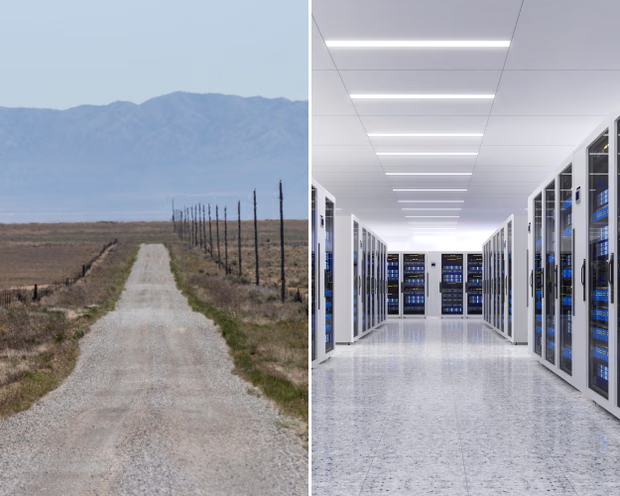
A record-shattering drought has racked much of the United States over recent months. Yet the artificial intelligence industry is pushing ahead regardless of these severe environmental conditions. The majority of planned datacenters are set to be built in drought-ridden locations. A detailed analysis has found deep conflicts between tech expansion and vital water resources. About two-thirds of upcoming datacenters are scheduled for construction in very dry regional areas. These facilities typically require a massive amount of water to operate their systems daily. They are being placed in areas that have been among the driest nationwide.
Of the total eight hundred and nine planned datacenters, five hundred and seventeen are troubled. They are slated for locations that have experienced ongoing drought throughout the past year. This information comes from combined data provided by Cleanview and the federal government. The authorities grade national drought conditions across four distinct levels of severe intensity. A similar proportion of existing datacenters are already situated in these affected areas. More than sixty percent of the contiguous United States faces varying stages of drought. This represents the largest expanse of dry weather for spring in modern records.
A particularly severe lack of rain and snow is hurting the country now. The south-east and west are experiencing desiccated croplands and rising environmental anxieties. These dry conditions are raising deep fears of a disastrous wildfire season ahead. Scientists have determined that the climate crisis is worsening these intense national droughts. The crisis is caused directly by the continuous burning of global fossil fuels. It alters the duration and intensity of droughts across the entire American landscape. But a stampede of new datacenters is adding extra demands on local water. These tech facilities bring hefty energy and water requirements to vulnerable rural communities.
Large datacenters can sometimes match the physical size of small American towns. They can require up to five million gallons of fresh water every day. This is equivalent to the daily water use of fifty thousand local people. The water is necessary to provide cooling to arrays of humming computers. Overall, multiplying datacenters across the nation are set to demand immense water supplies. They will need seventy-three billion gallons of water a year by twenty-eight. This is a massive rise from seventeen billion gallons used in twenty-three. Each hundred-word artificial intelligence prompt uses up roughly one small bottle of water. This specific calculation is based on the cooling needs of modern datacenters.
The artificial intelligence industry is sprinting as fast as it can right now. Companies want to gain market dominance before their major global competitors catch up. Meanwhile, ordinary citizens have to deal with a great increase in water demand. This demand is hitting places that are already suffering from prolonged drought conditions. Even without climate change, the nation would feel these drought effects more acutely. Water demand is going up to feed more people and water lawns. There simply is not enough water to go around for everyone anymore. With this explosion of datacenters, a major crunch point is now inevitable.
Prominent companies are pouring billions of dollars into these new datacenter projects. Developers are often drawn to dry and sparsely populated western areas today. This choice is driven by the lower cost of land there. Local governments also offer generous tax breaks to attract these massive tech investments. Arid climates are thought to cause the least equipment corrosion over time. One of the largest datacenters was recently approved despite heavy local controversy. This complex will be twice the physical size of Manhattan when completed. It was approved in a Utah county deep in drought since last summer.
Meanwhile, a planned Amazon datacenter is headed to Walla Walla county in Washington. This specific northern site has been overwhelmingly in drought since July last year. In Texas, two of the largest new datacenters are arriving very soon. They are being built in Pecos county and Carson county right now. Both areas have been recently parched by intense and damaging regional droughts. Datacenters could account for nine percent of total Texas water use by forty. State officials forecast rising overall demand alongside falling natural supplies of water. Hard choices will have to be made to avoid future local clashes.
An immediate water shortage is unlikely, but long-term planning remains absolutely vital. Citizens will face tough questions regarding who gets priority for water access later. Legal systems in the eastern United States are not set up for shortages. This is because people have always assumed an abundance of water there. Lawmakers cannot assume that citizens will not be asked to reduce water use. Tech infrastructure and energy sectors might be protected while residents face strict limits. Concerns over water use and rising energy bills have stirred local opposition. A rash of datacenter projects has faced community pushback across the country.
This building backlash has caused some developments to be curtailed or canceled entirely. These environmental concerns have quickly become a difficult political headache for local politicians. Donald Trump has been a vocal supporter of the artificial intelligence industry. Much of the current opposition is coming from conservative rural farming areas. Ranchers are constantly being told to be conservative with their water use. They try hard not to waste water on their agricultural land. Now there is a new competing interest getting near unlimited water access. The serious concerns raised by local farmers are real and entirely justified.
Datacenters are the flavor of the month for big technology investors today. But humans would not choose to limit their personal showers for technology. Most people would prefer to eat a beef steak if forced to choose. Datacenter developers argue that industry water use is still a small fraction. Agriculture and golf courses take much more water from major national rivers. Tech operators work closely with local authorities to ensure full environmental compliance. They want to ensure operations do not stress local drinking water supplies. The industry is actively prioritizing responsible water use through new engineering practices.
Developers are collaborating with conservation organizations on innovative water restoration projects. Datacenter operators are investing heavily in local water infrastructure across the nation. The sector claims it is making progress to replace standard evaporative cooling. They want to use efficient closed-loop cooling systems in new facilities. This technology continually pipes the same coolant among servers to absorb heat. However, while such cooling systems save water, they need more energy. This extra power typically comes from traditional local fossil fuel power plants. These plants require copious amounts of water to generate electricity for grids.
This clear trade-off is evident at a huge proposed Meta datacenter. The facility will be located in the southern state of Louisiana soon. It will use closed-loop cooling but requires ten gas-fired power plants. These plants will use large amounts of water and emit emissions. This will become a serious issue for farmers living near the site. If more datacenters are approved, a slow environmental decline will occur. The local water table will go down over the next decade. Wells will have to be drilled deeper to access the groundwater. This will make water much more expensive for residents to access.
The overall water impact of artificial intelligence is far larger than datacenters. A recent study found datacenters cause a small part of the problem. They are responsible for four percent of extra global water needs. Power generation and semiconductor fabrication for artificial intelligence will suck up much more. Datacenters are merely the most visible element to the general public. Global water shortages could face three-quarters of people by the year fifty. Datacenters will use trillions of liters of water in the coming decade. This is enough to meet global human drinking needs for a year. Large-scale withdrawals will continue to strain delicate river systems across the world.
Related News:
 Indonesia blocks Grok chatbot over sexual content risk
 The Woman Guarding Earth From the Threat of Asteroids
 California Defies Trump With Strict New AI Standards
 Artemis II: Humanity Returns to the Lunar Frontier
 Mapping the Mind: The Universal Fingerprint of Psychedelics
 Norway’s Telenor Faces Lawsuit Over Myanmar Data Breach
 Jimmy Wales Slams Australia Social Media Ban Policy
 Court Upholds Landmark Win for Transgender Rights
 AI Deepfakes of Farage and Bailey Spark Bank of England Alert
 AI to Help Botanists Win the Critical Race Against Extinction
 AI Lawyer Triumphs in Landmark English Court Victory
 Telstra Software Fault Triggers Massive Nationwide Outage
 Japan Vows to Bolster Security Against Espionage
 Virgin Trains Moves Closer to Challenging Eurostar Monopoly
 UK Bans Fake Numbers: Scammers Lose Their Trick
 Vibe coding’ named Collins dictionary’s word of the year
 Patients to Test Health at Home to Ease NHS Winter Pressure
 Britain deploys RAF specialists to assist Belgium with drone threats
 Northern Lights may illuminate UK skies this week
 New AI tool could cut wasted efforts in organ transplants
 Sundar Pichai Cautions on AI Hype and Market Risks
 Friedman Uninvited From 2024 Adelaide Writers’ Week
 Spoof “Make America Go Away” Caps Rally Denmark Over Greenland
 EU launches Grok AI probe into X over explicit images
 ABC Facebook Page Briefly Hacked, Adult Photos Posted
 Meta trial over child exploitation claims begins
 BT Names New Openreach Chief Amid Major Fibre Expansion
 Tech Trends Set to Transform Life in 2026
 Stewart Brand on Musk, Bezos and a Life of Long Thinking
 New Zealand Covid Response Praised Despite Lingering Scars
 The Kill Line: A Shifting Vision of the American Dream
 ‘Drinking from a Fetid Pond’: Superbug Genes in Lough Neagh
 Diplomacy on the Brink: Pakistan’s Risky Peace Mission
 Teenage Titan: Sooryavanshi Smashes IPL Records
 Canadian Mother and Daughter Released From ICE Detention
 Reform UK Pledges To Halt Visas Over Reparations Demands
 US and Iran Agree to Two-Week Provisional Ceasefire
 Israel Defies Ceasefire as Lebanon Operations Persist
 Pakistan Brokers Historic Peace Deal Amid Rising Tensions
 Islamabad Hosts Historic Peace Talks Between Iran and USA
 Artemis II Returns After Historic Moon Flyby
 Trump Signals Hope for New Iran Talks as Ceasefire Fades
 UK Banks to Deploy Controversial Mythos AI Tool Next Week
 Security Alert Near Israeli Embassy as Police Investigate
 Machado Rallies in Madrid as Venezuela Stays Frozen Out
 US-Iran Standoff: Will Trump Deploy Ground Troops?
 Investigation Into Anti-Trump Motives After Gala Shooting
 Oil Prices Surge Above $120 Amid Iran Blockade Fears
 Trump orders US troop pullout from Germany
 UK Watchdogs Warn Over AI Facial Recognition Oversight
 Japan Protests Erupt Over Plans to Revise Constitution
 DeepMind Staff Vote to Unionize Over US Military Contract
 High Stakes in Beijing as Trump and Xi Meet Amid Global Turmoil
 Fear and Betrayal: The Chilling Case of Kouri Richins
 Australia Joins UK-Led Mission to Reopen Vital Strait
 Trump and Xi Convene in Beijing for Historic High-Stakes Summit
 Australia Bans Neo-Nazi Group Under Tough New Hate Laws
 Rubles and Resilience: How Russia-China Border Towns Thrive
 Trump Turns to Middle East Allies as Iran Peace Eludes
 Aussie Race Row: Coalition Accused of Scapegoating
 Trump Pledges 5,000 Troops for Poland in U-Turn
 Cannes filmmakers split over AI’s role in cinema
 Washington Brokerage Sparking Hope Amid Regional Firestorms
 Tech Trends and the Battle Against Exam Hall Cheating
 US Condemns ‘Two-Tier’ UK Policing After Student Murder
 Trump Appeals for Middle East Calm but Conflict Escalates
 Stolen Mobiles Could Soon Become Useless Bricks
 Aukus Deal Facing Fierce Backing and Historic Criticism
 Tragic Loss of Australian Sprinter Jemma Stapleton
 Trump Urged to Condemn UFC Fighter Over Obama Slurs
 Russian Tanker Captain Remanded in UK Court After Channel Seizure
 US Military Pacific Boat Strike Kills Three People
 Trump’s Mount Rushmore Speech: A Divisive Anniversary
 Sydney Records Hottest June Since 1859 as Expert Warns New High a ‘Signature’ of Global Warming
 Telstra Software Fault Triggers Massive Nationwide Outage
 Trump Swaps Planes Amid Iran Tensions
 Rotterdam Museum Honours Artist With Peanut Butter Floor
 Bangkok Nightclub Blaze Claims 30 Lives Amid Negligence Probe
 Yemen Accuses Iran of Violating National Sovereignty
 Houthis Strike Saudi Arabia as Middle East Tensions Rise