Published: 10 June 2026. The English Chronicle Desk. The English Chronicle Online.
British households are facing a renewed and deeply concerning financial squeeze as the summer months approach. A major conflict in Iran has triggered a severe global shock across oil and gas markets. This geopolitical turmoil has directly caused a massive surge in international wholesale energy prices this year. As a direct result of these events, average household bills will rise significantly this July. This impending price hike represents the second major energy price shock within just four years. Families across England, Scotland, and Wales are now bracing for an extra annual cost burden.
A prominent progressive thinktank has just published a highly compelling solution to this crisis. Their extensive new research suggests a radical restructuring of the entire British domestic electricity market. The detailed report proposes that the government step directly into the energy market immediately. Ministers would act as the sole buyer of all electricity produced nationwide. This ambitious public procurement strategy could potentially shave billions of pounds from national electricity prices. Consequently, typical British households could save nearly two hundred pounds on their annual bills.
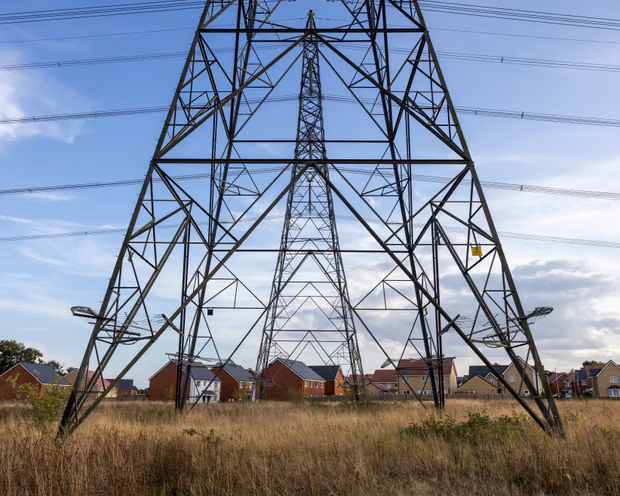
The core issue lies within the outdated mechanism currently used to set power prices. Under the existing framework, the price of electricity is pegged directly to gas costs. This specific pricing structure remains highly volatile and penalises consumers during international supply crises. The UK has successfully increased its reliance on much cheaper and cleaner renewable energy. However, the current market design allows expensive gas generators to dictate the wholesale price. This means normal consumers rarely feel the financial benefits of cheap wind and solar.
The report was written for Common Wealth by a senior energy policy researcher. This academic works within the political economy department at the prestigious University of Oxford. He stated that Britain’s electricity market was originally designed for a fossil fuel age. Because of this outdated design, the system now blocks a lower-cost future. Gas still sets the ultimate price for the vast majority of the time. Yet, gas generators actually produce only about one quarter of our total power.
This structural flaw effectively funnels billions of pounds in windfall profits to private companies. Meanwhile, British homes and businesses are forced to pay some of the highest bills globally. The government is now under immense pressure to tackle these soaring electricity costs. Earlier this year, officials set out proposals to decouple gas and electricity prices entirely. However, independent experts quickly warned that those specific plans would yield only modest savings. They argue that a far more radical approach is required to transform things.
Under the new thinktank blueprint, the state would actively limit expensive gas generation. A publicly accountable body would effectively purchase all power generated across the nation. This body would secure electricity through stable contracts offered directly to various energy generators. Gas-fired generators would then be moved into a newly created strategic gas reserve. These specific stations would only be paid to operate when renewable generation drops. They would also step in if legacy nuclear reactors suddenly go offline unexpectedly.
Meanwhile, older nuclear plants and early windfarms would receive different long-term contracts. Existing hydroelectric plants would also be paid through these new public power purchase agreements. The price offered through these stable contracts would reflect the true average generation mix. Crucially, these prices would no longer be pegged to the volatile cost of gas. This centralized model would successfully break the link between gas and electricity prices. It would contract directly with generators at highly cost-effective and predictable baseline prices.
The new system would also eliminate wasteful practices currently embedded within the network. For example, the state currently pays for energy twice when grid capacity is constrained. This centralized procurement model is very similar to successful systems used around the world. It also mirrors the way the nationalised power market functioned before eighties privatisation. Such an approach would effectively prevent gas companies from making excessive short-term profits. They would no longer cash in when global gas supplies are severely restricted.
The researcher calculated potential savings over a projected five-year period of market operation. The first scenario assumes that global gas prices will remain stubbornly high throughout. This would keep the baseline wholesale electricity price at one hundred pounds per megawatt-hour. Under these specific conditions, the proposed reforms could save a staggering seventy-four billion pounds. This massive saving would directly benefit the wider British economy and hard-pressed consumers.
The research also explored a more optimistic scenario regarding the current global crisis. If the war in Iran is resolved quickly, the energy shock should subside. Wholesale power prices could then fall down to seventy pounds per megawatt-hour. Even with lower market prices, total five-year savings would reach forty-one billion pounds. If electricity prices average out between these two estimates, household benefits remain substantial. The typical British home would save about one hundred and eighty-five pounds annually.
The author believes that additional consumer savings could be unlocked through behavioral changes. The new system would actively encourage people to use electricity during cheaper off-peak hours. Further financial benefits would come from strategic public investment in grid-scale battery storage. This advanced technology would help balance out the natural intermittency of renewable generation. The government acknowledges that the influence of the gas market must eventually wane. Officials expect this to happen naturally over the coming decades as infrastructure expands.
New renewable energy projects are currently being deployed under competitive fixed-price contracts. At the same time, older and more generous legacy subsidies are slowly ending. The Chancellor of the Exchequer has also taken independent action to address public anger. Rachel Reeves plans to increase the windfall tax on excess electricity generator profits. The current rate will rise from forty-five percent up to fifty-five percent soon. The tax proceeds will go directly toward supporting vulnerable households with winter bills.
However, political critics argue this tax increase stops far short of radical change. They believe it fails to alter the fundamental market structures driving up costs. The Department for Energy Security and Net Zero declined to comment on these proposals. A department spokesperson stated that clean energy remains the only way forward for Britain. They emphasized that the clean energy mission will get the UK off fossil fuels. This strategy aims to transition the nation securely onto homegrown power we control.
Related News:
 Reeves Faces Setback as Labour May Miss Homes Target
 Kate Winslet to Narrate Film Highlighting King’s Environmental Mission
 Trump’s UK Ambassador Urges North Sea Drilling to Strengthen US Ties
 UK Bans Fake Numbers: Scammers Lose Their Trick
 Vibe coding’ named Collins dictionary’s word of the year
BBC to Apologise Over Edited Trump Speech Amid Backlash
Vibe coding’ named Collins dictionary’s word of the year
BBC to Apologise Over Edited Trump Speech Amid Backlash
 Millionaires group urge Reeves to introduce wealth tax to ‘lift kids out of poverty’
 Reeves rejects £1bn plea for NHS redundancy payouts
 PM Condemns Leaks, Vows Loyalty to Ministers and Stability
 Phillipson Accused of Appeasing Unions by Diluting EBacc
 Saka Solidifies Role as Tuchel’s Key England Lieutenant
 Greene Pushes Epstein Files Amid Trump Fallout
 Zelenskyy Signs Fighter Jet Deal Amid Russian Drone Attacks
 Sundar Pichai Cautions on AI Hype and Market Risks
 Shadow Fleet at Sea: Europe’s Battle Against Illicit Oil Shipping
 Snow and Ice Cause Travel Chaos in North Yorkshire
 Director Michael Caton-Jones Reflects on Career and Beginnings
 Inside the Helpline Protecting Missing Children in the UK
 PlayStation PS5 Deals Hit Lowest Prices Ahead of Black Friday
 US Suspends Afghan Immigration After White House Shooting
 Five-Year-Old Dies After Rare Tonsil Surgery Complication
 Starmer Says Labour’s Economic Plan Needs Years to Deliver
 ‘Extinct’ Antelope Returns to Sahara, Bringing Hope
 IndiGo Cancels Hundreds of Flights Amid Pilot Shortages
 Young Britons Face Heaviest Burden from Ageing Population, Lords Warn
 U‑Turn on Farmers’ Inheritance Tax Sparks Political Firestorm
 Aston Villa Remain Arsenal’s Key Obstacle in Title Pursuit
 Irish Beach Tragedy: Irish Drown at Whitehaven Beach in Australia
 Starmer Faces Parliamentary Battles Over UK-EU ‘Reset’ Plan
 Met Police Vetting Failures Let Serial Rapists Remain
 Federal Immigration Shift: Officers Leave Louisiana for Minneapolis
 Fatal Bolton Taxi Crash Claims Three Teens and Driver
 Australia grants Asio powers to designate hate groups under new laws
 Friedman Uninvited From 2024 Adelaide Writers’ Week
 US and Iran Agree to Two-Week Provisional Ceasefire
 Battle of Britain Tower to House Tourists and Bats
 The Challenger: Will Péter Magyar End the Orbán Era?
 UK Government Poised to Revive Stalled Hillsborough Law
 Democrats Move to Impeach Defense Secretary Pete Hegseth
 Security Alert Near Israeli Embassy as Police Investigate
 Ben Roberts-Smith Denies War Crime Allegations in First Statement
 Home Office Faces Legal Risks Over Asylum Hotel Living
 US-Iran Standoff: Will Trump Deploy Ground Troops?
 Crisis in NHS Surgery Scheduling Hits Patients Hard
 Investigation Into Anti-Trump Motives After Gala Shooting
 Dubai Assets Linked to Sudan’s RSF Militia Exposed
 Blue Badge Abuse: The Rising Tide of Public Hostility
 Tragedy Strikes at Parafield Airport
 Scott Parker Leaves Burnley After Premier League Drop
 Silent Tracks: Rail Line Without Passengers
 Arteta urges Arsenal to step up in Atlético semi-final
 RFU Backs Borthwick Despite England’s Poor Six Nations
 Major test for Labour as polls open in Great Britain
 High-Profile Murder Trial Begins for Ian Watkins Death
 Trump Rejects Tehran Peace Plan as Regional Truce Crumbles
 Wes Streeting faces narrow road to Labour members’ favour
 Keir Starmer Struggles to Secure His Grip on Downing Street
 Trump and Xi Convene in Beijing for Historic High-Stakes Summit
 Farage Faces Standards Probe Over Cash Property Purchase
 Closing the Gap: UK Pensions Commission Demands Action
 Reality TV Under Scrutiny Following Serious Allegations
 UK Eases Russian Oil Sanctions as Fuel Costs Soar
 Alice Capsey Sparks England Win With Brilliant Fifty
 Maldives Cave Diving Tragedy Raises Safety Alarm
 Russian Electronic Attack Targets UK Defence Chief Jet
 UK Shoppers Face Prolonged Price Rises At Tills
 Tube Strike Brings Capital to a Standstill Over Shift Disputes
 Makerfield Voters Demand Real Change as Election Looms
 Man City Threaten Legal Action Over Haaland Real Madrid Shirt
 Celestial Waltz: Venus and Jupiter Meet at Twilight
 Abbott Signals Bold Strategy Change For Australian Right
 Stolen Mobiles Could Soon Become Useless Bricks
 Clean Air Initiatives Spark Major Fall in London Hospital Admissions
 Fearless Pioneer of Investigative Journalism Dies Aged 83
 Trump Urged to Condemn UFC Fighter Over Obama Slurs
 The Fear Gap: Why Europe Feels Less Safe Than It Is
 US Military Pacific Boat Strike Kills Three People
 Dettol Apologises for ‘Toxic Men’ Advert Backlash in China
 UK Care Crisis: Row Explodes Over New Visa Settlement Rules
 Sainsbury’s Boss Optimistic As Grocery Inflation Eases