Published: 30 June 2026. The English Chronicle Desk. The English Chronicle Online.
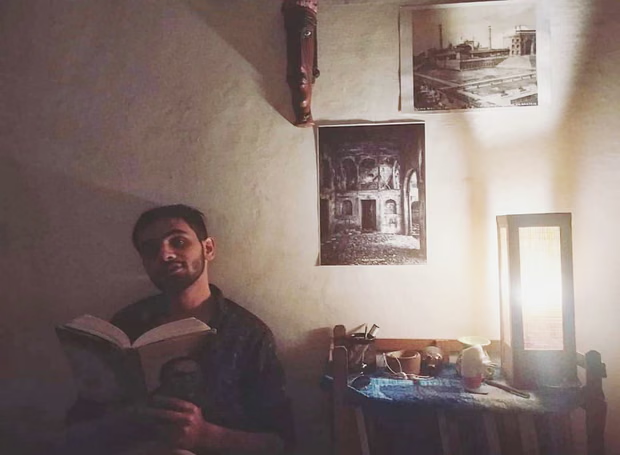
Sunset brings a unique and heavy dread to the thousands locked inside Delhi’s most infamous prison. As inmates leave their small cells for the damp exercise yard, a familiar anxiety begins rising. For prisoner number 626714, this daily moment represents the deepest emotional challenge of his long captivity. This particular inmate is Umar Khalid, who was once a highly prominent student political leader. Khalid recently discovered comfort in the historic words of an exiled nineteenth century Russian literary master. Fyodor Dostoevsky described a very similar feeling of evening sorrow within his own famous prison memoirs. The young activist noted that sunset reminds him of another day lost to endless captivity.
Outside the thick concrete walls of Tihar jail, millions of Indian citizens recognize his name. Over the last decade, he transformed from a passionate university student into a major national figure. He became the public face of massive anti-government demonstrations that gripped the country in late 2019. Those massive street protests presented the first significant domestic challenge to Prime Minister Narendra Modi’s administration. By autumn of 2020, authorities arrested the young activist under severe national anti-terror laws. Officials accused him of acting as a chief conspirator behind deadly religious riots in Delhi. They claimed he actively plotted to overthrow the federal government through a coordinated violent rebellion.
Mainstream television anchors still regularly attack his character during nightly political broadcast programs in India. They frequently label him a dangerous Muslim extremist and a threat to national security interests. Meanwhile, left-wing human rights groups loudly chant his name during various public protest rallies. Many sympathetic young activists wear printed t-shirts featuring his recognizable face to show active solidarity. For international rights organizations, Khalid represents the wider domestic suppression of political dissent under Modi. The ruling Bharatiya Janata Party has governed the developing nation for twelve consecutive years now. Critics frequently accuse the current administration of using the judicial system against political opponents.
Khalid identifies as a Muslim and remains a fierce defender of minority rights in India. He strongly opposes the ruling party’s explicit desire to create a dominant Hindu nationalist state. The activist argues that the current government actively encourages the systemic harassment of minority groups. India currently serves as home to more than two hundred million vulnerable Muslim citizens. The central government has repeatedly denied all formal allegations concerning state-sponsored religious discrimination. International monitoring agencies have strongly condemned his six years of detention without any legal trial. The progressive mayor of New York recently sent a supportive handwritten message to the prisoner. This high-profile American gesture provoked an angry diplomatic response from the Indian federal government.
The ruling political party maintains that the national judicial framework operates entirely independently of politics. They state that the criminal prosecution of the activist relies strictly on objective evidence. Due to severe security restrictions, foreign journalists could not interview the prisoner in person. Family members and close legal allies carefully carried the specific questions and answers back forth. After years of fighting intense state propaganda, the thirty-eight-year-old admits he struggles to stay sane. He explains that being reduced to a simple public symbol damages his personal mental health. Even well-meaning supporters sometimes forget that he is a regular human with deep vulnerabilities. The long years of harsh captivity have caused immense damage to his physical well-being.
The difficult experience of prolonged incarceration has not altered his views on the current regime. He watches the steady rise of aggressive Hindu nationalism with a sense of profound horror. The prisoner laments the widespread social normalization of violent hate speech across the entire country. He believes that the transformation of his homeland into a post-truth society is complete. Although legal details were not discussed, Khalid insisted that staying completely quiet is impossible. He sometimes hears fellow inmates whispering cruel slurs behind his back during communal prison meals. This pervasive state propaganda effectively strips away his basic humanity in the eyes of others. He sadly concludes that basic human dignity is a privilege denied to people like him.
Growing up in a Muslim-majority neighborhood in Delhi shaped his early political and social awareness. He witnessed how sectarian politics gradually divided local communities and stripped people of their rights. He observed the steady marginalization and systematic demonization of his community from a young age. Any sensitive individual would find it impossible to remain indifferent to such distressing developments. While pursuing his doctoral degree at university, Khalid eagerly joined the vibrant student political scene. The historic state-funded institution soon became a primary target for right-wing political commentators and politicians. They sought to dismantle an academic space known for progressive ideals and rigorous intellectual debate.
Following a campus political event in 2016, authorities arrested Khalid for the crime of sedition. Polarized media outlets immediately branded the young scholar as a dangerous anti-national threat to India. From that precise moment onward, his personal life changed in a sudden and permanent way. The university administration even attempted to block the submission of his final doctoral research thesis. He successfully challenged that unfair institutional decision before the regional high court after months. His academic work on fractured communities will finally be published as a book this month. His public conflict with the federal government reached its absolute peak during the winter of 2019.
The administration had just passed a highly controversial new citizenship law that marginalized Muslims. The local university campus quickly transformed into the main epicenter for the nationwide protest movement. Hundreds of thousands of citizens marched through major cities to oppose the discriminatory state policy. Khalid served as a vital inspirational figure during those peaceful mass rallies for civil rights. He famously urged the massive crowds to reject violence and meet hatred with love. The response from the state apparatus proved to be incredibly harsh and completely unforgiving. Security forces met peaceful demonstrators with immense police brutality and widespread arbitrary arrests across states.
As social tensions escalated, horrific sectarian riots broke out across Delhi in early 2020. Online misinformation quickly fueled violent mobs that targeted local mosques and prominent Muslim neighborhoods. Some minority residents chose to retaliate defensively against the overwhelming waves of external aggression. The intense communal violence lasted for three chaotic days and claimed over fifty lives. The vast majority of those who perished during the riots belonged to the minority community. When police investigators filed their final legal reports, they excluded prominent ruling party politicians. Instead, they accused Khalid of masterminding the entire tragedy from a distant location.
The state charged him alongside several other human rights defenders under severe anti-terror laws. Prosecutors claimed these student activists engineered the communal riots to launch a pre-planned national rebellion. Armed police officers arrived at his family home to arrest him seven months later. Multiple judges assigned to his hearings have repeatedly delayed proceedings or recused themselves entirely. Every single application for his legal release has been rejected by the courts so far.
Khalid openly expresses deep frustration regarding the quiet response of India’s mainstream opposition parties. Other prominent civil rights figures like Father Stan Swamy have tragically died while in custody. Inspiring words by revolutionary Bhagat Singh written on his wall provide comfort each quiet evening.
Related News:
 Saudi Officials Report Zubaidi Flee Before Yemen Peace Talks
 UK Targets in New York Bomb Threat Hoax: Man Jailed
 Gambia Supreme Court Hears Case to Overturn FGM Ban
 Trump targets Iran trade with 25% tariff warning
 US Senate rejects resolution limiting Trump military powers
 Gulf states warn Trump Iran strikes risk wider Middle East war
 Machado Trump medal gesture reshapes Venezuela power struggle
 Geopolitical football: Iran, Trump and the World Cup clash
 Canada-China trade gains momentum in new strategic partnership
 Syria President Declares Victory as Ceasefire Reached with SDF
 Shinzo Abe’s killer receives life sentence in Japan
 China General Under Investigation Amid Leadership Purge
 Philippines ferry disaster leaves 15 dead, dozens missing
 Cambridge Faces Scrutiny Over Arms Investment Transparency
 Concerns rise for Canberra boy amid Iran detention fears
 Ukraine Sends Drone Experts to Defend US Bases in Jordan
 Abramovich Chelsea Sale Cash Faces Jersey Probe
 Yvette Cooper: UK Must Follow Principles, Not US Pressure
 Jury Rules Meta and YouTube Liable for Addictive Design
 The Woman Guarding Earth From the Threat of Asteroids
 Exiled Tycoon Warns of New Russian Attacks on UK Soil
 LA 2028: Millions of Affordable Olympic Tickets Announced
 Trump Slams Europe as Transatlantic Tensions Boil Over
 Inside the Deceptive Machine: A Former Producer Speaks Out
 Spain Faces Backlash Over Xenophobic Chants in Egypt Draw
 A Global Voice For Justice: Stephen Lewis Dies At Age 88
 Hope and Fear as Iranians Flee Across the Turkish Border
 Reform UK Pledges To Halt Visas Over Reparations Demands
 US and Iran Agree to Two-Week Provisional Ceasefire
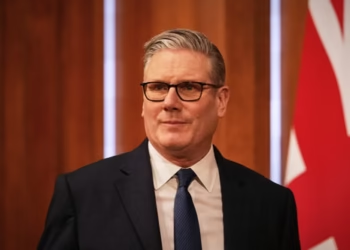 Starmer visits Gulf as US and Iran agree ceasefire
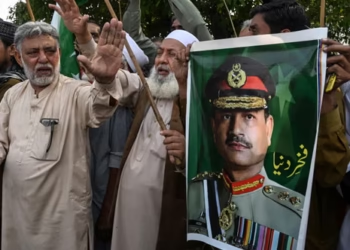 Pakistan Brokers Historic Peace Deal Amid Rising Tensions
 Trump Signals Hope for New Iran Talks as Ceasefire Fades
 US and Iran Pursue Extension of Ceasefire via Pakistan
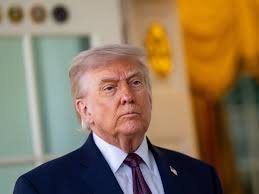 Trump’s Islamabad Gamble: The High Stakes of a New Iran Deal
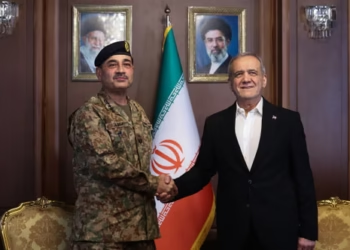 The General’s Gambit: Pakistan’s New Role in Global Peace
 Mexico, Spain and Brazil call for Cuba dialogue amid crisis
 Pakistan’s Ambitious Bid for Middle East Peace
 Israeli Soldiers Jailed Over Vandalism of Lebanese Statue
 Trump Weighs Sending Afghan Allies to the Congo
 Prominent Voices Challenge Palestine Action Ban
 Merz Criticises US Approach in Iran Conflict
 UK Envoy Sparks Controversy Over Special Relationship Claims
 Ukraine Urges UK to Seize Russian Oil Tankers
 The Billionaire’s Secretary and the £1m Fraud
 Ukraine strikes Tuapse as oil disaster worsens
 Mission to the World’s Edge: A Heroic Rescue in Tristan
 US and Mexico Face Heatwave as Floods Batter South Africa
 Mexico’s Missing: State Complicity in a Growing Crisis
 French Patient Told Hantavirus Was Just Anxiety
 Putin Signals War End as Russian Momentum Stalls
 Romania’s Judicial Crisis: A System Under Siege
 Lee Lai Makes History with Landmark Stella Prize Victory
 Philippine Senator Flees After Days Under Senate Siege
 Alberta Separatist Bid Blocked by Canadian Court
 Big Tobacco Under Fire Over Controversial New Ad Campaign
 Court Upholds Landmark Win for Transgender Rights
 Liberal Senator Criticises Immigration Rhetoric
 Senate Moves to Restrict Trump’s War Powers on Iran
 ICC Arrest Warrant Threat Sparks West Bank Retaliation
 Taliban Codifies Strict New Marriage and Divorce Legislation
 Tony Abbott Returns as New Liberal Party President
 Discontent grows around Putin amid war strain
 Trump Diplomacy Faces Hurdles from Tehran to Tbilisi
 Trump Faces Legal Blow Over Global Tariffs
 Washington Brokerage Sparking Hope Amid Regional Firestorms
 New York Consumer Watchdog Tackles Corporate Lawbreaking
 Global Tech Giants Face Off Against Australia Over Media Levies
 Ukraine Turning the Tide: Zelenskyy Reclaims the Initiative Against Isolated Russia
 Millions in British Charity Funds Linked to Illegal Settlements
 Firearm Fine for Missing Boy’s Grandmother
 Historic Peace Deal Reached Between United States and Iran
 A New Era of Diplomacy Sparks Confusion on the World Stage
 AI to Help Botanists Win the Critical Race Against Extinction
 Battle for Washington: Mayoral Race Braces for Trump
 Tuchel’s England Mission Goes Beyond Football Success
 Historic Victory for Canada as They Defeat Nine-Man Qatar
 Trump’s Iran Legacy Hangs on Tehran Deal
 What Burnham in Number 10 Means for the Future of Britain
 Canada Secure Historic Last 16 Spot with Late Goal
 White House Moves to Limit Public Voice on Fossil Fuels