Published: 13 August 2026. The English Chronicle Desk. The English Chronicle Online
The Democratic Republic of Congo is facing an Ebola outbreak of unprecedented speed, with the World Health Organization warning that the epidemic could become the deadliest recorded outbreak of the disease if its current trajectory continues.
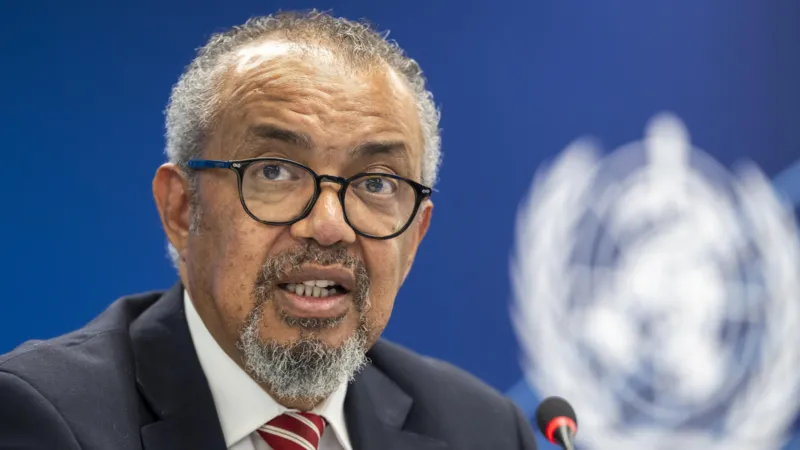
WHO Director-General Tedros Adhanom Ghebreyesus said the outbreak in eastern Congo was currently on course to surpass the West African Ebola epidemic of 2014-2016, which killed more than 11,000 people. The warning comes as the latest figures indicate that more than 4,300 cases have been recorded and deaths have passed 2,000.
The scale and speed of the outbreak have alarmed health officials because containment efforts are struggling to keep pace with transmission. WHO officials have described it as the fastest-growing Ebola outbreak recorded, with insecurity, difficult terrain, weak health infrastructure, delayed diagnosis and limited access to patients all complicating the response.
The epidemic was officially declared on 15 May, but genetic and epidemiological investigations indicate that the virus had been circulating for several months before authorities recognised the outbreak. WHO officials now believe transmission began around February, with early cases apparently mistaken for illnesses such as malaria and typhoid.

That delay has become one of the most significant concerns surrounding the crisis. By the time Ebola was identified and formally declared, the virus had already established transmission networks within communities.
WHO Africa director Dr Mohamed Janabi described the situation bluntly, saying health workers were effectively chasing a virus that was already ahead of them. The organisation has acknowledged that healthcare teams are reaching only a fraction of people affected by the disease in some of the most difficult areas.
The outbreak is concentrated in eastern parts of the Democratic Republic of Congo, including Ituri and neighbouring provinces. WHO’s July assessment recorded transmission across dozens of health zones and five provinces, demonstrating how widely the virus had already spread by that point.
The current epidemic is being caused by Bundibugyo virus, a relatively rare species of Ebola. It is particularly challenging because there is currently no approved vaccine or specific treatment specifically targeting the strain.
That makes the response fundamentally different from recent Ebola outbreaks involving the Zaire species, for which vaccines and treatments have transformed the ability of health authorities to prevent infections and improve survival.
Bundibugyo virus has previously been responsible for only a small number of known outbreaks, including outbreaks in Uganda in 2007 and 2012. The limited experience with the virus means scientists and public-health officials have had fewer established tools and less accumulated evidence with which to respond.
Ebola itself is a severe viral disease that can become fatal rapidly. Symptoms can initially resemble common illnesses, including fever, tiredness and headache, making early diagnosis difficult. As the disease progresses, patients can develop vomiting and diarrhoea, followed by severe dehydration, organ damage and other potentially fatal complications.
Transmission generally occurs through direct contact with infected bodily fluids or contaminated materials. This means that healthcare workers, family members and caregivers can face particularly high risks when infection-control procedures are difficult to maintain.
The humanitarian situation in eastern Congo has made those challenges considerably worse.
The region has experienced prolonged insecurity and displacement, with armed groups and instability affecting access to communities. Health workers must operate in areas where travel can be dangerous and where medical facilities and transport networks are limited.
WHO has also warned that population movement and trade routes create additional difficulties for containing transmission. The outbreak has already demonstrated a cross-border dimension, with Uganda recording infections linked to transmission originating in Congo. WHO has been coordinating surveillance and preparedness measures with neighbouring countries.
Community trust is another critical factor.
Ebola control depends heavily on people reporting symptoms, accepting testing, cooperating with contact tracing and allowing health teams to investigate potential cases. Misinformation or fear can undermine those efforts, particularly when communities have previously experienced inadequate healthcare or conflict.
The situation is further complicated by the fact that many patients are not being identified through established chains of transmission. That means health authorities cannot always determine who infected a patient or who else may have been exposed.
The resulting gaps make it harder to isolate infections before they spread.
The international response is therefore focusing heavily on surveillance, laboratory testing, contact tracing, infection prevention and community engagement. WHO says it is working with the Congolese and Ugandan governments to strengthen these systems and prepare neighbouring countries for potential imported cases.
At the same time, scientists are racing to develop tools specifically suited to Bundibugyo virus.
The UK’s Medicines and Healthcare products Regulatory Agency has authorised human trials for a candidate vaccine developed by researchers at the University of Oxford. The vaccine uses technology related to the platform developed for the Oxford-AstraZeneca Covid-19 vaccine.
Other research groups are also developing potential vaccines, although those candidates remain at earlier stages of development.
The WHO has additionally supported research into whether existing antiviral treatments could improve survival among patients infected with Bundibugyo virus. Earlier WHO assessments noted that candidate vaccines and possible therapeutic approaches were being evaluated because of the lack of approved products specifically targeting the strain.
The urgency of that research is underlined by the speed at which the current outbreak has grown.
In mid-July, WHO reported 2,124 confirmed cases and 828 deaths in Congo. By August, reported cases had more than doubled and deaths had passed 2,000, illustrating how rapidly the outbreak has accelerated.
The comparison with the 2014-2016 West African epidemic is therefore not simply about the eventual number of deaths. It is also about the speed at which infections are accumulating.
The West African outbreak remains the deadliest Ebola epidemic previously recorded. It began in Guinea before spreading to Liberia and Sierra Leone, overwhelming health systems and killing thousands. The crisis eventually helped drive unprecedented international investment in Ebola vaccines and treatments.
The current Congo outbreak is unfolding in a different environment. Although the global health community has more Ebola experience than it did in 2014, the virus involved in this outbreak is a different species for which the medical response is far less developed.
That creates an uncomfortable paradox: the world has more knowledge about Ebola than ever before, but the specific virus responsible for the current epidemic has fewer established countermeasures.
WHO officials are nevertheless trying to avoid unnecessary alarm. The organisation has said that bringing transmission under control within a few months is possible, but this should not be interpreted as meaning that the outbreak itself will necessarily end within that period.
Containing transmission would represent a major achievement, but cases could continue to occur afterwards as previously infected people are identified and treated.

For communities in eastern Congo, however, the crisis is already an immediate reality.
Hospitals and health workers are operating under extreme pressure, while families face the consequences of illness, deaths and disruption to everyday life. The combination of an aggressive outbreak and a fragile security environment leaves little margin for delays.
The WHO’s warning that the outbreak could eclipse the 2014-2016 epidemic is therefore a measure of how quickly the situation has deteriorated, rather than a prediction that the final death toll is already inevitable.
The trajectory can still change.
Faster diagnosis, better access to affected communities, effective contact tracing, stronger infection control, community cooperation and successful clinical trials could all alter the course of the epidemic.
But health officials face a race against time. As Tedros’s warning makes clear, every delay allows the virus more opportunities to move through communities.
For the Democratic Republic of Congo, the priority is now to bring transmission back under control before the current outbreak becomes not only the fastest-growing Ebola epidemic on record, but also the deadliest.
Related News:
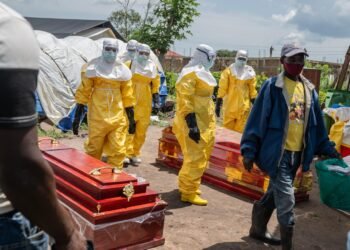 Ebola outbreak in DRC overwhelms health system as cases surge
 Nearly 50 Die of Thirst in Sahara Desert
 Woman Warns of Lifelong Damage From Ketamine
 Vulnerable Women Targeted by Illegal Sperm Donor Services on Social Media
 Ghana Mourns the Death of Its Tallest Man, Remembered as a Gentle Giant
 Majority of UK Men Would Opt for Prostate Cancer Screening, Survey Finds
 Cooper Unveils £4m Cyber Plan Against Russian Hackers
 Thousands in the UK sue Johnson & Johnson over alleged talcum powder, linked to cancer
 Five Young People Die in Spain Apartment Block Fire
 Illegal Skin Lightening Cream Being Sold in UK Butchers, Watchdog Warns
 Suspect in Rhode Island Ice Hockey Shooting Killed Ex‑Wife and Son
 Epstein Eyed Record Label Investment to Access Women, Files Suggest
 Austrian Climber Found Guilty After Girlfriend Froze to Death on Mountain
 ‘A Disgrace’ — Patient Blasts Neurology Report
 Vegetarian Diet Linked to Lower Risk of Several Cancers
 Kidnapping of Foreigners Soars in Africa’s Lawless Sahel Region
 Water Cremation Introduced in UK First
 I Met the Man Who Murdered My Identical Twin. What He Told Me Brought Me Peace
 Baba Vanga’s Chilling World War 3 Prediction and Russia’s New Leader
 Teen Admits Filming Westfield Chair Prank
 Missing Cuba-Bound Aid Ships Spark Urgent Search
 Horror in the Outback as Crocodile Kills World-Renowned Doctor
 Mother’s Heartbreak as Son Traumatised by Friend’s Sexual Abuse
 ‘A Living Nightmare’: Parents of Vaccinated Teenager Speak Out After Rare Meningitis B Battle
 How and When to See April’s Full Pink Moon
 “Homo Sapiens are All of Us”: Artemis II Crew Sends Emotional Message of Unity from Deep Space
 Inside the “Justice Factory”: BBC Enters the Seized Scam Compound with Fake Global Police Stations
 ‘I Will Not Abandon Him’: Pauline Hanson Stands by Ben Roberts-Smith After War Crime Charges
 ‘It Was an Accident’: Rohan Dennis Breaks Silence to Attack ‘False Narrative’ Over Wife’s Death
 The Digital Frontline: Inside the Rise of Africa’s ‘Manosphere’
 The Fallen Icon: Ben Roberts-Smith Charged with Five War-Crime Murders
 ‘The Best Decision I Ever Made’: A Mother’s Viral Plea After a Near-Miss with Lung Disease
 The Friendship Friction: Would You Call Out Your Friend’s Toxic Behaviour?
 Moldova River Crisis Exposes War’s Hidden Cost
 The Sinking Heritage: The Dutch Village at Risk of Being Demolished
 The Wheels of Hope: Charity Delivers ‘Seismic’ Joy Through Specialized Bikes for Children with Cancer
 The Pouch Peril: Dental Experts Probe the ‘Seismic’ Impact of Nicotine Pouches on Oral Health
 National Heartbreak: Turkey Mourns Victims of Unprecedented School Shooting Wave
 Canadian astronaut French words ease language row
 Horror at the Heights: Canadian Tourist Killed in Sniper-Style Attack at Teotihuacán
 NHS Safety Fears as Nurses Cover Doctor Gaps
 “It Felt Like Normal Life Just Dissolved”: Teenage Girls Invent Drug-Detecting Straw After Spiking Ordeal
 Two Dead in Adelaide Airport Plane Crash Fire
 Tragedy in the Red Centre: Outback Search Ends in Discovery of Missing Girl’s Body
 Robotic Revolution: UK Surgeons Complete First “Fully Autonomous” Abdominal Procedure
 “The Weight of the Nation”: Campaigners Demand Overhaul of “Fragmented” Eating Disorder Care
 “Fear is a Choice”: The 80-Year-Old Great-Grandmother Defying the “Dopamine Desert”
 The “Dementia Deficit”: Why 2026 is the Breaking Point for UK Social Care
 Precision Without the Scalpel: UK Team Reaches “New Frontier” in Robotic Abdominal Surgery
 China Fireworks Factory Blast Kills 21 in Hunan
 “The Floating Fever”: WHO Confirms Second Hantavirus Case as Cruise Outbreak Death Toll Reaches Three
 “The Trial’s Strange Turn”: Musk v. Altman Case Veers into Personal Testimony and ‘Sperm Offers’
 “The Swap Shop”: Dr Chris van Tulleken Backs Southampton Teens’ Fight Against ‘The Matrix’ of Ultra-Processed Food
 “The Bio-Marker Breakthrough”: At-Home Blood Test Could Spot Alzheimer’s Risk Years Before ‘Clinical’ Symptoms
 The Pathogen Protocol”: Third British National Monitored for ‘Nasty’ Suspected Hantavirus
 “The Critical Intervention”: Essential Steps for Identifying and Treating Heat-Related Emergencies
 China mine blast death toll rises to 90
 Pope Meets Families in Italy Toxic Waste Zone
 Israeli Strikes Kill 11 in Gaza City
 Everest Climber Recalls Guide’s Six-Day Survival
 Bear Escapes Factory Through Open Window
 Emergency Caesareans Rise Across England
 Fuel and Supply Crisis Pushes Gaza Toward Collapse
 Twelve Killed in Mass Shooting in Johannesburg, Police Confirm
 Woman Claims Swinging Website ‘Facilitated Abuse’ and Left Her Traumatised
 Girl Survives 32 Hours Under Rubble After Venezuela Quake
 Study Finds Fertility Success Falls Sharply After Age 49
 Blood Test Could Transform Endometriosis Diagnosis
 Trump’s Major Recruitment Drive Targets Border Patrol Growth
 Pioneering Treatment Gives Identical Twins a Healthy Start
 US Investigates ‘Explosive Diarrhoea’ Parasite Outbreak
 Dreyfus Statue Finally Gets Permanent Paris Home
 Alleged Head of Fake Government Agency Arrested in Nigeria After Weeks on the Run
 Magnitude 7.1 Earthquake Strikes Japan, Several Injured
 Many Trapped Inside Japanese Shopping Centre After Earthquake
 Calls Grow to Ban Toxic Pet Flea Treatments
 Thai School Shooting Leaves Nation Demanding Answers
 Evidence Links South African Forces to Detective’s Murder
 AOC Reveals Egg-Freezing Decision Amid Political Future
 Online Trolls Targeting Food Reviewer Are ‘Bored and Jealous’