Published: 14 August 2026 | The English Chronicle Desk | The English Chronicle Online
Nigel Farage’s convincing victory in the Clacton by-election has given the Reform UK leader a political boost, but it has not brought an end to the financial questions that prompted him to trigger the contest in the first place.
Within hours of his victory, parliamentary scrutiny into Farage’s financial affairs was set to resume, leaving the Reform leader facing the prospect that the controversy he sought to move beyond could follow him back into Westminster.
Farage won the Clacton contest with 22,239 votes, securing the seat he had previously represented before resigning and forcing a new election. The result was widely expected, particularly because the major established parties did not field candidates in the contest.
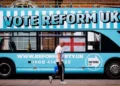
His victory nevertheless provided an important political moment for Reform UK. The party has been seeking to establish itself as a serious force in British politics, and Farage has repeatedly presented his return to Parliament as part of a broader campaign to challenge the established political system.

Yet the by-election has not removed the questions surrounding a £5m gift Farage received from cryptocurrency investor and Reform donor Christopher Harborne.
The parliamentary investigation centres on whether Farage should have registered the money. The Reform leader has maintained that he did not break parliamentary rules and has argued that he was not required to declare the gift in the circumstances in which it was received.
The issue has attracted sustained attention because of the size of the payment and the circumstances surrounding it.
Farage has described the £5m as an unconditional gift. Various explanations have emerged over why Harborne provided the money, including suggestions that it was connected to Farage’s political role and his activities following Brexit.
The controversy became particularly significant because parliamentary rules require certain financial interests and benefits to be declared. The question facing the standards process is whether the gift fell within those requirements and whether Farage should have formally registered it.
Farage has rejected accusations of wrongdoing and has portrayed the investigation as politically motivated.
His supporters have similarly argued that scrutiny of his finances forms part of a wider attempt by political opponents and sections of the establishment to undermine Reform UK.
For his critics, however, the issue is one of transparency and accountability rather than political disagreement.
The timing of the investigation’s return is particularly significant because Farage had himself triggered the Clacton by-election.
When he announced his resignation as an MP, he argued that voters in the constituency should judge his actions and that he wanted to continue what he described as the political revolution being led by Reform UK.
The subsequent campaign became an unusual contest. With the main parties choosing not to participate, Farage faced a field dominated by independent, minor-party and satirical candidates, including Count Binface.
The election also featured an unusually large number of candidates and a lengthy ballot paper, turning the contest into something of a national political curiosity.
Farage did not attend the count to celebrate his victory. Before the result was announced, he told supporters that he had been advised there was an organised effort to disrupt the result and said he did not want to be “demeaned and humiliated” by opponents.
When the final result arrived, however, it confirmed a substantial victory.
The result allows Farage to return to Parliament with a clear mandate from Clacton voters, but it does not provide him with immunity from the outstanding investigations.
The parliamentary process could take months. Any conclusion will depend on the evidence considered by the relevant authorities and the interpretation of the rules governing MPs’ financial interests.
The possible consequences will therefore remain uncertain until the investigation is completed.
The £5m controversy is not the only financial issue surrounding Reform UK.
The Metropolitan Police has also been investigating donations to the party for more than a year. Police have confirmed that two people have been interviewed, although no arrests have been announced.
The investigation reportedly concerns allegations involving the concealment or disguising of donations derived from an impermissible donor, or the use of false information relating to donations.
Reform UK has denied wrongdoing and has maintained that its officials have not been interviewed as part of the police investigation.
The police inquiry and parliamentary investigation are separate processes. A conclusion in one would not necessarily determine the outcome of the other.
Nevertheless, the continued scrutiny presents a challenge for Farage as he attempts to portray Reform UK as a credible party of government.
Farage has spent years positioning himself as an outsider challenging Britain’s political establishment. That political identity has been central to his appeal, particularly among voters frustrated with the Conservative and Labour parties.
But becoming a serious governing force brings additional expectations around financial transparency, internal standards and institutional accountability.
Reform UK has expanded significantly since its emergence as a major electoral force. It has built a large membership base and attracted prominent political figures, including former Conservative minister Robert Jenrick and businessman Zia Yusuf.
That expansion has increased pressure on the party to demonstrate that it can operate with the standards expected of an established political organisation.
Farage’s critics argue that the Clacton by-election did little to answer the questions surrounding his finances.
The election itself cost public money. The local authority estimated the cost of organising the contest at around £250,000, while Reform UK offered to cover the expense. Electoral law, however, prevents a political party from simply paying the cost of an election organised by the public authorities.
Critics therefore questioned why Farage triggered a contest in a seat he already represented when the financial investigation could continue regardless of the result.
Supporters counter that the election gave voters an opportunity to decide whether they wanted Farage to continue representing them and provided him with a renewed mandate.
The result suggests that voters in Clacton remain strongly supportive of him.
But the political environment beyond the Essex constituency is more complicated.
Farage’s personal popularity has shown signs of weakening in some polling, while Reform’s national support has faced increasing competition from both Labour and the Conservatives.
Polling analysts have suggested that growing awareness of the financial controversy could reinforce negative perceptions of Farage among voters who are already sceptical of Reform UK.
At the same time, his strongest supporters appear likely to interpret the continuing investigations differently, viewing them as evidence of what they regard as establishment hostility towards the party.
That creates a political divide that could make the financial controversy particularly difficult for Farage to escape.
The Reform leader’s challenge now is to convert his Clacton victory into broader political momentum while ensuring that the investigations do not dominate his return to Parliament.
His party has ambitious national objectives, including the possibility of becoming a major force at the next general election. To achieve that, Reform will need to demonstrate that it can move beyond personality-driven campaigning and operate as a disciplined political organisation.
The Clacton result gives Farage a platform from which to do that.
However, the parliamentary investigation means the financial questions remain firmly on the agenda.
If the standards process ultimately concludes that Farage breached parliamentary rules, the consequences could be politically significant. Depending on the findings and any sanctions imposed, his position as an MP could once again come under pressure.
A further by-election could even become possible in certain circumstances, although any such outcome would depend entirely on the eventual findings and the sanctions applied.
For now, Farage remains an elected MP and Reform UK’s leader. His victory has strengthened his immediate political position, but it has not resolved the controversy surrounding the £5m gift.
The central question is therefore no longer whether Farage can win Clacton. He has done that decisively.
The question is what happens next.
The parliamentary investigation will examine whether the gift should have been declared and whether Farage complied with the rules governing MPs’ financial interests. Meanwhile, the police investigation into Reform UK donations continues separately.
For a politician whose career has been built around challenging the political establishment, the coming months could test his ability to withstand institutional scrutiny as much as any election campaign.
Farage may have won the battle for Clacton, but the questions about his finances have not disappeared.
They have simply followed him back to Parliament.
Related News:
 Councils to Get Powers to Block New Vape Shops
 Teen Among Arrests at Nowak Protest as Three Charged
 Six More to Appear in Court Over Henry Nowak Protest Arrests
 Watchdog Says MI5 Knew Agent’s Violent Misogynistic Views
 Murder Probe Continues After Arrest Release
 Uncle of Man Arrested in Ann Widdecombe Investigation Says Family Was Left ‘Shocked’ by News
 Burnham Considers Inquiry Into Epstein UK Connections
 UK Charity Watchdog Probes Settlement Donations
 Harper Widow Fights Early Release of Killer’s
 Councils to Get New Powers to Block Vape and Betting Shops
 Farage faces Clacton battle as by-election stunt backfires
 Tasers Introduced in UK Prisons to Combat Rising Violence and Protect Staff
 David Lammy Faces Possible Legal Challenge Over Foreign Office Secondment Scheme
 Police Advised to Disclose Ethnicity of Suspects in High-Profile Cases
 Charlie Kirk Killing Used to Mobilise UK’s Largest Far-Right Rally in Decades
 Jailed Georgian Opposition Leaders Warn UK of Iranian Links to Ruling Party
 UK Police to Gain New Powers to Manage Repeated Protests, Home Office Announces
 Boris Johnson Breached Rules on Post-Office Business Contacts
 Lucy Powell urged ministers to reconsider costly legal case for Labour donor’s firm
 Tories Push to Dilute Labour’s Workers’ Rights Bill
 China Spy Case Hearing Reveals Key Gaps in Prosecution
 It’s time to come clean on the China spy case
 French Taxi Driver Cleared in David Lammy Theft Case After Fare Dispute
 Company linked to Michelle Mone owes £39m in tax
 Met Police Culture Makes Racial Harm ‘Inevitable’
 Remaining rebel Labour MPs have whip restored
 Victims’ commissioner Baroness Newlove dies aged 63
 Emails Show Epstein Funded Mandelson’s Husband After Jail
 Police Probe Mandelson Over Alleged Epstein Leak
 Last‑ditch Call to Save Police Front Counters in London
 How Much Could Andrew’s Arrest Hurt the Royal Family?
 Andrew Released Under Investigation After Arrest
 Plan to Name Company Owners to Curb Money Laundering
 Man on Trial for Rape That Led to Andrew Malkinson’s Wrongful Jailing
 Labour MP’s Partner Arrested on Suspicion of Spying for China
 Police Scotland Pays £8m Compensation to Staff
 Undercover officer deceived women with ‘grotesque and cruel’ lies, spycops inquiry told
 Expert in Letby Trial Failed to Disclose Hospital Probe
 Ram-Raid Gang Hit Livingston Store in Arson Escape
 Mandelson’s Phone Messages Requested in Files Release
 Justice Served: Nine Indian Cops Sentenced to Death for Custodial Murder
 Case Closed: No Criminal Wrongdoing by Officer in Simpson Murder Investigation
 Justice in Motion: Police Driver Charged Over Fatal Collision
 Prevent Failings Exposed After Southport Attack
 Mass Arrests at London Palestine Protest Spark Debate
 City & Guilds Sale Sparks Fees and Pay Uproar
 The ‘Axiom of Fraud’: £39.5m Hole Discovered in Second Major Law Firm Collapse
 The ‘Fill Up and Flee’ Spree: Fuel Thefts Surge 62% as Petrol Prices Rocket
 The London “Safe Houses”: BBC Reveals Epstein Housed Victims in Secret UK Flats
 US Charges Sinaloa Governor in Major Cartel Case
 The “Invisible” Tape: Leaked Video Contradicts Police Denial in Brutal Arrest Case
 High Street “Lawlessness”: Council Staff Under Attack from “Link-up” Gangs
 The “Golden Handshake”: Nigel Farage Referred to Standards Watchdog Over £5m Crypto Gift
 “I Won’t Be Silenced”: Candidate Reveals Arson Threat as “Political Terror” Grips Local Elections
 Cartel crackdown raises fears of fresh violence
 Under the Lens: Senior Officer Suspended as IOPC Probes “Disturbing” Arrest Footage
 City & Guilds Faces Governance Crisis Over Sale
 Barrister Criticises Trial After Suicide Case Verdict
 US Criticises UK Policing After Henry Nowak Case
 US Condemns Alleged ‘Two-Tier’ UK Policing
 Man Arrested 22 Years After Leeds Teen Murder
 MPs Warn Defence Plan Delays Are Undermining UK Credibility
 Henry Nowak Murder: How the Case Shocked Britain and Drew US Attention
 Starmer Says ‘Justice Has Been Done’ After Arson Attacks
 Review Calls for Major Overhaul of Police Leadership
 Democrats Urge Maine Senate Candidate to Leave Race
 Police Rule Out Political Motive in Widdecombe Killing
 Suzy Lamplugh Mystery Still Haunts Detectives
 Badenoch Urges Emergency Law to Halt Early Release Plan
 Man Admits Taking Ambulance With Patient Inside
 Two Held After Woman Found Dead in Liverpool Hotel
 PC Harper Family Angered by Early Release Policy
 Man Jailed After Noise Dispute Ends in Fish Killing
 Families Furious After Jailed Funeral Boss Apologises
 Harper Case Officer Condemns Possible Early Release
 Evidence Links South African Forces to Detective’s Murder
 Former Thai MP accused of killing official on camera
 Daniel Kinahan appears in Dublin court after extradition
 £3.7m Ferrari seized in London police crackdown
 PC Harper’s Mother Finds Hope After No 10 Call