Published: 26 August 2026. The English Chronicle Desk. The English Chronicle Online
Canada has announced a new round of retaliatory tariffs on American goods, escalating an already tense trade dispute with the United States after negotiations between the two countries broke down.
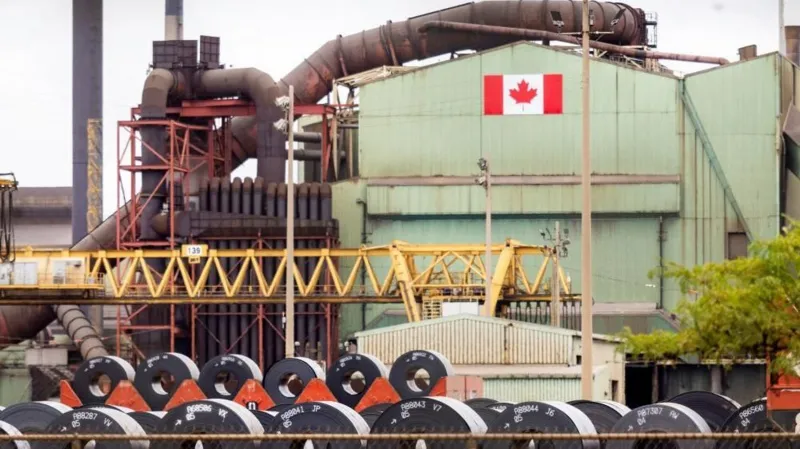
The Canadian government said the counter-tariffs would reach as high as 50% and cover almost C$28bn ($20bn; £15bn) worth of US products. The measures, which are scheduled to take effect on 8 September, target a wide range of goods, including steel, aluminium, furniture, clothing, seafood and household appliances.
Canadian officials described the measures as a carefully targeted response to tariffs imposed by President Donald Trump on Canadian imports. They said the value and structure of the Canadian tariffs had been designed to mirror the impact of the US measures while attempting to limit the damage to Canadian consumers and businesses.
Finance Minister François-Philippe Champagne said Canada had little choice but to respond after the latest US tariffs were imposed.
“Those tariffs will have real consequences for Canadian workers, businesses and communities across our nation,” he said. “Canada must respond.”
Champagne described the new measures as “proportionate” and “strategic”, signalling that Ottawa wants to demonstrate resistance without unnecessarily increasing the economic costs for Canadian households.
The government has also announced an additional C$7.5bn in support programmes for businesses and workers affected by the trade dispute. The money is intended to help companies withstand higher costs, protect employment and provide assistance to industries facing disruption from the tariffs.

The measures nevertheless represent a significant escalation between two countries whose economies have been deeply integrated for decades.
Canada and the US share one of the world’s largest bilateral trading relationships, with manufacturers and suppliers on both sides of the border relying heavily on cross-border trade. Components can cross the border multiple times during the production process, particularly in industries such as automobiles and manufacturing.
Higher tariffs therefore risk raising costs throughout supply chains rather than simply affecting the final price of an imported product.
Canadian consumers could ultimately face higher prices if businesses pass increased import costs on to customers. American companies could also face higher costs if Canadian suppliers become more expensive or if Canadian businesses seek alternative markets.
The dispute follows the collapse of trade talks late last week. Both governments have blamed the other side for making unreasonable demands during the negotiations.
Canada’s latest tariff list contains nearly 900 American products. Officials said they deliberately selected goods that Canadian consumers and businesses could obtain from alternative suppliers, in an effort to reduce the domestic impact of the retaliation.
The measures include a 50% tariff on steel and aluminium products that had previously faced a 25% Canadian counter-tariff. Other products facing tariffs of up to 50% include natural honey, furniture, clothing, cosmetics and perfume.
A separate group of products will face tariffs of 25%, including household appliances such as dishwashers and washing machines, dairy products including cheese, fish and seafood, and certain steel and aluminium derivatives.
Some tools and machinery, including forklifts and air-conditioning equipment, will face tariffs of 15%.
The structure of the Canadian response reflects an attempt to put pressure on American exporters while limiting the number of goods for which Canadian buyers have few alternatives.
However, businesses have warned that a prolonged confrontation could still have serious consequences.
The United States is Canada’s largest trading partner, meaning that even carefully designed tariffs could eventually affect investment, employment and consumer prices.
The latest escalation has also raised questions about the future of the United States-Mexico-Canada Agreement, or USMCA, the North American trade pact that replaced the previous NAFTA agreement.
The agreement was intended to provide a stable framework for trade across the continent, particularly for integrated manufacturing sectors. A sustained tariff confrontation between Canada and the US could put that framework under increasing pressure.
The White House responded sharply to Canada’s announcement, accusing Ottawa of choosing confrontation over cooperation.
It said the US had been prepared during the latest negotiations to offer Canada “the most preferential market access of any country on Earth”.
Instead, the White House accused Canada of making “unreasonable demands, walk-backs, and flat-out rejection”.
Trump also intensified his criticism of Canada in a series of posts on Truth Social.
He accused Canada of taking advantage of the US for decades and complained about tariffs faced by American farmers seeking to sell products in Canada.
“I deal with many countries, and Canada is easily the most difficult and unreasonable,” Trump wrote.
He also suggested that Canada should not expect the same economic relationship with the US if Ottawa continued its current approach.
In one particularly provocative comment, Trump suggested renaming Lake Ontario, one of the Great Lakes shared by the two countries, “Lake America”.
The US president has also threatened to increase tariffs on Canadian automobiles to 50% from 1 January, adding another layer of uncertainty for the North American automotive industry.
Canadian Prime Minister Mark Carney has responded by accusing Trump of seeking to damage important Canadian industries, including automobile manufacturing and steel and aluminium production.
The automotive sector is particularly exposed because manufacturing operations in Canada, the US and Mexico are closely connected. Parts and components routinely move across borders before vehicles reach consumers.
Any substantial increase in tariffs could therefore have consequences for manufacturers, suppliers, workers and consumers throughout North America.
Despite the increasingly hostile rhetoric, there have also been indications that some politicians and officials want negotiations to resume.
Ontario Premier Doug Ford, who had sharply criticised Trump during the escalation, adopted a more conciliatory tone in an interview with CNN.
After describing Trump as a “loser” at a news conference on Monday, Ford acknowledged that the situation had become heated.
“But I want to make a deal — a good deal for the American people, a good deal for Canadians,” he said.
The dispute is also being watched closely in Mexico.
Mexican President Claudia Sheinbaum has sent Economy Secretary Marcelo Ebrard to Washington for emergency discussions following the breakdown in negotiations involving Canada.
Mexico has a direct interest in preventing the dispute from destabilising North America’s wider trade arrangements. The three countries are economically interconnected, and prolonged tariff disputes could create uncertainty for companies that have invested heavily in regional supply chains.
The political dimension is equally significant.
Canadian public opinion has generally shown strong support for Ottawa taking a firm position against US tariff demands. However, the Conservative opposition has called for greater transparency over the failed negotiations and is demanding that the full text of the draft agreement with Washington be released.
That pressure reflects concerns that Canadians have not been given a complete explanation of why negotiations collapsed and whether a compromise could still have been reached.
For businesses, the central concern is now how long the dispute will last.
Tariffs can be absorbed temporarily by companies, suppliers or consumers, but prolonged restrictions can force businesses to redesign supply chains, find alternative suppliers or reconsider investment decisions.
The uncertainty itself can become an economic cost.

Canada’s decision to impose tariffs from 8 September therefore marks more than another exchange of trade penalties. It represents a deeper deterioration in relations between two economies that have historically depended on close cooperation.
Both governments continue to leave open the possibility of further talks, but the latest measures demonstrate how quickly negotiations can turn into economic confrontation.
For Canadian businesses and workers, the C$7.5bn support package offers some protection against the immediate effects. For American exporters, the new Canadian tariffs threaten reduced access to a major neighbouring market.
The wider question is whether the two governments can step back from escalating measures before the dispute causes lasting damage.
With the US threatening additional tariffs on Canadian automobiles and Canada preparing its own measures across hundreds of American products, the pressure on both sides to find a negotiated settlement is increasing.
The coming weeks will determine whether the latest tariffs become another temporary confrontation or the beginning of a much broader North American trade war.
Related News:
 Canada to Match Trump’s 50% Tariffs Dollar for Dollar
 Firms on both sides fear damage from US-Canada trade war
 Wealthy Britons Flee Gulf War but Avoid UK Taxes
 UK Wage Growth Slows as Jobs Market Holds Firm
 UK Doubles Steel Tariffs to 50% to Protect Domestic Plants
 Europe EV Demand Surges as Fuel Prices Rise
 Albanese Rejects Gas Export Tax Push
 BBC News Faces Deep Cuts in 2,000 Job Plan
 Spirit Airlines shuts down after 34 years amid crisis
 New UK advice scheme to boost savings and investing
 US Awaits Iran Reply on New Ceasefire Proposal
 Kevin Warsh sworn in as Fed chair amid economic backlash
 UK Pushes for New EU Goods Trade Deal
 Reeves Fights to Keep Treasury Role Amid Labour Turmoil
 Albanese Defends Tax Reforms Amid Emotional Speech
 Victoria Labor Launches Apprenticeship Expansion Plan
 UK rejects EV charging VAT cut amid Treasury clash
 UK firms accused of ‘AI washing’ boom
 Essex valley emerges as rising English wine hub
 Gen Z Graduates Face Economic Uncertainty
 Severn Trent CEO Reward Package Doubled Despite Public Anger
 Europe Weighs Hormuz Navigation Fee Plan
 Weight-Loss Drugs Transform Fashion Shopping Habits
 EasyJet Takeover Sparks Fears Over Passengers’ Future
 Pubs and Hotels Face Business Rates Reform Review
 Shein targets $27bn valuation in Hong Kong debut
 Post Office Scandal Compensation Tops £1 Billion as Victims Finally See Justice
 Tensions Unfold in Market Harborough as Asylum Seeker Hotel Sparks Divisive Protests
 Big Pharma Investment Freeze Puts UK Life Sciences Sector Under Strain
 Great Britain’s Energy Operator Commits to Strengthening Grid to Prevent Blackouts
 UK House Price Growth Slows as Buyers Exercise Caution Ahead of Autumn Budget
 Kemi Badenoch Unveils ‘Golden Rule’ to Halve Spending Cuts for Deficit Reduction at Tory Conference
 New V-Level qualification to transform post-16 education
 Real living wage set to rise nearly 7% for UK workers in 2026
 Reeves Faces Setback as Labour May Miss Homes Target
 Virgin Trains Moves Closer to Challenging Eurostar Monopoly
 Trump’s UK Ambassador Urges North Sea Drilling to Strengthen US Ties
 Ryanair Chief UK Economy ‘Doomed’ Under Labour
 M&S Profits More Than Halve After Cyber-Attack
 Millionaires group urge Reeves to introduce wealth tax to ‘lift kids out of poverty’
 From Lego to Pokémon: How Adults Are Driving UK Toy Market Growth
 Canada Passes Carney’s First Budget in Tight Parliamentary Vote
 Starmer Says Labour’s Economic Plan Needs Years to Deliver
 Historic £100-Weekly Pension Boost Brings Relief for UK Mineworkers
 Starmer Faces Parliamentary Battles Over UK-EU ‘Reset’ Plan
 ScottishPower Tops List of Worst UK Energy Suppliers
 City & Guilds pay surge sparks backlash amid £22m cuts
 Trump Fed bid heads to Supreme Court
 BT Names New Openreach Chief Amid Major Fibre Expansion
 UK Banks Plot Payment Backup Amid Trump Fears
 UK Unemployment Rate Climbs to 5.2% Peak
 Rising Costs Force Families to Rethink Days Out
 Unions Raise Concerns Over Doctors’ Pay Dispute
 US and Iran Agree to Two-Week Provisional Ceasefire
 Central Bank Chiefs Hold Crisis Simulation in Washington
 UK Staycations Rise as Travel Fears Grow
 Former Brexit Chief Calls for Rejoining the EU
 Oil Prices Surge Above $120 Amid Iran Blockade Fears
 Millions Face Food Poverty as Consumer Confidence Hits Record Low
 Silent Tracks: Rail Line Without Passengers
 DeepMind Staff Vote to Unionize Over US Military Contract
 Global Conflict Hits Home As Bullock Warns Of Economic Pain
 STV Election Coverage Disrupted Amid Bitter Pay Dispute
 High Stakes in Beijing as Trump and Xi Meet Amid Global Turmoil
 Lotus Boss Pledges Future to Norfolk and Seeks State Support
 Trump and Xi Convene in Beijing for Historic High-Stakes Summit
 Rubles and Resilience: How Russia-China Border Towns Thrive
 UK Eases Russian Oil Sanctions as Fuel Costs Soar
 Mid-Year Surge to Push Average Annual Bills Beyond £1,900
 Tube Strike Brings Capital to a Standstill Over Shift Disputes
 No Brutal EV Price War For British Motorists
 Gas Prices Fall Below $4 Following US-Iran Peace Deal
 Is JD Vance the Ultimate Fall Guy for Trump’s Shaky Iran Deal?
 EU Slashes Steel Quotas But Grants UK Favourable Rates
 Trump Faces Backlash Over $2bn Earnings Since Return
 Starling Bank Trims Jobs for AI Future
 Accessible Travel Could Unlock £176bn for UK Economy
 Apollo Launches £5.7bn Bid for Aviation Giant easyJet
 Burnham unveils £65m drought aid for farmers
 Unions Warn Labour Over Zero-Hours Contract Reforms