Published: 06 October 2026. The English Chronicle Desk. The English Chronicle Online.
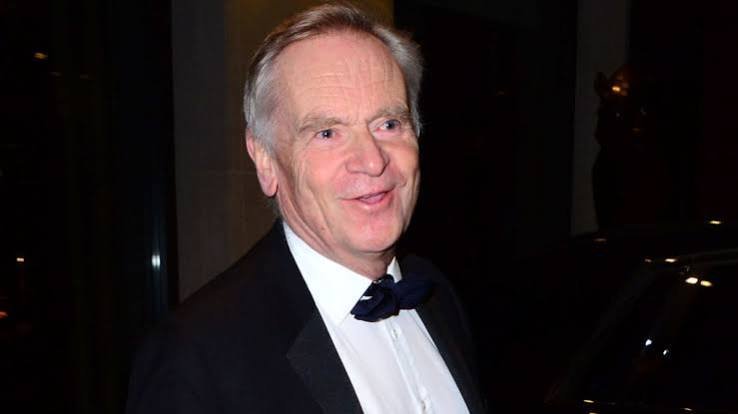
Jeffrey Archer, the bestselling British novelist and former Conservative politician whose extraordinary career moved between Westminster, international literary success and one of the country’s most notorious political scandals, has died aged 86.
Archer died suddenly but peacefully at his home on Monday, according to his publisher, HarperCollins. He reportedly died between writing sessions, just one day before the scheduled publication of his latest novel, Adam and Eve.
His death marks the end of a remarkable and often controversial life in which political ambition, personal adversity, criminal conviction and literary achievement repeatedly intersected.
For millions of readers around the world, Archer was best known as a prolific storyteller whose novels became international bestsellers. For Britain’s political establishment, however, his name remains closely associated with the scandal that brought his political career to an abrupt end and ultimately resulted in his imprisonment for perjury.

Archer’s literary achievements were substantial. His first novel, Not a Penny More, Not a Penny Less, was published in 1976, at a point when he was attempting to rebuild his finances after a disastrous period in business and politics.
The novel became the foundation of a writing career that would eventually make Archer one of Britain’s most commercially successful authors. Over subsequent decades, he produced a large body of novels, short stories, plays and other works, developing a style built around suspense, ambition, deception and dramatic twists.
His 1979 novel Kane and Abel became his signature international success. The story of two men from vastly different backgrounds whose lives become intertwined captivated readers across the world and eventually sold more than 30 million copies.
Overall, Archer’s books sold an estimated 300 million copies across 119 countries and in 49 languages. His work spent more than 14 years on the Sunday Times bestseller lists and more than five years on the New York Times bestseller lists, giving him an extraordinary position in the international publishing industry.
His publisher’s UK chief executive and Archer’s editor, Kate Elton, described working with him as one of the great privileges of her publishing career. She praised his discipline, describing him as exceptionally hardworking and committed to repeatedly revising his manuscripts in pursuit of precision.
That dedication to writing remained with Archer throughout his final years. His death occurred only hours after he had appeared at a sold-out event at Leicester Square Theatre in London with broadcaster Gyles Brandreth.
Hundreds of fans attended the event to hear Archer discuss his new novel and sign books. Brandreth later recalled that Archer had been energetic, humorous and engaging, describing him as a great storyteller until the very end.
Archer had reportedly told Brandreth that Adam and Eve would be his final novel.
His career before becoming a literary giant was very different. Archer entered Parliament at the age of 29 after winning a 1969 by-election in Louth, Lincolnshire. Before becoming an MP, he had served as a Conservative councillor in Havering in north-east London and had also been involved in the art business, including running a Mayfair gallery.
During his time in Parliament, Archer presented himself as a centrist Conservative and occasionally opposed the party’s more right-wing positions.
His political ambitions, however, were interrupted by financial difficulties. He became the victim of a fraudulent investment scheme that left him heavily in debt. By the time of the 1974 general election, he decided not to seek re-election, citing his financial circumstances.
The decision unintentionally opened the door to a second career that would ultimately make him far more famous as an author than as a politician.
Not a Penny More, Not a Penny Less was partly an attempt to restore his financial position. Its success proved transformative. The book was later adapted for radio and television, while Archer continued producing successful fiction and other forms of writing.
By the middle of the 1980s, he had established himself as a major commercial author and had regained considerable influence within Conservative politics.
His popularity as a speaker at grassroots Conservative events impressed party leader Margaret Thatcher, who appointed him deputy chairman of the Conservative Party in 1985.
But his political resurgence was soon overshadowed by a scandal that would remain central to his public reputation.
In 1986, allegations emerged that Archer had paid money to a sex worker. He denied the allegations and launched a libel action against the Star newspaper.
The case became a major legal victory for Archer at the time. In 1987, he won £500,000 in damages after the court accepted his case against the newspaper.
However, the events surrounding the libel action would return more than a decade later with devastating consequences.
In the late 1990s, Archer attempted to secure the Conservative nomination for mayor of London. His political ambitions were effectively destroyed when evidence emerged that he had lied under oath during the earlier libel proceedings.
The revelation transformed an earlier newspaper controversy into a criminal case.
Archer was charged in 2000 and subsequently tried for perjury and perverting the course of justice. His trial began in May 2001, shortly after Monica Coghlan, the woman at the centre of the original allegations, died in a road accident.
An Old Bailey jury found Archer guilty of lying during his libel case. He was sentenced to four years in prison.
He was initially held at Belmarsh prison in London and was later transferred between several other prisons. He was released early in 2003 after serving roughly half of his sentence.
The conviction effectively ended his frontline political career, although Archer retained his position as a life peer in the House of Lords.
He was created a life peer in 1992, but following his imprisonment he played little active role in the upper chamber. He eventually retired from the House of Lords in 2024.
Despite the extraordinary collapse of his political ambitions, his literary career continued to flourish.
Archer remained a highly visible figure in British cultural life and continued publishing books well into his eighties. His ability to maintain a loyal readership despite the controversies surrounding his personal and political life became one of the defining characteristics of his career.
His supporters and colleagues often emphasised a different side of his personality, pointing to his enthusiasm, energy, humour and extraordinary commitment to storytelling.
Former Conservative minister Nadhim Zahawi paid tribute to Archer after his death, describing him as a close friend and praising his wit, warmth and seemingly limitless energy.
The contrast between Archer’s public controversies and his enduring popularity as a writer reflects the complexity of his legacy.
He was simultaneously a former politician whose career ended in disgrace, a convicted perjurer, a bestselling novelist and a major figure in British publishing. His life repeatedly demonstrated how quickly public fortunes can change and how difficult it can be to separate a person’s artistic achievements from the controversies surrounding them.
Even after his imprisonment, Archer returned to writing and maintained a relationship with his readers. His books continued to reach audiences across generations and continents, ensuring that his name remained familiar long after his active political career had disappeared.
His final public appearance, coming only a day before his death, offered a fitting conclusion to a life dominated by storytelling. Surrounded by readers and discussing a novel he had written, Archer remained engaged with the profession that had ultimately defined his public identity.
His death also comes at the moment his latest work, Adam and Eve, was due to reach readers. The timing gives the publication a poignant significance, turning what was intended to be another addition to his long catalogue into his final literary work.

Archer is survived by his wife, Mary, and their two sons, William and James.
His death closes one of the more extraordinary chapters in modern British public life. From Parliament to the bestseller lists, from political prominence to prison and back to literary success, Jeffrey Archer’s career was marked by reversals few public figures have experienced.
His political legacy will remain inseparable from the perjury conviction that ended his ambitions, while his literary legacy will rest on the hundreds of millions of books sold worldwide and the enduring popularity of works such as Kane and Abel.
For readers, however, Archer’s final chapter is likely to be remembered most simply: as a novelist who continued writing until the end of his life, leaving behind a vast body of stories that reached an audience far beyond the political world in which he first became famous.
Related News:
 Green Party Surges Past Labour in Latest UK Poll
 Trump’s UK Ambassador Urges North Sea Drilling to Strengthen US Ties
 French Taxi Driver Cleared in David Lammy Theft Case After Fare Dispute
 Millionaires group urge Reeves to introduce wealth tax to ‘lift kids out of poverty’
 Starmer Faces Growing Dissent as Labour MPs Weigh Leadership Challenge
 Reeves rejects £1bn plea for NHS redundancy payouts
 PM Condemns Leaks, Vows Loyalty to Ministers and Stability
 Major Rent Reform Ends No-Fault Evictions in England
 Peers Flood Assisted Dying Bill with 942 Amendments
 Most Tories Expect to Support a Farage-Led Government
 Starmer Says Labour’s Economic Plan Needs Years to Deliver
 Culture secretary to review Telegraph takeover by Daily Mail owner
 Labour Blocks Burnham as Party Rift Deepens Ahead of Polls
 Huge mistake: Labour blocks Burnham from byelection bid
 Artificial intelligence will cost jobs, admits Liz Kendall
 Labour targets Greens on drugs in Gorton Denton byelection
 Greens nominate Hannah Spencer for Gorton and Denton byelection
 Mandelson Faces Police Inquiry Over Epstein Leak
 Labour Thinktank Row Deepens Over Journalist Probe Claims
 Morgan McSweeney downfall shocks Labour leadership
 Cabinet Secretary Shake-Up Triggers Due Diligence Warning
 Starmer Faces Inquiry Calls Over Thinktank Probe
 Royal Mail Delivery Crisis Deepens Amid Weather Chaos
 UK shelves £110m border project amid trade strain
 Farage Unveils Reform UK Frontbench Team
 California Democrats Vow Trump Reckoning
 Trump Tariffs Threat Spark UK and EU Alarm
 Wales Approves Assisted Dying Bill Consent
 UK EU Trade Reset Gains Public Backing
 Green Party Stuns Labour in Gorton and Denton Byelection
 Corbyn Leads Your Party in Coordinated Left-Flank Strategy
 Labour Together scandal sparks clean break vow
 Asylum Seekers to Work After Year-Long Wait
 Starmer Row as Greens Demand Apology
 Proposed Law Leaves Gap for Children of Convicted Paedophiles
 Gordon Brown urges court for crimes against children
 Starmer Praised for Stance on Trump and Iran Conflict
 Inquiry into HMRC child benefit errors launched by NAO
 NHS Plans to Cut Overseas Workers Labeled Overambitious
 Farage Faces Backlash Over Crypto Cameo Endorsements
 Relationship with Trump may be beyond repair, Starmer warned
 Unions Raise Concerns Over Doctors’ Pay Dispute
 UK Government Poised to Revive Stalled Hillsborough Law
 UK Stands Firm on Falklands Amid US Rift
 Welsh Labour Faces Potential Historic Election Defeat
 Starmer Survives Mandelson Rebellion
 Silent Tracks: Rail Line Without Passengers
 Major test for Labour as polls open in Great Britain
 Labour Members Doubt Starmer Future as Burnham Leads Poll
 Reform UK Faces Crisis as Newly Elected Councillors Resign
 Keir Starmer Struggles to Secure His Grip on Downing Street
 Farage Faces Standards Probe Over Cash Property Purchase
 Secret Role of UK Security Services in Troubles Amnesty Law
 Farage and Reform UK Reshape British Politics
 Minister Criticises Police Guidance Amid Southampton Protests
 Makerfield Voters Demand Real Change as Election Looms
 The Hidden Crisis Eroding Trust in British Communities
 Deepfake Abuse on X Sparks Safety Concerns for Dissidents
 Labour MP Revives Blocked Assisted Dying Bill in Commons
 Starmer Set to Announce Exit Plan as Burnham Eyes No 10
 Farage Warns Sky News Following Financial Inquiry
 Burnham Pledges New Era of Open Debate for Labour MPs
 Ann Widdecombe, Formidable Political Figure, Dies at 78
 Security Row Erupts Following Tragic Death
 Burnham unveils £65m drought aid for farmers
 Unions Warn Labour Over Zero-Hours Contract Reforms
 Former Diplomats Urge UK and France to Act on Palestine
 Bayeux Tapestry Revives Franco-British Ties
 Tom Watson Takes Senior Role at Palantir
 Mahmood Warns Far Right Over Asylum Protests
 MPs Defend UK Economic Watchdog Against Critics
 The Tests Awaiting Andy Burnham After Labour Conference
 Free Speech Emerges as Key UK Election Issue
 Burnham Opens Door to Possible UK Return to EU
 Badenoch Raises Prospect of 2027 UK Election
 Half of UK Voters Back Possible EU Return
 US bombers leave RAF Fairford after terror threat
 Tories Plan Major Overhaul of UK Environmental Rules
 Gosport Protesters Clash With Police Over Migrant Rescue
 Palace Rejects Funding Andrew’s Police Legal Challenge