Published: 24 May 2026.The English Chronicle Desk. The English Chronicle Online.
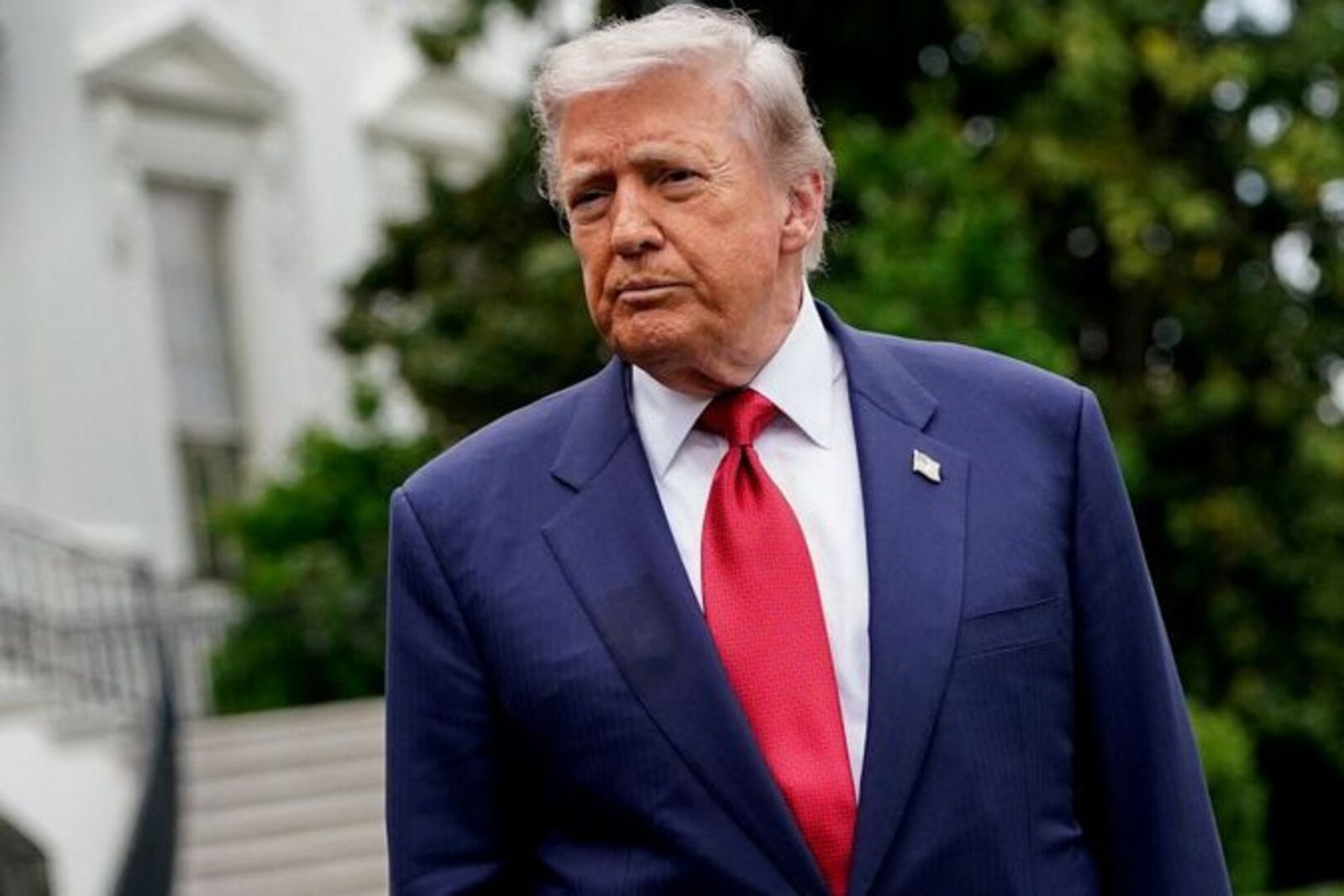
Donald Trump has claimed that a peace agreement with Iran has been “largely negotiated”, signalling a potential breakthrough in efforts to end the conflict that erupted earlier this year following US and Israeli military action. The announcement, made on his social media platform after discussions with regional leaders and mediators, has sparked both cautious optimism and sharp scepticism across diplomatic circles.
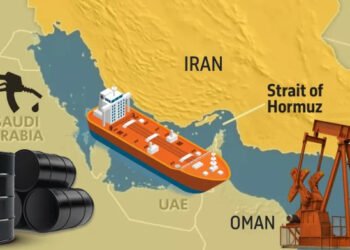
Trump said that “final aspects and details” of a memorandum of understanding were still being finalised, but insisted that the framework of a deal between the United States, Iran and several regional powers had already been reached. Among the most significant elements of his claim was that the strategic Strait of Hormuz would be reopened as part of the agreement, a key development for global energy and shipping routes.
The Strait of Hormuz, a narrow but critical waterway through which a large portion of the world’s oil exports pass, has remained one of the central flashpoints in the wider Middle East conflict. Any shift in its control or access carries immediate implications for global oil markets and international security.

However, Iranian state-linked media quickly challenged Trump’s assertions. The Fars news agency, which is closely associated with the Islamic Revolutionary Guard Corps, stated that the Strait would remain under Iranian control and described any suggestion of an imminent agreement as “inconsistent with reality”. It emphasised that decisions over maritime passage, navigation routes and permits would continue to fall solely under Iranian authority.
This public contradiction highlights the uncertainty surrounding the negotiations and raises questions about whether a unified agreement has truly been reached or whether parallel diplomatic messaging is being used for strategic leverage.
Pakistan has emerged as a key intermediary in the latest round of discussions. Prime Minister Shehbaz Sharif expressed optimism about the progress of talks and said Islamabad hoped to host further negotiations “very soon”. He described recent conversations between regional leaders, including officials from Saudi Arabia, Qatar, Turkey, Egypt, the United Arab Emirates, Jordan and Pakistan, as “productive and constructive”.
Pakistan’s military leadership, particularly army chief General Syed Asim Munir, has reportedly played a significant behind-the-scenes role in facilitating communication between Tehran and Washington. Sources indicate that Munir has held multiple meetings with senior Iranian officials in recent weeks as part of broader diplomatic efforts to de-escalate tensions.
According to reports circulating in international media, a revised draft proposal has been submitted that could see a phased reopening of the Strait of Hormuz under temporary ceasefire conditions. The proposal allegedly includes a 60-day truce period during which Iran would retain operational control of the waterway while allowing regulated passage of commercial shipping without tolls or restrictions.
In exchange, the United States would reportedly ease restrictions on Iranian ports and allow limited oil exports to resume, alongside renewed negotiations over Iran’s nuclear programme. Some accounts also suggest that frozen Iranian assets abroad, potentially worth tens of billions of dollars, could be partially released as part of a broader settlement.
Despite these reported outlines, major gaps remain between competing narratives. While US officials cited by international outlets suggest progress has been made, Iranian sources continue to insist that key sovereignty issues remain unresolved, particularly over maritime control and nuclear oversight.
The geopolitical stakes surrounding any potential deal are significant. The Strait of Hormuz handles a substantial share of global energy shipments, meaning any disruption or reopening agreement would directly affect global oil prices and supply chains. Financial markets have already shown sensitivity to early reports of a possible breakthrough, with traders closely monitoring developments for signs of stability or renewed escalation.
The diplomatic push comes after months of heightened conflict in the region following US and Israeli strikes in February. Since then, indirect negotiations have reportedly taken place through intermediaries, with Pakistan increasingly positioning itself as a neutral facilitator capable of engaging both Western and Middle Eastern stakeholders.

Within the United States, reactions to Trump’s announcement have been sharply divided. Critics from both political and security circles have questioned the viability of any agreement that does not clearly address Iran’s nuclear programme or long-term regional military influence. Supporters, however, have described the reported framework as a potential step toward de-escalation after months of escalating tensions.
Former US officials have also weighed in, with some warning that any deal resembling earlier nuclear agreements could face strong domestic opposition, particularly from political figures who favour a more hardline approach toward Tehran.
As negotiations continue behind closed doors, uncertainty remains over whether a final agreement is imminent or whether competing political narratives are shaping public perception of progress. While Trump has framed the situation as a near-complete diplomatic breakthrough, Iranian officials and state-aligned media continue to reject that characterisation.
For now, the prospect of a peace deal remains unresolved, suspended between diplomatic optimism and geopolitical distrust. What is clear is that any outcome will have far-reaching consequences not only for the Middle East, but for global energy markets and international security architecture.
Related News:
 Trump likens US Navy actions to ‘pirates’
 UK Prepares Aircraft Carrier for Middle East Crisis
 Trump Faces Crisis as Iran Reopens Hormuz Tensions
 Ohio’s Battle for Trust: Democrats Vying to Flip the Buckeye State
 Middle East Crisis Escalates as Oil Routes Shake Markets
 Tensions Emerge in Netanyahu-Trump Alliance
 Former ICC prosecutor condemns US sanctions
 Houthis Strike Saudi Arabia as Middle East Tensions Rise
 Putin Intensifies Territorial Demands Before US Talks
 Trump to Recheck Green Cards from 19 Nations After DC Attack
 Trump Escalates Minnesota Immigration Surge Amid Rising Tensions
 Greenland Faces Pivotal Summit Over Arctic Power Struggle
 Trump Threatens Strong Action If Iran Executes Protesters
 Trump Receives Machado’s Nobel Medal in White House Meeting
 EU Says US Ties Have Suffered ‘Big Blow’ After Greenland Crisis
 Thousands Protest ICE Operations in Nationwide US Day of Action
 Epstein Files Reveal Trump Officials’ Emails with Financier
 Thousands Protest ICE in New York Against Trump Deportation Campaign
 Trump Praises ‘Terrific’ Petro After White House Talks
 Clinton Testimony Erupts in Fiery Exchange
 Middle East Flights Halted After Iran Strikes
 Trump Faces Questions Over Iran Conflict Plan
 Thousands Protest Iran Strikes Outside US Embassy London
 US Bombers Arrive at RAF Base Amid Rising Iran Tensions
 Mojtaba Khamenei Chosen as Iran’s New Supreme Leader
 Tehran Oil Depot Strikes Darken City With Toxic Smoke
 Pete Hegseth Iran War Remarks Spark Alarm
 Mojtaba Khamenei Supporters Rally as Iranians Fear Repression
 Iran Defiance Grows Amid US-Israel War Pressure
 Hormuz Crisis Sparks Global Oil Market Fears
 Iranian Exile Factions Seek US Backing for Iran’s Future
 Injured Mojtaba Khamenei Elevated as Iran Leader
 Trump Iran War Stance Hardens as Conflict Widens
 Ghalibaf Iran: Survivor Emerges in Shifting Power Game
 MAGA Anxiety and the Iran War: A Movement Divided at CPAC
 Trump’s Harsh Rhetoric on Iran Sparks Global Alarm
 Iran Crisis Tests Trump’s Global Leadership
 Iran Reimposes Strait of Hormuz Restrictions Amid Tension
 Charles Faces Trump Test in High-Stakes US Visit
 UK Stands Firm on Falklands Amid US Rift
 Aid Crisis Grows as Hormuz War Disrupts Supply
 US Court Ruling Reshapes Voting Rights Landscape
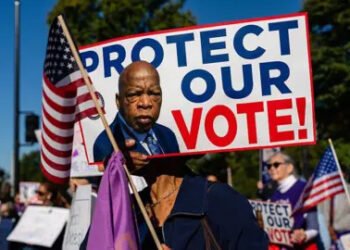 US states redraw maps after voting rights ruling
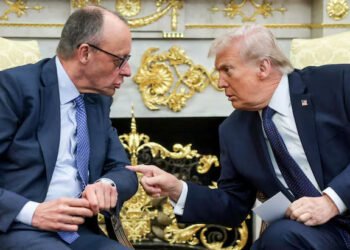 Trump orders US troop pullout from Germany
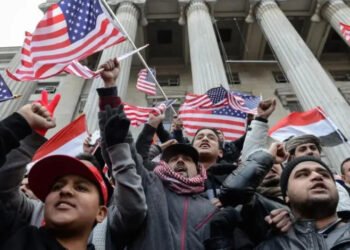 Judge halts deportation of Yemeni refugees in US
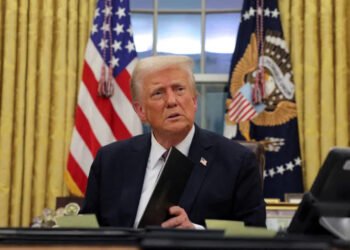 Global order shifts amid Trump-era turmoil
 Trump approval plunges amid Iran war fears
 Giuliani hospitalised in critical condition
 Trump Threatens UN Budget Cuts as US Pushes ‘Trade Over Aid’ Agenda
 Trump warns Iran as Middle East tensions surge again
 US ‘Narco Boat’ Strikes Draw Global Outcry
 Indiana Republicans Defy Trump in Key Vote Test
 US Court Restores Abortion Pill Access Temporarily
 Ohio Primaries Set Stage for Crucial Midterms
 Afghan Families Left in Limbo Face Risk of Deportation
 US Awaits Iran Reply on New Ceasefire Proposal
 Kevin Warsh sworn in as Fed chair amid economic backlash
 US green card applicants must apply from abroad, DHS says
 Hormuz Talks Near Critical Stage
 UK Pushes for New EU Goods Trade Deal
 Reeves Fights to Keep Treasury Role Amid Labour Turmoil
 Trump’s Revenge Drive Deepens GOP Divide
 Discontent grows around Putin amid war strain
 Gunman Killed After White House Security Shootout
 US Midterm Primaries: Democrats Target Key Republican Seats
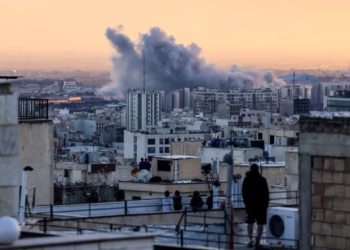 House Curbs Trump’s War Powers in Rare Rebellion
 Labour MPs Urge Burnham to Revive UK Aid Target
 Mystery Grows Over Mitch McConnell’s Health
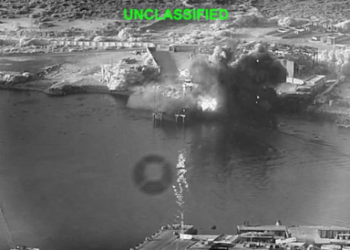 Senate Halts Defense Bill Over Iran Clashes
 Trump Jokes, Jabs and Press Tensions at WHCA Dinner
 Is America Ready for an AOC Presidential Run?
 Trump dismisses concerns over 250-day carrier deployment
 Greenland Crisis Forces Europe to Draw a Line With Trump
 UK and US Drop in Global Corruption Index Rankings
 Canberra Poster Seizure Sparks Free Speech Row
 Jacinda Ardern Move Sparks Kiwi Reflection
 Air Canada CEO Faces Outcry Over Recent Language Misstep
 Relationship with Trump may be beyond repair, Starmer warned
 Trump’s Six-Week Iranian War: The High Cost of Ignorance
 Trump’s Mount Rushmore Speech: A Divisive Anniversary