Published: 16 June 2026. The English Chronicle Desk. The English Chronicle Online.
The modern natural world faces unprecedented pressures from human activity and climate shifts today. Botanists globally are working tirelessly to document fragile ecosystems before they disappear completely. A groundbreaking report from the Royal Botanic Gardens, Kew offers a brilliant new hope. Artificial intelligence and mass digitisation are transforming the traditional landscape of botanical research rapidly. These advanced technologies are arriving just in time to rescue vital global plant species. Scientists now possess powerful digital tools to accelerate their conservation efforts across Earth. The race against extinction has entered a highly sophisticated and digital technological era.
Plants and fungi form the absolute foundation for all life on our planet. They provide vital food supplies, life-saving medicines, and essential regulation for global climates. Forests and meadows also absorb vast amounts of carbon dioxide from the atmosphere. Despite their undeniable importance, countless species face severe threats from habitat destruction daily. Approximately forty percent of all assessed plant species are currently vulnerable to extinction. A staggering three hundred and thirty thousand varieties remain completely unanalysed by science. Researchers estimate that another one hundred thousand unique plants are still entirely unnamed.
The scale of the undocumented natural world is genuinely vast and deeply challenging. Botanists currently record about two thousand new plant species around the world annually. However, leading experts state this current progress barely scratches the surface of nature. Professor Alexandre Antonelli serves as the executive director of science at Royal Botanic Gardens, Kew. He warns that potential medicines are disappearing forever before we can discover them. Sustainable crops that could feed future generations are also slipping away unnoticed. The situation regarding global fungi species is even more alarming for international scientists.
An incredible ninety percent of an estimated two million fungi species remain unknown. Less than one percent of known fungal varieties have been assessed for risk. This massive knowledge gap leaves planetary ecosystems highly vulnerable to unexpected environmental shifts. Yet, Professor Antonelli remains remarkably optimistic about the future of global conservation work. He believes that digitisation and emerging technologies provide the keys to ultimate success. Modern artificial intelligence models are learning to identify incredibly complex and challenging plant varieties. For example, sedges and peat mosses possess microscopic features that baffle human eyes.
Advanced AI systems can now analyse these tiny structures with incredible accuracy and speed. Some software models are currently identifying specimens better than experienced human specialists can. This astonishing capability allows researchers to spot vulnerable species much faster than before. Digitising physical collections also accelerates vital scientific collaboration across international borders very smoothly. It opens up historical archives that were previously hidden away in distant institutions. These digital records are especially crucial for biodiversity hotspots located in the global south.
Madagascar represents one of the most extraordinary and unique biodiversity hotspots on Earth. Landy Rajaovelona works as a dedicated senior botanist at Kew Madagascar today. Her team recently digitised thirty-seven thousand physical specimens from their local collections successfully. This massive effort unlocked a vast treasure of historical knowledge spanning several centuries. The digital archive offers invaluable insights into the state of modern tropical biodiversity. Scientists worldwide can now access this precious information without travelling across the globe. Such open access democratises scientific research and empowers local conservationists in developing nations.
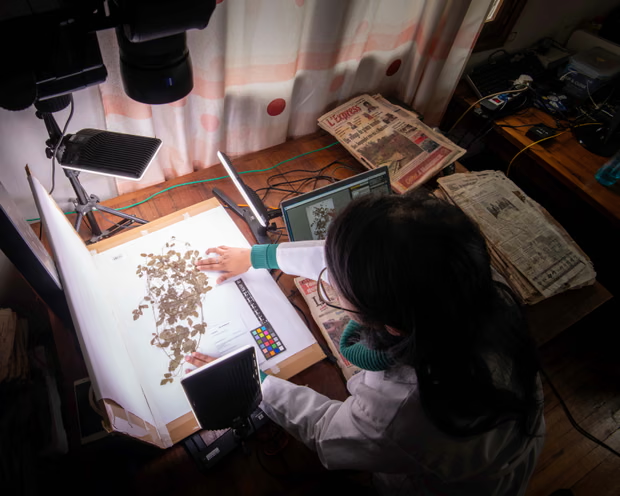
The Royal Botanic Gardens, Kew has officially digitised its entire physical collection. This monumental project includes seven million four hundred thousand individual specimens stored safely. Famous historical samples collected by Charles Darwin are now available to everyone online. At its absolute peak, the programme captured twenty thousand high-resolution images every day. Globally, there are now one hundred and forty-five million digital specimens online. However, this impressive figure represents less than sixteen percent of all museum archives. Huge blind spots in our collective understanding of nature still persist across continents.
A major study featured in the report demonstrates the immense power of AI. Scientists trained a model to recognise flowers across eight million digitised herbarium specimens. The analysis revealed that global flowering times have shifted significantly over the century. On average, plants are blooming two and a half days earlier each decade. This dramatic shift is a direct consequence of the escalating global climate crisis. Changing rainfall patterns and rising temperatures are disrupting the natural rhythms of fields. Some flowers are arriving much earlier while others are delayed past their prime.
These ecological shifts severely disrupt ancient relationships between plants and their local pollinators. Insects and birds depend on specific plants blooming at very precise times annually. When these cycles fall out of alignment, entire food webs can collapse rapidly. A historical study of herbarium specimens highlighted this precise danger in rural India. Eighty percent of kindal trees in the Western Ghats used to flower together. This synchronised blooming was vital for reproduction and local timber production industries. By the late 1990s, that successful proportion fell to less than half.
Fortunately, new technology is also unlocking deep genetic secrets from the fungal kingdom. Scientists can now extract high-quality genomes from incredibly old and fragile museum specimens. Some of these historical samples have been preserved for up to one hundred and eighty years. Researchers describe these historical fungarium collections as a literal genomic goldmine for humanity. They could yield advanced new medicines and help predict dangerous future disease outbreaks. It is worth noting that penicillin and statins were originally derived from fungi. Understanding fungal genetics remains absolutely vital for the future of global human health.
However, the impacts of climate change are altering how fungi behave in nature. Dr Esther Gaya is a prominent senior research leader at Royal Botanic Gardens, Kew. She explains that fungi are highly opportunistic organisms that thrive in warm environments. They absolutely love heat and moisture, which are increasing due to global warming. Some dangerous human pathogens appear to be spreading rapidly from traditionally warmer tropical places. As hot seasons lengthen in temperate regions like Europe, new health risks emerge. Tracking these microscopic shifts requires constant vigilance and advanced digital computing power.
The heavy use of technology does come with environmental costs of its own. The Kew report openly acknowledges the massive energy and water demands of AI. Massive data centres require immense resources to keep their powerful processors running cool. Recent media reports indicate these facilities consume six percent of British electricity today. A similar high percentage of power consumption is being mirrored across the United States. Leaders in the technology sector argue that human education also requires vast energy. Nevertheless, the environmental footprint of digital conservation remains a very serious consideration.
The comprehensive report represents the combined work of four hundred global scientific experts. These dedicated researchers hail from forty different countries, spanning a wide cultural spectrum. They caution that AI could accidentally amplify existing biases in historical scientific data. If original collections lack diversity, the technology will produce flawed conservation strategies. Therefore, the underlying data must be expanded and improved with absolute fairness. The authors call for strong partnerships between technology giants and environmental conservation groups. Governments must invest heavily in protecting physical plant and fungi collections for generations.
Related News:
 Indonesia blocks Grok chatbot over sexual content risk
 The Woman Guarding Earth From the Threat of Asteroids
 California Defies Trump With Strict New AI Standards
 Artemis II: Humanity Returns to the Lunar Frontier
 Mapping the Mind: The Universal Fingerprint of Psychedelics
 Norway’s Telenor Faces Lawsuit Over Myanmar Data Breach
 Jimmy Wales Slams Australia Social Media Ban Policy
 Court Upholds Landmark Win for Transgender Rights
 US AI Growth Faces Backside as Datacenters Hit Drought
 AI Deepfakes of Farage and Bailey Spark Bank of England Alert
 AI Lawyer Triumphs in Landmark English Court Victory
 Telstra Software Fault Triggers Massive Nationwide Outage
 Japan Vows to Bolster Security Against Espionage
 Virgin Trains Moves Closer to Challenging Eurostar Monopoly
 UK Bans Fake Numbers: Scammers Lose Their Trick
 Vibe coding’ named Collins dictionary’s word of the year
 Patients to Test Health at Home to Ease NHS Winter Pressure
 Britain deploys RAF specialists to assist Belgium with drone threats
 Northern Lights may illuminate UK skies this week
 New AI tool could cut wasted efforts in organ transplants
 Sundar Pichai Cautions on AI Hype and Market Risks
 Friedman Uninvited From 2024 Adelaide Writers’ Week
 Spoof “Make America Go Away” Caps Rally Denmark Over Greenland
 EU launches Grok AI probe into X over explicit images
 ABC Facebook Page Briefly Hacked, Adult Photos Posted
 Meta trial over child exploitation claims begins
 BT Names New Openreach Chief Amid Major Fibre Expansion
 Tech Trends Set to Transform Life in 2026
 Stewart Brand on Musk, Bezos and a Life of Long Thinking
 New Zealand Covid Response Praised Despite Lingering Scars
 The Kill Line: A Shifting Vision of the American Dream
 ‘Drinking from a Fetid Pond’: Superbug Genes in Lough Neagh
 Diplomacy on the Brink: Pakistan’s Risky Peace Mission
 Teenage Titan: Sooryavanshi Smashes IPL Records
 Canadian Mother and Daughter Released From ICE Detention
 Reform UK Pledges To Halt Visas Over Reparations Demands
 US and Iran Agree to Two-Week Provisional Ceasefire
 Israel Defies Ceasefire as Lebanon Operations Persist
 Pakistan Brokers Historic Peace Deal Amid Rising Tensions
 Islamabad Hosts Historic Peace Talks Between Iran and USA
 Artemis II Returns After Historic Moon Flyby
 Trump Signals Hope for New Iran Talks as Ceasefire Fades
 UK Banks to Deploy Controversial Mythos AI Tool Next Week
 Security Alert Near Israeli Embassy as Police Investigate
 Machado Rallies in Madrid as Venezuela Stays Frozen Out
 US-Iran Standoff: Will Trump Deploy Ground Troops?
 Investigation Into Anti-Trump Motives After Gala Shooting
 Oil Prices Surge Above $120 Amid Iran Blockade Fears
 Trump orders US troop pullout from Germany
 UK Watchdogs Warn Over AI Facial Recognition Oversight
 Japan Protests Erupt Over Plans to Revise Constitution
 DeepMind Staff Vote to Unionize Over US Military Contract
 High Stakes in Beijing as Trump and Xi Meet Amid Global Turmoil
 Fear and Betrayal: The Chilling Case of Kouri Richins
 Australia Joins UK-Led Mission to Reopen Vital Strait
 Trump and Xi Convene in Beijing for Historic High-Stakes Summit
 Australia Bans Neo-Nazi Group Under Tough New Hate Laws
 Rubles and Resilience: How Russia-China Border Towns Thrive
 Trump Turns to Middle East Allies as Iran Peace Eludes
 Aussie Race Row: Coalition Accused of Scapegoating
 Trump Pledges 5,000 Troops for Poland in U-Turn
 Cannes filmmakers split over AI’s role in cinema
 Washington Brokerage Sparking Hope Amid Regional Firestorms
 Tech Trends and the Battle Against Exam Hall Cheating
 US Condemns ‘Two-Tier’ UK Policing After Student Murder
 EU Leadership Gathers in Tivat to Renew Balkan Ties
 Trump Appeals for Middle East Calm but Conflict Escalates
 Millions in British Charity Funds Linked to Illegal Settlements
 From Pocket Monsters to the Frontline
 Trump Urged to Condemn UFC Fighter Over Obama Slurs
 Russian Tanker Captain Remanded in UK Court After Channel Seizure
 US Military Pacific Boat Strike Kills Three People
 Trump’s Mount Rushmore Speech: A Divisive Anniversary
 Sydney Records Hottest June Since 1859 as Expert Warns New High a ‘Signature’ of Global Warming
 Telstra Software Fault Triggers Massive Nationwide Outage
 Trump Swaps Planes Amid Iran Tensions
 Rotterdam Museum Honours Artist With Peanut Butter Floor
 Bangkok Nightclub Blaze Claims 30 Lives Amid Negligence Probe
 Yemen Accuses Iran of Violating National Sovereignty
 Houthis Strike Saudi Arabia as Middle East Tensions Rise