Published: 1 July 2026
The English Chronicle Desk
The English Chronicle Online
A three-year-old child has been rescued alive from the rubble of a collapsed building six days after a powerful earthquake struck Venezuela, providing a rare moment of hope amid an increasingly difficult search and recovery operation.
The child was discovered by rescue teams working in one of the areas worst affected by the disaster, which has claimed numerous lives, injured hundreds of people and left entire communities struggling to recover from widespread destruction.
Emergency workers described the rescue as remarkable, particularly given the length of time that had passed since the earthquake struck.

The young survivor was carefully extracted from debris and transported to hospital for medical assessment and treatment. Officials said the child was conscious when rescued, though details about their condition have not been fully disclosed.
The discovery has lifted spirits among rescue personnel who have spent nearly a week searching through collapsed buildings, damaged infrastructure and unstable structures in the hope of finding additional survivors.
As the operation enters its most challenging phase, each successful rescue becomes increasingly significant.
Earthquakes are among the most destructive natural disasters, capable of causing catastrophic damage within seconds. Buildings, roads, bridges and essential services can be severely affected, creating enormous challenges for emergency responders attempting to reach those trapped beneath debris.
In Venezuela, rescue teams have been working around the clock since the earthquake struck.
Search crews, firefighters, military personnel and volunteers have joined forces to locate survivors while also assisting displaced families and distributing emergency supplies.
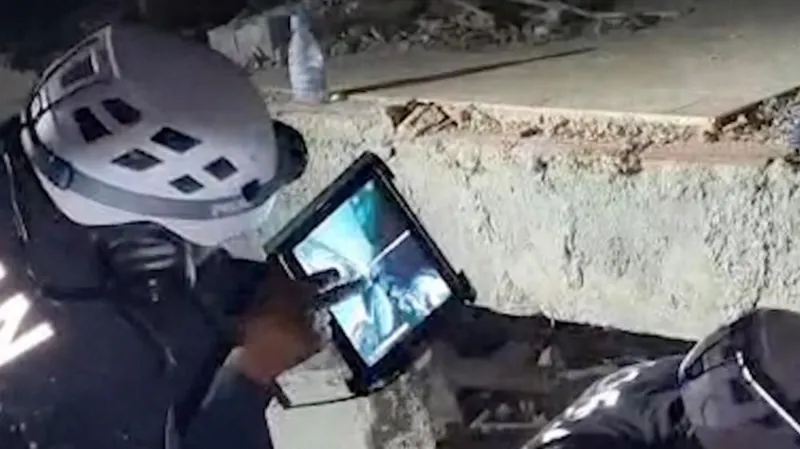
Specialist teams equipped with thermal imaging technology, listening devices and search dogs have been deployed to identify signs of life beneath collapsed structures.
The rescue of the three-year-old has highlighted the extraordinary efforts of these teams.
Emergency responders reported that they continued searching the area despite diminishing expectations of finding survivors after so many days.
Disaster experts note that while survival chances decrease significantly over time, rescues can still occur under certain circumstances.
Access to small pockets of air, protection from falling debris and favourable environmental conditions can sometimes allow individuals to survive far longer than initially expected.
Throughout history, there have been several remarkable cases of people being rescued days or even weeks after major earthquakes.
Such stories often become symbols of resilience and determination during times of tragedy.
For families affected by the Venezuelan disaster, the survival of a young child has become one of those rare moments of optimism amid overwhelming grief.
Witnesses described emotional scenes as rescue workers carried the child from the wreckage.
Some emergency personnel reportedly applauded while others embraced colleagues after the successful operation.
Many rescuers have been working in difficult and dangerous conditions since the disaster began.
Extreme temperatures, unstable buildings and exhaustion have complicated efforts to reach survivors.
Despite these challenges, teams continue to search areas where there remains even a small possibility of finding people alive.
Authorities have praised the dedication of emergency workers and volunteers involved in the operation.
Government officials said the rescue demonstrates why search efforts remain important even when survival odds appear low.
Meanwhile, hospitals across the affected region continue to treat those injured during the earthquake.
Medical facilities have faced significant pressure as large numbers of patients seek care for fractures, crush injuries and other trauma-related conditions.
Humanitarian organisations have also become increasingly involved in relief efforts.
Aid agencies are helping provide shelter, food, clean water and medical assistance to communities affected by the disaster.
Thousands of residents have been forced from their homes, with some staying in temporary accommodation centres established by local authorities.
Infrastructure damage has complicated relief operations in several areas.
Collapsed roads, disrupted communications and power outages have slowed the delivery of emergency supplies and made access to remote communities more difficult.
Engineers are working to assess the safety of buildings and critical infrastructure while recovery planning begins.
Disaster management specialists say the transition from rescue to recovery is one of the most challenging stages following a major earthquake.
While immediate efforts focus on saving lives, attention gradually shifts toward rebuilding communities and restoring essential services.
The psychological impact of such disasters can also be profound.
Mental health professionals emphasise the importance of supporting survivors, bereaved families and emergency responders who may experience long-term emotional effects following traumatic events.
For many Venezuelans, the rescue of the three-year-old child has become a powerful symbol of hope during an exceptionally difficult period.
Images and reports of the rescue have spread widely, prompting messages of support from across the country and around the world.
Social media users described the child as a reminder of human resilience and the importance of perseverance in the face of adversity.
Rescue teams, however, remain focused on their work.
Officials have stressed that operations will continue wherever there is a realistic possibility of finding survivors.
Although hopes naturally diminish as time passes, emergency workers say they remain committed to searching every accessible area.
Experts note that each disaster produces unique circumstances and that survival outcomes can sometimes defy expectations.

The Venezuelan rescue serves as a reminder that determination, skill and persistence can occasionally produce extraordinary results even in the aftermath of devastating events.
As recovery efforts continue, communities across the affected region are beginning the long process of rebuilding.
For now, however, attention remains fixed on the remarkable survival of a three-year-old child whose rescue six days after the earthquake has provided a much-needed moment of hope amid tragedy.
Related News:
 US Citizens Warned to Venezuela Flee Amid Paramilitary Threats
 Gulf states warn Trump Iran strikes risk wider Middle East war
 Machado Trump medal gesture reshapes Venezuela power struggle
 Greenland defence seen as shared Nato duty amid troop arrivals
 Trump Receives Machado’s Nobel Medal in White House Meeting
 Syria President Declares Victory as Ceasefire Reached with SDF
 US Considers Asylum for British Jews Amid Rising Antisemitism
 Russia Strikes Kyiv and Kharkiv as Peace Talks Enter Day Two
 Emails Show Epstein Funded Mandelson’s Husband After Jail
 Fears of New Arms Race as US-Russia Nuclear Weapons Treaty Expires
 US Military Says Two Killed in Strike on Alleged Drug Boat in Eastern Pacific
 Venezuela’s Opposition Says Party Leader Kidnapped Hours After Being Freed
 Iran Says ‘Guiding Principles’ Agreed With US at Nuclear Talks
 Ukraine Peace Talks End in Acrimony After Two Hours
 Indian University Kicked Out of AI Summit for Claiming Chinese Robot Dog as Its Own Invention
 UK Has Not Given US Permission to Use RAF Bases for Iran Strikes
 Major 7.1 Earthquake Strikes Off Malaysian Tourist Coast
 Drugs, Denial, Stigma: Fiji’s HIV Crisis Hits Children
 US ‘Suitcase Murderer’ Deported From Bali After 11 Years in Jail
 Why Asian Firms Are Not Cheering Trump Tariff Ruling
 Months of Planning Behind US‑Israeli Mission to Target Iran’s Supreme Leader
 UK Will Allow US to Use Bases to Strike Iranian Missile Sites, PM Says
 Israel Launches Fresh Strikes on Tehran & Beirut; US Warns “Hardest Hits” Ahead
 Carney to Push His Middle Power Strategy During Australia Visit
 Azerbaijan Promises Retaliation After Iranian Drone Hits Airport
 Yvette Cooper: UK Must Follow Principles, Not US Pressure
 Wary Allies Signal No Easy Path in Iran Crisis
 Saudi Arabia Urging US to Keep Up Iran Attacks
 Washington Enlists Musk to Battle Global Hostility Online
 Beyond ‘Halfway’: Netanyahu Signals Progress as Iranian Drone Strikes Tanker in Dubai
 Tragedy in Lebanon: Two Indonesian UN Peacekeepers Killed in Border Explosion
 Chain of Fire: US Bunker Busters Strike Major Iranian Ammo Depot in Isfahan
 ‘Lego Drones’: Ukraine Hits Back at German Arms Giant Over ‘Housewife’ Slurs
 ‘Targeting the Truth’: US Journalist Shelly Kittleson Abducted in Central Baghdad
 ‘The Warthog’s Stopover’: American Tank Busters Land at Lakenheath En Route to the Gulf
 ‘The Cost of Living’: Asia’s Migrant Workers Debate if Gulf Jobs are Worth the Risk of War
 ‘The 42-Day Rally’: Asian Markets Surge as Trump Signals ‘Rapid’ Iran Exit
 ‘You’re No Longer My Sister’: The Invisible Frontline Dividing Iranian Families
 ‘Blue Helmets’ in the Crossfire: Initial Probe Points to Roadside Bomb in Killing of UN Peacekeepers
 ‘The Arch of Anxiety’: How the $116 Oil Price and the Iran War are Reshaping Life in Asia
 7.4-Magnitude Earthquake Jolts Eastern Indonesia; Tsunami Warning Lifted
 Macron Urges Stability as Trump Jolts Nato and Iran
 Macron Rebukes Trump Following Mockery of His Marriage
 Tragic End to Outback Search as Floods Claim a Life
 Ben Roberts-Smith Arrested Over Alleged War Crimes
 Netanyahu Vows Continued Lebanon Strikes Amid Peace Talks
 Reeves Slams Trump Over Iran War Lack Of Exit Plan
 US and Iran Pursue Extension of Ceasefire via Pakistan
 Pope Leo Calls for Global Unity Following Trump Criticism
 Trump Brokers Ten Day Ceasefire to Halt Lebanon Conflict
 Mexico, Spain and Brazil call for Cuba dialogue amid crisis
 Ukraine Urges UK to Seize Russian Oil Tankers
 US Calls Australia Media Law “Foreign Extortion”
 Questions Remain Over The Tragic Bondi Massacre
 Ukraine strikes Tuapse as oil disaster worsens
 “The Tightrope Walk”: Lula and Trump Meet at White House to ‘Recalibrate’ Fractured Alliance
 “The Boy in the Bay”: German Airman to Receive Permanent Headstone 86 Years After Somerset Crash
 Tensions Emerge in Netanyahu-Trump Alliance
 US and Mexico Face Heatwave as Floods Batter South Africa
 The Long Way Home: Australia’s High-Stakes Virus Mission
 Trump Warns Iran Ceasefire Is Now on Life Support
 Putin Signals War End as Russian Momentum Stalls
 Philippine Senator Flees After Days Under Senate Siege
 “The Axis of Autonomy”: Government Breaks Silence on What Really Holds China and Russia Together
 Tragedy in the Maldives: Inside the Deep Sea Rescue
 US Ebola Case Sparks Urgent Global Screening Measures
 Discontent grows around Putin amid war strain
 Former ICC prosecutor condemns US sanctions
 European Allies Set Peace Terms for Ukraine
 At Least 19 Killed After Powerful Earthquake Hits Southern Philippines
 Iran and Israel Pause Strikes but Warn Retaliation Will Follow Any New Breach
 Aukus Deal Facing Fierce Backing and Historic Criticism
 Sentenced to 30 Years: Former Leader’s Secret Drone Plot
 Iran To Propose New Shipping Fees In Strait Of Hormuz
 Trump’s Iran Legacy Hangs on Tehran Deal
 Grief and Devotion Amidst the Rubble of Nabatieh
 Lebanon Reports 18 Killed in Israeli Strikes as Israel Announces Deaths of Four Soldiers
 Dozens Reported Killed After Pakistani Strikes Inside Afghanistan
 Canada Secure Historic Last 16 Spot with Late Goal
 Concerns Grow Over Whether China’s New ‘Ethnic Unity’ Law Could Be Used Against Critics Overseas