Published: 1 July 2026
The English Chronicle Desk
The English Chronicle Online
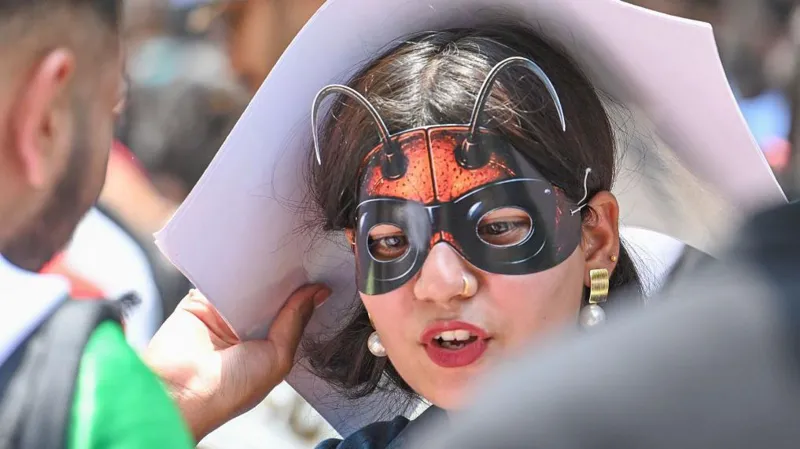
In cities across India, where temperatures have climbed above 40C during one of the hottest periods of the year, an unusual protest movement has continued to attract attention. Demonstrators known as the “cockroach protesters” have remained on the streets despite the extreme heat, using a powerful symbol to express frustration over issues ranging from governance and public services to living conditions and political accountability.
The movement has drawn widespread public interest, not only because of its unusual name but also because of the determination shown by participants who continue protesting under physically demanding conditions.
The term “cockroach protesters” emerged from campaigners’ decision to use the insect as a symbol of resilience and survival. Organisers argue that many ordinary citizens feel ignored by authorities and forced to endure difficult living conditions, much like creatures that survive in challenging environments.

By adopting the symbol, protesters aim to highlight concerns about housing, sanitation, infrastructure and the quality of public services in some communities.
What began as a local campaign has gradually developed into a broader movement encompassing a variety of social and political grievances.
Participants say the protests are intended to draw attention to everyday struggles experienced by millions of people. These include rising living costs, unemployment, inadequate public facilities and concerns about government responsiveness.
The demonstrations have occurred against the backdrop of severe heat affecting large parts of India.
Meteorologists have reported temperatures exceeding 40C in numerous regions, creating difficult conditions for outdoor activity. Health officials have repeatedly warned residents about the dangers of prolonged exposure to extreme heat, including dehydration, heat exhaustion and heatstroke.
Despite these warnings, protesters have continued gathering in public spaces, arguing that the issues motivating them are too important to ignore.
Many participants say they feel compelled to remain visible even when conditions become uncomfortable or potentially hazardous.
Several demonstrators have described the heat itself as symbolic of the pressures facing ordinary citizens.
They argue that economic hardship, environmental challenges and social inequalities have created circumstances that leave many people feeling overwhelmed.
For these individuals, enduring high temperatures during protests serves as a visible demonstration of commitment to their cause.
Organisers have attempted to reduce health risks by providing water, shade structures and medical support where possible.
Volunteer groups have distributed drinking water and encouraged participants to take regular breaks.
Healthcare professionals monitoring the situation have nevertheless urged caution, emphasising that prolonged exposure to extreme heat can have serious consequences.
The protests have sparked debate about the effectiveness of unconventional forms of political activism.
Supporters argue that the movement’s distinctive imagery has succeeded in attracting public attention and encouraging discussion of issues that might otherwise receive limited coverage.
In an era dominated by social media and rapid news cycles, campaigners often seek creative ways to stand out and communicate their message.
Political analysts note that unusual protest symbols can sometimes help movements gain visibility.
Throughout history, campaign groups around the world have used costumes, mascots and symbolic imagery to draw attention to their causes.
The cockroach motif has become one of the latest examples of this approach.
Critics, however, argue that symbolism alone may not be enough to produce meaningful political change.
Some question whether the movement has articulated sufficiently clear policy objectives or identified specific solutions to the problems it highlights.
Others suggest that public sympathy may diminish if demonstrations continue for extended periods without visible results.
Protest leaders reject those criticisms, insisting that awareness is an important first step toward reform.
They argue that many of the concerns being raised have existed for years and deserve greater public attention.
According to organisers, maintaining a visible presence keeps pressure on decision-makers and ensures that affected communities are not forgotten.
The demonstrations have also highlighted broader questions about civic participation in modern democracies.
Experts note that public protests remain one of the most accessible forms of political expression available to citizens seeking change.
Whether focused on economic issues, environmental concerns or social justice, demonstrations often serve as a way for individuals to make their voices heard.
India has a long history of public protest, with movements playing important roles in shaping political and social developments throughout the country’s history.
From independence-era campaigns to contemporary advocacy movements, public demonstrations have frequently been used to influence policy and raise awareness.
The current protests continue that tradition while reflecting modern concerns about inequality, governance and quality of life.
Environmental factors have added another dimension to the story.
Scientists warn that extreme heat events are becoming more frequent and intense in many parts of the world.
As temperatures rise, outdoor protests, public gatherings and community events may increasingly face challenges associated with climate conditions.
Some observers suggest that the determination of protesters to remain active despite the heat has become part of the movement’s identity.
Images of demonstrators standing under the blazing sun have circulated widely online, generating both admiration and concern.
Supporters view the scenes as evidence of commitment and resilience, while health experts continue to stress the importance of protecting participants from heat-related illness.
Government officials have acknowledged the right of citizens to protest peacefully while encouraging public safety precautions during periods of extreme weather.
Authorities have also emphasised the importance of maintaining public order and ensuring demonstrations do not create risks for participants or the wider community.
As the heatwave continues, the future direction of the movement remains uncertain.
What is clear, however, is that the protests have succeeded in attracting national attention.
The combination of unusual symbolism, persistent activism and challenging weather conditions has turned the campaign into one of the most talked-about protest movements in recent months.

For many participants, the message is simple: the issues they are highlighting will not disappear when temperatures rise.
Whether standing in the shade or beneath the intense summer sun, they insist they will continue making their concerns heard until they believe meaningful change has been achieved.
Related News:
 US Citizens Warned to Venezuela Flee Amid Paramilitary Threats
 Gulf states warn Trump Iran strikes risk wider Middle East war
 Machado Trump medal gesture reshapes Venezuela power struggle
 Greenland defence seen as shared Nato duty amid troop arrivals
 Trump Receives Machado’s Nobel Medal in White House Meeting
 Syria President Declares Victory as Ceasefire Reached with SDF
 US Considers Asylum for British Jews Amid Rising Antisemitism
 Russia Strikes Kyiv and Kharkiv as Peace Talks Enter Day Two
 Emails Show Epstein Funded Mandelson’s Husband After Jail
 Fears of New Arms Race as US-Russia Nuclear Weapons Treaty Expires
 US Military Says Two Killed in Strike on Alleged Drug Boat in Eastern Pacific
 Venezuela’s Opposition Says Party Leader Kidnapped Hours After Being Freed
 Christchurch Shooter Seeks to Overturn Guilty Plea in Appeals Court
 Iran Says ‘Guiding Principles’ Agreed With US at Nuclear Talks
 Ukraine Peace Talks End in Acrimony After Two Hours
 Indian University Kicked Out of AI Summit for Claiming Chinese Robot Dog as Its Own Invention
 India Sentences Three Men to Death for Attack on Israeli Tourist and Hosts
 UK Has Not Given US Permission to Use RAF Bases for Iran Strikes
 Drugs, Denial, Stigma: Fiji’s HIV Crisis Hits Children
 US ‘Suitcase Murderer’ Deported From Bali After 11 Years in Jail
 Why Asian Firms Are Not Cheering Trump Tariff Ruling
 Months of Planning Behind US‑Israeli Mission to Target Iran’s Supreme Leader
 UK Will Allow US to Use Bases to Strike Iranian Missile Sites, PM Says
 Israel Launches Fresh Strikes on Tehran & Beirut; US Warns “Hardest Hits” Ahead
 Carney to Push His Middle Power Strategy During Australia Visit
 Azerbaijan Promises Retaliation After Iranian Drone Hits Airport
 Yvette Cooper: UK Must Follow Principles, Not US Pressure
 Wary Allies Signal No Easy Path in Iran Crisis
 Saudi Arabia Urging US to Keep Up Iran Attacks
 Washington Enlists Musk to Battle Global Hostility Online
 Beyond ‘Halfway’: Netanyahu Signals Progress as Iranian Drone Strikes Tanker in Dubai
 Tragedy in Lebanon: Two Indonesian UN Peacekeepers Killed in Border Explosion
 Chain of Fire: US Bunker Busters Strike Major Iranian Ammo Depot in Isfahan
 ‘Lego Drones’: Ukraine Hits Back at German Arms Giant Over ‘Housewife’ Slurs
 ‘Targeting the Truth’: US Journalist Shelly Kittleson Abducted in Central Baghdad
 ‘The Warthog’s Stopover’: American Tank Busters Land at Lakenheath En Route to the Gulf
 ‘The Cost of Living’: Asia’s Migrant Workers Debate if Gulf Jobs are Worth the Risk of War
 ‘The 42-Day Rally’: Asian Markets Surge as Trump Signals ‘Rapid’ Iran Exit
 ‘You’re No Longer My Sister’: The Invisible Frontline Dividing Iranian Families
 ‘Blue Helmets’ in the Crossfire: Initial Probe Points to Roadside Bomb in Killing of UN Peacekeepers
 ‘The Arch of Anxiety’: How the $116 Oil Price and the Iran War are Reshaping Life in Asia
 Macron Urges Stability as Trump Jolts Nato and Iran
 Macron Rebukes Trump Following Mockery of His Marriage
 Tragic End to Outback Search as Floods Claim a Life
 Ben Roberts-Smith Arrested Over Alleged War Crimes
 Netanyahu Vows Continued Lebanon Strikes Amid Peace Talks
 Reeves Slams Trump Over Iran War Lack Of Exit Plan
 US and Iran Pursue Extension of Ceasefire via Pakistan
 Pope Leo Calls for Global Unity Following Trump Criticism
 Trump Brokers Ten Day Ceasefire to Halt Lebanon Conflict
 Mexico, Spain and Brazil call for Cuba dialogue amid crisis
 Ukraine Urges UK to Seize Russian Oil Tankers
 US Calls Australia Media Law “Foreign Extortion”
 Questions Remain Over The Tragic Bondi Massacre
 Ukraine strikes Tuapse as oil disaster worsens
 “The Tightrope Walk”: Lula and Trump Meet at White House to ‘Recalibrate’ Fractured Alliance
 “The Boy in the Bay”: German Airman to Receive Permanent Headstone 86 Years After Somerset Crash
 Tensions Emerge in Netanyahu-Trump Alliance
 US and Mexico Face Heatwave as Floods Batter South Africa
 The Long Way Home: Australia’s High-Stakes Virus Mission
 Trump Warns Iran Ceasefire Is Now on Life Support
 Putin Signals War End as Russian Momentum Stalls
 Philippine Senator Flees After Days Under Senate Siege
 “The Axis of Autonomy”: Government Breaks Silence on What Really Holds China and Russia Together
 Tragedy in the Maldives: Inside the Deep Sea Rescue
 US Ebola Case Sparks Urgent Global Screening Measures
 Discontent grows around Putin amid war strain
 Former ICC prosecutor condemns US sanctions
 European Allies Set Peace Terms for Ukraine
 Iran and Israel Pause Strikes but Warn Retaliation Will Follow Any New Breach
 Aukus Deal Facing Fierce Backing and Historic Criticism
 Sentenced to 30 Years: Former Leader’s Secret Drone Plot
 Iran To Propose New Shipping Fees In Strait Of Hormuz
 Trump’s Iran Legacy Hangs on Tehran Deal
 Grief and Devotion Amidst the Rubble of Nabatieh
 Lebanon Reports 18 Killed in Israeli Strikes as Israel Announces Deaths of Four Soldiers
 Dozens Reported Killed After Pakistani Strikes Inside Afghanistan
 Canada Secure Historic Last 16 Spot with Late Goal
 Concerns Grow Over Whether China’s New ‘Ethnic Unity’ Law Could Be Used Against Critics Overseas
 Headline: Three-Year-Old Rescued Alive Six Days After Devastating Venezuela Earthquake