
Published: 15 July 2026 | The English Chronicle Desk | The English Chronicle Online
US President Donald Trump’s apparent retreat from plans to impose tolls on commercial shipping passing through the Strait of Hormuz has fuelled fresh debate over Washington’s strategy toward Iran, with foreign policy analysts suggesting the move reflects the mounting challenges facing the White House as it seeks to bring an end to an increasingly complex regional conflict.
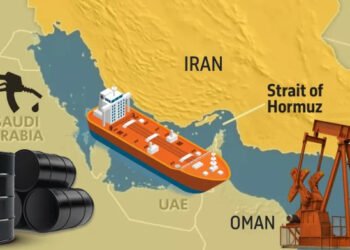
The Strait of Hormuz remains one of the world’s most strategically important maritime chokepoints, carrying a significant proportion of global oil and liquefied natural gas exports each day. Any disruption to shipping through the narrow waterway immediately reverberates across international energy markets, affecting governments, businesses and consumers worldwide.

In recent weeks, the Trump administration had floated the possibility of introducing a system that would require commercial vessels using the route to pay fees intended to offset the costs of increased US naval operations in the Gulf. Officials argued that American military forces had long borne much of the responsibility for safeguarding one of the world’s busiest shipping lanes and that other nations benefiting from safe passage should contribute more directly to those security efforts.
However, the proposal quickly generated criticism from allies, shipping companies, legal experts and energy analysts. Many warned that imposing unilateral tolls on an international waterway could raise complex legal questions under international maritime law while potentially increasing tensions with both Iran and major trading partners.
Within days, senior administration officials appeared to soften their position, suggesting that no immediate decision had been made and that consultations with international partners would continue. Trump himself also adopted a more cautious tone, indicating that the United States remained focused on restoring stability rather than introducing measures that might complicate diplomatic efforts.
The shift has been widely interpreted as an acknowledgment of the difficult balancing act confronting the administration.
Since hostilities with Iran intensified, Washington has sought simultaneously to project military strength, protect international shipping, reassure regional allies and avoid becoming drawn into a prolonged and costly conflict. Those objectives have often proved difficult to reconcile, particularly as developments on the ground continue to evolve rapidly.
Security analysts argue that the proposed toll system may have been designed to demonstrate resolve while encouraging allied nations to share a greater proportion of the financial burden associated with maritime security. Yet implementing such a plan would have required broad international cooperation, something that has so far proved elusive.
Several European governments reportedly expressed concerns that charging commercial vessels could disrupt global trade and undermine established principles governing freedom of navigation. Major Asian economies, many of which depend heavily on energy imports transported through the Gulf, were also believed to be monitoring the proposal closely.
The Strait of Hormuz occupies a uniquely sensitive position in global commerce.
Roughly one-fifth of the world’s traded crude oil passes through the narrow passage connecting the Persian Gulf with the Gulf of Oman and the Arabian Sea. Any interruption to shipping has the potential to trigger sharp increases in energy prices, disrupt supply chains and generate wider economic uncertainty.
Even the prospect of additional costs imposed on shipping companies can influence freight rates, insurance premiums and fuel prices, making governments particularly cautious about measures affecting the route.
Trump’s decision to step back from the proposal therefore appears to reflect not only geopolitical considerations but also economic realities.
The administration has consistently argued that controlling inflation and maintaining affordable energy prices remain central priorities. Introducing policies that could contribute to higher transportation costs would risk undermining those domestic economic objectives.
Political observers also note that the administration faces competing pressures from within the United States.
Some Republican lawmakers have urged a tougher stance toward Iran, including stronger military measures and additional economic sanctions. Others have argued that avoiding a wider regional war should remain the overriding objective, warning against policies that might escalate tensions further.
The President has repeatedly stated that his preference is to achieve peace through strength rather than prolonged military engagement. Throughout the conflict, Trump has insisted that while the United States will defend its interests and allies, it does not seek an open-ended war in the Middle East.
Yet bringing the conflict to a close has proven far more complicated than many anticipated.
Iran has continued to demonstrate its capacity to influence regional security through both conventional military capabilities and its network of allied groups operating across the Middle East. Diplomatic efforts involving regional powers have produced limited progress, while military exchanges have heightened concerns about broader instability.
Foreign policy specialists argue that these realities leave Washington with relatively few straightforward options.
Direct military escalation carries considerable risks, while purely diplomatic initiatives may struggle without meaningful concessions from all parties involved. Economic pressure remains an important tool, but sanctions alone have historically produced mixed results in altering Tehran’s strategic calculations.
The apparent withdrawal from the Hormuz toll proposal may therefore illustrate the administration’s recognition that maintaining international unity is essential if diplomatic and economic pressure is to remain effective.
Maritime law experts have also questioned whether any single nation possesses the legal authority to impose mandatory transit fees on vessels navigating an international strait used for global commerce. Such concerns may have contributed to the administration’s decision to reconsider the proposal before any formal implementation.
Meanwhile, international energy markets have responded cautiously.
Although prices remain sensitive to developments in the Gulf, investors generally welcomed indications that the administration was avoiding measures likely to create additional uncertainty for global shipping.
Shipping companies likewise continue monitoring the security situation closely while working with naval authorities to minimise risks for commercial vessels transiting the region.
The broader strategic challenge facing the White House extends well beyond maritime policy.
Ending the confrontation with Iran requires balancing military deterrence, economic stability, alliance management and diplomatic engagement—all while responding to rapidly changing events on the ground.
Each decision carries consequences that extend far beyond the immediate conflict, affecting global trade, regional security and international political relationships.
For critics of the administration, the reversal over Hormuz tolls suggests uncertainty in Washington’s broader approach to the crisis.

Supporters, however, argue that adapting policy in response to evolving circumstances reflects pragmatic leadership rather than weakness.
As diplomatic contacts continue behind the scenes and military forces remain on heightened alert across the region, the administration’s next steps will be watched closely by allies, adversaries and global markets alike.
Whether Trump’s adjustment represents a tactical recalibration or a broader reassessment of America’s strategy toward Iran may become clearer in the weeks ahead. What is already evident, however, is that ending the conflict is proving considerably more difficult than either side may have initially anticipated, with every policy decision carrying significant implications for regional stability and the wider international community.
Related News:
 US Urges Iran to Make Deal as Military Presence Rises
 Trump’s Foreign Policy Dilemma Laid Bare by Iran Tensions
 US Partially Evacuates Beirut Embassy Amid Rising Iran Tensions
 Hopes and Fears as US Iranians Take to Streets After Toppling of Supreme Leader
 Iran, the US, and a World Cup That Starts in Three Months
 Trump’s Iran Endgame Unclear After Mixed Messaging on War Aims
 Rubio Responds to Reported Strike on Iranian School
 US Senate Backs Trump War Powers Amid Iran Missile Barrage
 UK Prepares Aircraft Carrier for Middle East Crisis
 Iran Rejects Ceasefire, Warns Trump With Chilling Message
 Trump likens US Navy actions to ‘pirates’
 Tensions Emerge in Netanyahu-Trump Alliance
 Former ICC prosecutor condemns US sanctions
 Trump Claims Iran Peace Deal Near Completion
 Trump-Netanyahu Call Fuels Iran Talk Crisis
 Israel Strikes Iran After Missile Attack
 Russia losses Ukraine war peace talks intensify amid rising deaths
 Trump Escalates Minnesota Immigration Surge Amid Rising Tensions
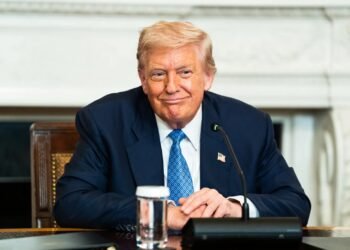 Trump Threatens Strong Action If Iran Executes Protesters
 Trump Receives Machado’s Nobel Medal in White House Meeting
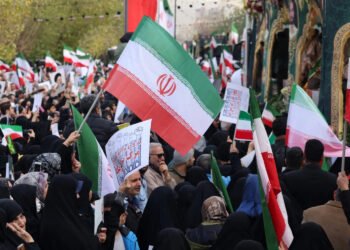 Iran Cannot Be Bombed Into Democracy, Only Helped There
 EU Says US Ties Have Suffered ‘Big Blow’ After Greenland Crisis
 Trump Praises ‘Terrific’ Petro After White House Talks
 Fears of New Arms Race as US-Russia Nuclear Weapons Treaty Expires
 ‘He Did It for Us’: US Soldier Recalls Jesse Jackson’s Efforts to Free Him and Two Other POWs
 Iran Says ‘Guiding Principles’ Agreed With US at Nuclear Talks
 Stephen Colbert Says CBS Spiked Interview With Democrat Over FCC Fears
 American Citizen Killed in Cuba Boat Shooting, U.S. Officials Say
 Middle East Flights Halted After Iran Strikes
 Iran’s Regime Still Intact — Coming Days Will Test Its Survival
 Allies of US in the Gulf Bear Brunt of Iran Attacks
 Trump Faces Questions Over Iran Conflict Plan
 Cooper: Joining US Strikes on Iran ‘Not in Britain’s Interest’
 Did Trump Declare War and Did Congress Approve Iran Attacks? What to Know
 Why the US and Israel attacked Iran
 Israel Launches Fresh Strikes on Tehran & Beirut; US Warns “Hardest Hits” Ahead
 Three Days In, This War’s End Is Still Unclear
 Israel’s New Airstrikes on Tehran & Beirut After US Embassy in Riyadh Is Hit
 Israel Launches Ground Invasion of Lebanon Amid Widening Middle East War
 Trump Underestimated the Iranian Regime’s Will to Survive
 U.S. Tells Citizens to Leave Israel Now as Regional Conflict Escalates
 US Embassy in Riyadh Hit by Iranian Drones as Israeli Troops Enter Southern Lebanon
 US Senate Vote Fails to Rein in Trump War Powers on Iran
 Macron Finds ‘Freedom Fries’ Redemption in Iran Crisis
 Thousands Protest Iran Strikes Outside US Embassy London
 US Bombers Arrive at RAF Base Amid Rising Iran Tensions
 Pete Hegseth Iran War Remarks Spark Alarm
 Nine Days of Strikes Reshape the Middle East
 Trump Threatens Iran With ‘Twenty Times Harder’ Oil Strike
 Iran War Puts Trump at Political Risk Amid Rising Prices
 Iran’s New Leader Faces Existential Test
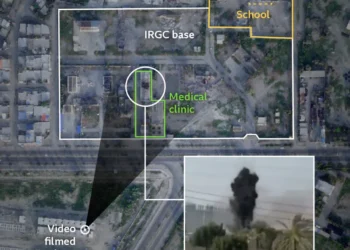 Video Analysis Suggests US Missile Hit Base Near Iran School
 Trump Iran War Stance Hardens as Conflict Widens
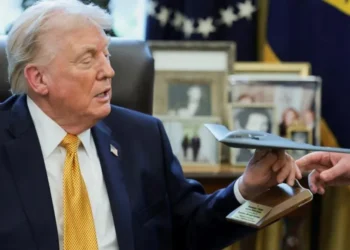 Trump’s Confidence Undimmed — But Every Iran Option Carries Risk
 Israel Says Iran Security Chief Larijani ‘Killed’
 Ghalibaf Iran: Survivor Emerges in Shifting Power Game
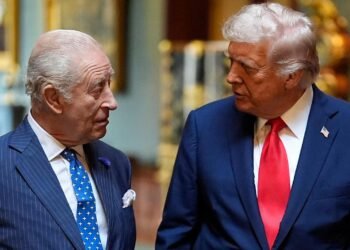 Charles Faces Trump Test in High-Stakes US Visit
 US Court Ruling Reshapes Voting Rights Landscape
 US states redraw maps after voting rights ruling
 Giuliani hospitalised in critical condition
 Trump Threatens UN Budget Cuts as US Pushes ‘Trade Over Aid’ Agenda
 Trump warns Iran as Middle East tensions surge again
 US Court Restores Abortion Pill Access Temporarily
 Middle East Crisis Escalates as Oil Routes Shake Markets
 US Awaits Iran Reply on New Ceasefire Proposal
 Hormuz Talks Near Critical Stage
 Gunman Killed After White House Security Shootout
 House Curbs Trump’s War Powers in Rare Rebellion
 Zelensky Invites Putin to Direct Peace Talks
 Republicans Defy Trump on Ukraine Aid Bill
 Ex-Wife of Dubai Royal Relative Held in Custody
 US Launches Strikes on Iran After Military Helicopter Downed Near Strait of Hormuz
 Efforts to Reshape Middle East Risk Creating Long-Term Regional Crisis, Analysts Warn
 Three Indian Sailors Killed in US Strike on Tanker Near Oman as US–Iran Conflict Escalates
 Trump Presidency Reignites America’s Founding Debate: How Much Presidential Power Is Too Much?
 Trump Helps Clear Balogun for Belgium World Cup Clash
 Why Some African Nations Are Rejecting Trump Aid
 Trump’s Major Recruitment Drive Targets Border Patrol Growth
 Trump’s New Vision for 250 Years of US Expansion
 Senate Halts Defense Bill Over Iran Clashes