Published: 5 August 2026
The English Chronicle Desk
The English Chronicle Online
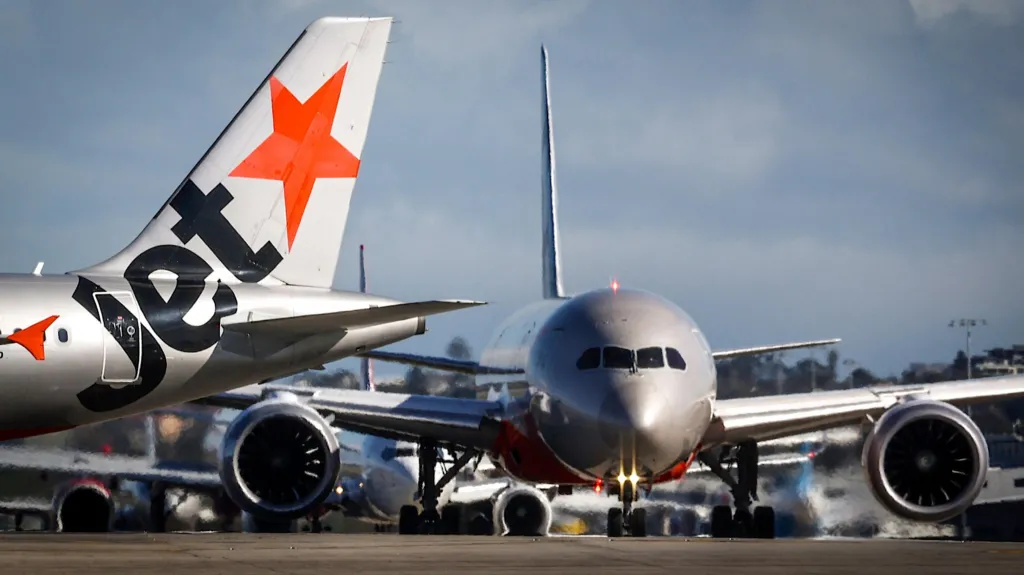
Australia’s low-cost airline Jetstar has announced a significant change to its baggage policy, introducing new charges for passengers who wish to place their carry-on luggage in overhead storage compartments. The move marks another shift in the airline industry’s efforts to generate additional revenue while keeping advertised ticket prices comparatively low, but it has also reignited debate over whether travellers are being asked to pay more for services that were once considered standard.
The revised policy means passengers travelling on selected Jetstar routes will no longer automatically receive access to overhead locker space with a standard fare. Instead, customers who intend to place larger cabin bags in the overhead bins will need to purchase that option during the booking process or before departure. Smaller personal items that fit beneath the seat in front of passengers will continue to be carried free of charge.
Jetstar said the changes are designed to improve the boarding experience, reduce congestion inside aircraft cabins and provide greater clarity over available storage space. The airline argues that overhead compartments have become increasingly crowded as more passengers attempt to avoid checked baggage fees by travelling with larger cabin bags.

According to the carrier, the new system will help crew members manage cabin storage more efficiently while reducing delays caused by passengers searching for available space after boarding. Under the updated model, only travellers who have paid for overhead locker access will be permitted to store eligible bags above their seats.
The airline maintains that passengers travelling light will benefit from lower overall travel costs because they will not subsidise services they do not use. Those carrying only handbags, laptop bags or small backpacks that fit beneath the seat can continue travelling without paying any additional cabin baggage charge.
The announcement has generated widespread discussion among passengers, consumer advocates and aviation analysts, many of whom view the move as another example of airlines increasingly separating traditional ticket inclusions into optional extras.
Over the past decade, low-cost carriers around the world have introduced additional fees covering everything from seat selection and priority boarding to meals, baggage, onboard entertainment and flexible booking options. Supporters argue that these unbundled pricing models allow customers to pay only for the services they actually require, while critics contend that they make comparing the true cost of flights increasingly difficult.
Many travellers expressed concern that the latest policy could leave families or groups paying substantially more than expected once baggage charges are added to their bookings. Others questioned whether passengers who decline the overhead storage option might struggle to fit all essential belongings beneath the seat, particularly on longer journeys.
Social media quickly filled with mixed reactions following the announcement. Some frequent flyers said they understood the reasoning behind managing limited cabin storage more effectively, noting that disputes over overhead bin space have become increasingly common on busy flights. Others argued that charging separately for overhead locker access risks creating confusion during boarding and could lead to disagreements between passengers.
Consumer groups have also urged airlines to ensure pricing remains transparent. They argue that customers should clearly understand what is included in their fare before completing a booking, particularly where optional charges may significantly increase the overall cost of travel.
Industry observers note that overhead luggage has become a growing operational challenge for airlines worldwide. As checked baggage fees have become more common, passengers increasingly maximise cabin baggage allowances, placing pressure on limited storage space aboard aircraft. Flight attendants often spend valuable boarding time rearranging bags or asking passengers to check luggage at the gate when lockers become full.
Aviation experts suggest that assigning overhead locker access in advance may reduce some of these problems by limiting the number of passengers entitled to use the shared storage areas. Whether this ultimately results in faster boarding times and fewer delays will become clearer once the policy has been in operation for an extended period.
Jetstar has indicated that the changes form part of broader efforts to improve operational efficiency while maintaining competitive base fares in an increasingly challenging aviation market. Rising fuel prices, labour costs, airport charges and supply chain pressures have all contributed to higher operating expenses across the global airline industry in recent years.
Like many budget carriers, Jetstar relies heavily on ancillary revenue generated through optional services rather than ticket prices alone. These additional purchases—including baggage, seat selection, travel insurance and onboard sales—represent an important source of income that helps airlines maintain low advertised fares while covering rising operational costs.
Despite criticism, some aviation analysts believe similar baggage policies could become more common across the low-cost airline sector if they prove commercially successful. Airlines continuously examine ways to streamline operations while offering different pricing tiers that appeal to varying passenger preferences.
However, experts also warn that customer satisfaction remains an important consideration. Frequent changes to baggage rules can create uncertainty, particularly for occasional travellers unfamiliar with individual airline policies. Clear communication, consistent enforcement and straightforward booking systems will therefore be essential if airlines wish to avoid confusion and minimise complaints.
Travellers planning future Jetstar flights are being encouraged to review the airline’s baggage rules carefully before departure. Purchasing the appropriate baggage option during the initial booking process may prove less expensive than adding it later or paying charges at the airport.
Passengers are also advised to measure and weigh their bags before travelling, ensuring they comply with the airline’s size and weight requirements. Exceeding the permitted limits could result in additional fees or require luggage to be checked into the aircraft hold.

As airlines continue adapting their business models to changing consumer behaviour and economic pressures, travellers are increasingly expected to make more decisions when purchasing tickets. While some welcome the flexibility of paying only for selected services, others argue that essential aspects of air travel should remain included within the ticket price.
Jetstar’s new overhead locker charging system is likely to remain closely watched by both competitors and consumer organisations. Its success—or failure—may influence how other airlines approach cabin baggage management in the future, potentially reshaping passenger expectations across the budget aviation sector.
For now, the policy highlights the evolving nature of modern air travel, where the advertised fare often represents only the starting point of a journey’s total cost. Whether customers embrace the greater choice offered by optional pricing or continue pushing back against additional fees will become clearer as the new system is introduced across more routes.
Related News:
 Glasgow Central Set for Full Reopening After Fire
 The £3,000 License: Learners “Held Hostage” by Cancelled Tests and Shifting Goalposts
 Rising World Cup Ticket Prices Spark Concern
 Spain Tourism Surges as Travellers Avoid Middle East
 Bars and Hotels Struggle to Hire Staff
 Two Major Torridge Projects Approved
 Keeping a 125-Year-Old Pier Alive
 Cancelled Cornwall Event Leaves Traders Facing Heavy Losses
 Spain Sees Tourism Boom as Travellers Shift Away From Middle East
 Italy’s Beach Lunch Ban Sparks Holiday Backlash
 South Africa’s Garden Route Gem Faces Looming Water Crisis
 Royal Mail Blames Poor Weather and Sickness for Delayed Deliveries
 Singapore Offers to Set Up Single Americans with ‘Epic’ First Dates – There’s Just One Catch
 Store at Famous Shopping Village to Close After 18 Years Due to Rising Costs
 Germany’s Fairy Tale Route: The Real Places Behind the Grimm Stories
 Luxury Airbnb Cabins With Hot Tubs Must Be Demolished After Planning Ruling
 Man discovers £18k trading card stash in his loft
 Qantas Revamps Loyalty Program Amid $1.46bn Profit Surge
 Limited Flights Leave UAE But Disruption Continues Amid Iran Strikes
 My One-Hour Flight Transfer Left Me Facing 10 Days Stuck in a City Under Attack
 Sarah Ferguson Loses Another £1.5m Amid Financial Struggles
 Courier Firm Bust After 14 Years as Evri Deliveries Face ‘Temporary Disruption’
 ‘Heating Oil Suppliers Are Holding Us to Ransom’ as Prices and Cancellations Surge
 Rare Glimpse of Historic Bridge Thanks to Low Tide

 Rising Costs Force Families to Rethink Days Out
 Fire Crews Battle Major Blaze at Coventry Car Dealership
 Michel Rolland: The ‘Spielberg of Wine’ Who Directed the Global Palate
 Gridlock Britain: Easter 2026 Set for Busiest Roads in Four Years
 ‘Empty Tanks’: UK Drivers Cry Foul as Petrol Prices Surge Amid $120 Oil Threat
 British Businesses Braced as National Living Wage Hits £12.71 Published: 1 April 2026
 National Treasure: Raja Ravi Varma Masterpiece Smashes Indian Art Record with $17.9m Sale
 The “Citrus” Shift: Marmalade to be Legally Rebranded in Post-Brexit Food Realignment
 Silver Linings: Why Global Tourism is Finding “Positives” Amidst Iran War Uncertainty
 Debt Relief or Drop in the Ocean? UK Caps Student Loan Interest at 6%
 The $100 Billion Peace: Trump’s ‘Grand Bargain’ Ends Iran Conflict at a Staggering Cost
 ‘No Gas, No Food’: LPG Shortage Triggers Reverse Migration in Indian Metros
 Paws on the Wheel: Driver Facing Fine After Dog Photographed on Lap
 The Pre-School Lottery: Families Left in ‘Holding Pattern’ as Local Places Vanish
 The Silent Lifeline: Why the 2026 Digital Switchover has Millions Saying, ‘I Didn’t Realise How Much I Needed My Landline’
 Relief at the Pump: Irish PM Unveils €505m Package to Stem Fuel Crisis
 The Price of Help: Fuel Surge Threatens Charitable ‘Power Plant’
 The Outback Squeeze: ‘Out of Control’ Diesel Prices Threaten Australia’s Freight Arteries
 The Waiting Ward: ‘Month of Worry’ as Doctor Strikes Trigger Seismic Surgery Delays
 The Pouch Peril: Dental Experts Probe the ‘Seismic’ Impact of Nicotine Pouches on Oral Health
 Harry and Meghan’s Australia Visit Sparks Debate
 The ‘War Tax’: How the Iran Conflict is Siphoning Your Bank Account
 ‘Unviable and Unfair’: Private Hire Drivers Warn New 2026 Rules Will Decimate Local Trade
 ‘The Triple-Shift Generation’: The 20-Somethings Juggling Three Jobs to Stay Afloat
 ‘Economic Sandbags’: UK Retailers Activate Price Rise Contingency Plans as Supply Chain Strains Mount
 UK Pub Price Hikes: Landlady Calls Drink Increases Last Resort
 “Jobs Will Go”: Rishi Sunak Warns AI is Already Eroding Entry-Level Opportunities
 Human Capital for AI Infrastructure: Meta Cuts 8,000 Staff to Fuel $135bn Bet
 The £36 Billion Reckoning: BHP Faces Quantum Trial After High Court Liability Landmark
 The “Cancer Commute”: Patient Warns of Breaking Point Over 40-Mile Treatment Trek
 Ukraine Urges UK to Seize Russian Oil Tankers
 Two Dead in Adelaide Airport Plane Crash Fire
 Reality Check on Reform: Minister Says Outright Abolition of Leasehold “Impossible”
 End of the “Beefeater” Era: Whitbread to Cut 3,800 Jobs in Radical Strategic Reset
 “Adult Trends” for Children: Mum’s Viral Horror at “Sexualised” Swimwear in Major UK Retailer
 The “Final Fence”: A Guide to Navigating the 2026 Badminton Horse Trials
 Belfast Approves Pilot Extension of Sunday Trading Hours
 Thailand Tightens Visa Rules to Curb Tourist Misbehavior
 Trump Ballroom Project Faces Rising Costs
 AI May Soon Start Conversations on Dating Apps
 Families Grieve Beyond Air India Crash Victims
 Dad Receives Baby Magazine 19 Years After Ordering
 Widow Distressed by Nine-Month Delay to Husband’s Pension Payment
 “My Drinking Days Are Over” — How to Enjoy an Alcohol-Free World Cup
 Sinkhole Outside Chip Shop “Has Cut Trade in Half”, Owner Says
 “I Applied for Hundreds of Jobs” — The Advice That Finally Worked
 Airline Leaders Warn 2050 Net Zero Target May No Longer Be Achievable
 Former Employee Alleges Sexual Assault by Business Founder as Investigation Draws Attention
 Jet2 Sees Summer Surge Despite Global Tensions
 Weight-Loss Drugs Transform Fashion Shopping Habits
 London Tube Heat Reaches Dangerous Levels
 Italy’s Ulysses Riviera Where Myth Meets the Sea
 Technical Subjects to Be Expanded for Pupils Aged 14
 Bali Bans Dutch Expats Over Alleged Running Club Exclusion
 Avalanche Claims Nepal’s Greatest Mountain Guides