Published: 11 August 2026. The English Chronicle Desk. The English Chronicle Online
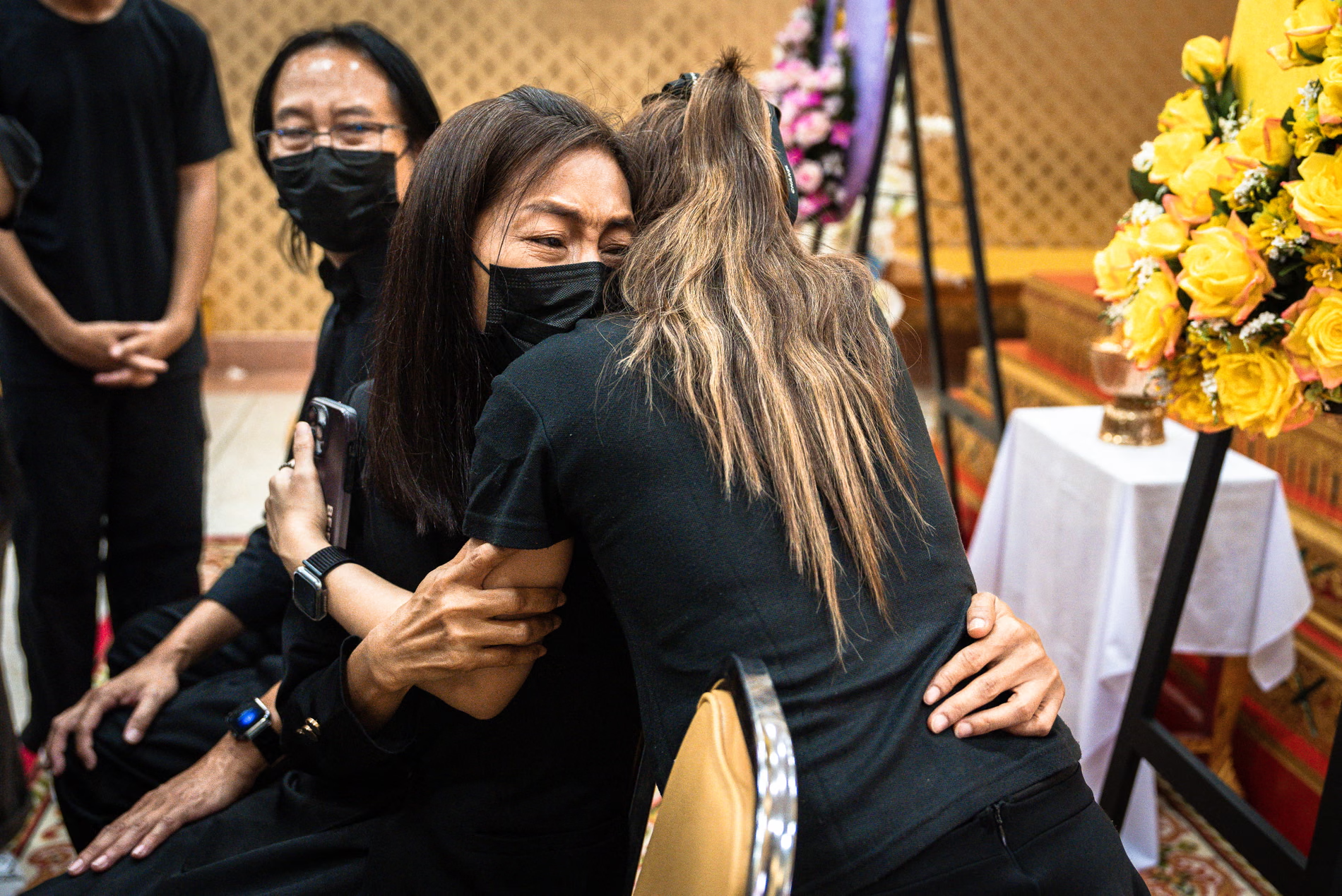
At a Buddhist temple north of Bangkok, grief over Thailand’s latest school shooting was expressed through mourning, forgiveness and an extraordinary encounter between two families whose lives were devastated by the same tragedy.
The parents of 12-year-old Naphat Chaimar arrived at Wat Lat Pla Duk in Nonthaburi province to mourn their daughter, the youngest victim of the deadly shooting at Debsirin Nonthaburi School.
As relatives, teachers, friends and other mourners gathered for the funeral rites, Naphat’s parents faced an unimaginable loss. Their daughter had been critically injured during the attack and died several days later, taking the death toll from the shooting to nine, including the teenage attacker.
But the ceremony took an unexpected and deeply emotional turn when the father of the 14-year-old boy who carried out the shooting arrived at the temple.

Nithi Yimruang approached Naphat’s parents, fell to his knees and repeatedly bowed in the traditional Thai gesture of respect and apology. Overwhelmed by grief, he sought forgiveness from the family whose daughter had been killed by his son.
Naphat’s father, Pongthon Chaimar, helped Nithi to his feet and accepted his apology.
The moment reflected the extraordinary complexity of the tragedy. Both fathers had lost a child. Naphat’s parents had lost their daughter, while Nithi had lost his teenage son after the boy carried out the shooting and died by suicide.
Nithi was also mourning the deaths of his own parents, who were killed by his son before the school attack.
Speaking before the funeral, Nithi described being overwhelmed by conflicting emotions. He said he felt both guilt and heartbreak and struggled to understand how his son could have committed such violence.
He said his son had generally been quiet and reserved. After his parents separated when he was two years old, the boy had lived with his grandparents, although Nithi visited him regularly and took him to additional tutoring classes.
The father said he had often asked his son about school and his classes. The teenager’s answers were generally brief, often simply saying things were “so-so”.
Now, Nithi said, there was no opportunity to ask those questions again.
The shooting has generated widespread grief across Thailand. The attack began at the teenager’s home, where his grandparents were killed, before he went to Debsirin Nonthaburi School in Nonthaburi province and opened fire.
Police said the boy used a firearm belonging to his grandfather. The attack killed school staff members and injured more than 30 people. The teenager subsequently died by suicide.
Naphat became the ninth person to die when she succumbed to her injuries after the initial attack. Her death deepened the national mourning and focused attention on the families of the victims.
At the temple, Naphat’s coffin was surrounded by floral tributes, including royal wreaths sent by Thailand’s King Maha Vajiralongkorn and Queen Suthida.
The Thai royal household also announced royal patronage for the victims and their relatives. The support included medical care for those injured and assistance with funeral rites and cremations for those who died.
The gesture was part of a wider national response to a shooting that has shocked the country.
On Monday, hundreds of people gathered at the temple to pay their respects. Among them were teachers, parents, friends and senior officials.
Monks chanted prayers as mourners gathered around Naphat’s coffin. Photographs displayed at the ceremony showed different stages of her short life, from childhood to her final months as a young student.
Her parents remembered her as an outgoing and expressive child who enjoyed taking part in activities and performing in front of others.
Naphat had attended Debsirin Nonthaburi School for only about three months. She had recently begun participating in school activities and competitions and had become involved in dance and traditional Thai costume events.
She was also expected to take part in a cheerleading competition later in the month.
Her father said those ambitions were among the things he and Naphat’s mother would miss most.
“What I miss most about her, and what her mother and I miss the most, are her dreams,” he said.
For her family, the tragedy is therefore not only about the loss of a child but also the sudden disappearance of the future they had imagined for her.
Naphat’s teacher described her as someone who enjoyed entertaining others and expressing herself.
On the day of the shooting, she was reportedly not normally supposed to be in the area where the attack occurred. She had gone there with other students for a vaccination and was leaving the room afterwards when she was struck.
Her parents had initially tried repeatedly to reach her by telephone after hearing about the shooting.
Eventually, an officer informed them that she had been taken to hospital in critical condition.
They waited and hoped for her recovery, but she died several days later.
Despite their devastating loss, Naphat’s parents have not publicly blamed the school.
Her father said he believed such violence could happen anywhere and instead focused on remembering his daughter and supporting other grieving families.
That attitude was also visible when he accepted the apology from Nithi.
The encounter between the two fathers has become one of the most poignant moments to emerge from the aftermath of the shooting.
For Nithi, there is the burden of knowing that his son was responsible for the deaths of Naphat and others.
For Pongthon, there is the pain of having to bury his 12-year-old daughter.
Yet rather than responding with anger towards another grieving parent, Pongthon helped Nithi stand and told him that he too was experiencing profound suffering.
The exchange does not resolve the questions surrounding the shooting, nor does it lessen the consequences for those who lost loved ones. But it demonstrated the complicated human emotions surrounding a tragedy in which the families of victims and the family of the perpetrator are themselves caught in separate forms of grief.
The shooting has also intensified concerns about firearm access and gun violence in Thailand.
Prime Minister Anutin Charnvirakul has announced tougher measures following the attack, including the suspension of new firearm purchase permits and a review of existing licences.
The issue is particularly sensitive in Thailand, where civilian firearms are relatively widespread and the country has experienced several high-profile shootings in recent years.
The latest attack has prompted renewed questions about how weapons are stored in homes, how young people can gain access to firearms and whether existing safeguards are sufficient.
It has also raised difficult questions about the pressures experienced by young people and the warning signs that might precede extreme violence.
Authorities are continuing to investigate the circumstances surrounding the teenager and the factors that may have contributed to his actions.
For Naphat’s family, however, those broader questions exist alongside a much more personal reality.
They are now preparing to say goodbye to a daughter who was only 12 years old and had just begun a new chapter of her education.
At the temple, photographs of Naphat’s childhood stood alongside flowers and royal tributes. Her parents greeted mourners while trying to come to terms with the loss of the child whose ambitions and personality had filled their lives.
The presence of hundreds of mourners reflected the extent to which her death has resonated beyond her immediate family.
Thailand’s latest school shooting has left students, teachers and parents confronting fear and grief, while the country debates how to prevent another tragedy.

But at Naphat’s funeral, the focus was ultimately on the life she had lived rather than only the circumstances of her death.
Her parents remembered a young girl who enjoyed music, dance, competitions and performance, and who had dreams for the future.
Those dreams were cut short.
The image of her parents mourning beside her coffin, while the father of the teenage gunman knelt before them asking for forgiveness, captured the devastating human consequences of the shooting more powerfully than any official statistic.
For Naphat’s family, forgiveness cannot bring their daughter back. But their response to another grieving parent has offered a rare moment of compassion amid a tragedy that has left an entire country asking how such violence could happen and how it can be prevented from happening again.
Related News:
 India Sentences Three Men to Death for Attack on Israeli Tourist and Hosts
 South Korea’s Ex-President Faces Death Penalty in Insurrection Trial
 British Men Jailed for Smuggling Cocaine into Bali
 Point-Blank Gunshot Misses Indian Politician
 China Fireworks Factory Blast Kills 21 in Hunan
 China mine blast death toll rises to 90
 Israeli Strikes Kill 11 in Gaza City
 Australia Seizes Illegal Insects Worth $200K
 Bear Escapes Factory Through Open Window
 Japanese Bear That Injured Four Still Missing
 Man Accused of Murdering Mother-in-Law Using Poison-Laced Satay
 Two Men Sentenced to Death Over Bangkok Shrine Bombing, Thai Court Rules
 Chinese Police Detain Man Following Outrage Over Alleged Dog Abuse Videos
 Bangkok Bar Fire Kills 27, Leaves Eight Critically Injured
 Trafficked Indonesian Babies Face Uncertain Futures
 Why Violence Has Surged Before Kashmir Election
 Pradhan Resigns Amid Protests
 US and Iran Pause Strikes as Diplomatic Talks Loom
 Malaysian School Murder Trial Puts Spotlight on Juvenile Justice
 Thai School Shooting Leaves Nation Demanding Answers
 Former Thai MP accused of killing official on camera
 West End Exposed as London’s Knife Crime Epicentre Amid Alarming Surge in Violence
 Targeted Attack in Bury Sparks Murder Investigation as Community Awaits Justice
 Merseyside Police Helicopter Crew Cleared After Low-Altitude Pursuit of Suspect
 Urgent Action Needed on Windrush Compensation as Survivors Speak of “Waiting to Die”
 Systemic Racism in Maternity Care Continues to Endanger Black Women in England, MPs Warn
 Northern Ireland Faces Fears of Prolonged Race Riot “Permacrisis”
 No Evidence Found to Substantiate Alleged Rape in Oxfordshire Churchyard, Police Confirm
 Massive London Poundland Fire Engulfs High Street
 Paedophile Singer Ian Watkins Dies After Prison Attack
 UK Bans Fake Numbers: Scammers Lose Their Trick
 Indian authorities demolish Kashmir home linked to Red Fort blast
 Greene Pushes Epstein Files Amid Trump Fallout
 Man Denies Stealing Bronze Age Gold from Museum
 Inside the Helpline Protecting Missing Children in the UK
 Runaway Driver Caught by DNA Evidence
 Woman Jailed for Life After Killing E-Bike Rider in Tragic Mistaken Identity Case
 Police response times face strict new national limits
 Salford Attempted Robbery Sees 95-Year-Old Woman Tied Up
 Police Doubt Fugitive Dezi Freeman Survived Bushland
 ‘Daejaun Was Drawn Deeper Into Danger,’ Says Heartbroken Mother
 Austrian Man Charged Over Foiled Taylor Swift Concert Attack Plot
 Nine Arrested in France Over Death of Far‑Right Student
 Epstein Eyed Record Label Investment to Access Women, Files Suggest
 Fly-Tippers to Be Hunted by ‘Drone Squad’ in Crackdown from the Sky
 Rape Accused Had Fight With Man in Alley, Court Told
 American Citizen Killed in Cuba Boat Shooting, U.S. Officials Say
 Ian Huntley Seriously Injured in Prison Attack
 Mother Says ‘I Hugged My Daughter’s Killer’ as They Cried Together in Prison
 Suspects in Lisa Dorrian Case Released on Bail
 Deadly Texas Bar Shooting ‘Potentially Act of Terrorism,’ FBI Says
 Driver Jailed Over Fatal Water Treatment Tank Crash
 Calls Grow to Remove Billboard Following Lyra McKee Graffiti
 Police Scotland Pays £8m Compensation to Staff
 Real Estate Brothers Convicted in Sex Trafficking Trial
 After Mugabe: Family Feuds and Legal Battles
 Teen Wins Payout After TRNSMT Crush Horror
 Sri Lanka Sets Weekly Shutdown to Save Fuel
 Nepal to swear in ex-rapper as new prime minister
 Two Men Bailed Following Arson Attack on Jewish Charity Ambulances
 ‘The Insulation Trap’: Knifeman Discovered Hiding Under Loft Padding After Six-Hour Standoff
 The Fallen Icon: Ben Roberts-Smith Charged with Five War-Crime Murders
 Fading Maple Leaf: Why Indian Students Are Reconsidering the Canadian Dream
 Roadside Reckoning: Nearly 160,000 Uninsured Vehicles Seized in National Crackdown
 Rat Poison Found in Baby Food Sparks Major Recall Row
 The Shadow of the Ticker: Insider Trading Allegations Cloud Trump’s Economic Agenda
 Justice and Deceit: High Court Convicts Woman in Hong Kong Blackmail Plot
 Tragedy in the Red Centre: Outback Search Ends in Discovery of Missing Girl’s Body
 “The Blue Light Intersection”: Seventeen-Year-Old Critically Injured in ‘Nasty’ Police Pursuit Crash
 US Awaits Iran Reply on New Ceasefire Proposal
 Discontent grows around Putin amid war strain
 Israel, Lebanon Agree on Fragile Ceasefire Deal
 Peak District Solstice Tragedy: Victim Formally Named
 Trump’s Major Recruitment Drive Targets Border Patrol Growth
 Safeguards Lag as Prisoners Face Early Release
 Police Rule Out Political Motive in Widdecombe Killing
 Mother Found Guilty Over Baby’s Death After Hairdryer Burn Injuries
 Berlin Pride Attack Suspect Killed in Police Raid
 UK Government Reviews Why Police Are Handing Criminal Cases to US Military Authorities
 Burnham Considers Inquiry Into Epstein UK Connections