Published: 05 September 2026. The English Chronicle Desk. The English Chronicle Online.
US President Donald Trump has sought to downplay the scale and seriousness of the ongoing conflict with Iran, describing the military confrontation as “small potatoes” despite the deaths of 18 American service members and the wounding of more than 750 others.
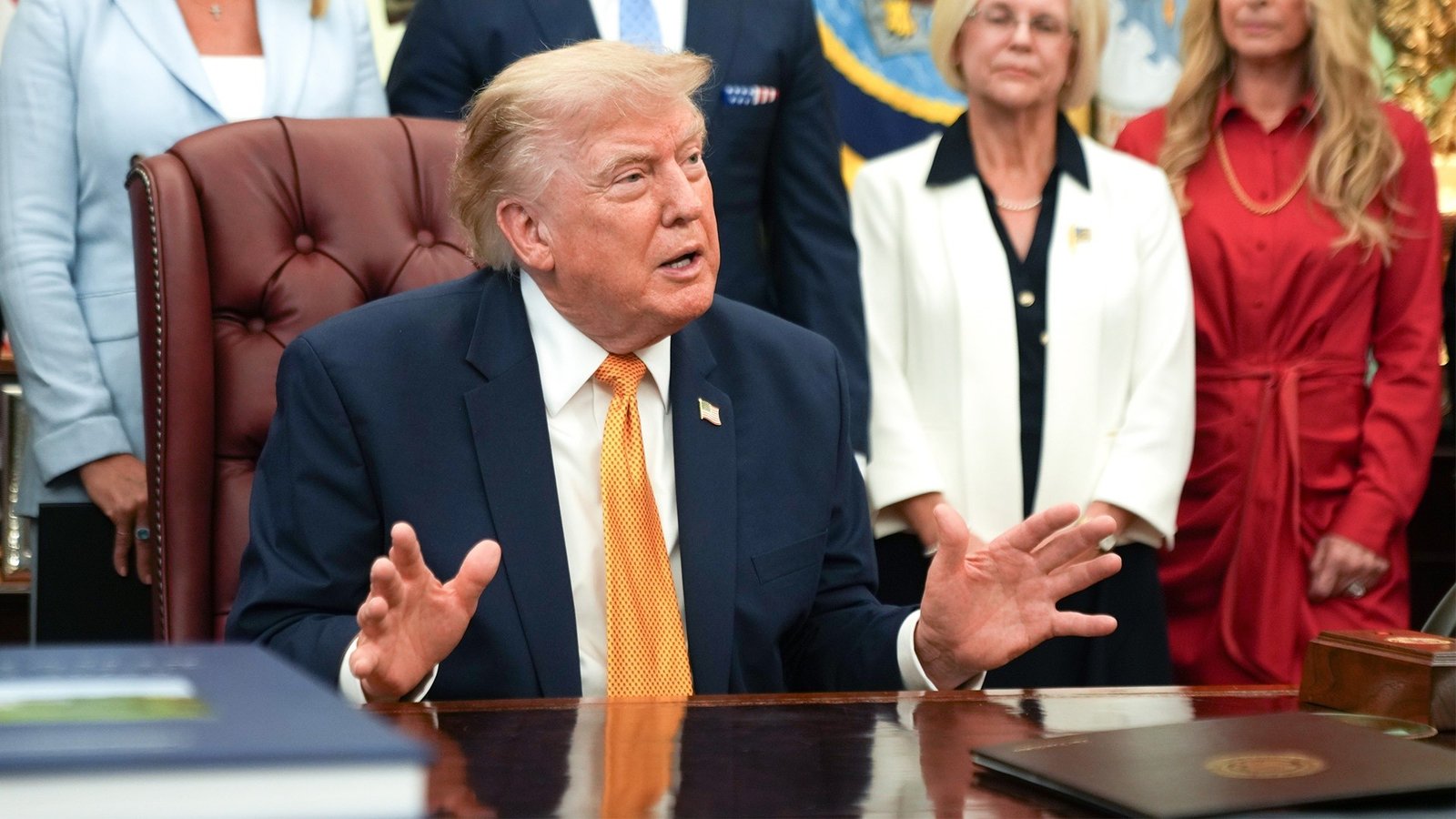
Speaking to reporters in the Oval Office on Friday, Trump rejected the characterization of the conflict as a major war and instead described it as a “military conflict”. His remarks came as the confrontation, which began in late February, has entered its fifth month and continued to affect military operations, energy markets and global trade.
Asked how he would describe the conflict if it was not a war, Trump said it was relatively minor from the perspective of the United States. He contrasted the current casualties with the much higher number of American deaths suffered during the Vietnam War and other major conflicts.
Trump acknowledged that 18 US service members had died during the confrontation but argued that the figure remained far below the losses recorded in previous American wars. He cited Vietnam, where more than 100,000 US personnel were killed, as an example of a conflict that he considered substantially more severe.

The president’s comments immediately drew attention because of the length and intensity of the Iran conflict. American military personnel have been deployed for months, while thousands of Iranians are reported to have been killed during the fighting. The conflict has also caused widespread disruption beyond the battlefield, particularly through its impact on oil supplies and international shipping.
When a reporter questioned Trump about the deaths of American personnel and the unusually long deployments, the president pushed back, repeatedly comparing the current conflict with Vietnam. He questioned why the deployment should be described as historically long when American forces remained involved in Vietnam for years.
Trump also claimed that there was currently no fighting, even as the conflict had experienced renewed escalation during the week. US military strikes against targets in Iran have contributed to heightened tensions, while Tehran and Washington remain locked in a confrontation with potentially wider regional consequences.
The president further claimed that the United States was taking out substantial amounts of Iranian oil and that American forces controlled the Strait of Hormuz. Those assertions have been disputed by developments surrounding the strategically important waterway, where disruptions have continued to affect the movement of oil and other goods.
The Strait of Hormuz remains one of the world’s most important energy corridors, carrying a significant share of global oil supplies. The continuing instability around the waterway has contributed to higher fuel prices and created additional pressure on economies already dealing with inflation and supply-chain difficulties.
The economic consequences of the conflict have extended well beyond the United States and Iran. Higher energy costs have affected transportation, food production and manufacturing, while interruptions to shipping routes have complicated international trade. Businesses and consumers in multiple countries have faced increased costs as uncertainty surrounding energy supplies has persisted.
Trump nevertheless presented the situation as manageable and indicated that the United States retained significant military options. He said American forces could potentially strike Iran’s Pickaxe Mountain, where nuclear-related facilities are reportedly located, suggesting that further military action remains possible.
His comments have added to uncertainty over the future direction of the conflict. While Trump has attempted to characterize the confrontation as limited, his administration’s continued military operations and warnings about potential future strikes indicate that Washington has not ruled out further escalation.
The president has also used varying descriptions of the conflict. Although he said Friday that many people do not consider it a war, he has previously referred to the confrontation as a war and more recently described it as a relatively small war. The changing terminology has prompted renewed questions about how the administration wants the public to understand the military campaign.
The issue is particularly sensitive because of the human cost for American service members and their families. Eighteen US military deaths represent 18 families dealing with the loss of relatives who were serving their country. More than 750 wounded personnel have also underscored the physical consequences of months of military operations.
For Iran, the toll has been considerably greater. Thousands of people have reportedly been killed since the fighting began, adding to the humanitarian consequences of the conflict. Civilian populations have also faced disruptions to essential services, transportation, food supplies and economic activity.
The conflict has simultaneously become a major political issue inside the United States. Democrats and other critics of the administration have questioned the duration and consequences of the military campaign, while Trump’s supporters have defended his approach and argued that the United States has demonstrated overwhelming military strength.
The president’s remarks came as his administration confronted several other domestic political and economic issues. The approaching 2026 midterm elections have intensified attention on the administration’s record, including inflation, fuel prices, trade policy and national security.
Higher gasoline prices have emerged as a particularly important concern for American households. The Iran conflict and disruption around the Strait of Hormuz have contributed to pressure on global energy markets, increasing the political sensitivity of fuel costs ahead of the elections.
Trump has continued to argue that his administration’s policies will strengthen the US economy, while also pressuring the Federal Reserve to reduce interest rates. On Friday, he linked his economic arguments to a stronger-than-expected August employment report and renewed his demand for lower borrowing costs.

At the same time, the administration is dealing with tensions over trade, immigration, voting rules and government policy. The Iran conflict therefore forms part of a much broader political environment in which the president is attempting to maintain public support while facing criticism over several major policy decisions.
Trump’s description of the conflict as “small potatoes” is likely to remain controversial because it contrasts sharply with the realities faced by military personnel deployed to the region and families who have lost loved ones. It also comes at a time when the conflict’s economic consequences are being felt across international markets.
Despite the president’s effort to minimize the confrontation, the possibility of additional military action remains. His warning that Iran’s nuclear facilities could be targeted “very soon” indicates that Washington continues to consider significant military options.
The immediate future of the conflict will depend on developments between the United States and Iran, the security situation around the Strait of Hormuz and the ability of both sides to prevent further escalation. For now, Trump’s remarks suggest that the White House views the conflict as limited in comparison with America’s most costly wars, even as the casualties, prolonged deployments and international economic disruption continue to give the confrontation a much larger significance.
Related News:
 UK Prepares Aircraft Carrier for Middle East Crisis
 Iran Crisis Tests Trump’s Global Leadership
 US states redraw maps after voting rights ruling
 Trump likens US Navy actions to ‘pirates’
 Trump approval plunges amid Iran war fears
 Trump Threatens UN Budget Cuts as US Pushes ‘Trade Over Aid’ Agenda
 US ‘Narco Boat’ Strikes Draw Global Outcry
 Tensions Emerge in Netanyahu-Trump Alliance
 US Awaits Iran Reply on New Ceasefire Proposal
 Hormuz Talks Near Critical Stage
 Former ICC prosecutor condemns US sanctions
 Trump Claims Iran Peace Deal Near Completion
 Houthis Strike Saudi Arabia as Middle East Tensions Rise
 Is America Ready for an AOC Presidential Run?
 Trump Calls Strait of Hormuz ‘American Territory’
 Trump Faces Iran War Crisis Before Midterm Vote
 Trump announces major US oil deal with Venezuela
 Trump Hardens Canada Trade Stance as Talks Stall
 Canada Passes Carney’s First Budget in Tight Parliamentary Vote
 India’s Labour Law Overhaul Sparks Fierce Debate
 Trump to Recheck Green Cards from 19 Nations After DC Attack
 Trump Escalates Minnesota Immigration Surge Amid Rising Tensions
 Greenland Faces Pivotal Summit Over Arctic Power Struggle
 Mark Carney Walks Diplomatic Tightrope on China Visit
 Government Unveils Northern Powerhouse Rail Plans
 Trump Fed bid heads to Supreme Court
 EU Says US Ties Have Suffered ‘Big Blow’ After Greenland Crisis
 Thousands Protest ICE Operations in Nationwide US Day of Action
 Epstein Files Reveal Trump Officials’ Emails with Financier
 Thousands Protest ICE in New York Against Trump Deportation Campaign
 Trump Praises ‘Terrific’ Petro After White House Talks
 Sanders Condemns Billionaire ‘Greed’ in California Tax Debate
 Clinton Testimony Erupts in Fiery Exchange
 Middle East Flights Halted After Iran Strikes
 Thousands Protest Iran Strikes Outside US Embassy London
 US Bombers Arrive at RAF Base Amid Rising Iran Tensions
 Mojtaba Khamenei Chosen as Iran’s New Supreme Leader
 Tehran Oil Depot Strikes Darken City With Toxic Smoke
 Pete Hegseth Iran War Remarks Spark Alarm
 Mojtaba Khamenei Supporters Rally as Iranians Fear Repression
 Iran Defiance Grows Amid US-Israel War Pressure
 Hormuz Crisis Sparks Global Oil Market Fears
 Injured Mojtaba Khamenei Elevated as Iran Leader
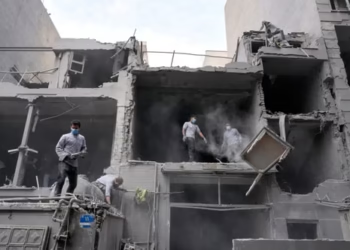 Trump Iran War Stance Hardens as Conflict Widens
 MAGA Anxiety and the Iran War: A Movement Divided at CPAC
 Trump to Deploy “God Squad” Over Gulf Wildlife Protections
 Trump Threatens Iran With Total Infrastructure Destruction
 Iran Drone Strike Hits Kuwaiti Oil Tanker in Dubai Port
 Can Congress Stop US Sports Teams From Moving Cities?
 Trump Slams UK Ties and Threatens To Rewrite Trade Deal
 Iron Worker Challenges Trump Loyalist in Ohio
 Trump Faces Crisis as Iran Reopens Hormuz Tensions
 Charles Faces Trump Test in High-Stakes US Visit
 UK Stands Firm on Falklands Amid US Rift
 Southeast Asia Turns to Russia Amid Energy Crisis
 US Calls Australia Media Law “Foreign Extortion”
 Capitalism ‘Suicidal’, Warns Petro at Climate Summit
 Oil Prices Surge Above $120 Amid Iran Blockade Fears
 US Court Ruling Reshapes Voting Rights Landscape
 Cartel crackdown raises fears of fresh violence
 Trump orders US troop pullout from Germany
 Judge halts deportation of Yemeni refugees in US
 Ohio’s Battle for Trust: Democrats Vying to Flip the Buckeye State
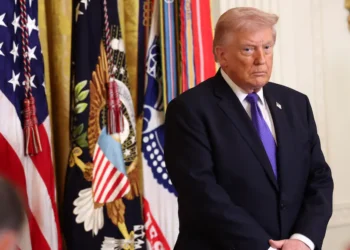 Trump warns Iran as Middle East tensions surge again
 Ohio Primaries Set Stage for Crucial Midterms
 Afghan Families Left in Limbo Face Risk of Deportation
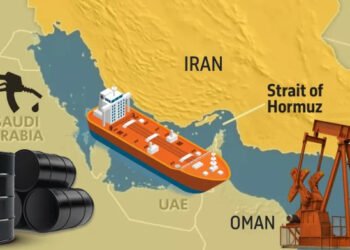 Middle East Crisis Escalates as Oil Routes Shake Markets
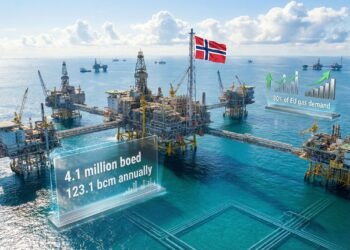 Norway Doubles Down on Oil and Gas for Europe Energy Security
 Immigration Judges Fear Pressure in Trump Era
 Kevin Warsh sworn in as Fed chair amid economic backlash
 UK Pushes for New EU Goods Trade Deal
 Gunman Killed After White House Security Shootout
 House Curbs Trump’s War Powers in Rare Rebellion
 Ukraine Creates Long-Range Strike Command
 Trump Refuses to Sign Housing Bill, But Law Takes Effect
 Israeli Strike in Southern Lebanon Kills Seven
 Former Diplomats Urge UK and France to Act on Palestine
 Trump orders US to rename Lake Ontario ‘Lake America’
 Ukraine Villagers Demand Answers After Deadly Arms Depot Strike
 Green Leader Targets Starmer’s Former Seat