Published: 16 September 2026. The English Chronicle Desk. The English Chronicle Online
A long-running attempt to develop an oilfield at Horse Hill in Surrey has entered a new phase after the company that spent years pursuing the project sold its interests for £1m, while the new owners have renewed efforts to secure planning permission for oil extraction.
The sale marks a sharp change in the fortunes of the Horse Hill project. UK Oil & Gas, known as UKOG, spent more than a decade attempting to develop oil resources at the site and at one stage the licence area’s implied value reached tens of millions of pounds. The company has since written down the value of its Horse Hill interests and is now moving away from onshore oil and gas towards energy-storage projects.
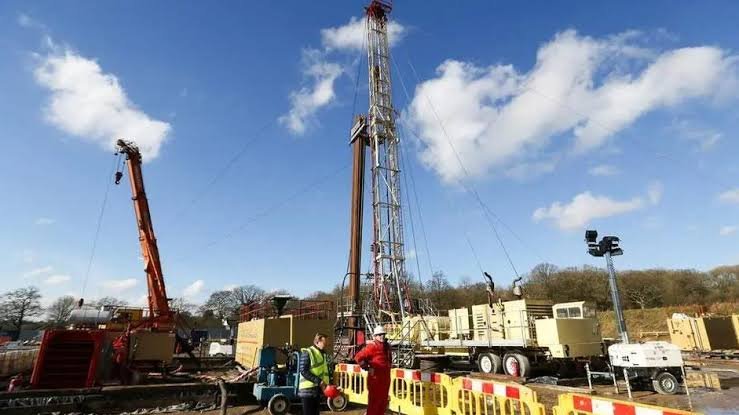
The new owners, however, are continuing to pursue oil production. Horse Hill Developments Ltd, now controlled by Energy B, submitted a renewed planning application to Surrey County Council in May. The proposal includes four production wells, an oil-processing area, tanker-loading facilities and a fluid-reinjection well.
The application has brought the project back into the centre of a planning and environmental debate that was transformed by a landmark Supreme Court judgment in 2024.
The case, brought by campaigner Sarah Finch on behalf of the Weald Action Group, concerned an earlier application to expand oil production at Horse Hill. Surrey County Council had granted planning permission in 2019 after an environmental assessment that considered greenhouse gas emissions directly associated with the site but did not include emissions from the eventual combustion of the oil after it had been extracted and refined.

In June 2024, the Supreme Court ruled by a three-to-two majority that the council’s decision was unlawful because the environmental impact assessment should have included the greenhouse gas emissions resulting from the eventual burning of the oil.
The judgment has become widely known as the Finch ruling. Its significance extends beyond Horse Hill because it established that, in the circumstances considered by the court, downstream emissions from the eventual use of extracted fossil fuels could fall within the environmental impact assessment required for an oil-development project.
The Supreme Court’s case summary states that the original proposal involved expanding the Horse Hill site and drilling four new wells, with oil production planned over 20 years. The court found that the eventual combustion emissions were within the scope of the environmental assessment required by law.
The ruling has therefore become a central consideration in the renewed planning process.
UKOG’s financial history at Horse Hill illustrates the changing economics of the project. According to the information reported from company and public records, the implied value of the Horse Hill licence area reached about £46m in September 2018. That followed an agreement by UKOG to acquire a 14.3% economic interest from a group of vendors for £6.6m.
Earlier valuations were influenced by estimates of potentially substantial oil resources beneath the site. Industry estimates cited in the reporting suggested that the Jurassic shale and conventional reservoir sections within the Horse Hill licences could contain billions of barrels of oil.
But the project’s eventual financial value proved considerably lower. Public records indicate that UKOG invested more than £25m in Horse Hill. Before the latest sale, the company’s accounts had reduced the carrying value of its Horse Hill interests to only £55,360.
The eventual £1m disposal therefore represents a substantial reduction from earlier implied valuations and from the money UKOG had invested in the project.
The company has also undergone a broader transformation. UKOG changed its name to UK Energy Group in September 2026. London Stock Exchange records list the company’s name-change announcement on 10 September and its Horse Hill disposal announcement on 12 June 2026.
The company is now seeking to focus more heavily on energy-storage opportunities, including salt-cavern and hydrogen-storage projects. The strategic shift reflects the company’s decision to leave the UK’s onshore oil and gas sector while pursuing projects associated with energy storage and the wider transition in the energy system.
Chief executive Stephen Sanderson has said the company continues to see potentially significant resources at Horse Hill, but described the sale as an opportunity to complete its exit from the UK’s onshore oil and gas industry.
For the buyer, the calculation is different. Energy B has taken control of Horse Hill Developments and is continuing with the planning process for oil extraction.
The renewed proposal would permit the extraction of up to 678,693 tonnes of oil over 20 years. The application also proposes infrastructure needed to process and transport the production.
The environmental assessment estimates that the development would be associated with approximately 2.3m tonnes of greenhouse gas emissions over its lifetime. This figure includes emissions linked to the eventual burning of the extracted oil.
Planning documents argue that the project’s contribution to the UK’s overall carbon budget would be relatively small, estimating that Horse Hill would account for approximately 0.05% of the projected UK carbon budget. The assessment therefore describes the resulting climate-change effects as insignificant.
That conclusion has been challenged by Finch and environmental campaigners.
Finch has argued that the new assessment should consider the proposed project’s emissions alongside emissions from other existing and approved fossil-fuel developments. She has said that government guidance requires such emissions to be considered within a cumulative context.
The disagreement is important because the 2024 Supreme Court judgment was concerned not only with whether downstream emissions could be calculated, but also with whether those emissions had to be considered as part of the environmental assessment before planning permission could be granted.
The Supreme Court judgment noted that the combustion of the oil produced from the Horse Hill site was an inevitable consequence of the proposed development and that the likely quantity of resulting emissions could be calculated.
The court also stressed that an environmental impact assessment is intended to ensure that decisions affecting the environment are made with relevant information available. Its ruling overturned the earlier approach that had excluded downstream combustion emissions from consideration.
The new planning application consequently arrives under a different legal framework from the one considered by Surrey County Council in 2019.
Energy B has defended the economic and energy-security case for the development. A spokesperson has argued that producing oil and gas domestically could reduce reliance on imports at a time of international uncertainty and energy-price volatility.
The company has also said the oil would be refined in the UK and that gas associated with the field would serve the domestic market. It argues that the development could therefore make a positive contribution to the UK economy while increasing domestic energy supply.
Finch disputes that interpretation of energy security. She has argued that oil is traded through international markets and that domestic production does not necessarily mean that the resulting fuel will be reserved for British consumers.
The competing arguments highlight a wider policy question facing UK energy planning: how proposed domestic fossil-fuel production should be assessed against considerations including energy security, economic activity, planning law and climate impacts.
Surrey County Council’s formal consultation on the latest application closed on 13 July. The council has said that representations received before a decision will be considered, and a decision could be reached this month.
The outcome could have consequences beyond the Horse Hill site itself. If permission is granted, campaigners may consider whether the environmental assessment complies with the requirements established by the Supreme Court and subsequent guidance.
Finch has said that the Weald Action Group has not ruled out another judicial review if the council approves the development. She has argued that the environmental statement submitted with the latest proposal contains shortcomings in its treatment of climate impacts.
Any further legal challenge would be separate from the 2024 Supreme Court proceedings and would depend on the details of the council’s decision and the grounds advanced by any claimant.

For UK Energy Group, the sale brings an end to a major chapter in its long-running involvement with Horse Hill. The company once placed considerably higher values on its interests in the area, but ultimately sold them for £1m after writing down their book value.
For Energy B and Horse Hill Developments, meanwhile, the project remains an active proposition. The new owners are seeking to demonstrate that their revised application satisfies the planning, environmental and legal requirements that became more demanding following the Supreme Court’s ruling.
The future of Horse Hill will therefore depend on the planning decision now before Surrey County Council and, potentially, any subsequent legal proceedings. The dispute also illustrates how changes in environmental law and climate policy can alter both the regulatory position and the financial value of fossil-fuel projects.
The Horse Hill story has moved from a question of how much oil might lie beneath Surrey to a broader debate over what information must be considered before new fossil-fuel extraction is approved. With the Supreme Court’s 2024 ruling now forming part of the legal background, the latest planning application will provide another important test of how those principles operate in practice.
Related News:
 Horse Hill Oil Site Sold as New Drilling Bid Emerges
 Heavier SUVs Accelerate Britain’s Pothole Crisis
 City & Guilds Sale Sparks Fees and Pay Uproar
 City & Guilds Faces Governance Crisis Over Sale
 UK rejects EV charging VAT cut amid Treasury clash
 UK Risks Falling Behind in AI Race
 Ukraine Moves to Seize Water Company
 Councils spend £125m on illegal children’s care
 McLaren to Create 1,000 UK Jobs in £450m Investment
 Nats Boss Summoned as UK Flight Chaos Continues
 Thames Water Revises Oxfordshire Mega-Reservoir Plan
 Election Candidate Abuse Raises Alarm in England
 UK Retailers Accused of Breaking Refund Laws
 Farage Threatens Union Funding Ban Over Reform Donations
 Heathrow Expansion Faces New Climate Conditions Over CO₂
 UK Heatwaves Set to Worsen Pothole Damage, RAC Warns
 Mayors Could Gain Greater Powers Over Water Firms
 ICAC Examines Greenwood Payments and Nassif Links
 Anglian Water Fined £63 Million Over Sewage Scandal Amid National Outrage
 How to Exit Your Broadband Contract Without Paying Exit Fees
 Supreme Court Ruling on Car Finance Scandal Poised to Impact Millions of Motorists and Banks
 David Lammy Faces Possible Legal Challenge Over Foreign Office Secondment Scheme
 Ed Davey Urges Government to Block Elon Musk’s Tesla from Supplying UK Home Energy
 UK Could Generate Nearly £2bn Annually by Taxing SUVs, New Study Reveals
 Jaguar Land Rover Extends Production Halt Following Cyber-Attack
 British AI Startup Outshines Human Forecasters in Global Prediction Contest
 Royal Mail Owner Acquires Stake in Collect+ and Launches High Street Rebrand
 NHS May Pay 25% More for Medicines Amid US Drug Talks
 Watchdog Rules Red Tractor Ad Misled Public on Environmental Claims
 Lucy Powell urged ministers to reconsider costly legal case for Labour donor’s firm
 North Sea oil workers must lose weight or face job loss
 Government urges schools to ban phones to curb classroom disruption
 UK Taskforce Unveils Plan to Streamline Nuclear Reactor Rules
 Virgin Media Fined £23.8m Over Telecare Safety Failures
 Starmer’s communications chief to outline media strategy overhaul
 TikTok to Strengthen Age Verification Across the EU
 Why China’s ‘Mega Embassy’ Poses Less Risk Than Critics Claim
 AI job losses UK: Britain faces sharper employment shock
 UK New Car Discounts Near £6,000 as Prices Are Slashed
 Aberdeen Chosen for GB Energy HQ at Marischal Square
 UK Energy Reform Could Cut Bills by £200
 ABC Staff Strike Over Pay and AI Concerns
 Prevent Failings Exposed After Southport Attack
 Crackdown Backfires on UK Climate Protesters
 Reform UK funding: mystery billionaire revealed
 Millions Face Food Poverty as Consumer Confidence Hits Record Low
 Barrister Criticises Trial After Suicide Case Verdict
 Father’s diaries reveal doubts over Hawking
 UK firms accused of ‘AI washing’ boom
 Westminster Council Threatens Charing Cross Soup Kitchen
 BBC Warned About Missing Clothes of Murder Victim
 Cambridge Professor Jason Arday Found Dead at Home
 Burnham unveils £65m drought aid for farmers
 Unions Warn Labour Over Zero-Hours Contract Reforms
 Pubs and Hotels Face Business Rates Reform Review
 Ghent Professors Questioned Cofnas Appointment
 London Launches First Self-Driving Taxis
 Internal Exclusions Surge in England’s Schools
 Survivor Sues Musk’s xAI Over AI Abuse Images
 Daughter Finds Bones in Parents’ Burned-Out Car
 UK Subsidence Claims Surge After Record-Breaking Summer
 Reform Faces Fresh Financial Controversy
 Spire Healthcare Agrees £1bn Takeover by Toscafund
 Billionaire Chris Rokos poised to leave UK
 UK plans tougher Israel stance with settlement trade ban
 Oil nears $100 as Saudi attacks shake markets
 JPMorgan Boss Warns Against UK Bank Tax Rise
 New Mexico Takes Facebook to Trial Over Data Scandal
 Iceland to Open First UK High Street Store in Falklands
 John Lewis Losses Widen to £124m as Confidence Falls
 Patriot Platform Raises Concern Across Britain
 AI CEOs Call for Slower Development
 North Sea Firms Urge Early End to Windfall Tax
 Fugitive Developer Rants at NSW Corruption Inquiry
 JLR Eyes NATO Market With New Defender Military Vehicle
 Mayors Could Gain New Powers Over UK Water Firms
 Lisa Nandy Calls for Tougher Action on Social Media Doxxing
 Piddington Votes for Symbolic Independence Over Asylum Plan
 Seoul Restaurant Fined Over Ant-Topped Dessert
 Anthropic Backs $31.9bn Queensland Data Centre