Published: 28 September 2026. The English Chronicle Desk. The English Chronicle Online
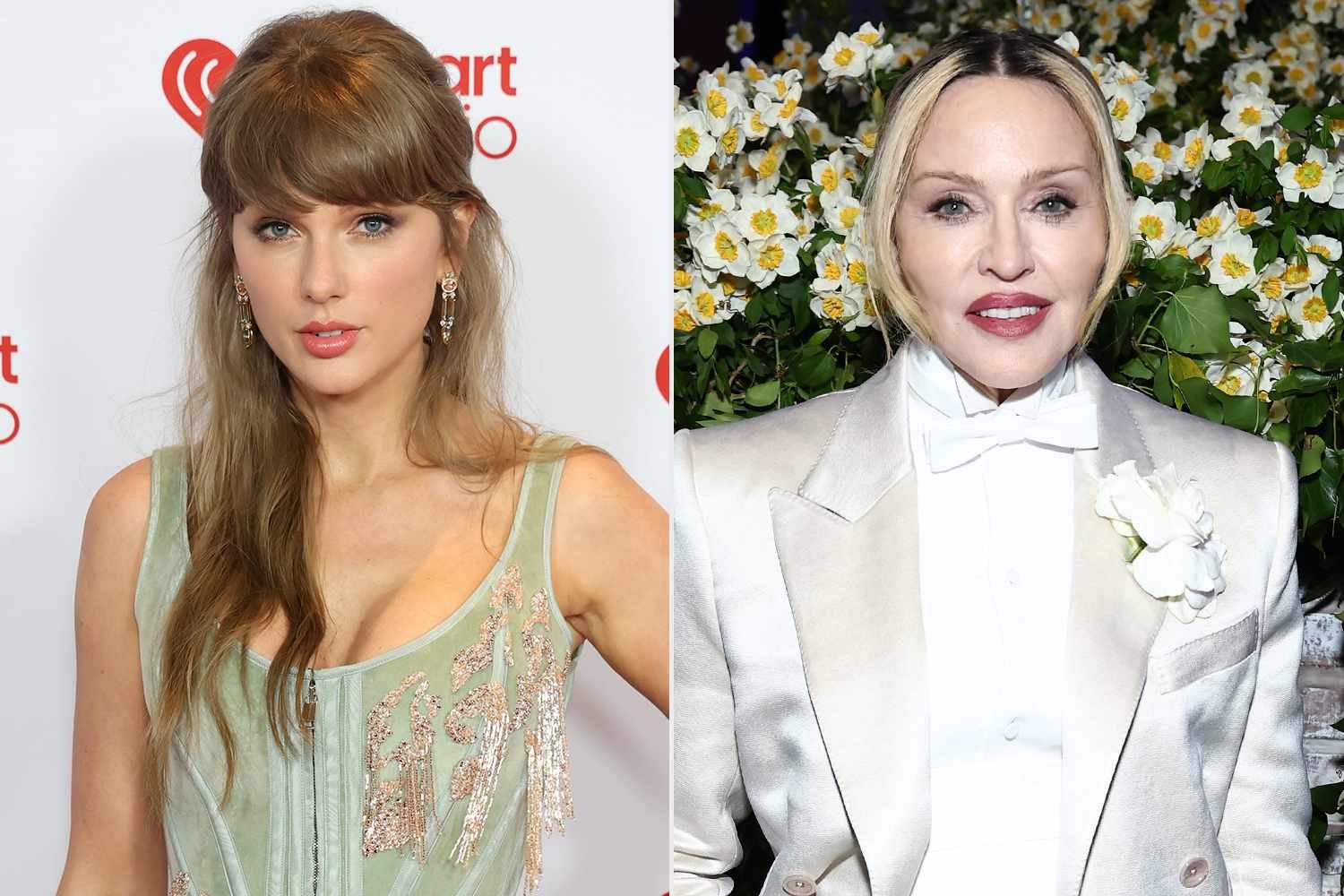
Taylor Swift and Madonna emerged as the central figures of the 2026 MTV Video Music Awards, taking home major honours during a ceremony that placed female artists firmly at the centre of the night. Madonna collected three awards during the televised programme, while Swift claimed three trophies of her own, including the ceremony’s top prize for Video of the Year.
The evening brought together several generations of music stars at Los Angeles’ Peacock Theater, with veteran performers, established chart leaders and emerging artists sharing the spotlight. Alongside Madonna and Swift, K-pop star Lisa and British newcomer Sienna Spiro were among the major winners, while Nirvana received the night’s lifetime achievement-style Video Vanguard Award.
Madonna arrived at the ceremony as the year’s most nominated artist, receiving 13 nominations. Her eventual haul included seven awards overall, with three presented during the televised portion of the event. She won Best Collaboration alongside Sabrina Carpenter, Best Dance and Artist of the Year.
Her Artist of the Year victory carried particular significance given the company she faced in the category. Swift, Carpenter, Ariana Grande, Bruno Mars and Morgan Wallen were also among the nominees. At 68, Madonna used her acceptance speech to reflect on the extraordinary length of her career and her enduring relationship with the VMAs.

Madonna recalled that many people watching the ceremony were not yet born when she performed at the first VMAs more than four decades ago. She also looked back at one of the early moments in her career when an onstage mishap exposed part of her body, an incident she said had threatened her emerging career at the time.
Her speech ultimately moved away from nostalgia and toward a message about personal confidence. Madonna spoke about spending the previous year and a half rediscovering herself, trusting her own instincts and creating music according to her own artistic wishes. She encouraged other artists and viewers to pursue a similar sense of self-belief.
The veteran singer also played a prominent role in the ceremony’s performances. Madonna opened the show with her first VMAs performance in 23 years, marking her return to the event since her highly publicised appearance with Britney Spears in 2003.
She performed music from her latest album, including “Bring Your Love” with Sabrina Carpenter. Madonna also delivered a lively performance of “Danceteria”, a song inspired by New York’s influential 1980s club culture. Charli xcx joined her, while actor Julia Garner appeared among the dancers.
Garner’s presence carried an additional connection to Madonna’s career. She had previously been selected to portray the singer in a planned biographical film, although that project was later abandoned following difficulties surrounding its development.
Swift’s evening was equally significant. She won Video of the Year for “The Fate of Ophelia” and received the inaugural Artist Director honour. The new award recognises musicians whose work behind the camera has helped expand the creative possibilities of music videos.
The recognition added another chapter to Swift’s already extensive record at the VMAs. She has become the most-awarded solo artist in the history of the ceremony and has also established herself as one of its most decorated music video directors.
Swift used her acceptance speech to remember country music icon Dolly Parton, who died at the age of 80 the previous month following a cancer diagnosis. Swift described herself as a longtime admirer of Parton and reflected on the emotional power of her songwriting.
She said she considered herself fortunate to have been among Parton’s fans and expressed gratitude for having lived during the same period as the legendary performer. Her comments formed one of the more emotional moments of the ceremony, particularly as the music industry continues to reflect on Parton’s decades-long influence.
Swift also marked her directorial work by premiering a new music video for “Patient Zero”, the lead single from the expanded edition of her latest project. The video features Swift alongside actor Dakota Johnson in a dramatic confrontation involving a character played by Colin Farrell.
The presentation reinforced the increasingly important role Swift has taken in shaping the visual identity of her music. Her recognition as an artist director reflects a career in which she has moved beyond simply performing in music videos to becoming deeply involved in their creative development.
The ceremony also featured a tribute to Parton. Country singer Kacey Musgraves performed alongside archival footage of Parton singing “I Will Always Love You”. The performance visibly affected members of the audience and served as another reminder of the late singer’s influence across generations of musicians.
Elsewhere in the programme, a special performance brought together Sombr, Raye, Teddy Swims and Adam Lambert for songs associated with George Michael’s “Faith” era. The tribute acknowledged Michael’s lasting contribution to pop music a decade after his death at the age of 53.
Nirvana was another major focus of the evening. The band received the Michael Jackson Video Vanguard Award, an honorary recognition celebrating its impact on music videos and visual culture.
Krist Novoselic accepted the award on behalf of the group, alongside drummer Dave Grohl and guitarist Pat Smear. In discussing Nirvana’s visual legacy, Novoselic highlighted the creative vision of Kurt Cobain, whose influence shaped the band’s iconic videos for songs including “Smells Like Teen Spirit”, “Come As You Are”, “In Bloom”, “Heart-Shaped Box” and “All Apologies”.
Cobain died in 1994, but Novoselic argued that the band’s work continues to resonate because audiences remain interested in authenticity and music that feels uncompromising. He suggested that Cobain would have appreciated the continuing impact of the band’s artistic legacy.
The ceremony also highlighted the growing international reach of contemporary pop music. Lisa, the South Korean K-pop star, won Best Pop for “Dream”, adding another major international name to the winners’ list.
Sienna Spiro, a British newcomer, won Best New Artist after fans voted throughout the ceremony. Her victory placed an emerging performer alongside some of the biggest names in contemporary music and represented one of the night’s important moments for a newer generation of artists.
Several other major awards were presented outside the televised portion of the ceremony. BTS won Best Group and Best K-pop, as well as Song of the Year for “Swim”. Bruno Mars received Best R&B for “I Just Might”, while Cardi B and Kehlani won Best Hip-Hop for “Safe”.
Bad Bunny won Best Latin for “NUEVAYoL”, while Olivia Rodrigo took Best Alternative for “The Cure”. Ella Langley won Best Country for “Choosin’ Texas”, a song that had already established itself as one of the year’s notable country hits.
The distribution of awards underscored the breadth of the contemporary music industry, spanning mainstream pop, K-pop, country, hip-hop, Latin music, alternative music and R&B.
The ceremony itself lasted roughly two and a half hours and began more than 20 minutes later than scheduled because of an NFL game. Snoop Dogg served as host, although much of the attention remained focused on the performers and award winners rather than the presenter.
For the VMAs, the strong showing by Madonna and Swift provided a link between different eras of popular music. Madonna represented a generation that helped transform the awards show into a major cultural event, while Swift demonstrated how contemporary artists increasingly combine songwriting, performance, visual storytelling and music-video direction.
Their combined success also reflected the evening’s broader emphasis on female artists. With major awards going to Madonna, Swift, Lisa, Sienna Spiro and other women across different categories, the ceremony presented a wide picture of the role female performers continue to play in shaping popular music.

At the same time, the presence of Nirvana, BTS, Bruno Mars, Bad Bunny and other winners demonstrated that the modern VMAs remain a platform where different musical traditions and generations can coexist.
The 2026 ceremony ultimately became a night of contrasts: established legends stood beside emerging performers, contemporary pop shared the stage with grunge history, and new visual creators were recognised alongside artists whose careers helped establish the language of the modern music video.
For Madonna, the evening represented another milestone in an extraordinary career. For Swift, it added further recognition to an already extensive VMA record while highlighting her work as a director. And for newer winners such as Sienna Spiro and Lisa, the ceremony offered another indication of how quickly the global music landscape continues to evolve.
With its mixture of nostalgia, new talent, tributes and major award victories, the 2026 MTV VMAs once again placed music videos and the artists behind them at the centre of a broader cultural conversation.
Related News:
 Whistler’s Mother and why its fame frustrated artist
 Cannes filmmakers split over AI’s role in cinema
 The Obamalisk: Inside the Controversial $850m Presidential Center
 Taylor Swift and Travis Kelce Marry at Madison Square Garden
 Is This the End of Harry and Meghan’s US Dream?
 Yayoi Kusama, Iconic Polka Dot Artist, Dies at 97
 Susan Sarandon Says Palestine Stand Costs Roles
 Bad Apples Review: Ronan Leads School Horror Satire
 Greece Pushes for Parthenon Marbles Reunification
 Prunella Scales: From Fawlty Towers Icon to Beloved Canal Explorer
 Charlie Kaufman: They told me Being John Malkovich would never get made
 Kate Winslet to Narrate Film Highlighting King’s Environmental Mission
 Hollywood Is an Industry of Looney Tunes Pretending to Be Normal
 Top Christmas Books Reads: Classics to Cozy Romcoms
 Oprah enjoys Meghan’s jam on English muffins
 Pauline Collins, Beloved ‘Shirley Valentine’ Star, Dies at 85
 VAR Must Rein Its Neck In to Save Football’s Spirit
 From Lego to Pokémon: How Adults Are Driving UK Toy Market Growth
 Pop Stars Call on UK Government to Cap Resale Prices for Fans
 Pat Butcher Returns to EastEnders in Touching Dementia Storyline
 SS Rajamouli Announces ‘Varanasi,’ a Mythic Time-Travel Epic
 Tom Cruise Receives Honorary Oscar, Celebrates Cinema
 Eminem Takes Legal Aim at Australian ‘Swim Shady’ Brand
 The Lasting Legacy of Seven: Crime, Morality, and Urban Decay
 Director Michael Caton-Jones Reflects on Career and Beginnings
 Reggae Legend Jimmy Cliff Dies at 81
 Rosalía Inspires Young Listeners to Discover Classical Music
 Rusty Bond-Era Aston Martin Restored to £1m Glory
 Pavarotti statue frozen in Italian ice rink sparks backlash
 Amanda Seyfried, Faith and Fear in a Radical Musical Leap
 John Lithgow criticises Rowling stance in trans debate
 Draco Malfoy Emerges as Lunar New Year Icon in China
 Top 10 Must-See Films Arriving This February
 The Hidden Dark Side of Early Reality TV Fame
 Last Weekend of Summer Brings Sparkle and Stars to Sydney
 North Korea Fires Missiles Amid US-South Korea Drills
 Ticketmaster Fees Rise Despite Recent US Junk Fee Crackdown
 Scott Mills Sacked by BBC Over Personal Conduct Claims
 Army Probes Apache Flyover at Kid Rock’s Nashville Estate
 US Senators Slam Ticketmaster Over Sneaky New Fee Hikes
 Keir Starmer Expresses Concern Over Kanye West Wireless Festival Dates
 Exhibition Revisits Life of 18th-Century Black Court Figure
 Robots Outpace Humans in Beijing Half-Marathon
 Rebel Wilson Accused of Orchestrating Smear Campaign
 Rebel Wilson Denies Role in Smear Campaign Trial
 Southeast Asia Turns to Russia Amid Energy Crisis
 Unveiling Hidden Masters: Female Artists Take Centre Stage
 Stephen Fry Sues Tech Organisers For £100k Following Stage Fall
 North Korean Women’s Football Club to Visit Seoul in Rare Cross-Border Trip
 China Fireworks Factory Blast Kills 21 in Hunan
 The Burning Lens: An Iranian Artist’s Visual Resistance
 Opera Singer Hails Surgery For Restoring Her Hearing
 US Awaits Iran Reply on New Ceasefire Proposal
 Lee Lai Makes History with Landmark Stella Prize Victory
 Hormuz Talks Near Critical Stage
 Maldives Cave Diving Tragedy Raises Safety Alarm
 Discontent grows around Putin amid war strain
 Mandalorian Movie Hits Record Disney Era Low at Box Office
 Thailand Tightens Visa Rules to Curb Tourist Misbehavior
 Saving the Scalloped Hammerhead: The Pacific Battle
 BBC Faces Backlash Over Ashley Cain Vetting Failures
 BBC Faces Backlash Over Ashley Cain Vetting Failures
 Rotterdam Museum Honours Artist With Peanut Butter Floor
 Sydney Arts Venue Faces Eviction After Religious Protests
 Houthis Strike Saudi Arabia as Middle East Tensions Rise
 Powerful 7.7-Magnitude Earthquake Hits Eastern Indonesia
 Indian Jewellery Ad Pulled After Backlash Over Outfit
 British Museum Faces Questions Over Peter Thiel’s Private Bayeux Viewing
 Bayeux Tapestry Revives Franco-British Ties
 Nepal Tunnel Rescue Offers Hope Amid Flood Devastation
 Typhoon Saudel Triggers Mass Evacuations in China
 Saudi Arabia Shuts Oil Pipeline After Drone Attack
 Japan PM Backs International Criminal Court
 Roman Finds Reveal Bath’s Suburban Past
 Trump gives Xi red-carpet welcome as trade truce extends
 Chinese Hybrid Car Surge Raises EU Auto Industry Concerns
 Ukraine and Russia Escalate Long-Range Drone War
 Xi urges Trump to avoid US-China military conflict
 Nepal PM calls deadly flood a global climate warning
 The Art and Meaning Behind Diplomatic Gifts