
Published: 01 October 2026. The English Chronicle Desk. The English Chronicle Online
Crowborough was once known for its quiet streets, comfortable surroundings and strong sense of community. The East Sussex town, home to around 22,000 people, had rarely attracted national attention for political controversy. In recent years, however, the arrival of more than 300 asylum seekers at a former military training camp has transformed the atmosphere, creating one of the most visible local disputes over migration in the area.
On a recent Sunday morning, opposing groups gathered in the town, separated by little more than a pathway leading towards a supermarket car park. One group protested against the accommodation of asylum seekers at the Crowborough Training Camp, while another demonstrated in support of the newcomers and argued for a more welcoming approach.
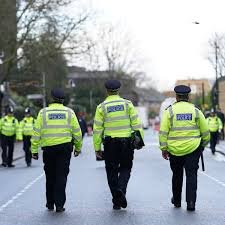
Police officers stood between the groups, although the atmosphere remained relatively calm. Protesters on both sides carried signs expressing sharply different views about immigration, community safety and humanitarian responsibility. Music played from both groups, creating an unusual scene in a town more accustomed to ordinary weekend activities than competing political demonstrations.

The arrival of the asylum seekers earlier this year has exposed deep disagreements within Crowborough. Some residents argue that the decision to accommodate more than 300 men at the former military site was made without adequate consultation with the local community. Others believe the newcomers should not be blamed for a government decision and that they should be treated with dignity while their asylum claims are considered.
There is, however, one issue on which many residents appear to agree: dissatisfaction with the way the Home Office handled the decision.
Rachel Millward, deputy leader of the Green party and leader of Wealden district council, has criticised what she described as a lack of communication between central government, local authorities and residents. She said the absence of information had created an environment in which rumours and competing narratives could spread rapidly.
The dispute is particularly striking because Crowborough previously developed a reputation for welcoming refugees. In 2022, the town received attention for its support for people fleeing the war in Ukraine. Community groups helped Ukrainian refugees with accommodation, clothing and other forms of assistance.
The circumstances surrounding the new arrivals are different, and that distinction has become an important part of the local debate. Some residents who supported Ukrainian refugees now say they feel differently about asylum seekers arriving through irregular routes. Others argue that people seeking asylum are entitled to have their claims considered regardless of how they entered the country.
The debate has intensified because the residents of the military camp are predominantly young men. Some opponents of the accommodation have expressed concerns about public safety, while supporters say those fears have often been based on rumours rather than documented incidents.
Since the asylum seekers arrived, anti-migration demonstrations have taken place regularly in Crowborough. Groups including Crowborough Says No! and Crowborough Shield have organised protests and marches, attracting both local residents and people from outside the area.
National political figures and campaigners have also visited the town, increasing its profile within the wider debate over immigration. Their appearances have brought stronger rhetoric to demonstrations, with calls for asylum seekers to be removed from Britain and criticism of the government’s immigration policies.
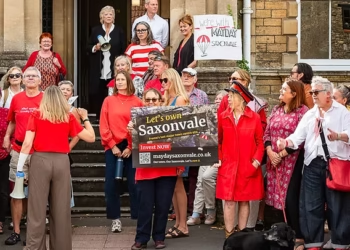
Supporters of the asylum seekers have responded with their own weekly gatherings. Volunteers from the local community have provided clothing, English lessons, food and other forms of assistance. An organisation supporting migrants and asylum seekers has attracted more than 200 volunteers, although some supporters have become reluctant to identify themselves publicly because of hostility on social media.
Several residents say the dispute has changed the way people behave in everyday life. Some supporters of the asylum seekers have avoided publicly discussing their views, while others have taken measures to conceal their identities when attending community activities.
Holly Jeffery, one of the residents supporting the asylum seekers, has spoken publicly despite facing criticism online. She said misinformation and fear surrounding the newcomers had encouraged her to become more vocal rather than remain silent.
Other residents supporting the camp have described similar experiences. Some say they have received abusive messages or been subjected to online harassment. A local dossier reportedly presented to police contains allegations of threats against supporters, businesses and community organisations.
These allegations include threats of serious violence and intimidation. Residents have also described incidents in which people supporting the asylum seekers were targeted because of their views. Such reports have added another dimension to the dispute, with concerns extending beyond disagreement over immigration policy to questions about intimidation and freedom to participate in public life.
At the same time, supporters of the protests argue that their concerns should not automatically be dismissed as racism or extremism. Some say they are worried about pressure on public services, local safety and the wider scale of immigration. Others object to the government’s decision-making process rather than the individual asylum seekers themselves.
One recurring concern involves alleged antisocial behaviour. Some opponents have claimed that asylum seekers have caused problems in local streets or behaved inappropriately. Yet local police figures indicate that only a small number of criminal charges have been connected with Crowborough since the camp opened, with only one involving an asylum seeker who was inside the camp at the time of the alleged offence. Two other cases involved anti-migration protesters who were from outside the town.
The difference between documented incidents and rumours has become an important feature of the local debate. Supporters say allegations circulating on social media have sometimes been repeated without evidence, while opponents argue that residents should not be expected to ignore their concerns simply because every allegation cannot immediately be verified.
The dispute has also exposed a broader question about how communities respond when central government decisions affect local areas. For many Crowborough residents, the issue is not simply about asylum seekers. It is also about whether communities should have a meaningful role in decisions involving accommodation, policing, public services and local infrastructure.
The Home Office has defended its approach, saying the government is seeking a more balanced distribution of asylum accommodation around Britain. Officials have also argued that moving away from expensive hotel accommodation can reduce costs for taxpayers. Former military sites are being used as alternatives, with the government maintaining that such facilities can provide controlled environments with security and monitoring.
For Crowborough, however, the policy has created a social divide that did not previously exist on such a visible scale. Residents who once shared shops, churches, schools and community spaces now sometimes find themselves on opposite sides of demonstrations.
Despite the tension, there have also been examples of cooperation. Volunteers continue to provide practical assistance to asylum seekers, while many residents opposed to the accommodation have maintained that their concerns should be heard through peaceful protest rather than confrontation.
The town’s experience demonstrates how quickly a national political issue can become a deeply personal local dispute. Immigration statistics and government policies may appear distant when discussed in Westminster, but their consequences become immediate when hundreds of people are accommodated in a community without extensive prior consultation.
For some Crowborough residents, the priority is ensuring that the asylum seekers are treated humanely. For others, the focus remains on border controls, public safety and the government’s responsibility to local communities. Between those positions lies a growing group of residents who are frustrated with both the central government’s handling of the issue and the increasingly hostile atmosphere surrounding the debate.

Whether the divisions can be repaired remains uncertain. The town’s streets have remained largely peaceful despite the opposing demonstrations, but the personal hostility reported by some residents has made reconciliation more difficult.
As the asylum process continues, the future of the camp and its residents will remain a major issue for Crowborough. The challenge for the community will be finding ways to debate immigration and public policy without allowing disagreement to turn into intimidation or permanent social division.
For a town once associated with welcoming refugees, the present moment represents a significant change. The competing voices outside the camp reflect a much wider national argument about migration, responsibility and belonging. But for the people living in Crowborough, the issue is no longer an abstract political debate. It has become part of everyday life, testing whether a divided community can still find enough common ground to live together.
Related News:
 UK may ban protests amid rising antisemitism fears
 Victim says non-custodial rape sentence ‘rock in my face’
 King Refers Jamaica Slavery Petition to Privy Council
 Fayed Survivors Demand Inquiry Into Medical Regulator
 Labour Attacks Reform Candidate Over Tommy Robinson Backing
 Undercover officer deceived women with ‘grotesque and cruel’ lies, spycops inquiry told
 Synagogue Arson Attempt Sparks Security Fears
 Police Suspect Help in Missing Alice Springs Girl Case
 Asylum deal sparks fears over Syria deportations
 Greens Face Internal Row Over Antisemitism Claims
 Barrister Criticises Trial After Suicide Case Verdict
 Immigration Judges Fear Pressure in Trump Era
 Cornwall Van Dwellers Face Eviction in Housing Crisis
 Westminster Council Threatens Charing Cross Soup Kitchen
 BBC Warned About Missing Clothes of Murder Victim
 Cambridge Professor Jason Arday Found Dead at Home
 British Man Faces Deportation Threat in Sweden
 Internal Exclusions Surge in England’s Schools
 UN expert urges UK to rethink Israel policy
 Ministers Condemn Far-Right Unrest in Portsmouth
 Councils spend £125m on illegal children’s care
 British widow says deportation from Sweden feels like a death sentence
 Miliband Rejects Chief Rabbi’s West Bank Warning
 Patriot Platform Raises Concern Across Britain
 Reform UK Receives Record £36m Donation From Crypto Billionaire
 Election Candidate Abuse Raises Alarm in England
 UK Retailers Accused of Breaking Refund Laws
 Texas Transfers Raise Fears for Migrant Children
 Mahmood Warns Far Right Over Asylum Protests
 Disabled Travellers Seek Fairer UK Care Rules
 NHS Breast Care Review Finds Serious Patient Harm
 Harrods Faces Dispute Over Fayed Abuse Compensation
 Clancy Defense Seeks Inquiry Into Lone Juror
 Briton Faces Cyprus Court Over Son’s Fatal Fall
 UK Reviews Hague Child Abduction Cases Involving Abuse
 Court Says Judge Should Not Have Heard Case From Bed
 Paris child pickpocketing gang leader jailed for eight years
 Far-Right Activist Arrested After Channel Dinghy Incident
 Portadown protest ends after tense Orange Order standoff
 Free Speech Emerges as Key UK Election Issue
 Tennessee Set to Execute Woman After Clemency Denied
 London Facial Recognition Trial Ends With False Alert
 Pelicot Trial Play Comes to London for One Night
 UK University Strikes Spread as Financial Pressure Grows
 Burnham Opens Door to Possible UK Return to EU
 Drumcree Talks Falter as Legal Challenge Deepens
 UK-France Returns Deal Faces Expiry as Talks Stall
 French Taxi Driver Cleared in David Lammy Theft Case After Fare Dispute
 Just Stop Oil Protesters Convicted Amid Climate Defence Row
 King Charles to Lead Nation in Remembrance Sunday Service
 Major Rent Reform Ends No-Fault Evictions in England
 Peers Flood Assisted Dying Bill with 942 Amendments
 Serial Rapist and Former Cop Found Guilty Again
 Virgin Media Fined £23.8m Over Telecare Safety Failures
 Google Employee Claims Redundancy After Harassment Report
 Proposed Law Leaves Gap for Children of Convicted Paedophiles
 Rising Costs Force Families to Rethink Days Out
 Police Chiefs Under Fire for Failing to Address Racism
 Prominent Voices Challenge Palestine Action Ban
 Crackdown Backfires on UK Climate Protesters
 Met Officers Probed Over Al Fayed Abuse Allegations
 Farage and Reform UK Reshape British Politics
 British Teens in EU Face Soaring UK University Fees
 Kylian Mbappé Slams Paraguayan Senator Over Racist Attack
 New Footage Revives Peter Falconio Mystery
 UK Schools Struggle as Classrooms Top 40C
 Burnham unveils £65m drought aid for farmers
 Unions Warn Labour Over Zero-Hours Contract Reforms
 Queue row erupts on Wales’ highest mountain
 RAF Barnham Protests Fuel Tensions in Norfolk Town
 British Museum Faces Questions Over Peter Thiel’s Private Bayeux Viewing
 UK plans tougher Israel stance with settlement trade ban
 Abusive ex used Tesla to control and harass former partner
 Royal Crown Branded Enslaved Africans in Britain’s Slave Trade
 Entain Plans 400 Job Cuts After Profit Update
 UK Rent Gap Puts Low-Income Families Under Pressure
 Headteachers Warn New Ofsted System Is Harming Wellbeing
 Democrat Says ICE Restricted Detention Camp Oversight
 Roman Finds Reveal Bath’s Suburban Past
 Frome Community Loses Bid for Major Regeneration Site