
Published: 06 October 2026. The English Chronicle Desk. The English Chronicle Online.
Conservative leader Kemi Badenoch has rejected suggestions that her party is proposing to build a British version of Israel’s Iron Dome missile defence system, despite Conservative communications repeatedly using the comparison to explain its planned “Britannia Shield” programme.
The dispute has emerged during the Conservative party conference, where the party has placed national defence and the protection of Britain’s critical infrastructure among its central political priorities. The Conservatives have proposed spending £1 billion a year for a decade on a new air and missile defence capability, describing the proposed system as an effort to strengthen Britain’s ability to respond to growing aerial threats.
Badenoch, however, has insisted that Britannia Shield should not be understood as a direct copy of Israel’s Iron Dome. Speaking in broadcast interviews, she argued that Britain would instead develop a system specifically designed around the threats facing the United Kingdom.

Her comments followed criticism and confusion over the language used by the Conservative party itself. A party press release described Britannia Shield as being “in essence a British Iron Dome”, while an article written by Badenoch also referred directly to Israel’s system as a model for the proposed British programme.
The Conservative leader subsequently sought to draw a distinction between using Iron Dome as a familiar description of missile defence and actually reproducing Israel’s technology and architecture.
Badenoch said the disagreement was largely a matter of semantics and argued that Britain urgently needed greater protection against potential missile and aerial attacks. She said the proposed investment would provide the country with the radar, interceptor missiles and other technology required to identify and respond to threats before they could reach British territory.
The proposal envisages £10 billion being invested over 10 years. The Conservatives say the programme would focus particularly on protecting critical national infrastructure, which includes facilities and systems considered essential to the functioning and security of the country.
The scale and cost of the proposal have nevertheless attracted scrutiny. Former army general Richard Barrons has suggested that constructing a system comparable with Israel’s Iron Dome could cost more than £100 billion, a figure dramatically higher than the £10 billion commitment announced by the Conservatives.
That comparison has contributed to questions over precisely what the Conservatives intend to build and whether the proposed funding would be sufficient to establish a comprehensive national missile defence network.
Badenoch has sought to address those concerns by stressing that Britannia Shield would be a bespoke British system rather than an attempt to reproduce Israel’s existing defensive network.
“We are not building the Iron Dome,” she said, arguing that Britain was following a broader European trend towards strengthening national air and missile defence capabilities. She pointed to countries including Greece, Belgium, the Netherlands and Germany as examples of European states developing or strengthening systems suited to their own security requirements.
The distinction is significant because Israel’s Iron Dome was developed primarily to intercept relatively short-range threats. Its operational role has been shaped by the specific security environment facing Israel, including repeated attacks involving rockets and other relatively short-range projectiles.
Britannia Shield, according to the Conservatives, would be designed around Britain’s own strategic circumstances and would focus on protecting important national assets from a wider range of potential aerial threats.
Shadow defence secretary James Cartlidge defended the party’s use of the term “Iron Dome”, comparing it to the way some brand names become widely used as generic descriptions for particular products.
He argued that the phrase had become an easily understood shorthand for missile defence systems. While acknowledging that Britannia Shield would not be identical to Israel’s Iron Dome, he said using the term helped the public understand the broad concept being discussed.
Cartlidge also stressed the technical differences between the two systems. He noted that Israel’s Iron Dome was designed primarily to deal with short-range threats and had originally been developed to counter relatively unsophisticated forms of weaponry.
The Conservative proposal, he said, would instead involve a system designed specifically for Britain’s requirements.
The debate comes as European governments reassess their defence strategies following a period of heightened international insecurity. The war in Ukraine has demonstrated the potential scale of modern missile and drone warfare, while the wider deterioration in relations between major powers has increased concern about the vulnerability of critical infrastructure.
For Britain, the issue has raised difficult questions about how a relatively limited defence budget should be allocated. Protecting military installations, energy facilities, transport networks, communications infrastructure and other strategically important sites against aerial attack could require significant investment in radar, interception technology, command systems and personnel.
The Conservatives argue that Britain cannot afford to ignore these risks. Badenoch has maintained that the proposed annual investment of £1 billion would be capable of delivering the planned capability over a decade.
She has also clarified that the objective would not necessarily be to create an impenetrable defensive umbrella covering every part of the country. Instead, she said protecting critical national infrastructure was central to the proposal because the loss of a single strategically important facility could have consequences far beyond the immediate location.
Her comments suggest that the Conservatives are considering a layered approach to national protection, concentrating resources on sites whose disruption could cause widespread economic or social consequences.
The political argument over the name and description of Britannia Shield has also highlighted a wider challenge for Badenoch as she attempts to present the Conservatives as a credible alternative government.
The Conservative leader is due to deliver her conference-closing speech on Wednesday, with defence expected to remain an important part of the party’s message. Badenoch has said she believes public opinion towards the Conservatives can improve before the next general election, while acknowledging that the party remains unpopular among voters because of the record of the previous Conservative government.
She said voters still associate the party with decisions and problems they disliked under the previous administration and accepted that changing that perception would take time.
Badenoch has nevertheless expressed confidence that the Conservatives can eventually persuade voters that the party has changed. She has presented the current leadership as an effort to build a different Conservative Party focused on what she describes as practical solutions and common sense.
The controversy over Britannia Shield therefore carries significance beyond the technical question of missile defence. It is also a test of the party’s ability to communicate complex defence policies clearly and credibly.
For voters, the distinction between a British-built missile defence system and an actual replica of Israel’s Iron Dome may appear technical. But the difference becomes important when considering cost, capability, coverage and the types of threats the system would be expected to intercept.
The Conservatives will now face pressure to explain precisely what Britannia Shield would contain, how its proposed funding would be allocated and which parts of Britain would receive protection. Questions are also likely to persist over whether £10 billion would be sufficient to deliver the level of capability implied by the party’s rhetoric.
Labour has seized on those uncertainties, accusing Badenoch of trying to distance herself from a proposal that the Conservatives themselves had promoted using the Iron Dome comparison.
A Labour source argued that the party’s defence promises lacked credibility and accused the Conservatives of having weakened Britain’s armed forces while previously in government. Labour also questioned whether the proposed financial figures were realistic and described the programme as an inadequate approach to national security.
The Conservatives are likely to argue that the criticism reflects political resistance to increased defence investment rather than a substantive objection to the need for stronger air defence.

The dispute ultimately places Badenoch in a difficult position. She must convince voters that Britain requires greater protection from emerging threats while also demonstrating that her party’s proposed system is technically realistic, financially credible and clearly defined.
As European security concerns continue to evolve, the demand for stronger air and missile defence is unlikely to disappear from Britain’s political agenda. Whether Britannia Shield becomes a defining Conservative defence policy or remains associated with an awkward dispute over the Iron Dome comparison will depend largely on how clearly the party explains its plans in the months ahead.
For now, Badenoch’s message is that Britain needs its own tailored defensive capability rather than a direct copy of Israel’s system. But because the Conservatives themselves initially used the Iron Dome comparison so prominently, the party may have difficulty persuading critics that the phrase was merely a convenient shorthand rather than an accurate description of its original proposal.
Related News:
 UK Prepares Aircraft Carrier for Middle East Crisis
 Is Britain Ready? Experts Warn of ‘Bizarre’ Military Delay
 Informa Agrees £2.24bn Deal to Buy Clarion
 Green Party Surges Past Labour in Latest UK Poll
 Trump’s UK Ambassador Urges North Sea Drilling to Strengthen US Ties
 French Taxi Driver Cleared in David Lammy Theft Case After Fare Dispute
 Millionaires group urge Reeves to introduce wealth tax to ‘lift kids out of poverty’
 Starmer Faces Growing Dissent as Labour MPs Weigh Leadership Challenge
 Reeves rejects £1bn plea for NHS redundancy payouts
 PM Condemns Leaks, Vows Loyalty to Ministers and Stability
 Major Rent Reform Ends No-Fault Evictions in England
 Peers Flood Assisted Dying Bill with 942 Amendments
 Most Tories Expect to Support a Farage-Led Government
 Starmer Says Labour’s Economic Plan Needs Years to Deliver
 Culture secretary to review Telegraph takeover by Daily Mail owner
 Labour Blocks Burnham as Party Rift Deepens Ahead of Polls
 Huge mistake: Labour blocks Burnham from byelection bid
 Artificial intelligence will cost jobs, admits Liz Kendall
 Labour targets Greens on drugs in Gorton Denton byelection
 Greens nominate Hannah Spencer for Gorton and Denton byelection
 Mandelson Faces Police Inquiry Over Epstein Leak
 Labour Thinktank Row Deepens Over Journalist Probe Claims
 Morgan McSweeney downfall shocks Labour leadership
 Cabinet Secretary Shake-Up Triggers Due Diligence Warning
 Starmer Faces Inquiry Calls Over Thinktank Probe
 UK shelves £110m border project amid trade strain
 Farage Unveils Reform UK Frontbench Team
 California Democrats Vow Trump Reckoning
 Wales Approves Assisted Dying Bill Consent
 UK EU Trade Reset Gains Public Backing
 Green Party Stuns Labour in Gorton and Denton Byelection
 Corbyn Leads Your Party in Coordinated Left-Flank Strategy
 Labour Together scandal sparks clean break vow
 Asylum Seekers to Work After Year-Long Wait
 Starmer Row as Greens Demand Apology
 Proposed Law Leaves Gap for Children of Convicted Paedophiles
 Gordon Brown urges court for crimes against children
 Inquiry into HMRC child benefit errors launched by NAO
 NHS Plans to Cut Overseas Workers Labeled Overambitious
 Farage Faces Backlash Over Crypto Cameo Endorsements
 Relationship with Trump may be beyond repair, Starmer warned
 Unions Raise Concerns Over Doctors’ Pay Dispute
 UK Government Poised to Revive Stalled Hillsborough Law
 UK Stands Firm on Falklands Amid US Rift
 Welsh Labour Faces Potential Historic Election Defeat
 Starmer Survives Mandelson Rebellion
 Trump orders US troop pullout from Germany
 Silent Tracks: Rail Line Without Passengers
 Major test for Labour as polls open in Great Britain
 Labour Members Doubt Starmer Future as Burnham Leads Poll
 Reform UK Faces Crisis as Newly Elected Councillors Resign
 Keir Starmer Struggles to Secure His Grip on Downing Street
 Farage Faces Standards Probe Over Cash Property Purchase
 Discontent grows around Putin amid war strain
 Secret Role of UK Security Services in Troubles Amnesty Law
 Farage and Reform UK Reshape British Politics
 Minister Criticises Police Guidance Amid Southampton Protests
 Makerfield Voters Demand Real Change as Election Looms
 The Hidden Crisis Eroding Trust in British Communities
 Deepfake Abuse on X Sparks Safety Concerns for Dissidents
 Labour MP Revives Blocked Assisted Dying Bill in Commons
 Starmer Set to Announce Exit Plan as Burnham Eyes No 10
 Burnham Pledges New Era of Open Debate for Labour MPs
 Ann Widdecombe, Formidable Political Figure, Dies at 78
 Security Row Erupts Following Tragic Death
 Burnham unveils £65m drought aid for farmers
 Unions Warn Labour Over Zero-Hours Contract Reforms
 Former Diplomats Urge UK and France to Act on Palestine
 Bayeux Tapestry Revives Franco-British Ties
 Tom Watson Takes Senior Role at Palantir
 Mahmood Warns Far Right Over Asylum Protests
 MPs Defend UK Economic Watchdog Against Critics
 The Tests Awaiting Andy Burnham After Labour Conference
 US Sends Third Carrier to Middle East
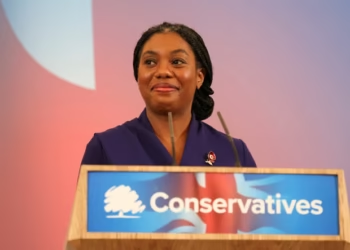 Badenoch Raises Prospect of 2027 UK Election
 Yemen government launches offensive against Houthis
 US bombers leave RAF Fairford after terror threat
 Tories Plan Major Overhaul of UK Environmental Rules
 Gosport Protesters Clash With Police Over Migrant Rescue
 Palace Rejects Funding Andrew’s Police Legal Challenge