
Published: 08 July 2026. The English Chronicle Desk. The English Chronicle Online.
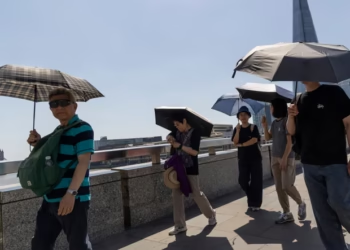
As a sweltering summer continues across Europe, trades unions are mounting a desperate push for new laws. They aim to counter deadly heat stress that currently claims an estimated 230 lives annually. This year’s tragic toll may unfortunately be even higher due to the extreme weather conditions. The World Health Organization has already linked 1,300 excess deaths to June’s intense heatwave. Some other expert estimates for total excess deaths are running as high as 20,000 people. Unions now demand enforceable workplace thermal limits based on the wet bulb globe temperature scale. This specific measurement effectively tracks the human body’s natural ability to cool itself down. Alongside these limits, they want mandatory job site heat risk assessments for every employer. They are also calling for essential rights to be included in a new law. These rights involve mandated heat breaks, accessible outdoor shade, cool water, and air. Adjusted working hours are also crucial for those operating in the most severe heat. These proposals were included in a draft directive text seen by the media recently.
Enrico Somaglia serves as the general secretary of the European Federation of Food and Agriculture. He noted that climate change is no longer just a distant or abstract environmental challenge. It has become a daily occupational health and safety risk for millions of working people. Beyond health, it represents a significant threat to long-term job stability across the entire continent. The current European legal framework is clearly not sufficient to defend workers against these threats. While the draft text remains a proposal, it is being taken up by many officials. Sympathetic members of the European Parliament are now pushing for these changes as summer intensifies. The torrid summer of 2026 has forced the issue onto the very top of agendas. The plan proposes maximum workplace temperatures on a scale between 30C and 32.5C for workers. These limits apply to work ranging from very high intensity to much lighter tasks. Beyond these specific temperatures, work would be suspended to ensure the safety of employees. Any employers bucking the rules would face effective, proportionate, and very firm legal sanctions.
Effat is one of three major union groups representing 15 million workers currently backing this. They are joined by the European Federation of Public Service Unions and the building sector. There is a massive groundswell of support for these changes among workers across all nations. In the United Kingdom, an amber heat alert was issued for the south-west of England. Temperatures are expected to soar further during this dangerous new period of extreme heat. The Trades Union Congress is now calling on ministers to introduce a maximum working temperature. This demand has also been recently backed by the government’s advisers on the climate committee. The union body wants rules to ensure employers take steps to reduce workplace temperatures. If indoor conditions climb above 24C, specific cooling measures must be implemented for staff. They also argue for the right for workers to stop work at higher temperatures. This threshold is set at 30C for general work and 27C for very strenuous jobs.
Paul Nowak serves as the general secretary of the Trades Union Congress in the UK. He said that the rapidly changing climate brought significant workplace risks needing urgent mitigation. Indoor workplaces should always be kept at comfortable temperatures with sensible and relaxed dress codes. Employers should also offer flexible working to make use of the coolest morning hours. Employers must ensure outdoor workers are protected with regular breaks and plenty of fluids. Workers need access to enough sunscreen and the right protective clothing for their roles. A Heat Strike movement formed after the record heat of 2022 has stepped up activism. This group recently called a national action that 1,500 people participated in last June. Activists were supported by several large unions and major organizations including Greenpeace and others. They set up cool stations to hand out water and advice in various towns. Some supporters held symbolic lunchtime walkouts in solidarity with those working in extreme heat.
Global heating is rapidly intensifying and Europe is warming twice as fast as average. Up to 130 million workers are now exposed to significant workplace heat stress today. Research from the European Trade Union Institute indicates 277,000 workers are injured by heat annually. Maria Ohisalo is a Finnish Green MEP who is reporting on these extreme temperature issues. She is currently supporting the intense union push for these necessary and binding regulations. She said that there is currently no European regulation on protection against workplace heat exposure. There is currently just a patchwork of mere recommendations that fail to protect vulnerable people. Workers everywhere need the real protection that only legally binding and harmonised rules offer. While new heat stress rules could be included in the upcoming European labor legislation, challenges remain. The European Commission has pledged to bring this law forward for consideration this year. However, it will first have to overcome opposition from several ministers in rightwing states. Those specific ministers currently favour weaker recommendations instead of the strong protections unions demand.
The stakes could not be higher as thousands of workers face dangerous heat every day. Without strict and enforced rules, the number of heat-related injuries will continue to rise. Protecting the workforce is a matter of both human rights and economic productivity for nations. The push for these safety measures represents a critical turning point for European labor policy. Legislators must now decide if they will prioritize human life over the preferences of employers. As the summer heat continues to shatter records, the pressure on officials will only grow. The public is watching closely to see how their representatives handle this climate emergency. Many believe that clear, binding regulations are the only way to manage these new risks. The coming months will be decisive for the future of health and safety standards. Unions remain committed to fighting until every worker is safe from extreme heat conditions. Their collective voice is becoming louder as more people experience these dangers first hand. This legislative battle is far from over but the need for change is absolute. Clearer standards will lead to a safer and more resilient future for all European workers.
Related News:
 Aberdeen Chosen for GB Energy HQ at Marischal Square
 Scotland’s Climate Plans Face Scrutiny Over ‘Science Fiction’ Targets
 Ocean Warming Drives Massive Marine Life Loss, Study Warns
 Tropical Flowers Shift Blooming Due to Climate Crisis
 UK Energy Reform Could Cut Bills by £200
 Evacuations Ordered as California Wildfires Spread Fast
 UK Records Earliest Spring as Nature Awakens Fast
 North Sea Drilling to Cut UK Imports Only Slightly
 Queensland Braces for Potential Second Severe Cyclone Hit
 Heavier SUVs Accelerate Britain’s Pothole Crisis
 Cyclone Vaianu Forces Mass Evacuations in New Zealand
 Chornobyl Still at Risk 40 Years After Disaster
 Crackdown Backfires on UK Climate Protesters
 Older Than Dinosaurs: Secrets of Mayfly Dance Revealed
 Capitalism ‘Suicidal’, Warns Petro at Climate Summit
 Coalition pushes fossil fuel phaseout plan
 Record May Heat to Cold Front in Eastern Australia
 Norway Doubles Down on Oil and Gas for Europe Energy Security
 Doomsday Clock Nears Midnight Amid Global Crises
 Tractor Breakdown Tests Lincolnshire Farmers
 Britons Build Emergency Supplies Amid Rising Fears
 Migratory Bird Crisis: UK Numbers Plunge Despite Record Warmth
 UK Faces Mass Water Shortages by 2055, Lords Warn
 Sycamore Gap Artwork Chosen After Public Vote
 Pope Meets Families in Italy Toxic Waste Zone
 UK rejects EV charging VAT cut amid Treasury clash
 Essex valley emerges as rising English wine hub
 Hope for mountain bongos returns to Kenya
 UN Issues Urgent Warning: Imminent Return of El Niño
 Europe Swelters as UK and France Smash Heat Records
 Germany Summons Chinese Envoy Over Russian Troop Training
 Sydney Records Hottest June Since 1859 as Expert Warns New High a ‘Signature’ of Global Warming
 UK Heatwaves Ignite Crisis of Sleep and Public Safety
 UK Seas Face Extreme Heatwave as Global Temperatures Surge
 Kate Winslet to Narrate Film Highlighting King’s Environmental Mission
 Trump’s UK Ambassador Urges North Sea Drilling to Strengthen US Ties
 UK Bans Fake Numbers: Scammers Lose Their Trick
 Vibe coding’ named Collins dictionary’s word of the year
BBC to Apologise Over Edited Trump Speech Amid Backlash
Vibe coding’ named Collins dictionary’s word of the year
BBC to Apologise Over Edited Trump Speech Amid Backlash
 Millionaires group urge Reeves to introduce wealth tax to ‘lift kids out of poverty’
 Reeves rejects £1bn plea for NHS redundancy payouts
 PM Condemns Leaks, Vows Loyalty to Ministers and Stability
 Phillipson Accused of Appeasing Unions by Diluting EBacc
 Saka Solidifies Role as Tuchel’s Key England Lieutenant
 Greene Pushes Epstein Files Amid Trump Fallout
 Zelenskyy Signs Fighter Jet Deal Amid Russian Drone Attacks
 Sundar Pichai Cautions on AI Hype and Market Risks
 Shadow Fleet at Sea: Europe’s Battle Against Illicit Oil Shipping
 Snow and Ice Cause Travel Chaos in North Yorkshire
 Director Michael Caton-Jones Reflects on Career and Beginnings
 Inside the Helpline Protecting Missing Children in the UK
 PlayStation PS5 Deals Hit Lowest Prices Ahead of Black Friday
 US Suspends Afghan Immigration After White House Shooting
 Five-Year-Old Dies After Rare Tonsil Surgery Complication
 Starmer Says Labour’s Economic Plan Needs Years to Deliver
 ‘Extinct’ Antelope Returns to Sahara, Bringing Hope
 IndiGo Cancels Hundreds of Flights Amid Pilot Shortages
 Penny Wong silent on Australian crew in sub strike
 Thousands Protest Iran Strikes Outside US Embassy London
 UK Oil and Gas Supplies Reassured Amid Middle East Concerns
 Trump Pressures Congress Over Save America Act
 Goma Drone Attack Kills Three as Conflict Escalates
 Queensland Protest Laws Spark Free Speech Backlash
 Social Media Giant Trial Reaches Final Jury Decision
 Oscars 2026: One Battle After Another Dominates Night
 Trump Nato threats expose Iran strategy vacuum
 Charity Watchdog Takes Control of Learning Disability Care Home
 NHS Satisfaction Rises for First Time Since 2019
 Trump Facing Backlash from Epstein Survivors Over Files
 Royal Ascot Allegation Sparks Wider Police Inquiry
 Secret Role of UK Security Services in Troubles Amnesty Law
 US Commentators to Address Oxford Union via Livestream
 Celestial Waltz: Venus and Jupiter Meet at Twilight
 Broadview Six Case Collapses Amid Prosecutor Misconduct
 Saka Playing Through Pain As England World Cup Campaign Looms
 UK Economy Suffers a Sharp Downturn as Iran Conflict Bites
 Appeal Court Rules Ban on Palestine Action Was Lawful
 Tuchel’s England Mission Goes Beyond Football Success
 Historic Victory for Canada as They Defeat Nine-Man Qatar
 Starmer Set to Announce Exit Plan as Burnham Eyes No 10