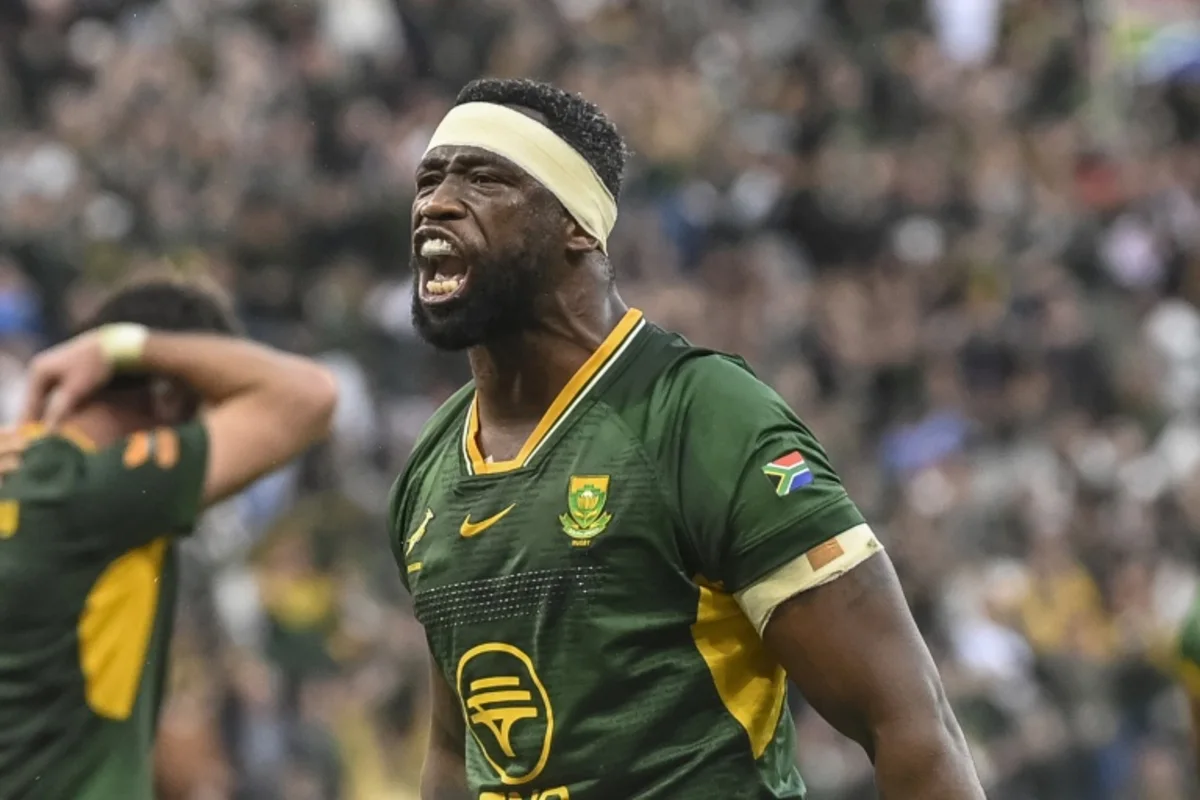
South Africa’s dominance of international rugby is facing another significant examination as the Springboks prepare to meet France in the Nations Championship final at Twickenham on Sunday. After years of establishing themselves as one of the most formidable teams in the sport, the defending rugby powerhouses must demonstrate that their remarkable ability to perform under extreme pressure remains intact.
The contest represents more than an opportunity to secure another international title. It is also a test of South Africa’s mentality, team unity and ability to maintain their position at the top of world rugby as other leading nations increasingly challenge their authority.
Under head coach Rassie Erasmus, South Africa have developed a reputation for thriving in the most demanding situations. Their physical strength, tactical flexibility and remarkable resilience have made them particularly difficult opponents in closely contested matches. However, recent encounters with France and Ireland have raised questions about whether their traditional advantage in high-pressure situations is beginning to narrow.

The ongoing Nations Championship has provided several memorable demonstrations of the intensity and unpredictability of international rugby. Wales produced one of the biggest surprises in their recent history by defeating New Zealand 35-28, while England recorded an impressive 37-12 victory over the All Blacks. France also demonstrated their competitive strength by narrowly beating South Africa in Paris, before Ireland defeated the Springboks by three points in Dublin.
These results have reinforced the growing belief that international rugby is entering a highly competitive period in which traditional powerhouses can no longer rely solely on their reputations.
South Africa have spent much of the past seven years establishing themselves as specialists in close encounters. Their ability to remain composed when matches reach their most physically and mentally demanding stages has been central to their success.
The Springboks demonstrated this quality throughout their victorious 2023 Rugby World Cup campaign. They secured three consecutive knockout victories by extremely narrow margins, defeating France 29-28, England 16-15 and New Zealand 12-11 in the final.
Those results highlighted the team’s remarkable capacity to survive difficult situations and deliver decisive performances when the consequences were greatest. Their success was built not simply on physical power or tactical preparation but also on discipline, determination and an exceptional willingness to withstand pressure.
However, France and Ireland have recently demonstrated that they possess the quality and mentality required to challenge South Africa in precisely those circumstances.
The influence of Erasmus has been particularly important in creating the strong identity that defines the Springbok squad. His coaching philosophy extends beyond technical preparation, focusing heavily on developing a collective purpose and strengthening the emotional connection between players.
His ability to motivate the squad and create a powerful sense of belonging has become one of the defining characteristics of South African rugby. Players appear united by a shared understanding of what representing their country means, particularly when facing difficult opponents.
Recent controversy surrounding Erasmus has further highlighted the importance of that relationship. The South African coach has publicly criticised refereeing decisions and questioned the treatment of his team and their opponents. His comments have generated considerable discussion, but they can also be understood as part of his effort to motivate the squad and maintain its competitive intensity.
Erasmus has previously received a six-match ban following criticism of referees. Despite the controversy, he continues to enjoy considerable support among South African rugby followers, many of whom regard him as a central figure in the team’s recent achievements.
The team’s latest announcement also carried significance beyond the immediate sporting contest. Assistant coach Mzwandile Stick delivered the squad announcement press conference entirely in Xhosa, one of South Africa’s major languages, spoken by millions of people.
The decision attracted attention across the international rugby community. While some observers interpreted it in the context of the ongoing disagreement surrounding Erasmus’s use of English, the announcement was widely welcomed in South Africa as an important recognition of the country’s linguistic and cultural diversity.
For many supporters, the use of Xhosa represented a meaningful moment for a sport that has historically faced challenges in becoming equally representative of all South African communities.
Rugby remains deeply connected to the country’s social and cultural history. By recognising a language spoken by more than eight million people, the announcement reinforced the message that the national team belongs to the entire country.
Captain Siya Kolisi also expressed his support for Erasmus ahead of the final. Speaking about the coach’s absence because of his suspension, Kolisi said the players would love to win the competition for him.
The statement reflected the close relationship between the coaching staff and the squad, as well as the sense of collective responsibility that has become central to South Africa’s identity.
However, France will provide a formidable challenge at Twickenham. Head coach Fabian Galthié has made it clear that his team intends to approach the final with maximum commitment. France have already demonstrated that they can compete with South Africa in physically demanding and closely contested matches.
Their narrow victory over the Springboks in Paris earlier in the competition provided evidence that the gap between the two sides is considerably smaller than South Africa’s recent achievements might suggest.
France are also expected to benefit from important changes to their backline. Thomas Ramos returns at full-back, while Matthieu Jalibert is set to operate at fly-half. Their inclusion gives the French side additional attacking options and could create problems for South Africa’s defensive organisation.
The Springboks have also made significant adjustments to their selection. Sacha Feinberg-Mngomezulu is expected to play at full-back, Manie Libbok will take responsibility at fly-half and Cobus Reinach will feature at scrum-half.
These changes suggest that South Africa are prepared to adopt a different approach from the side that faced France in Paris. The new combination could provide greater attacking variety and allow the team to respond differently to the pressure created by the French defence.
The tactical contest between the two teams will be important, but the decisive moments may once again depend on individual determination and collective resilience.
Modern international rugby increasingly demands players who can maintain concentration and physical intensity throughout the full 80 minutes. Small mistakes, missed tackles and poorly timed decisions can determine the outcome of matches between teams operating at such a high level.
For South Africa, Sunday’s encounter carries particular importance because another defeat could strengthen the belief among their major rivals that the Springboks are becoming increasingly vulnerable in decisive contests. Losing three consecutive matches in this sequence would represent a significant psychological challenge for a team accustomed to controlling the biggest occasions.
For France, the final offers an opportunity to reinforce their status as one of the strongest teams in international rugby and demonstrate that their recent victory over South Africa was not an isolated achievement.
The wider significance of the match also extends towards the next Rugby World Cup cycle. With leading nations increasingly competitive, the outcome could provide an indication of which teams are best positioned to establish themselves as favourites for the next major international tournament.

South Africa’s success under Erasmus has been built on more than tactical innovation and physical strength. Their ability to remain united, motivated and mentally prepared during the most difficult moments has distinguished them from many opponents.
France now have an opportunity to test that advantage once again. Their players must demonstrate that they can maintain the same intensity and determination when the pressure reaches its highest point.
When the teams meet at Twickenham, the central question will be whether South Africa can once again prove that they remain the masters of rugby’s most demanding moments, or whether France can establish a new balance of power in the international game. The final promises to provide an important measure of both teams’ ambitions, resilience and championship credentials.
Related News:
 Tension and Turmoil at Aston Villa v Maccabi Match
 Lando Norris Dominates Brazil GP to Strengthen F1 Title Bid
 Ronaldo Confirms Final World Cup and Plans Retirement
 England Maintain Perfect World Cup Qualifying Record with Win Over Serbia
 Osimhen doubles as Nigeria reach CAF World Cup final
 Tears of Joy as Ireland Stun Hungary to Stay in World Cup Race
 Haaland Heroics and Portuguese Rampage Seal World Cup Qualification
 Irish Hero Parrott Says Goal Brought First Tears in Years
 Scotland Fans Reflect on France ’98 as World Cup Looms
 Nigeria Misses World Cup Again After Play-Off Loss
 Mark Wood Bowls Rapid Nets Spell, Ashes Test Hopes Rise
 Cardiff Nights Could Propel Wales to World Cup Glory
 Spain Qualify for 2026 World Cup After Dramatic Draw
 Scotland End 28-Year Wait With Stunning World Cup Qualification
 Cristiano Ronaldo Joins Trump, Bin Salman at State Dinner
 Tiny Curacao Makes History as Smallest Nation to Reach World Cup
 Haiti Qualifies for World Cup Despite Coach Never Visiting Country
 Scotland Fans Celebrate Historic World Cup Qualification
 Barcelona Returns to Camp Nou vs Athletic Bilbao
 India, Pakistan to Clash in T20 World Cup 2026 Group Match
 Mbappe Scores 4 as Real Madrid Edge Olympiakos
 Man City Lose, Champions League Risk
 Trump to attend 2026 FIFA World Cup draw in Washington
 2026 World Cup Draw Explained Ahead of Ceremony
 Hilary Knight speaks out on Trump’s recent hockey remarks
 Brady Tkachuk Denies AI Video Claims After Olympic Gold
 India T20 World Cup Triumph Seals Historic Title Defence
 Iranian Captain Departs Australia Amid Asylum Tension
 Iran World Cup Move Talks Raise Global Concerns
 Jos Buttler Searches for Form as the IPL Returns
 Peretz Targets FA Cup Upset Amid War Concerns
 Irvine Slams Trump Fifa Peace Prize
 $13bn World Cup Set to Break All Revenue Records
 Premier League drama defines crucial weekend
 Infantino’s Grip Tightens as FIFA Eyes a $14bn Future in Vancouver
 RFU Backs Borthwick Despite England’s Poor Six Nations
 Miami Upgrades Shake Up F1 Title Fight
 Infantino Defends Soaring World Cup 2026 Ticket Costs
 FIFA Confirms Global Ban for Benfica Star Prestianni
Chasing Glory: The Quest for a New World Cup Champion
 Tuchel Boldly Reshapes England Squad for World Cup Glory
 Ebola outbreak in DRC overwhelms health system as cases surge
 Hunger increasingly weaponised in global conflicts
 Drama in New Zealand as Surf Final Halted by Marine Attack
 Knicks Clinch Historic Comeback in Thrilling NBA Finals
 Football Hopes to Outshine World Cup Drama in Mexico
 Fifa Official Under Investigation Over Hand Gesture Controversy
 Canada Secure Historic Last 16 Spot with Late Goal
 Mexico World Cup Joy Turns to Tragedy as Two Die in Crowds
 Bryne Backs Haaland Before England World Cup Clash
 England and Norway Fans Turn Miami Into World Cup Carnival
 Lamine Yamal’s Birthday: Football, Fame, and France
 Grafström sounded out over challenge to Infantino
 Premier League Midfielders Cost More Than Ever
 South Africa’s Femicide Crisis Deepens
 Tropics May Wait Longest for Net-Zero Climate Benefits
 Irish PM Backs Coach in Israel Football Dispute
 UK Pauses Chagos Deal Amid US Opposition
 Spain Arrive at Wembley Hungry for More Glory
 Economic growth and political strain reshape Benin
 Cairo Mural Sparks Debate Over Ancient Egyptian Identity
 Nigeria Military Aircraft Crash Kills All 32 On Board
 Kenya Confirms First Ebola Case as Patient Dies
 South Sudan Trauma Wards Struggle as Fighting Intensifies
 USS Lincoln Ends Record 265-Day Deployment
 Navi Pillay Wins Nobel Peace Prize for Justice
 Controversial Vaccine Trial Approved in Guinea-Bissau
 Premier League Faces a Crisis of Trust After City Verdict
 Nigeria Confirms Ebola Case as Regional Outbreak Spreads
 UK Aid Set to Fall Short of Reduced 2027 Target
 UAE Nominee Faces Backlash Over Sudan War Role
 King Charles Faces Reparations Protests at Antigua Summit
 Canada Joins Boycott of Russian Ice Hockey Teams
 ANC Faces Voter Backlash in South African Elections
 Iran Death Row Boxer Wins Prestigious Human Rights Award
 Drone Warfare Fuels a Deadly Civilian Crisis in Sudan
 Yemenis Prepare to Flee as Houthis Advance on Aden
 US and West Indies Poised to Host 2034 T20 World Cup
 Cairo Fuel Tanker Explosion Kills at Least 31 People
 France Schools Protests Draw 250,000 as Police Clash