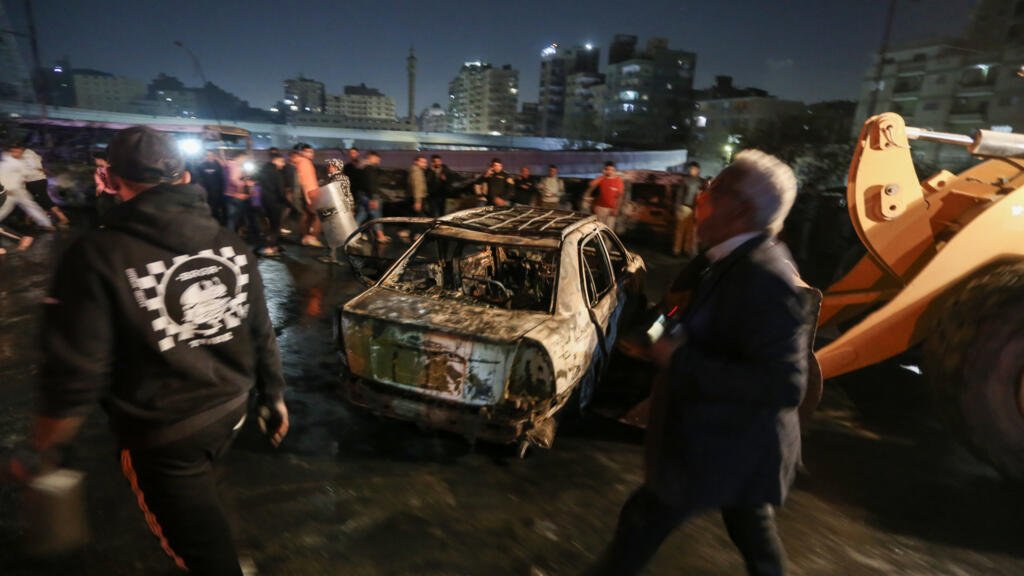
At least 31 people have been killed and 21 others injured after a fuel tanker overturned and triggered a massive fire on a major highway surrounding Egypt’s capital, Cairo. The devastating incident occurred on Wednesday in the densely populated Warraq district of Giza, part of the Greater Cairo metropolitan area, turning a busy section of the road into a scene of destruction. Several cars and motorcycles were engulfed in flames, leaving vehicles severely damaged and families facing the devastating consequences of one of the region’s latest deadly road accidents.
According to Egyptian authorities, the fire broke out after a fuel tanker overturned on the Cairo Ring Road, a major transport route that circles the capital and connects several densely populated districts. The accident triggered an intense blaze that rapidly spread among nearby vehicles, trapping motorists and passengers who were unable to escape in time.
The Egyptian Health Ministry confirmed that at least 31 people had died and 21 others had sustained injuries. More than two dozen cars and motorcycles were reportedly damaged or destroyed by the fire. Officials described the death toll as preliminary, warning that the number of fatalities could change as emergency teams continued their work and authorities established the identities of the victims.

The accident caused widespread panic among motorists and residents in the surrounding neighbourhoods. The affected section of the highway was crowded with vehicles when the tanker overturned, leaving many drivers caught in heavy traffic with little opportunity to escape the rapidly spreading flames.
State-linked Egyptian media reported that the fuel truck lost control and overturned, resulting in the devastating fire. Although authorities confirmed the sequence of events, a detailed investigation will be required to establish the precise circumstances that caused the tanker to overturn and determine whether mechanical failure, driver error or other factors contributed to the disaster.
Emergency services rushed to the scene as the fire spread across the highway. Firefighters worked to control the flames while rescue personnel attempted to reach people trapped inside burning vehicles. The intensity of the fire made rescue operations particularly challenging, as several vehicles became engulfed almost simultaneously.
Video footage released by the Associated Press showed firefighters battling the flames as the fire spread among cars on the highway. Rescue workers could also be seen attempting to remove victims from damaged vehicles. Hundreds of people gathered near the accident site, watching the emergency operation and trying to understand the scale of the tragedy.
The aftermath was particularly disturbing. Burnt-out vehicles remained scattered across the road, while charred cars and motorcycles illustrated the destructive force of the blaze. Some vehicles were so severely damaged that identifying those who had been inside them became difficult, prompting authorities to begin forensic procedures.
Ahmed Sameer, a motorist who became trapped in traffic after the accident blocked the highway, described the terrifying moments he witnessed. He said he saw the fuel tanker and several vehicles burning as the fire spread through the traffic congestion. According to his account, at least eight bodies were being removed from burned cars when he observed the rescue operation.
Describing the incident, Sameer said the fire was enormous and vehicles became trapped together as the flames spread. He recalled the atmosphere of fear and panic, describing the scene as shocking and extremely distressing.
Such eyewitness accounts highlight the suddenness of the disaster and the difficulties faced by people caught in the affected area. Motorists who initially believed they were experiencing an ordinary traffic disruption were suddenly confronted with a rapidly developing emergency involving highly flammable fuel and intense flames.
Egyptian President Abdel Fattah el-Sisi expressed condolences to the families of those killed in the accident. His statement reflected the government’s concern over the scale of the tragedy and the loss of life. The incident has once again drawn attention to road safety challenges in a country where serious traffic accidents continue to claim thousands of lives every year.
Egypt’s Public Prosecutor’s Office has initiated procedures to establish the identities of the deceased. DNA testing is being conducted because the severity of the fire made visual identification difficult in several cases. The forensic process is expected to help authorities provide accurate information to relatives and ensure that victims are formally identified before their remains are handed over to their families.
The investigation is particularly important for families waiting for confirmation about loved ones who may have been travelling through the area when the accident occurred. In major disasters involving fires and extensive vehicle damage, identifying victims can become a lengthy and emotionally difficult process.
Health Minister Khaled Abdel Ghaffar said the injured had been transported to nearby hospitals for medical treatment. Medical authorities were monitoring their conditions while emergency healthcare teams worked to provide the necessary assistance.
The minister later visited the accident site and hospitals to assess the situation and review the response to the disaster. His visit came as rescue operations and the identification process continued. Officials also stressed that the reported death toll remained preliminary, leaving open the possibility that the number of fatalities could rise.
The fire also created major traffic disruption on the Cairo Ring Road, one of the most important transportation routes in Greater Cairo. The highway is used daily by large numbers of commuters, commercial vehicles and private motorists travelling between different parts of the metropolitan area.
The closure of the affected section caused significant congestion as emergency services secured the scene and removed damaged vehicles. However, a spokesperson for the health minister later told the state-linked Al-Qahera News that the road had been reopened after the remaining wreckage was cleared.
Although the highway has resumed operations, the human consequences of the accident are likely to remain significant for the affected families and communities. The incident has also renewed public concern about the safety of transporting highly flammable materials through heavily populated urban areas.
Fuel tankers carry substantial quantities of combustible substances, making accidents involving such vehicles particularly dangerous. When a tanker overturns or suffers structural damage, leaking fuel can ignite and spread flames rapidly, especially when other vehicles are positioned close together. Heavy traffic can further complicate evacuation efforts and prevent emergency responders from reaching victims quickly.
The Cairo disaster has once again highlighted Egypt’s longstanding road safety problems. Deadly traffic incidents occur regularly across the country, with speeding, poor road conditions and inadequate enforcement of traffic regulations frequently identified as contributing factors.
The country’s expanding road network and increasing vehicle numbers have placed additional pressure on transport infrastructure and traffic management systems. Although authorities have undertaken road development and modernisation projects in recent years, serious accidents continue to demonstrate the importance of stronger safety measures and effective enforcement.
In January, another major road accident near the southern province of Beni Suef claimed 21 lives and injured 16 people in a multivehicle collision. That incident also raised concerns about the dangers faced by motorists travelling on busy Egyptian roads.
The repeated occurrence of deadly accidents has strengthened calls for improvements in driver training, vehicle inspections, speed control and emergency response systems. Transporting hazardous materials through densely populated areas also requires strict safety standards, including regular tanker inspections, appropriate driving regulations and carefully planned routes.
For emergency responders, the Cairo incident demonstrates the importance of rapid coordination between firefighters, medical teams, police and forensic investigators. In accidents involving fuel and multiple vehicles, delays can increase the danger to trapped passengers and people attempting to assist victims.
The latest tragedy is also a painful reminder of the human cost of inadequate road safety. Behind the official figures are families who have lost relatives, injured survivors facing uncertain recoveries and witnesses struggling to process the scenes they experienced.
As investigations continue, Egyptian authorities will face pressure to establish exactly what caused the tanker to overturn and whether preventive measures could have reduced the scale of the disaster. The findings may also influence future discussions about the transportation of fuel and other hazardous materials through busy urban corridors.

For now, the immediate priority remains supporting injured survivors, identifying the deceased and providing assistance to grieving families. Although the Cairo Ring Road has reopened, the devastating fire has left a lasting impact on the affected community and renewed questions about how similar tragedies can be prevented.
The incident serves as another urgent warning that improving road safety requires more than infrastructure development. Effective regulation, responsible driving, properly maintained vehicles and well-coordinated emergency services are essential to reducing the risk of catastrophic accidents and protecting human lives.
Related News:
 Gaza Strike Kills Child and Paramedic
 South Africa’s Femicide Crisis Deepens
 Latin America women fear rollback of rights
 South Sudan Trauma Wards Struggle as Fighting Intensifies
 Navi Pillay Wins Nobel Peace Prize for Justice
 UAE Says Co-Pilot Planned Suicide Attack on Israel
 Controversial Vaccine Trial Approved in Guinea-Bissau
 Senegal LGBTQ+ Crackdown Drives People Into Hiding
 French Police Face Scrutiny Over Injured Teenagers
 Nigeria Confirms Ebola Case as Regional Outbreak Spreads
 Serbia’s Student Victory Sparks a ‘Smell of Freedom’
 Trump’s Midterm Campaign Faces Racism and Political Backlash
 UAE Nominee Faces Backlash Over Sudan War Role
 Alan Jones Trial Paused for Melbourne Cup Viewing
 ANC Faces Voter Backlash in South African Elections
 Seven Arrested After Bonfire Night Violence in Scotland
 Kraków Shooting Suspect Dies After Killing Six
 Teenager Found Alive After Six Days Lost in Australian Bush
 Drone Warfare Fuels a Deadly Civilian Crisis in Sudan
 Indonesia Factory Fire Kills 24, Dozens Missing
 Malaysia to Deport Thousands to Genocide-Hit Myanmar
 UN Tribunal Questions Evidence Behind Gaza Aid Staff Sacking
 Ben Roberts-Smith Denies War Crime Allegations in First Statement
 China Fireworks Factory Blast Kills 21 in Hunan
 US ‘Narco Boat’ Strikes Draw Global Outcry
 Barrister Criticises Trial After Suicide Case Verdict
 New Footage Revives Peter Falconio Mystery
 Westminster Council Threatens Charing Cross Soup Kitchen
 BBC Warned About Missing Clothes of Murder Victim
 Ukraine Villagers Demand Answers After Deadly Arms Depot Strike
 Councils spend £125m on illegal children’s care
 Man Arrested in Mississippi Woman’s Death
 Royal Crown Branded Enslaved Africans in Britain’s Slave Trade
 Israel Accused of Undermining Palestinian Life

 Yemen War Displaces 125,000 as Fighting Intensifies
 Lib Dems Prepare for Election Amid Reform Challenge
 Democrat Says ICE Restricted Detention Camp Oversight
 Tropics May Wait Longest for Net-Zero Climate Benefits
 Nepal PM calls deadly flood a global climate warning
 Cornell Fraternity Assault Investigation Reopened
 London Facial Recognition Trial Ends With False Alert
 Economic growth and political strain reshape Benin
 Drumcree Talks Falter as Legal Challenge Deepens
 Green Party faces dispute over Zionism motion
 French School Protests Escalate as 400 Schools Close
 New Prosecutor Takes Over Cornell Assault Case
 Former German Intelligence Chief Arrested Over Espionage
 Israel Promotes Film Challenging Controversial Gaza Documentary
 Gaza War Deepens India’s Strategic Ties With Israel
 South Africa Withdraws Directive on Asylum Applications
 Three Convicted in Mexico Surfing Trip Murders
 Australian Advocates Seek Subsidised Drugs for PMOS
 British Military School Abuse Victims Denied Justice
 French Students Protest Poor Conditions in Paris Suburbs
 UK Greens Face Crisis Over Zionism and Extremism Row
 Elizabeth Struhs Inquest Examines Child Safety Failures
 Greta Thunberg Backs French Students in School Protests
 Millions Face Tougher Medicaid Rules From January
 Gadi Eisenkot: Israel’s Anti-Netanyahu Challenger
 UK Bill Faces Warning Over Fayed Trafficking Victims
 Jenrick Defends Farage Amid Fresh Reform Racism Claims
 Milan Luxury Stores Shut as Italy Plans Troop Deployment
 Zelenskyy Says US Failed to Warn Kyiv of Russian Strikes
 Fire Engulfs Hitler’s Eagle’s Nest Retreat
 Former RAAF Pilot Accused of Murdering Wife
 Melting Dolomites Glaciers Reveal 250 WWI Explosives
 Erin Patterson Faces Life in Prison After Appeal Loss
 Novaya Gazeta to Close After Russian Government Pressure
 King Charles Faces Reparations Protests at Antigua Summit
 Bedouin Women Drive Historic Arab Election Gains
 Domestic Abuse Survivor Fears Attacker Without Tag
 Exiled Journalists Defy Putin’s Growing Media Crackdown
 One Nation Candidate Apologises for Offensive Posts
 Iran Death Row Boxer Wins Prestigious Human Rights Award
 Eisenkot Accuses Netanyahu of Racist Anti-Arab Campaign
 Zelenskyy Warns Starshield Curbs Weaken Ukraine Defences
 Helen Haines Leaves Hospital After Double Amputation
 India Blocks Cockroach Movement Leader From UK Flight
 Yemenis Prepare to Flee as Houthis Advance on Aden