A growing reliance on Chinese-made battery technology could shape the future of Britain’s energy infrastructure, as several projects linked to Chinese manufacturers remain in contention for government-backed financial support despite mounting warnings about national security and foreign interference. The development has intensified debate over whether the United Kingdom is giving sufficient priority to domestic energy technology and long-term security when allocating public funding for major renewable energy storage projects.
The concerns centre on a new long-duration energy storage scheme being developed by Ofgem, Britain’s energy regulator. The scheme is intended to support battery projects capable of storing electricity generated from renewable sources and releasing it back into the national grid for at least eight hours. Such facilities are expected to play an increasingly important role as the country expands its reliance on wind and solar power, whose output can fluctuate according to weather conditions.

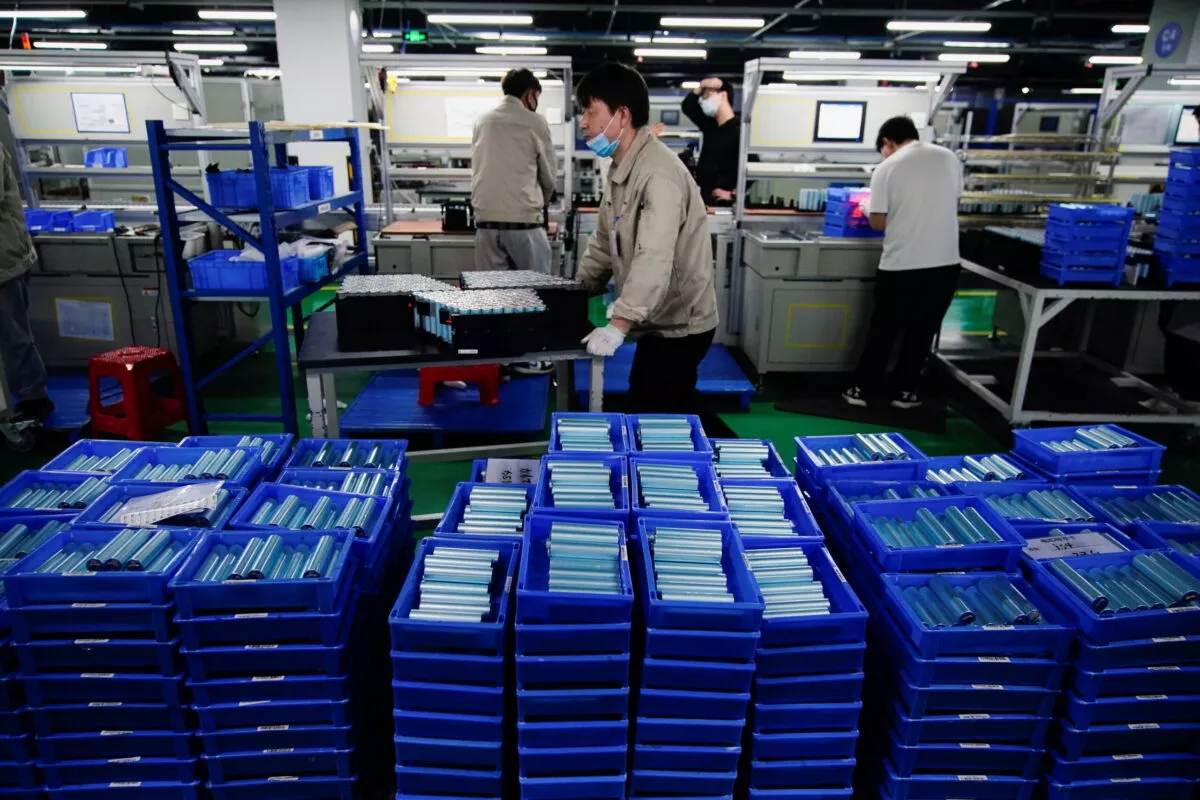
Ofgem published a provisional shortlist of 16 projects in June, with 11 relying on lithium-ion battery technology. These batteries are widely manufactured in China and are often operated using software developed or supplied by Chinese companies. Their relatively low production costs have given them a significant commercial advantage over alternative technologies, allowing projects using them to compete successfully for potential state support.
The regulator is expected to confirm the final projects selected for financial assistance in the coming weeks. The outcome could influence not only the development of Britain’s energy storage capacity but also the direction of investment in its domestic battery manufacturing industry.
The central concern raised by industry representatives and security experts is that the assessment process appears to place considerable emphasis on financial cost without giving equivalent weight to the strategic risks associated with dependence on overseas technology. As battery installations become more closely integrated into electricity networks, questions about software security, remote access and supply-chain vulnerabilities are gaining importance.
Lithium-ion batteries have become a major component of the global energy transition because they are commercially established, relatively affordable and capable of responding quickly to fluctuations in electricity supply and demand. Their widespread use in electric vehicles, consumer electronics and grid-scale storage has helped reduce manufacturing costs through large-scale production.
China has developed a dominant position in the global battery supply chain, supported by substantial manufacturing capacity and established relationships with international energy developers. For British companies seeking to deliver projects within tight budgets and schedules, Chinese equipment can therefore represent an attractive option. However, the same concentration of supply has raised concerns about the strategic consequences of relying heavily on a small number of overseas manufacturers for critical infrastructure.
Senior figures in the energy industry have questioned whether Ofgem’s evaluation criteria adequately recognise the security and economic benefits of supporting British battery technologies. They argue that a procurement process focused heavily on immediate project costs could disadvantage domestic manufacturers whose products may offer alternative supply chains and different security characteristics.
One company affected by the shortlist is Invinity Energy Systems, a British manufacturer of vanadium flow batteries. Unlike conventional lithium-ion batteries, vanadium flow systems store energy in liquid electrolytes held in separate tanks. The technology is considered particularly suitable for certain long-duration storage applications because its capacity can be expanded by increasing the size of the electrolyte tanks.
Invinity has expressed disappointment after only one project using its technology was included in Ofgem’s provisional shortlist. The company has warned that the outcome could force it to reconsider plans to manufacture batteries in the United Kingdom.
The issue has implications beyond the immediate competition between different battery technologies. Domestic manufacturing capacity can contribute to industrial employment, technical expertise and a more diversified supply chain. Supporters of British battery production argue that public investment should consider these broader economic benefits rather than selecting projects primarily on the basis of their initial costs.
The security debate has also become more prominent following warnings about Europe’s dependence on Chinese-made green technology. Michael Collins, a former deputy head of national security strategy at the UK Cabinet Office, previously warned that European countries were sleepwalking into serious economic and national security problems because of their growing reliance on Chinese technology.
His warning reflected wider concerns that equipment used in energy infrastructure could create vulnerabilities if manufacturers or software providers retain access to sensitive systems. Modern battery installations are not simply collections of storage units. They rely on digital controls, monitoring systems and communication networks to manage electricity flows, respond to grid requirements and maintain operational stability.
A cybersecurity weakness in such systems could potentially disrupt operations or expose sensitive information. Security specialists have therefore argued that the assessment of battery projects should examine the risks associated with equipment and software throughout the operational life of an installation, rather than concentrating mainly on whether security requirements might delay construction.
Ofgem’s evaluation has considered proposed information technology and cybersecurity arrangements. However, the criteria reportedly assess these measures largely in relation to whether they could affect projects’ stated delivery schedules in the early 2030s. Critics argue that this approach may not adequately address the possibility of security breaches after the facilities have become operational.
The distinction is important because energy infrastructure is expected to remain in service for many years. A project that meets initial security requirements may still face emerging threats as software changes, remote maintenance arrangements evolve and new vulnerabilities are discovered. Industry representatives believe these risks should form a more substantial part of the funding decision.
The provisional shortlist includes projects developed by companies with established relationships with Chinese battery manufacturers. Field Energy and Statera Energy are among the developers attracting attention because of their previous sourcing arrangements and their involvement in several shortlisted schemes.
Field Energy is responsible for five projects on the list and has typically sourced battery technology from Envision Energy. The company has been identified by US senators as one of six firms with close links to the Chinese Communist Party. Such political and commercial connections have contributed to concerns among some policymakers about the potential exposure of critical infrastructure to foreign influence.
Statera Energy has three projects on the shortlist. These include one pumped hydro storage project and two lithium-ion battery projects. The company has previously sourced batteries from Envision Energy as well as Sungrow, a major Chinese solar and battery manufacturer.
Sungrow attracted additional attention earlier this year after a German cybersecurity company carried out what it described as an ethical hack. The company claimed to have gained access to hundreds of thousands of solar installations across Europe. The episode raised questions about the security of equipment and digital systems used in renewable energy infrastructure.
Such findings do not by themselves establish that a manufacturer has deliberately created a security vulnerability or that a particular energy project is compromised. However, they have reinforced calls for more detailed scrutiny of technology providers, software access arrangements and the safeguards used to protect electricity networks.
Field Energy and Statera Energy have both said they take security seriously and comply with national security guidance at their sites. Their responses underline the importance of distinguishing between concerns about supply-chain dependence and evidence of actual misconduct. The presence of Chinese-manufactured equipment does not automatically demonstrate that a project presents a security threat, but critics argue that the potential risks should be assessed transparently.
Amit Gudka, chief executive of Field Energy and a former head of the collapsed energy supplier Bulb, said the company wanted to contribute to the development of a battery manufacturing industry in the United Kingdom. His comments suggest that developers can pursue projects using internationally sourced equipment while also expressing an interest in expanding domestic industrial capacity.
The debate places the government and Ofgem in a difficult position. Britain needs substantial investment in energy storage to support its renewable electricity ambitions, but it also needs to ensure that critical infrastructure is protected from technological and geopolitical risks. Selecting the cheapest available equipment may reduce immediate project costs, yet excessive dependence on a limited number of foreign suppliers could create vulnerabilities that become more expensive to address later.
The government has maintained that the security of the national energy system is a priority. A spokesperson said ministers were taking action to develop secure and resilient battery supply chains and reduce vulnerabilities. The spokesperson also stated that investment in Britain’s energy sector was subject to the highest levels of national security scrutiny.
Ofgem, meanwhile, said it had assessed the projects against the legal and policy framework established by the government and parliament. The regulator added that it was carefully considering responses to its consultation before reaching final decisions.

The final selection will therefore be closely watched by energy companies, domestic manufacturers and national security specialists. It will provide an indication of how Britain intends to balance affordability, technological competition and strategic independence as it builds the infrastructure required for a low-carbon electricity system.
For domestic manufacturers such as Invinity, the outcome could influence future investment decisions and the viability of expanding production in Britain. For developers, it will determine which projects receive financial backing and how quickly additional storage capacity can be delivered. For policymakers, the challenge is to ensure that the country’s energy transition does not create new dependencies that could undermine its long-term resilience.
Ultimately, Britain’s battery storage strategy is about more than choosing between competing technologies. It involves deciding how public money should support the country’s industrial future while protecting the infrastructure on which households, businesses and essential services depend. As the government and regulator prepare to finalise the funding decisions, the balance between low-cost imports, domestic manufacturing and national security is likely to remain at the centre of the debate.
Related News:
 Reform UK funding: mystery billionaire revealed
 Tom Watson Takes Senior Role at Palantir
 Drax Datacentre Faces Major Carbon Emissions Concerns
 UK Must Build Its Own AI to Protect National Security
 UK Warned Over Dangerous Dependence on China for Minerals
 MPs warn AI financial risks threaten UK stability
 MPs warn AI financial risks threaten UK stability
 OpenAI Halts Stargate UK Project Amid Energy Crisis
 UK firms accused of ‘AI washing’ boom
 UK Risks Falling Behind in AI Race
 London Launches First Self-Driving Taxis
 Louise Haigh Urges UK to Heed AI Safety Warnings
 UK Unveils Centre to Counter Foreign Disinformation
 UK Plans New Centre to Counter Information Warfare
 Xi urges Trump to avoid US-China military conflict
 Bank Chief Calls for Power to Intervene in AI
 Palantir Lobbyist Had Role in Burnham Campaign
 Tom Watson Warns Against ‘Mob Rule’ in UK Contracts
 UK Urges Interpol to Reject Argentina’s Falklands Arrest Requests
 NHS Trusts Reject Palantir’s £330m Patient Data Platform
 Bradford Rail Hub Promises Faster Northern Connections
 Meta Faces Election Bias Claims Ahead of Brazil Runoff
 Healey Pledges Major AI Investment for UK Security
 Elon Musk’s $446m Midterm Gamble Ends in Defeat
 Australia Faces Political Risks After US Midterm Shift
 Britain Seeks Emergency Power as Wind Generation Falls
 UK Civil Service Chief Vows Radical Whitehall Reform
 AI Boom Drives UK Economy to Fastest Growth in Two Years
 Nvidia Scandal Fuels US-China Security Crisis
 Weakening UK EV Targets Could Damage Car Industry
 Rubio Rejects Links Between US Tech Outages
 Trump Dismisses US Outages Ahead of China Summit
 BAE Systems to Cut 1,070 Jobs Amid Order Uncertainty
 White House Cyber Chief Fired After US Tech Outages
 Meta Brings Muse AI Shopping Assistant to the UK
 Trump Open to Pardoning Nvidia Chief Jensen Huang
 Trump’s UK Ambassador Urges North Sea Drilling to Strengthen US Ties
 Millionaires group urge Reeves to introduce wealth tax to ‘lift kids out of poverty’
 PM Highlights UK Business at G20 in South Africa
 Starmer Says Labour’s Economic Plan Needs Years to Deliver
 UK Government Borrowing Drops to £11.6bn in December
 AI job losses UK: Britain faces sharper employment shock
 UK shelves £110m border project amid trade strain
 Reeves Must Back Defence Plan or Face Dismissal, Says Unite Chief
 Silent Tracks: Rail Line Without Passengers
 UK Ministers Lobby Trump Over Under-16s Social Media Ban
 Trump Faces Backlash Over $2bn Earnings Since Return
 Burnham unveils £65m drought aid for farmers
 Unions Warn Labour Over Zero-Hours Contract Reforms
 UK plans tougher Israel stance with settlement trade ban
 North Sea Firms Urge Early End to Windfall Tax
 MPs Defend UK Economic Watchdog Against Critics
 Trump gives Xi red-carpet welcome as trade truce extends
 The Tests Awaiting Andy Burnham After Labour Conference
 Burnham Opens Door to Possible UK Return to EU
 Sheikh Tahnoon and the UAE’s AI Ambitions
 Badenoch Raises Prospect of 2027 UK Election
 UK Diesel Reaches £2 as Inflation Surges Across Europe
 North Sea Strike Threatens UK Fuel Supplies
 IMF Warns Governments Over Rising Debt Burdens
 UK Water Firms Earn Millions From Industrial Wastewater
 Aardman Cuts Losses but Fails to Return to Profit
 UK Could Rejoin EU Through a Switzerland Plus Deal
 Brexit Debate Returns as UK Voters Reconsider EU Exit
 UK Borrowing Hits £24.5bn Ahead of Healey’s Budget
 Middleton Revitalisation Blueprint for UK Towns
 Tax Online Sales to Save High Street, Burnham Urged
 Spain Deepfake Ad Sparks Election Outrage
 Labour MPs Urge Burnham to Lead UK Reindustrialisation
 China’s AI Ambitions Hit $2.4 Trillion Market Setback
 UK Land Registry Plan Faces Opposition From Landowners
 Global Crises Test Diplomacy as Trump’s Policies Face Scrutiny
 Zelenskyy Seeks Urgent Help as Russia Hits Ukraine’s Power Grid
 UK Employers to Be Forced to Publish Job Salaries
 Burnham’s Christmas Homelessness Pledge Faces Uncertainty
 Trump Defends Lutnick Amid Nvidia Chip Export Controversy
 Burnham Weighs Tax Cuts to Boost Youth Employment
 Bank of England Faces £160m Renovation Challenge
 London Car Use Set to Rise 10% Over Next Decade
Trump, Nvidia and the Fight Against Tech Oligarchs