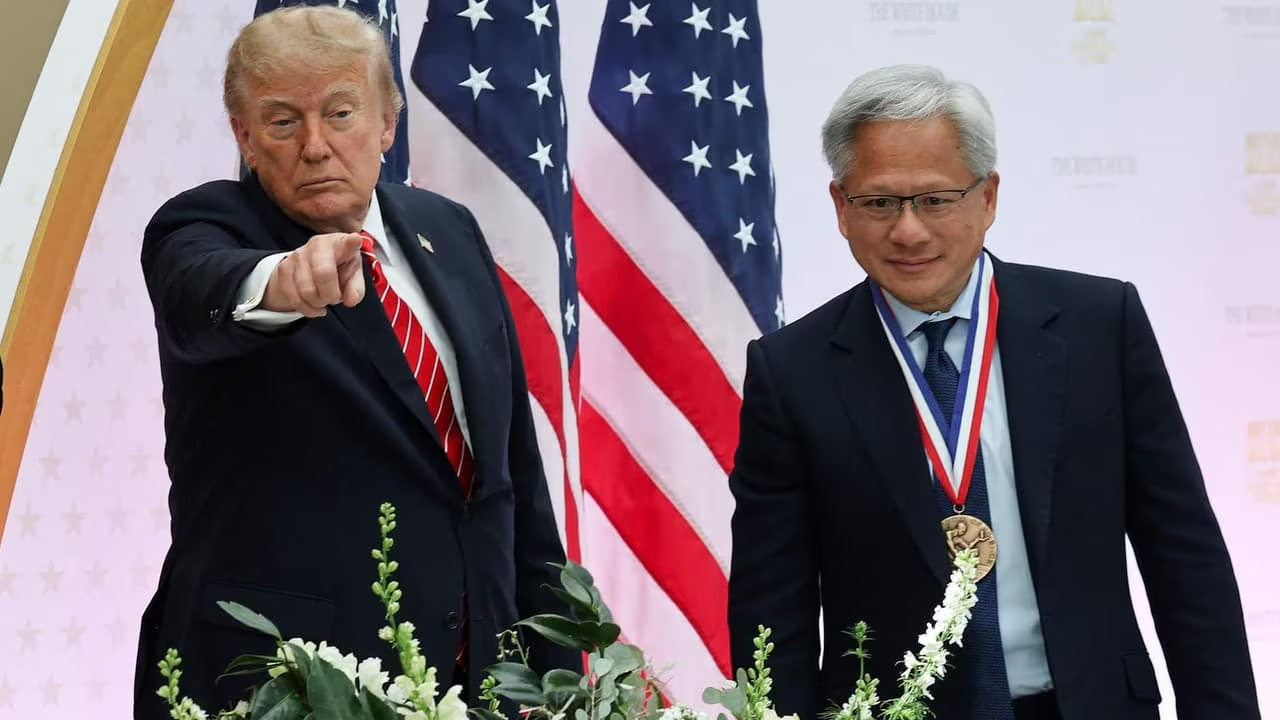
The growing concentration of economic and political power in the hands of major technology executives is raising serious questions about the future of democracy, corporate accountability and the influence of wealthy individuals over government decisions in the United States. As artificial intelligence reshapes industries and transforms the global economy, a small group of technology billionaires appears increasingly capable of influencing decisions that extend far beyond their companies. However, recent political developments, including Democratic gains in the US midterm elections, have raised hopes that the era of unchecked corporate influence could eventually face stronger resistance.
At the centre of the debate is Nvidia, one of the world’s most influential technology companies and a major supplier of advanced processors used in artificial intelligence systems. Its chief executive, Jensen Huang, has become one of the most powerful figures in the technology industry. Yet controversies surrounding his leadership and the company’s corporate governance have placed renewed attention on the relationship between business interests, political influence and national security.

Nvidia’s board recently reinstated Huang following a period of controversy, a decision that received a strongly positive response from financial markets. The company’s share price reportedly increased by approximately one-third following the announcement, suggesting that investors welcomed the leadership decision and remained confident in its future prospects.
For shareholders, the immediate financial outcome appeared encouraging. However, the circumstances surrounding the decision raised questions about whether corporate boards can maintain independence when powerful political figures become involved in sensitive business matters.
Reports concerning Huang’s alleged personal relationships and possible connections to a suspected Chinese intelligence operation had created concerns about potential national security implications. Questions were raised about whether sensitive corporate information or valuable technological assets could have been exposed to foreign interests. The allegations also placed pressure on Nvidia’s leadership and its board to explain how the situation had been assessed.
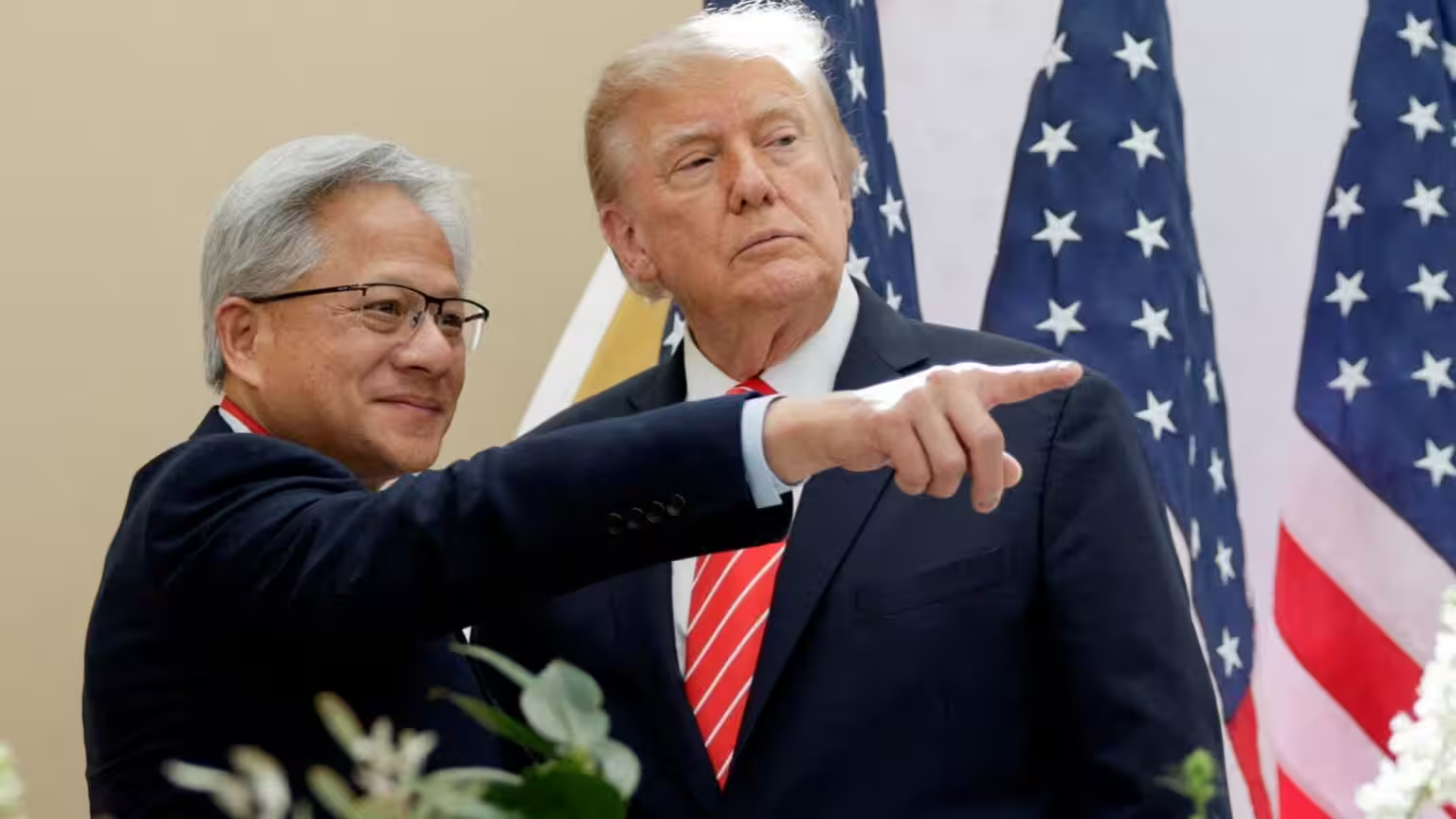
The controversy reportedly took another turn following a telephone conversation involving the White House. US President Donald Trump was said to have reassured Nvidia’s board that the allegations did not present a national security threat. Huang subsequently received a path back to his leadership position, although the full circumstances surrounding the board’s decision and the allegations remain disputed.
Trump publicly defended the assessment, suggesting that national security concerns had been examined and dismissed. However, his reported involvement has raised questions about the boundaries between presidential authority and private corporate governance, particularly because the president also reportedly holds a financial interest in Nvidia shares.
The issue is significant because Nvidia occupies a central position in the global artificial intelligence industry. Its processors are essential to the development and operation of advanced AI systems used by technology companies, research institutions and governments. Any compromise involving sensitive technology could therefore have implications extending beyond ordinary commercial competition.
The possibility that a company’s chief executive could become vulnerable to foreign influence is particularly sensitive when the business supplies technology with strategic importance. China and the United States are competing aggressively for leadership in artificial intelligence, advanced computing and semiconductor manufacturing. In this environment, corporate decisions involving Nvidia can carry consequences for national security and international economic competition.
The controversy also draws attention to another prominent example of concentrated corporate power involving OpenAI chief executive Sam Altman. Altman was removed from his position by the company’s board before being reinstated within a matter of weeks following a revolt by investors and employees. The episode demonstrated the difficulty of challenging influential technology founders when their continued leadership is considered essential to business success.
Both cases illustrate a broader pattern in Silicon Valley, where founders and chief executives are increasingly treated as indispensable figures whose decisions should rarely be questioned. Investors often view their leadership as a major source of commercial value, particularly when companies are operating at the forefront of rapidly expanding industries.
However, critics argue that this approach can weaken corporate accountability. When a handful of individuals exercise extraordinary influence over companies controlling critical technologies, ordinary governance procedures may become less effective. Boards can face pressure from investors, political leaders and market expectations, making independent oversight more difficult.
The concern becomes even greater when considering the wider ambitions of technology billionaires such as Elon Musk, Mark Zuckerberg and other prominent artificial intelligence executives. Their companies are not simply competing to develop profitable products. They are helping shape the future of employment, communication, transportation, public services and economic organisation.
Artificial intelligence could deliver substantial benefits through improved productivity, scientific research, medical innovation and more efficient business operations. At the same time, rapid automation could displace workers, widen economic inequalities and create new forms of social disruption. Decisions about how these technologies are developed and deployed therefore affect billions of people, not merely shareholders and company executives.
Critics fear that technology leaders increasingly believe they should be allowed to determine the direction of this transformation with limited interference from governments or democratic institutions. Their argument is often based on the idea that exceptional technological innovation requires freedom from traditional restrictions. However, opponents say that technological expertise and financial success do not automatically provide the authority to make decisions affecting entire societies.
To understand the current situation, comparisons are increasingly being drawn with America’s Gilded Age during the late nineteenth century. That period witnessed extraordinary industrial expansion alongside the accumulation of enormous wealth and political influence by a small number of business leaders.
The dominant industries of the time were railways and steel, while powerful industrialists such as Cornelius Vanderbilt, Andrew Carnegie, John D Rockefeller and J P Morgan shaped the country’s economic development. Their companies controlled essential infrastructure, industrial production and financial resources, giving them considerable influence over political and economic institutions.
Like today’s technology billionaires, the industrial leaders of the Gilded Age were often regarded as powerful figures whose interests could influence government decisions. Their influence extended through lobbying, campaign financing, political connections and, in some cases, bribery. Government subsidies and public resources also played an important role in supporting the expansion of major industrial enterprises.
The comparison is particularly relevant to the modern technology sector because several leading companies have benefited from substantial government support. Elon Musk’s businesses, for example, have received public contracts, subsidies and other forms of government assistance. Such support has helped expand industries ranging from electric vehicles to space technology. Critics argue that public assistance should come with meaningful accountability rather than allowing private companies to exercise disproportionate influence over public policy.
The concentration of wealth during the Gilded Age also produced significant social tensions. Economic growth generated enormous fortunes for industrial leaders, but the benefits were distributed unevenly. By 1913, the richest 1 per cent of American taxpayers received nearly 18 per cent of national income and controlled close to 40 per cent of the country’s wealth. Comparable levels of concentration have returned in the modern economy, reinforcing concerns about inequality and the growing influence of wealthy individuals.
However, the Gilded Age did not continue indefinitely. The Progressive Era of the early twentieth century introduced important reforms designed to limit corporate power and strengthen public institutions. The federal income tax was introduced, antitrust legislation expanded, and new regulatory structures were established to oversee business activities.
Political reforms also sought to reduce the influence of powerful private interests over elections and government institutions. A more professional public administration developed, helping reduce opportunities for bribery and political interference. These changes demonstrated that democratic governments could respond to excessive corporate influence when public pressure and political determination aligned.
The historical experience offers a possible lesson for the current technology era. The power of major technology companies is not necessarily permanent or beyond democratic control. Stronger competition laws, transparent political financing, effective regulatory institutions and independent corporate oversight could help restore a balance between private innovation and public accountability.
Recent political developments in the United States may provide an opportunity for such changes. Democratic gains in the midterm elections have strengthened expectations that congressional oversight of the Trump administration and major corporations could become more assertive. Nvidia’s controversy is already expected to feature in congressional scrutiny, with Huang scheduled to testify before lawmakers.
Such hearings could examine the company’s governance procedures, the handling of national security concerns and the relationship between political influence and private corporate decisions. They may also encourage wider discussion about the responsibilities of technology executives whose companies control infrastructure essential to the development of artificial intelligence.
The broader challenge will be ensuring that regulation does not unnecessarily undermine innovation while preventing powerful corporations from operating without meaningful oversight. Artificial intelligence is likely to remain one of the most important drivers of economic growth, but its benefits will depend partly on whether governments can establish rules that protect workers, consumers and democratic institutions.

Ultimately, the debate surrounding Trump, Nvidia and Silicon Valley represents a much larger struggle over who should control the technologies shaping the future. The comparison with America’s Gilded Age suggests that periods of concentrated corporate power can eventually give way to reform. Whether the United States is approaching a similar turning point will depend on the willingness of elected representatives, regulators and the public to demand greater transparency and accountability.
For now, the growing political scrutiny of technology billionaires offers a reminder that financial success and technological influence do not place corporate leaders above democratic institutions. As artificial intelligence becomes increasingly central to modern life, the responsibility to ensure that its development serves the wider public rather than a privileged few is becoming more urgent.
Related News:
 EU-China Talks Target Surge in Hybrid Car Imports
 China’s AI Ambitions Hit $2.4 Trillion Market Setback
 Fed Expected to Hold Rates Steady Ahead of US Midterms
 G20 Photo Cancelled as Russia Deepens Western Rift
 Nvidia and Jensen Huang Face Shareholder Lawsuit
 California Voters Reject One-Time Billionaire Tax
 Nvidia Scandal Fuels US-China Security Crisis
 Global Markets Plunge as AI Sell-Off Intensifies
 Reeves Fights to Keep Treasury Role Amid Labour Turmoil
 Firms on both sides fear damage from US-Canada trade war
 Trump Hardens Canada Trade Stance as Talks Stall
 Swedish Mining Push Puts Sami Land Rights Under Pressure
 Oil nears $100 as Saudi attacks shake markets
 Trump Pledges $5,000 if Republicans Win Midterms
 US House Passes Russia Sanctions Bill Amid Debate
 Trump Eyes Major Belarus Fertiliser Deal Amid Canada Trade Dispute
 Tony Blair Calls for Britain to Rejoin EU Within a Decade
 Xi urges Trump to avoid US-China military conflict
 Saudi intercepts Houthi missiles as oil fears grow
 Why Americans Feel Ripped Off by Rising Prices
 UK Diesel Reaches £2 as Inflation Surges Across Europe
 Minister Rejects Fears of UK Diesel Shortage
 Informa Agrees £2.24bn Deal to Buy Clarion
 IMF Warns Governments Over Rising Debt Burdens
 Doubts Grow Over Trump’s $15bn Iowa Steel Plant
 Ministers Push ATO to Reconsider Credit Card Ban
 Australia Delays Tax Credit Card Payment Ban After Backlash
 France Faces Debt Crisis as Protests and Markets Clash
 EU Caps Chinese Hybrid Car Imports at 350,000
 Brazil Court Scandal Threatens Lula as Bolsonaros Rise
 Trump Rallies GOP as Senate Democrats Boost Key Races
 Trump Halts New Russia Sanctions Amid Ukraine Rift
 Cormann Warns Australia Against Populist Migration Caps
 Trump Fears Shock Democratic Senate Win in Kansas
 Meta Faces Election Bias Claims Ahead of Brazil Runoff
 Trump Faces Voter Backlash Over Soaring Gas Prices
 Labour MPs Urge Burnham to Lead UK Reindustrialisation
 US Bans BYD Vehicles at Japan Military Base
 Anthropic IPO Reveals AI Boom’s Huge Costs and Risks
 Global Crises Test Diplomacy as Trump’s Policies Face Scrutiny
 Australia Raises Interest Rates to 18-Year High
 Elon Musk’s $446m Midterm Gamble Ends in Defeat
 Big Tech Faces a New Political Reckoning in America
 Paraguay President Quits After Major Bank Collapse
 Paraguay President Impeached and Arrested After Banking Crisis
 Qatar Pushes Iran Deal to Reopen Strait of Hormuz
 EU Manufacturers Face Growing Chinese Competition
 US Treasury Chief Moves to Military Base Over Iran Threat
 Elon Musk Leads 165,000 Calls to Reinstate Nvidia CEO
 Musk Distances Himself From MAGA After Costly GOP Bet
 Bank of England Faces £160m Renovation Challenge
 Trump Hosts Third Crypto Gala Amid Corruption Allegations
 Capita CEO Quits as Shares Plunge 67% Over Pension Crisis
 Trump approval plunges amid Iran war fears
 Ohio’s Battle for Trust: Democrats Vying to Flip the Buckeye State
 Kevin Warsh sworn in as Fed chair amid economic backlash
 Trump Calls Iran War ‘Small Potatoes’ Despite US Deaths
 Trump Threatens EU With Tariffs Over Canada Proposal
 US Sanctions Open New Battle for Cuba Assets
 MPs Defend UK Economic Watchdog Against Critics
 Trump gives Xi red-carpet welcome as trade truce extends
 Chinese Hybrid Car Surge Raises EU Auto Industry Concerns
 AO Acquires Jessops in Camera Retail Expansion
 Burnham Opens Door to Possible UK Return to EU
 French Debt Fears Put Euro Markets Under Pressure
 Tesco Raises Profit Forecast as Consumer Confidence Holds
 Trump’s Russian Diesel Deal Sparks Ukraine Fury
 Hall and Woodford Win Nobel Economics Prize
 Healey Plans £1bn Online Marketplace Tax Crackdown
 UK Could Rejoin EU Through a Switzerland Plus Deal
 UK Borrowing Hits £24.5bn Ahead of Healey’s Budget
 Sainsbury’s Warns of Tough Christmas Ahead
 Albanese Faces Labor Pressure as Inflation Hits 4.3%
 Trump’s Global Policies Put Republicans at Risk
 Australia Faces Deeper Economic Slowdown
 James Talarico Makes History with Texas Senate Victory
 Poundland Remains Vulnerable as Rescue Talks Continue
 Labor Minister Defends Chalmers Amid Budget Tensions
 Canada May Turn to Chinese Automakers if US Talks Fail
 Trump Defends Lutnick Amid Nvidia Chip Export Controversy