Published: 27 November 2026 | The English Chronicle Desk | The English Chronicle Online
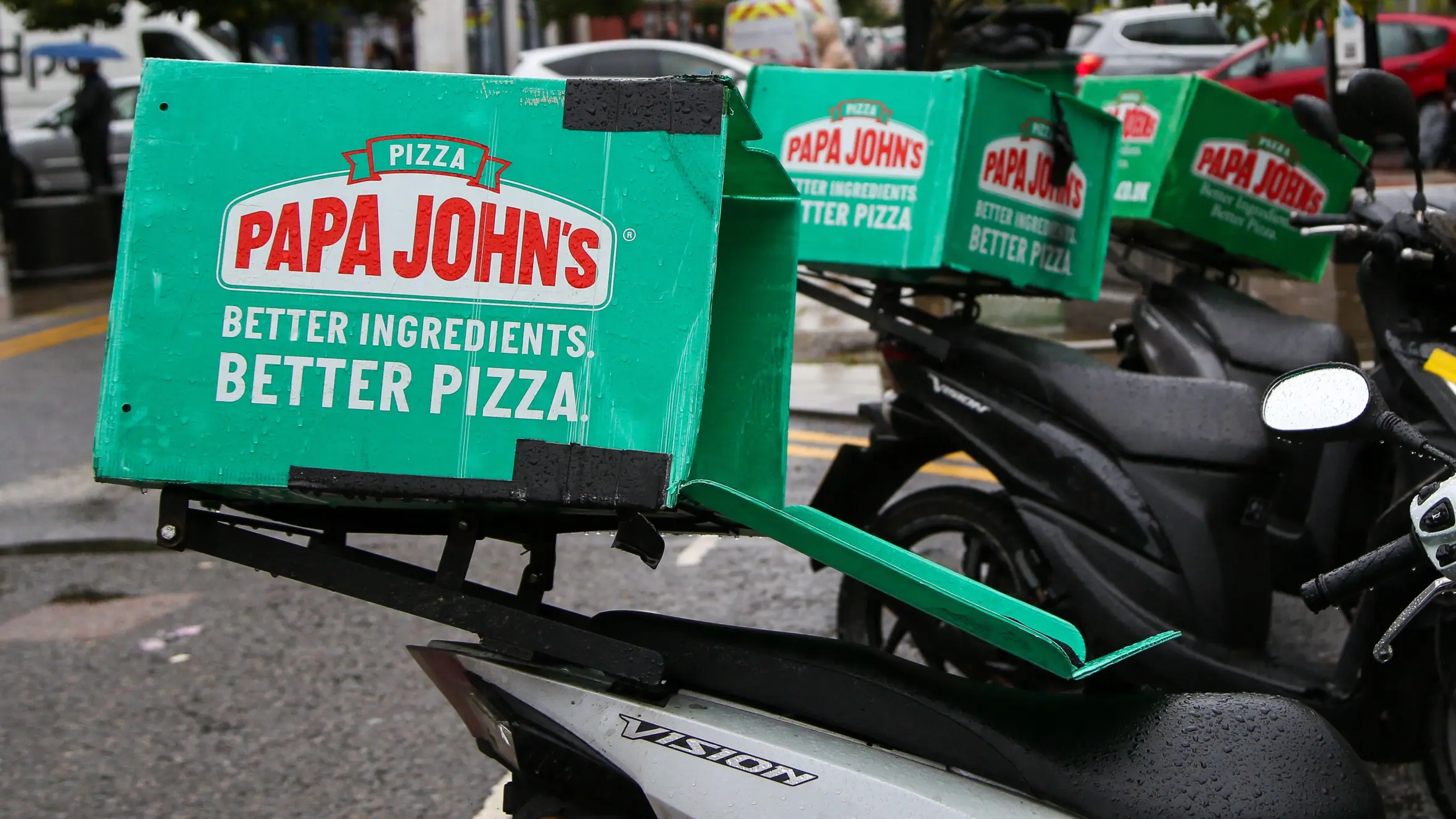
A historic development in artificial intelligence and digital payments has taken place in the United Kingdom after an AI-powered shopping agent successfully purchased pizzas from Papa John’s without requiring the customer to share bank card details, passwords or other sensitive security information.
The transaction, involving an order of nine mini Margherita pizzas, is being described as the first purchase of its kind in the UK in which an AI agent used cardless payment technology to complete a real retail transaction on behalf of a customer.
The experiment was conducted as part of regulated sandbox trials organised by the Financial Conduct Authority (FCA), working alongside Lloyds Bank and London-based payment technology company TrueLayer.
The development could represent an important step towards a future in which consumers increasingly rely on artificial intelligence to compare products, select purchases and complete payments under carefully defined permissions.
Unlike conventional online shopping, where customers generally enter card details or use digital wallets to authorise transactions, the new system allowed an AI agent to request payment directly from a customer’s bank account.

Importantly, the customer did not need to disclose account numbers, passwords or other banking security information to the AI system.
The successful transaction has attracted attention from the financial technology and retail industries because it demonstrates how autonomous AI systems could eventually become a regular part of everyday shopping.
The experiment involved an AI agent associated with Papa John’s, which was authorised to interact with a customer’s bank account and request payment for the purchase.
The team described the occasion and its dietary requirements to the AI agent, which then suggested suitable pizza flavours and quantities.
After reviewing the recommendations, the customer confirmed the order.
The payment was subsequently processed through the cardless payment technology provided by TrueLayer, with Lloyds Bank participating in the regulated trial.
Nine mini pizzas were ordered and delivered to the customer.
According to TrueLayer, this was the first time an AI agent had completed a payment to a UK retailer for a real customer using this particular approach.
The significance of the experiment extends beyond the purchase itself. It demonstrates how artificial intelligence could move from simply recommending products to taking practical actions within the shopping process.
Until recently, most consumer-facing AI shopping tools were primarily used to search for products, compare prices, prepare shopping lists and provide recommendations.
The latest experiment shows how those systems could eventually be authorised to complete transactions as well.
The transaction relied on account-to-account payment technology, which enables money to move directly between bank accounts without requiring traditional card payments.
TrueLayer specialises in payment infrastructure that connects customers’ bank accounts with authorised businesses and services.
In the Papa John’s experiment, the AI agent was given permission to request a payment from the customer’s account to the retailer.
Rather than receiving sensitive banking information, the agent operated within a controlled authorisation framework established with Lloyds Bank.
This distinction is important because allowing an AI system to make purchases should not mean giving it unrestricted access to a person’s financial information.
The trial incorporated specific spending limits, including restrictions on the maximum amount that could be spent on an individual transaction and within a month.
These safeguards were designed to ensure that the AI agent could only operate within the authority granted to it.
The customer remained involved in the decision-making process by describing the requirements and confirming the proposed purchase.
The arrangement demonstrates a possible model for future AI-powered payments, in which consumers grant limited permissions to digital assistants without revealing their banking credentials.
Francesco Simoneschi, chief executive of TrueLayer, described the successful transaction as an important first step towards the wider adoption of AI-powered purchasing.
Speaking to BBC Radio 4’s Today programme, he explained that the payment had been completed without sharing account numbers or passwords.
He emphasised that the transaction had been handled using a high level of security.
Simoneschi believes the development could eventually transform how people approach everyday shopping.
He suggested that consumers might increasingly depend on AI agents to purchase gifts, manage shopping lists and compare complicated products.
According to his vision, artificial intelligence could become a personal assistant available to millions of people, helping them manage a range of routine activities.
Rather than spending hours searching different retailers and comparing products manually, consumers could explain their requirements to an AI system and allow it to identify suitable options.
The system could then complete authorised purchases once the customer has approved the recommendations.
Such developments could change the relationship between consumers, retailers and digital payment providers.
Simoneschi also suggested that the successful transaction could signal the beginning of significant changes to online shopping.
Referring to Black Friday, the annual retail discount event, he suggested that the traditional shopping experience could look very different in the coming years.
Consumers already use AI tools to prepare shopping lists, research products and identify potential bargains.
The next stage, he believes, could involve AI agents purchasing gifts and other products directly on behalf of customers.
This could create a shopping environment in which consumers provide their budgets, preferences and requirements while AI systems handle much of the research and purchasing process.
For example, someone looking for a birthday present could ask an AI assistant to find suitable products within a particular budget.
The system could compare prices, examine product specifications and identify retailers offering appropriate delivery arrangements.
Once the consumer approves the recommendation, the agent could complete the purchase through an authorised payment system.
The potential advantages include saving time, reducing the complexity of online shopping and making it easier to compare products.
However, the transition will depend heavily on consumer confidence, payment security and the reliability of AI recommendations.
Despite the excitement surrounding autonomous shopping, the technology also raises important questions about financial responsibility and consumer protection.
An AI agent that can purchase goods on behalf of a customer must operate within clear limits.
Without appropriate safeguards, an automated system could potentially make an unsuitable purchase, misunderstand instructions or spend more money than the customer intended.
The Papa John’s experiment addressed some of these concerns through spending restrictions established with Lloyds Bank.
The agent was subject to a maximum transaction limit and a separate monthly spending limit.
These restrictions were designed to prevent the system from making purchases beyond the authority it had been given.
Simoneschi acknowledged that human judgment would remain essential even as AI-powered purchasing becomes more sophisticated.
He emphasised that consumers would need to maintain control and supervision over the systems they authorise.
The technology must also meet appropriate security standards before it can become widely available.
This is particularly important because consumers need confidence that their financial information will remain protected when automated systems interact with banks and retailers.
The involvement of the Financial Conduct Authority is another significant aspect of the experiment.
The transaction formed part of regulated sandbox trials, which allow financial businesses to test innovative technologies in a controlled environment.
Such trials can help regulators and companies understand how new payment systems operate and identify potential risks before wider commercial adoption.
AI-powered payments raise several regulatory questions, including responsibility for unauthorised transactions, consumer consent, data protection and the limits of automated decision-making.
Regulators will also need to consider what happens when an AI agent makes an incorrect purchase or misunderstands a customer’s instructions.
The technology must provide clear mechanisms for authorisation, monitoring and dispute resolution.
For financial institutions, the challenge will be to develop payment infrastructure that supports innovation without weakening existing consumer protections.
The participation of Lloyds Bank and TrueLayer demonstrates the growing interest among established financial institutions and technology companies in preparing for this emerging market.
The wider adoption of AI shopping agents could have significant consequences for retailers.
Traditional online shopping platforms are designed around customers visiting websites, searching for products and selecting items themselves.
In an AI-driven shopping environment, customers may increasingly rely on automated agents to identify products and make purchasing decisions.
This could change how businesses compete for attention and attract customers.
Retailers may need to ensure their products are accurately represented in systems used by AI assistants, with clear information about prices, availability, ingredients, delivery and other important details.
For food businesses such as Papa John’s, AI agents could help customers identify meals according to dietary requirements, preferences and spending limits.
For other retailers, automated systems could compare specifications and identify products that best match individual requirements.
However, businesses may also need to consider how to maintain customer relationships when purchasing decisions are increasingly handled by artificial intelligence.
The ability of AI agents to compare competing offers could create additional pressure on retailers to provide competitive prices and transparent product information.
Although the technology offers considerable possibilities, widespread adoption will depend on whether consumers trust AI systems with financial transactions.
People may be comfortable using artificial intelligence to generate recommendations but could feel differently about allowing software to spend their money.
Security will therefore remain one of the most important considerations.
Consumers will need clear information about what permissions an AI agent has received, how much it can spend and which transactions require additional approval.
Banks and payment providers will also need systems that can identify suspicious activity and respond quickly when something goes wrong.
Another important consideration is the accuracy of AI recommendations.
An agent must understand dietary restrictions, product specifications, budgets and other instructions correctly before making a purchase.
Even a relatively simple transaction involving food demonstrates why reliable information and human oversight are necessary.
The successful pizza order provides an early example of how these systems could operate, but it does not establish that all future AI shopping transactions will be equally straightforward or secure.
The Papa John’s transaction represents a potentially important milestone in the development of AI-powered commerce in Britain.
By combining artificial intelligence, direct bank payments and controlled spending permissions, the experiment demonstrated how automated systems could complete real purchases without requiring customers to disclose traditional banking credentials.
For consumers, the technology could eventually make shopping faster and more convenient.
For retailers, it could introduce new ways of reaching customers and managing transactions.
For banks and payment companies, it represents an opportunity to develop financial infrastructure for a future in which AI agents increasingly act on behalf of individuals.
However, the success of this emerging market will depend on strong security, clear authorisation procedures and effective consumer protection.

The nine mini pizzas purchased during the trial may appear to be an ordinary food order, but the technology behind the transaction points towards a potentially significant transformation in digital commerce.
If the system develops as its supporters expect, consumers could soon move beyond asking artificial intelligence what to buy and begin allowing it to complete purchases on their behalf.
The future of shopping may therefore involve fewer manual transactions and more intelligent digital assistants, with customers retaining control over the decisions that affect their money.
Related News:
 Bank Chief Calls for Power to Intervene in AI
 Reform UK funding: mystery billionaire revealed
 UK rejects EV charging VAT cut amid Treasury clash
 UK firms accused of ‘AI washing’ boom
 UK Risks Falling Behind in AI Race
 London Launches First Self-Driving Taxis
 Tom Watson Takes Senior Role at Palantir
 TalkTalk Races to Sell Arms as Administration Looms
 BBC Three and Scotland Face Online-Only Future
 Feeld Founders Receive Record Dividend as Sales Rise
 Asos Investigates Hack Claims After Customer Alerts
 Drax Datacentre Faces Major Carbon Emissions Concerns
 Firmus Abandons Major ASX Listing Amid Investor Doubts
 UK Must Build Its Own AI to Protect National Security
 Parking Apps Push UK Drivers’ Costs Up by 40%
 EU Caps Chinese Hybrid Car Imports at 350,000
 Cyber Fraud Threatens Trust in Global Financial System
 Global Tech Sell-Off Deepens on Inflation and AI Debt Fears
 Healey Pledges Major AI Investment for UK Security
 China’s AI Ambitions Hit $2.4 Trillion Market Setback
 Anthropic IPO Reveals AI Boom’s Huge Costs and Risks
 North Korea Linked to Record $6.3bn Binance Crypto Heist
 M&S Profits Rebound to £355m After Cyber-Attack
 UK Warned Over Dangerous Dependence on China for Minerals
 Nvidia and Jensen Huang Face Shareholder Lawsuit
 AI Boom Drives UK Economy to Fastest Growth in Two Years
 Microsoft Outage Sparks Billion-Dollar Fears in Australia
 Weakening UK EV Targets Could Damage Car Industry
 Meta Brings Muse AI Shopping Assistant to the UK
 UK Battery Subsidies Raise Concerns Over China Links
 AI job losses UK: Britain faces sharper employment shock
 UK Subsidence Claims Surge After Record-Breaking Summer
 Billionaire Chris Rokos poised to leave UK
 JPMorgan Boss Warns Against UK Bank Tax Rise
 UK Retailers Accused of Breaking Refund Laws
 UK Productivity Improves as Bank Weighs Interest Rates
 UK Retail Sales Rebound as Consumers Spend More
 UK Rent Gap Puts Low-Income Families Under Pressure
 Calls Grow to Expand UK National Wealth Fund
 MPs Defend UK Economic Watchdog Against Critics
 UK Plans New Centre to Counter Information Warfare
 Trump gives Xi red-carpet welcome as trade truce extends
 Chinese Hybrid Car Surge Raises EU Auto Industry Concerns
 AO Acquires Jessops in Camera Retail Expansion
 Xi urges Trump to avoid US-China military conflict
 Should Savers Lock Into 5.25% Fixed Rates?
 Poundland Rescue Bid Could Protect 11,000 Jobs
 Sheikh Tahnoon and the UAE’s AI Ambitions
 Healey urged to act as UK energy bills rise 4%
 UK house price growth slows as mortgage rates rise
 UK borrowing costs surge as global bond sell-off deepens
 UK Assures Public Over Diesel Supply
 UK Diesel Reaches £2 as Inflation Surges Across Europe
 IMF Warns Governments Over Rising Debt Burdens
 UK Water Firms Earn Millions From Industrial Wastewater
 Hall and Woodford Win Nobel Economics Prize
 IMF Warns Global Economy Is Nearing Its Limits
 Healey Plans £1bn Online Marketplace Tax Crackdown
 Aardman Cuts Losses but Fails to Return to Profit
 NHS Trusts Reject Palantir’s £330m Patient Data Platform
 UK Unemployment Falls to 4.7% as Vacancies Decline
 UK Borrowing Hits £24.5bn Ahead of Healey’s Budget
 Tax Online Sales to Save High Street, Burnham Urged
 Labour MPs Urge Burnham to Lead UK Reindustrialisation
 US Bans BYD Vehicles at Japan Military Base
 UK Chancellor Moves to Scrap Gas Standing Charges
 Healey Set to Scrap Planned Cut to Cash ISA Allowance
 Global Crises Test Diplomacy as Trump’s Policies Face Scrutiny
 London Luxury Homes Face Deeper Price Declines
 Avanti West Coast Faces £70m Refund Bill
 UK Mortgage Holders Face Fresh Payment Shock
 Elon Musk’s $446m Midterm Gamble Ends in Defeat
 Poundland Remains Vulnerable as Rescue Talks Continue
 Starbucks to Create 7,500 UK Jobs in Major Expansion
 UK Youth Face Jobs Crisis as Economy Loses Momentum
 Bank of England Faces £160m Renovation Challenge
 UK Borrowing Beats Forecast in Boost for Healey
 Trump, Nvidia and the Fight Against Tech Oligarchs
 M&G Chief Warns Over London Stock Market Exodus
 UK Housebuilding Faces Deepening Crisis as Projects Stall