Published: 27 November 2026 | The English Chronicle Desk | The English Chronicle Online
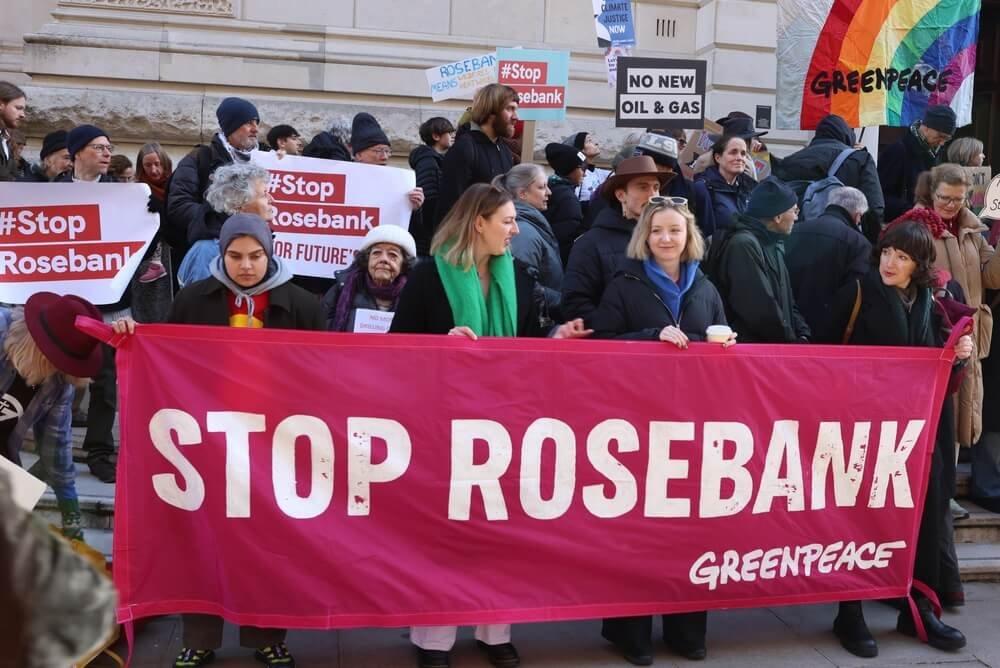
A growing political rebellion within Britain’s Labour Party has exposed deep divisions over the future of the controversial Rosebank oilfield, with 92 backbench MPs and at least four frontbenchers urging Prime Minister Andy Burnham not to approve the major North Sea drilling project.
The intervention represents one of the clearest indications yet of the political tensions surrounding the government’s energy strategy, climate commitments and plans for the future of Britain’s oil and gas industry.
The letter, organised by Labour MP Catherine Fookes, calls on Burnham to reject the proposed development, arguing that extracting additional fossil fuels would undermine the country’s climate objectives while offering little meaningful benefit to ordinary households.
The growing opposition has created a difficult situation for the prime minister, who faces competing demands from Labour MPs representing different regions and political interests. While some members of the parliamentary party believe the project should proceed to support domestic energy production and economic activity, others argue that approving it would contradict Labour’s environmental commitments.

The disagreement has become particularly sensitive because Rosebank is the largest undeveloped oilfield in UK waters. Its future has significant implications for the country’s energy policy, investment decisions and efforts to reduce greenhouse gas emissions.
The dispute also threatens to become one of Burnham’s first major political challenges since entering Downing Street, with reports suggesting that some ministerial aides are considering resignation if the government approves the development.
The letter signed by 92 Labour backbenchers and at least four frontbench figures demonstrates the scale of opposition to the proposed oilfield development within the governing party.
Catherine Fookes, the MP for Monmouthshire who helped coordinate the initiative, said concerns about Rosebank were widespread across the parliamentary Labour Party.
She indicated that the number of MPs who signed the letter did not necessarily represent the full extent of opposition, suggesting that additional colleagues shared their concerns but had not formally supported the intervention.
Fookes said she hoped the prime minister would carefully consider the names attached to the letter and listen to the arguments against approving further oil drilling.
Her intervention reflects a wider concern among Labour MPs that the government could weaken its environmental credibility if it supports a major new fossil fuel development.
Opponents argue that Rosebank would not provide direct relief for households struggling with energy costs because the oil extracted would belong to private companies and could be sold on international markets.
They also question whether the potential economic returns would justify the environmental consequences associated with developing the field.
For these MPs, the issue is about more than one oilfield. It represents a broader test of whether Labour intends to maintain its commitment to a transition towards cleaner energy.
Fookes has emerged as one of the most prominent parliamentary voices opposing Rosebank.
In a separate article, she argued that continued dependence on fossil fuels was contributing to rising household costs, extreme weather and environmental damage.
She challenged the suggestion that approving the project would make energy more affordable for British consumers.
According to Fookes, the oil would be controlled by private companies and sold according to commercial interests rather than being reserved for British households.
She also warned that additional fossil fuel production could accelerate climate change, creating further economic consequences through extreme weather events, flooding and damage to agricultural production.
Her argument reflects a central criticism of the Rosebank development: increasing domestic oil production does not automatically guarantee lower energy bills.
Oil and gas prices are influenced by international markets, global supply and demand, geopolitical developments and commercial decisions.
Consequently, opponents argue that the government should prioritise investment in renewable energy and other low-carbon technologies rather than approving projects that could extend reliance on fossil fuels.
The political challenge for Burnham is that these arguments must be balanced against concerns about energy security, industrial employment and the economic interests of communities connected to the North Sea industry.
The growing disagreement has also reached the government’s frontbench, with ministers publicly acknowledging that Labour remains divided over the future of Rosebank.
Environment minister Emma Hardy recognised the differences of opinion within the party during an interview with Sky News on Friday.
She explained that Labour MPs representing Scotland may have different perspectives from colleagues elsewhere in the United Kingdom.
Her comments underline the geographical and economic dimensions of the dispute.
Scottish representatives have strong reasons to consider the potential consequences for employment, industrial investment and businesses connected to the oil and gas sector.
For many communities, the North Sea energy industry remains an important source of jobs, economic activity and technical expertise.
At the same time, Labour MPs representing other constituencies argue that the government must demonstrate leadership on climate change and avoid approving developments that could undermine long-term environmental objectives.
Hardy said she expected Burnham to listen to the different perspectives within the party before reaching a decision.
Her remarks suggest that the government recognises the political sensitivity of the issue and the need to balance competing priorities.
Labour MP Fleur Anderson has also challenged the economic arguments supporting the proposed development.
Speaking to the BBC, Anderson questioned whether Rosebank would provide sufficient long-term financial returns to justify the environmental consequences.
She highlighted concerns about the declining nature of the projected tax revenue and the possibility that the economic benefits could be relatively limited compared with the potential costs associated with climate change.
Her argument focuses on the wider economic consequences of global warming, including damage caused by extreme weather, flooding and agricultural disruption.
For opponents of the project, the financial assessment should not be limited to the immediate revenue expected from oil production.
They argue that policymakers must also consider the longer-term economic costs associated with greenhouse gas emissions and the need to protect communities from increasingly severe climate impacts.
The debate therefore raises a fundamental question about how the government measures economic value.
Supporters of Rosebank may emphasise investment, employment and domestic production, while opponents argue that the potential environmental damage could create much larger costs for future generations.
Although opposition to Rosebank is substantial, the project also has influential supporters within Labour.
Chancellor John Healey and several Scottish MPs are among those pushing for the development to proceed.
Their position reflects concerns about Britain’s energy requirements, the future of domestic production and the economic consequences of reducing investment in the North Sea.
Supporters argue that the country will continue to require oil and gas during the transition to cleaner energy.
They also maintain that domestic production could contribute to energy security and support businesses and workers whose livelihoods depend on the sector.
The Scottish dimension is particularly important because the North Sea energy industry has played a significant role in the region’s economy for decades.
A decision against Rosebank could create further uncertainty for companies and workers already facing changes associated with the transition away from fossil fuels.
However, critics dispute whether approving new fields represents an effective response to energy security concerns.
They argue that oil produced in the UK can still be sold internationally, meaning additional extraction does not necessarily guarantee lower domestic prices or greater protection against global market volatility.
This disagreement has made it difficult for Labour to establish a unified position.
The political consequences could extend beyond disagreements among MPs.
Reports indicate that more than one ministerial aide is considering resigning if the government approves the Rosebank development.
Although no formal resignations have been announced, the possibility highlights the intensity of feeling surrounding the issue within Labour’s parliamentary ranks.
Ministerial aides often work closely with government departments and political leadership teams. Their potential departure would therefore represent an additional political difficulty for an administration already facing pressure to demonstrate consistency on climate policy.
For Burnham, the challenge is to prevent the dispute from developing into a wider crisis of confidence among MPs who believe Labour should place environmental commitments at the centre of its programme.
A decision to approve Rosebank could alienate climate-focused members and supporters, while rejecting it could create tensions with Scottish representatives and those prioritising domestic energy investment.
Either outcome could have political consequences.
The controversy is not limited to Rosebank.
The smaller Jackdaw gasfield has also become part of the wider political argument over Britain’s approach to oil and gas production.
Together, the projects have become symbols of the difficult choices facing governments attempting to balance energy security, industrial policy and net-zero commitments.
The debate comes amid wider concerns among Labour MPs about the government’s commitment to tackling climate change.
Some members have already expressed dissatisfaction with decisions involving reductions to green projects and proposals to weaken electric vehicle targets.
These developments have increased pressure on Burnham to demonstrate that Labour remains committed to its environmental programme.
The political context is particularly important because the Conservatives have promised to repeal the Climate Change Act, while Reform UK has indicated that it would cancel government green spending if it entered office.
Labour MPs concerned about climate policy argue that their government must offer a clear alternative and maintain ambitious environmental standards.
They believe decisions involving major fossil fuel projects will influence public confidence in Labour’s ability to deliver its climate commitments.
The Rosebank dispute could become a defining early test of Burnham’s leadership.
The prime minister must navigate competing economic, environmental and political pressures while attempting to maintain unity within his parliamentary party.
The letter from 92 backbenchers and at least four frontbenchers demonstrates that opposition is not confined to a small group of environmental campaigners.

It also signals that a decision to approve the project could trigger further internal resistance.
For Burnham, listening to MPs from different regions will be important, but so will establishing a clear policy direction that can withstand criticism from both environmental campaigners and supporters of the oil and gas industry.
The decision will also have consequences beyond Westminster, affecting perceptions of Britain’s investment environment, climate ambitions and long-term energy strategy.
As the debate continues, the future of Rosebank has become a much broader question about the direction of the UK economy.
Whether the government chooses to support the development or reject it, the consequences are likely to extend across Labour’s parliamentary party.
With climate commitments, energy security and economic growth all at stake, the prime minister faces a difficult balancing act that could shape his government’s political identity for years to come.
Related News:
 Burnham unveils £65m drought aid for farmers
 Reform Faces Fresh Financial Controversy
 North Sea Firms Urge Early End to Windfall Tax
 Slave-Trade Wealth Embedded in Britain’s Financial System
 Mayors Could Gain Greater Powers Over Water Firms
 Horse Hill Oil Site Sold for £1m as Drilling Bid Returns
 Dale Vince Plans New London-Wide News Operation
 Palantir Lobbyist Had Role in Burnham Campaign
 Badenoch Raises Prospect of 2027 UK Election
 Report Urges UK to Rethink Overseas Military Spending
 Tories Overstate Net Zero Costs by Nearly £500bn
 UK Urges Interpol to Reject Argentina’s Falklands Arrest Requests
 UK Land Registry Plan Faces Opposition From Landowners
 Denmark Seeks EU-Wide Ban on Fast-Growing Turbo Chickens
 UK Warned Over Dangerous Dependence on China for Minerals
 UK Water Regulator Moves to Tighten Boss Bonus Ban
 Natural England Datacentre Row Raises Abolition Fears
 Chancellor Rachel Reeves Pushes for Sweeping Changes to Environmental Protections to Accelerate Development
 Senior Tories Condemn Badenoch’s Vow to Repeal Climate Change Act as Catastrophic
 Kemi Badenoch Unveils ‘Golden Rule’ to Halve Spending Cuts for Deficit Reduction at Tory Conference
 Trump’s UK Ambassador Urges North Sea Drilling to Strengthen US Ties
 Millionaires group urge Reeves to introduce wealth tax to ‘lift kids out of poverty’
 Starmer Says Labour’s Economic Plan Needs Years to Deliver
 UK Government Borrowing Drops to £11.6bn in December
 UK shelves £110m border project amid trade strain
 Reeves Must Back Defence Plan or Face Dismissal, Says Unite Chief
 UK Energy Reform Could Cut Bills by £200
 Crackdown Backfires on UK Climate Protesters
 Silent Tracks: Rail Line Without Passengers
 Unions Warn Labour Over Zero-Hours Contract Reforms
 Ghent Professors Questioned Cofnas Appointment
 RAF Barnham Protests Fuel Tensions in Norfolk Town
 Trump Calls Iran War ‘Small Potatoes’ Despite US Deaths
 UK Subsidence Claims Surge After Record-Breaking Summer
 UK plans tougher Israel stance with settlement trade ban
 Europe’s democracies face a growing far-right threat
 Farage Threatens Union Funding Ban Over Reform Donations
 UK Pay Growth Slows to 3.9% as Rate Decision Nears
 Bank Urged to Slow Bond Sales as UK Costs Rise
 Heathrow Expansion Faces New Climate Conditions Over CO₂
 UK Heatwaves Set to Worsen Pothole Damage, RAC Warns
 Horse Hill Oil Site Sold as New Drilling Bid Emerges
 Trump Threatens EU With Tariffs Over Canada Proposal
 US Sanctions Open New Battle for Cuba Assets
 Tom Watson Takes Senior Role at Palantir
 Lib Dems Prepare for Election Amid Reform Challenge
 MPs Defend UK Economic Watchdog Against Critics
 Lula accuses Trump of seeking control over Brazil
 The Tests Awaiting Andy Burnham After Labour Conference
 Free Speech Emerges as Key UK Election Issue
 UK University Strikes Spread as Financial Pressure Grows
 Burnham Opens Door to Possible UK Return to EU
 US bombers leave RAF Fairford after terror threat
 Royal Navy Sailor Charged With Alleged Spying
 UK Water Firms Earn Millions From Industrial Wastewater
 Australia Rejects Russian Fuel as Trump Strikes Deal
 Brazil Court Scandal Threatens Lula as Bolsonaros Rise
 Farage Calls for Prosecution of Asylum Seeker Charities
 Serbia Leader Linked to Controversial Trump Tower Plan
 UK Could Rejoin EU Through a Switzerland Plus Deal
 Brexit Debate Returns as UK Voters Reconsider EU Exit
 UK Borrowing Hits £24.5bn Ahead of Healey’s Budget
 Middleton Revitalisation Blueprint for UK Towns
 Tax Online Sales to Save High Street, Burnham Urged
 Labour MPs Urge Burnham to Lead UK Reindustrialisation
 UK Chancellor Moves to Scrap Gas Standing Charges
UK Devolution Plan Faces Test Over Regional Inequality
 Trump’s Global Policies Put Republicans at Risk
 Zelenskyy Seeks Urgent Help as Russia Hits Ukraine’s Power Grid
 UK Employers to Be Forced to Publish Job Salaries
 Labor Minister Defends Chalmers Amid Budget Tensions
 Burnham’s Christmas Homelessness Pledge Faces Uncertainty
 Zelenskyy Sees Peace Opportunity as US Envoys Meet Putin
 Burnham Unveils Major Plan to Tackle Youth Unemployment
 Burnham Weighs Tax Cuts to Boost Youth Employment
 Bank of England Faces £160m Renovation Challenge
 London Car Use Set to Rise 10% Over Next Decade
 UK Energy Bills Set to Rise 26% in January
 UK Housebuilding Faces Deepening Crisis as Projects Stall
 London Tube Strike Triggers Major Travel Disruption