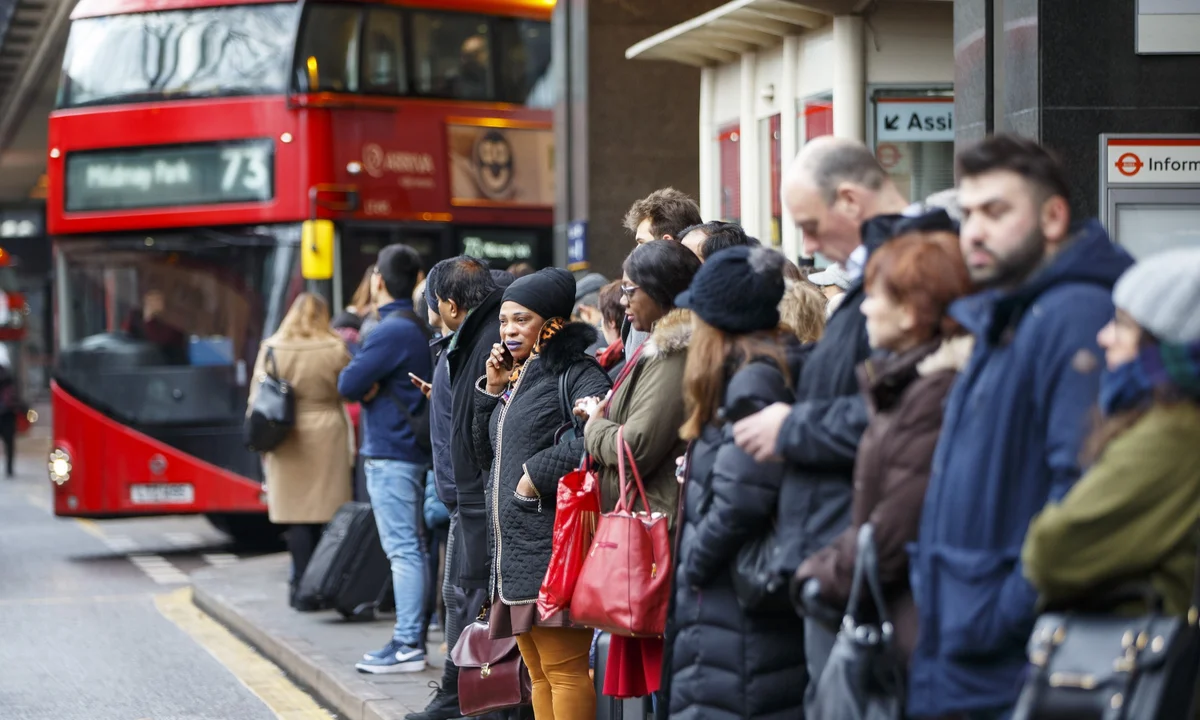
London commuters are facing significant travel disruption as a 24-hour strike by London Underground drivers begins on Thursday, threatening to affect journeys across the capital during an already busy period. The industrial action, organised by the National Union of Rail, Maritime and Transport Workers (RMT), is expected to disrupt services on Thursday and Friday, forcing passengers to consider alternative routes and allowing extra time for their journeys.
The strike began at midday on Thursday, with RMT members taking part in the latest action in a long-running dispute over proposed changes to Tube drivers’ working arrangements. The disagreement centres on London Underground’s plan to introduce a four-day working week, a proposal that management says would offer employees greater flexibility while improving operational efficiency. However, the RMT argues that the changes could undermine existing employment protections, increase fatigue and create potential safety concerns.

The dispute has continued despite months of discussions between the union and London Underground. The latest negotiations, held through the Advisory, Conciliation and Arbitration Service (Acas), ended on Tuesday without an agreement. The failure to reach a settlement cleared the way for the latest industrial action, leaving commuters and businesses preparing for another period of uncertainty across the transport network.
Transport for London (TfL) has warned passengers to expect disruption across all Underground lines and advised them to plan their journeys carefully. Although most lines are expected to continue operating on Thursday, services will be significantly reduced, with some routes facing complete closures. The Piccadilly and Circle lines are expected to have no service, while the Waterloo and City line will close from midday when the strike begins.
Other Underground services are expected to operate with reduced frequency from late Thursday morning. The disruption is likely to become more pronounced as the day progresses, with services ending earlier than usual. TfL has warned that no Tube services are expected to operate after 9pm on Thursday, potentially affecting commuters returning home from work, evening events and shopping trips.
Friday is also expected to begin with considerable disruption. Underground trains will start running later than normal, with services expected to resume from approximately 7am. Reduced operations and delays are likely to continue throughout the afternoon, while normal services are not expected to return until early evening.
The impact is likely to extend beyond the Underground network. Although the Elizabeth line, London Overground and national rail services are expected to operate normally, they could experience significantly higher passenger numbers as commuters look for alternative ways to travel. Buses are not directly affected by the industrial action, but increased demand and heavier road traffic are expected to cause overcrowding and delays.
For thousands of people who rely on the Tube for daily travel, the disruption could mean longer journeys, missed connections and additional transport expenses. Workers travelling into central London, students attending educational institutions and visitors planning shopping or entertainment activities may all face difficulties. Businesses that depend on customers and employees travelling across the capital could also experience reduced activity, particularly during the evening period.
The latest action is part of a wider programme of industrial disputes planned by the RMT. The union has announced seven additional strike dates, including two 24-hour stoppages during the week before Christmas. The planned action on 17 and 19 December is expected to affect travel during four of the busiest shopping and entertainment days in the capital, raising concerns among retailers, hospitality businesses and other service providers.
The timing is particularly sensitive because London traditionally experiences a substantial increase in passenger numbers during the Christmas shopping season. Department stores, restaurants, theatres, entertainment venues and tourist attractions depend heavily on reliable public transport to bring customers into central areas. Repeated strikes could therefore affect not only commuters but also businesses that rely on seasonal spending.
Further industrial action has also been scheduled for the beginning of 2027. The RMT plans additional strikes on 4 and 6 January, followed by three more stoppages in February. Unless an agreement is reached, London could face repeated periods of transport disruption extending well beyond the current dispute.
The disagreement over the four-day working week has exposed differences between the unions representing Underground drivers. The RMT, which represents just under half of Tube drivers, has strongly opposed the proposed arrangements. It argues that the changes are being imposed without sufficient agreement and could result in longer and less predictable shifts.
The union is particularly concerned about the possible consequences for drivers’ working conditions and safety. According to the RMT, employees could be required to spend more time operating trains while losing protections established through agreements negotiated over many years. It also argues that the proposed system could allow management to increase operational flexibility at the expense of employees.
RMT general secretary Eddie Dempsey said the union had not received the assurances it was seeking. He rejected the suggestion that the arrangement was genuinely voluntary, arguing that drivers could face pressure to abandon existing protections regardless of whether they chose a four-day or five-day working pattern. He also raised concerns about longer shifts, increased driving responsibilities and the possibility of employees being displaced from their existing depots if they refused the changes.
The union maintains that the dispute is not simply about reducing the number of working days. It believes the proposed arrangements could fundamentally change how drivers work and weaken the safeguards that currently protect employees. These concerns, according to the RMT, remain unresolved despite the discussions held with management.
London Underground, however, has defended its proposal and insisted that the new arrangements are voluntary. The organisation says drivers would be able to choose between a four-day working week and a five-day pattern, with the same terms and conditions applying to both options.
Nick Dent, director of customer operations at London Underground, described the strike as disappointing after months of discussions. He said management had attempted to address the union’s concerns by providing employees with a meaningful choice over their working arrangements without requiring them to change their workplace.
According to Dent, drivers choosing either working pattern would spend less time at work annually while helping the Underground operate more efficiently and reliably. He also said management believed most of the RMT’s concerns had already been resolved and urged the union to present the proposal to its members.
The position of the RMT differs significantly from that of Aslef, the other major union representing Tube drivers. Aslef represents a slight majority of drivers and has welcomed the proposed shorter working week. The contrasting responses have made the dispute more complicated, as the two unions have taken different positions on a proposal that could affect the working arrangements of thousands of employees.
London Underground has also argued that the planned changes could provide benefits for workers and passengers. A more efficient staffing arrangement could help improve the reliability of services while offering employees greater flexibility. However, the RMT believes that any potential advantages must be considered alongside the impact on working conditions, safety and established employment agreements.
The dispute also raises wider questions about how major public transport organisations balance operational efficiency with employee welfare. Underground drivers work in an environment where concentration, predictable working arrangements and adequate rest are important. Any changes to shift patterns therefore require careful consideration, particularly when they affect safety-sensitive responsibilities.
For commuters, however, the immediate concern remains the availability of reliable transport. The strike comes at a time when London residents and visitors are preparing for the busy final weeks of the year. Repeated disruptions could create difficulties for employees, retailers, event organisers and people travelling to airports and railway stations.
Separately, London’s international rail connections have also experienced disruption. Some Eurostar services between London and Paris were cancelled on Wednesday following unexpected industrial action involving some staff during annual pay negotiations. Eurostar said the action had caused cancellations and severe disruption, adding another transport challenge for passengers travelling between the United Kingdom and continental Europe.
The two disputes are separate, but their timing highlights the difficulties passengers can face when industrial disagreements affect major transport networks. For international travellers, cancelled trains can create additional problems involving accommodation, connecting journeys and changes to travel plans.

No further talks between the RMT and London Underground are expected before the current strike. This leaves little immediate prospect of a settlement and increases the likelihood that the additional December and January stoppages will proceed unless negotiations resume.
The coming weeks will therefore be important for both sides. London Underground will need to demonstrate that its proposed arrangements can protect workers while delivering the operational improvements it promises. The RMT, meanwhile, will continue pressing for stronger guarantees on working conditions and existing employment protections.
For passengers, the priority is avoiding unnecessary disruption and ensuring that essential journeys can continue. With further strike dates already announced, commuters and businesses may have to prepare for an unsettled period across London’s transport network unless a lasting agreement can be reached.
Related News:
 Avanti West Coast Set for Public Ownership in March
 Dale Vince Plans New London-Wide News Operation
 Bradford Rail Hub Promises Faster Northern Connections
 UK Housebuilding Faces Deepening Crisis as Projects Stall
 Reform UK funding: mystery billionaire revealed
 Burnham unveils £65m drought aid for farmers
 Green Leader Targets Starmer’s Former Seat
 UK retailers plan 100,000 placements for young people
 Nats Boss Summoned as UK Flight Chaos Continues
 Iceland to Open First UK High Street Store in Falklands
 Thames Water Revises Oxfordshire Mega-Reservoir Plan
 UK Retailers Accused of Breaking Refund Laws
 Fashion Firms Urge UK-Made NHS and Army Uniforms
 Mayors Could Gain Greater Powers Over Water Firms
 Lords Call for Tobacco-Style Gambling Ad Ban
 Thinktank Calls for Abolition of UK State Pension
 Burnham Opens Door to Possible UK Return to EU
 Poundland Rescue Bid Could Protect 11,000 Jobs
 Royal Nursing Union Ends Partnership With Teva UK
 Palantir Lobbyist Had Role in Burnham Campaign
 Feeld Founders Receive Record Dividend as Sales Rise
 Badenoch Raises Prospect of 2027 UK Election
 BT Broadband Pauses Raise Digital Switchover Concerns
 Informa Agrees £2.24bn Deal to Buy Clarion
 Sydney Town Square Plans Face New Planning Hurdle
 UK Water Firms Earn Millions From Industrial Wastewater
 Labour MP Urges Billions for Affordable Homes
 Milburn Proposes Pre-Apprenticeship Route for Young People
 Labour Fears Budget Will Fail to Lift Living Standards
 UK Passport Rules Leave Family Facing Separation
 Bedbug Infestation Grounds Qantas Plane in Rome
 UK Rejects EU Pressure to Impose Tariffs on China
 UK Water Firms Face £107m Bill Reduction Penalties
 UK Pledges Stronger Protections for Disabled Air Passengers
 Middleton Revitalisation Blueprint for UK Towns
 Post Office Closures Raise Fears of UK Postal Deserts
 Older Worker Training Plan Faces Business Backlash
 UK Aid Set to Fall Short of Reduced 2027 Target
 Brexit Deal Not Good Enough for Britain, Burnham Says
 Labour MPs Urge Burnham to Lead UK Reindustrialisation
 UK Land Registry Plan Faces Opposition From Landowners
 MPs Urge UK to Write Off Most British Council Debt
Burnham Admits First Budget Fell Short of His Ambitions
 Avanti West Coast Faces £70m Refund Bill
 Ryanair Weighs Pay Freezes as Fuel Costs Surge
 Denmark Seeks EU-Wide Ban on Fast-Growing Turbo Chickens
 Australia Reviews UK Visa Rules Amid Worker Influx
 UK Parliament Faces Risk of Notre Dame-Style Fire
 UK Review Urges Jobs Revolution for Disabled Youth
 UK Employers to Be Forced to Publish Job Salaries
 Starbucks to Create 7,500 UK Jobs in Major Expansion
 Burnham’s Christmas Homelessness Pledge Faces Uncertainty
 TUC Chief Urges Major Investment to Tackle UK Youth Jobs Crisis
 Badenoch Unveils £36bn Tory Welfare Cuts Plan
 UK Civil Service Chief Vows Radical Whitehall Reform
 Tories Face Pension Age Rise Beyond 70, Labour Warns
 UK Water Regulator Moves to Tighten Boss Bonus Ban
 Burnham Unveils Major Plan to Tackle Youth Unemployment
 Burnham Weighs Tax Cuts to Boost Youth Employment
 Bank of England Faces £160m Renovation Challenge
 BAE Systems to Cut 1,070 Jobs Amid Order Uncertainty
 UK School Crossing Patrols Face Uncertain Future
 Capita CEO Quits as Shares Plunge 67% Over Pension Crisis
 UK Disability Benefit Review Promises Major Overhaul
 Trump’s UK Ambassador Urges North Sea Drilling to Strengthen US Ties
 Millionaires group urge Reeves to introduce wealth tax to ‘lift kids out of poverty’
 Starmer Says Labour’s Economic Plan Needs Years to Deliver
 Rising Costs Force Families to Rethink Days Out
 Silent Tracks: Rail Line Without Passengers
 Unions Warn Labour Over Zero-Hours Contract Reforms
 Entain Plans 400 Job Cuts After Profit Update
 Tom Watson Takes Senior Role at Palantir
 The Tests Awaiting Andy Burnham After Labour Conference
 Healey urged to act as UK energy bills rise 4%
 Royal Mail Plans Up to 2,500 Job Cuts
 Ministers Push ATO to Reconsider Credit Card Ban
 Up to 20 English Maternity Units Face Possible Closure
 UK Chancellor Moves to Scrap Gas Standing Charges
 Early-Release Prisoners Face Rising Risk of Homelessness
 Northern England Reinvents Modern Men’s Fashion