Published: 27 November 2026 | The English Chronicle Desk | The English Chronicle Online
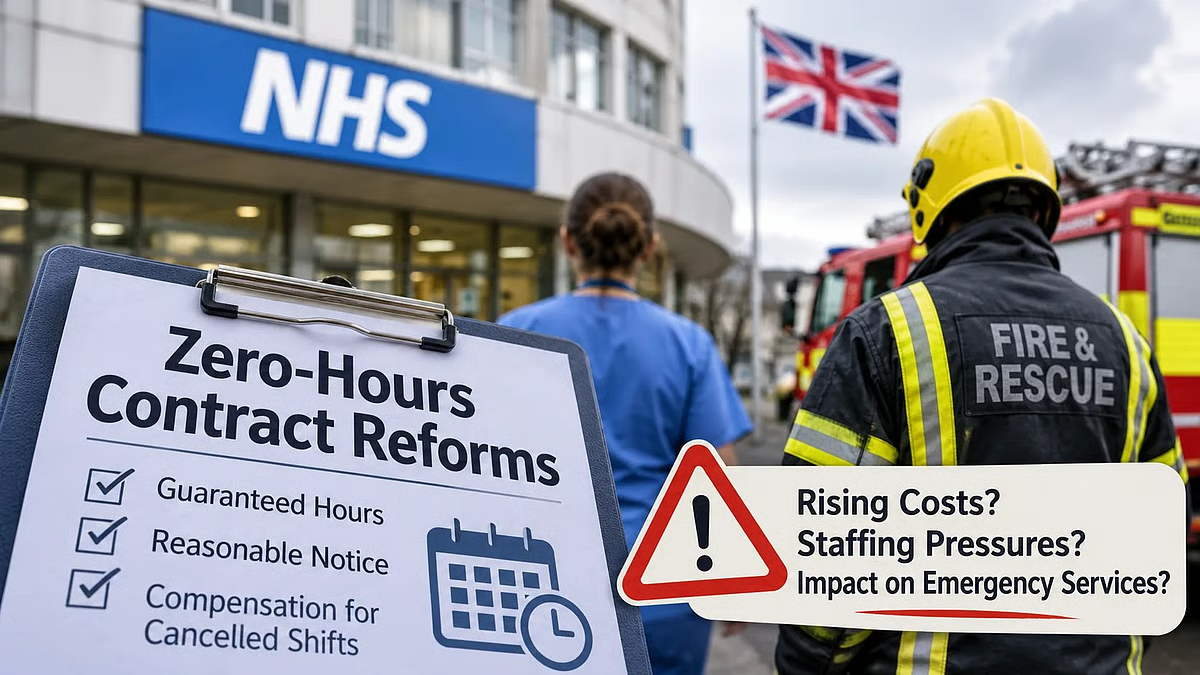
As many as 1.4 million workers across the United Kingdom could miss out on stronger employment protections under Labour’s planned zero-hours contract reforms, trade unions have warned, urging Prime Minister Andy Burnham not to weaken legislation designed to improve job security for millions of people.
The warning comes as the government faces growing pressure from business leaders to reconsider parts of the Employment Rights Act, which is being introduced in stages throughout 2026 and 2027. The legislation represents one of the most significant proposed changes to British employment rights in a generation and is intended to provide greater protection for people working under insecure and unpredictable arrangements.
At the centre of the disagreement is a proposed requirement for employers to offer guaranteed working hours to eligible employees who currently experience fluctuating schedules. However, disagreements over the minimum weekly hours threshold could determine how many workers actually benefit from the reform.
Business organisations are reportedly pushing for an eight-hour threshold, which would significantly restrict the number of employees covered by the new protection. Trade unions, meanwhile, want the government to remove the threshold entirely or establish a much higher limit that reflects the realities of working life.

The Trades Union Congress (TUC) estimates that approximately 1.4 million workers could be excluded if the government adopts the eight-hour proposal.
The dispute has developed into a major test of Labour’s commitment to its election manifesto promise to tackle insecure employment and make work pay.
Paul Nowak, general secretary of the Trades Union Congress, has urged the government to deliver on its commitment to improve employment conditions rather than give in to pressure from business lobby groups.
He argued that millions of workers should not be denied greater employment security because of concerns about the potential costs to employers.
According to Nowak, people working under insecure contracts often have little certainty about how many hours they will receive each week or how much money they will earn.
Some workers can find their scheduled hours reduced or withdrawn at short notice, making it difficult to manage household budgets, rent payments and other essential expenses.
The TUC believes that the proposed reforms should address these problems by ensuring that working arrangements more accurately reflect the hours employees regularly perform.
Nowak also argued that responsible employers should welcome the changes because they would help create a fairer competitive environment.
He suggested that stronger employment standards could prevent businesses from gaining an advantage by relying on unstable working arrangements and transferring financial risks to employees.
The union’s position is that the government must ensure the new legislation provides meaningful protection rather than creating additional exceptions that leave vulnerable workers exposed.
The most contentious aspect of the proposed reforms concerns the weekly hours threshold that will determine eligibility for guaranteed working hours.
Under the government’s proposed system, workers on zero-hours or similar variable-hours arrangements would have a right to receive an offer of guaranteed hours based on their established working patterns.
However, ministers are consulting on the appropriate threshold, with options reportedly ranging between eight and 20 hours a week.
Business leaders are pushing for the lowest figure, arguing that a threshold of eight hours would limit the financial and administrative burden on employers.
Trade unions strongly disagree, warning that the approach could exclude large numbers of people who regularly work substantially more hours than their contracts formally guarantee.
The TUC’s analysis suggests that approximately 1.4 million workers on variable-hours contracts could miss out if the threshold is fixed at eight hours.
The problem becomes particularly clear when comparing employees with different contractual arrangements.
For example, a worker officially employed on a zero-hours contract but regularly working 30 hours a week could qualify for guaranteed hours under the proposed system.
However, another employee contracted for 12 hours a week who regularly works 30 hours could be excluded under an eight-hour eligibility threshold.
Unions argue that this would create an unfair distinction between workers experiencing almost identical working conditions.
They believe employers should not be allowed to avoid providing greater security simply because an employee’s contractual hours are slightly above an arbitrary threshold.
Official figures cited in the debate indicate that approximately 2.5 million people are employed on zero-hours contracts or work as agency employees paid hourly under schedules that vary from week to week.
These arrangements are particularly common in sectors where employers need flexibility to manage changing demand.
Hospitality, retail, social care, logistics and other service industries frequently rely on workers whose schedules can change according to operational requirements.
Although flexible contracts can provide opportunities for people who prefer irregular working patterns, they can also create significant financial uncertainty for employees who depend on consistent income.
Workers may find it difficult to arrange childcare, secure housing or plan regular household expenditure when their working hours are unpredictable.
The problem can be especially serious for people who depend on a single job and cannot easily find additional employment to compensate for reduced shifts.
The proposed Employment Rights Act reforms are intended to address some of these difficulties by giving eligible employees greater certainty about their working hours.
However, unions warn that the benefits could be substantially reduced if the government introduces a restrictive threshold.
The proposed reforms have also attracted opposition from business organisations concerned about the potential impact on employment and economic growth.
Business leaders argue that Labour’s plans could increase employment costs at a particularly difficult time for the British economy.
They point to wider economic pressures, including inflation, higher business expenses and uncertainty associated with the conflict in the Middle East.
According to critics, employers may struggle to absorb additional costs while maintaining recruitment levels and investing in expansion.
The debate has also been influenced by a report on youth unemployment produced by former Labour cabinet minister Alan Milburn.
Milburn’s report raised concerns about the challenges facing young people entering the labour market and warned that changes to employment legislation could affect employers’ willingness to recruit.
Business representatives have used these findings to strengthen their argument that ministers should approach the employment reforms cautiously.
They maintain that policies intended to improve job security must also consider the ability of businesses to create and sustain employment opportunities.
The government is therefore facing competing demands from employers seeking greater flexibility and unions insisting that insecure employment must be addressed.
The financial implications of the Employment Rights Act have become another major source of disagreement.
Government analysis suggests that the estimated annual costs to employers could range from £350m to £2.9bn, with a central estimate of approximately £1.1bn.
The variation reflects uncertainty about how businesses will respond to the legislation and the extent to which new employment rights will affect staffing arrangements.
Employers argue that additional obligations could increase administrative costs and make workforce planning more complicated.
Some businesses may need to adjust recruitment practices, working schedules and contractual arrangements to comply with the new requirements.
However, unions argue that the financial impact should be considered alongside the benefits of more secure employment.
They point out that unpredictable working arrangements can place considerable financial pressure on employees and contribute to wider economic insecurity.
From their perspective, providing guaranteed hours would help workers plan their finances and reduce the uncertainty associated with irregular employment.
The government must now decide how to balance these competing considerations without undermining the central purpose of its employment reforms.
Joanne Thomas, general secretary of Usdaw, the shopworkers’ union, has also criticised proposals that could restrict access to guaranteed working hours.
She warned that loopholes or exemptions could leave millions of workers without the fair employment arrangements promised in Labour’s manifesto.
Thomas expressed particular concern that some employers might change the way they distribute overtime to avoid giving certain workers access to additional protections.
Under such an arrangement, employees who qualify for guaranteed hours could receive fewer opportunities for additional shifts, while those excluded from the legislation could continue receiving overtime.
The union argues that this could leave some of the lowest-paid workers in an even more difficult financial position.
The concern highlights a wider challenge facing policymakers: employment legislation must be designed carefully enough to prevent businesses from finding ways around its intended protections.
Usdaw believes that a weak threshold could create incentives for employers to structure contracts in ways that minimise their obligations.
The union is therefore calling for stronger safeguards to ensure that the new rules deliver genuine improvements rather than simply changing the formal wording of employment agreements.
The dispute is taking place against the background of growing concerns about employment opportunities for young people.
Alan Milburn’s report has drawn attention to the difficulties facing young jobseekers, including limited entry-level opportunities and concerns about the quality and security of available work.
Business leaders argue that increasing employment costs could discourage recruitment, particularly among younger applicants who are entering the labour market for the first time.
However, supporters of the reforms believe that insecure, low-paid employment is itself part of the problem.
They argue that young people should not be expected to accept unpredictable schedules and uncertain earnings simply to secure a foothold in the jobs market.
For many younger workers, zero-hours arrangements can make it difficult to plan education, training, accommodation and other long-term commitments.
The TUC and other organisations supporting the reforms believe that improving the quality of available jobs should be an important part of addressing youth unemployment.
The disagreement therefore reflects two different approaches to the same economic challenge: whether improving employment conditions will strengthen the labour market or whether additional obligations could discourage employers from recruiting.
Banning insecure zero-hours arrangements and strengthening employment protections were important commitments in Labour’s election manifesto.
However, elements of the party’s wider Make Work Pay programme have already been adjusted following opposition from business representatives.
This has created concerns among trade union leaders and some Labour MPs that the government could weaken its original promises under pressure from employers.
The latest consultation over guaranteed working hours has therefore become politically significant.
For unions, the question is whether the government will maintain its commitment to workers who face unstable employment or prioritise business concerns about additional costs.
For employers, the challenge is ensuring that new protections do not make recruitment and workforce management excessively difficult.
The government has said it is reviewing responses to its consultation to ensure the details of the policy are appropriate.
A spokesperson confirmed that ministers remain committed to addressing one-sided flexibility associated with zero-hours and similar contracts, where employees carry the financial risk of uncertain hours, shifts and earnings.
The coming months will be important for millions of employees whose livelihoods depend on variable working arrangements.
If the government adopts a restrictive eight-hour threshold, the TUC believes approximately 1.4 million workers could miss out on the intended protections.

If ministers choose a higher threshold or remove it altogether, significantly more workers could become eligible for guaranteed-hours offers.
The final decision will help determine how effectively the Employment Rights Act addresses insecure employment across Britain.
For workers, the issue is about having enough certainty to plan their lives, manage household finances and know what income they can reasonably expect.
For businesses, it is about maintaining operational flexibility and controlling employment costs during a period of economic uncertainty.
For Andy Burnham’s government, it is a test of whether Labour can deliver its promise to improve working conditions while maintaining confidence among employers.
As consultation continues, trade unions are making clear that they will not accept a watered-down settlement that leaves millions of people facing the same insecurity the reforms were designed to address.
The government’s final decision could shape employment conditions across the UK for years, determining whether the promised workplace changes provide meaningful security or leave a substantial proportion of Britain’s most vulnerable workers behind.
Related News:
 Burnham Opens Door to Possible UK Return to EU
 Badenoch Raises Prospect of 2027 UK Election
 Fashion Firms Urge UK-Made NHS and Army Uniforms
 UK Pay Growth Slows to 3.9% as Rate Decision Nears
 Bank Urged to Slow Bond Sales as UK Costs Rise
 UK Inflation Hits 3.1% as Household Pressure Grows
 UK Youth Jobs Gap Reveals Deep Regional Divide
 Mayors Could Gain Greater Powers Over Water Firms
 Entain Plans 400 Job Cuts After Profit Update
 Lords Call for Tobacco-Style Gambling Ad Ban
 Tories Press Healey Over Tax Rises Ahead of Budget
 Trump Threatens EU With Tariffs Over Canada Proposal
 Trump Threatens EU Over Canada Partnership Proposal
 Thinktank Calls for Abolition of UK State Pension
 Labour MP Urges Billions for Affordable Homes
 Labour Fears Budget Will Fail to Lift Living Standards
 UK Could Rejoin EU Through a Switzerland Plus Deal
 Brexit Deal Not Good Enough for Britain, Burnham Says
 UK Land Registry Plan Faces Opposition From Landowners
Burnham Admits First Budget Fell Short of His Ambitions
 UK Employers to Be Forced to Publish Job Salaries
 Burnham Weighs Tax Cuts to Boost Youth Employment
 Lucy Powell urged ministers to reconsider costly legal case for Labour donor’s firm
 UK Doubles Steel Tariffs to 50% to Protect Domestic Plants
 UK Pushes for New EU Goods Trade Deal
 Burnham unveils £65m drought aid for farmers
 Unions Warn Labour Over Zero-Hours Contract Reforms
 UK House Prices Fall as Mortgage Rates Rise
 UK plans tougher Israel stance with settlement trade ban
 Councils spend £125m on illegal children’s care
 UK Retailers Accused of Breaking Refund Laws
 Farage Threatens Union Funding Ban Over Reform Donations
 North Sea Firms Urge Early End to Windfall Tax
 Mayors Could Gain New Powers Over UK Water Firms
 US Sanctions Open New Battle for Cuba Assets
 Omar Proposes Bill to Redirect ICE Funding
 Mahmood Warns Far Right Over Asylum Protests
 Disabled Travellers Seek Fairer UK Care Rules
 UK Rent Gap Puts Low-Income Families Under Pressure
 Reform UK Faces Internal Debate Over £72m Spending
 Labour Apprenticeship Scheme Faces Slow Start
 Trump and Mamdani Hold Cordial Gracie Mansion Meeting
 King Refers Jamaica Slavery Petition to Privy Council
 MPs Defend UK Economic Watchdog Against Critics
 Free Speech Emerges as Key UK Election Issue
 UK University Strikes Spread as Financial Pressure Grows
 Poundland Rescue Bid Could Protect 11,000 Jobs
 Drumcree Talks Falter as Legal Challenge Deepens
 UK-France Returns Deal Faces Expiry as Talks Stall
 Healey urged to act as UK energy bills rise 4%
 Gosport Protesters Clash With Police Over Migrant Rescue
 Milburn Proposes Pre-Apprenticeship Route for Young People
 IFS Warns UK Budget Faces £35bn Spending Gap
 England and Wales Begin Second Wave of Early Prison Releases
 UK Plans Higher Training Costs for Older Apprentices
 UK Pledges Stronger Protections for Disabled Air Passengers
UK Borrowing Hits £24.5bn Ahead of Healey’s Budget
 Middleton Revitalisation Blueprint for UK Towns
Tax Online Sales to Save High Street, Burnham Urged
 Labour MPs Urge Burnham to Lead UK Reindustrialisation
UK Devolution Plan Faces Test Over Regional Inequality
 UK Budget Leaves Households Facing Higher Energy Bills
 MPs Urge UK to Write Off Most British Council Debt
 King Charles Faces Reparations Protests at Antigua Summit
 Avanti West Coast Faces £70m Refund Bill
 Australia Reviews UK Visa Rules Amid Worker Influx
 Early-Release Prisoners Face Rising Risk of Homelessness
 EU Citizens Sue Home Office Over UK Residency Rights
 Burnham’s Christmas Homelessness Pledge Faces Uncertainty
 TUC Chief Urges Major Investment to Tackle UK Youth Jobs Crisis
 UK Youth Face Jobs Crisis as Economy Loses Momentum
 Labour MPs Question Ambition of Burnham’s 10-Year Plan
 Hackney Mayor Accuses Home Office of Free Speech Assault
 Burnham Unveils Major Plan to Tackle Youth Unemployment
 UK Unemployment Falls to 4.6% Amid Youth Jobs Crisis
 Bank of England Faces £160m Renovation Challenge
 BAE Systems to Cut 1,070 Jobs Amid Order Uncertainty
 MPs Press Miliband to End Offshore Company Secrecy
 UK Housebuilding Faces Deepening Crisis as Projects Stall
 London Tube Strike Triggers Major Travel Disruption