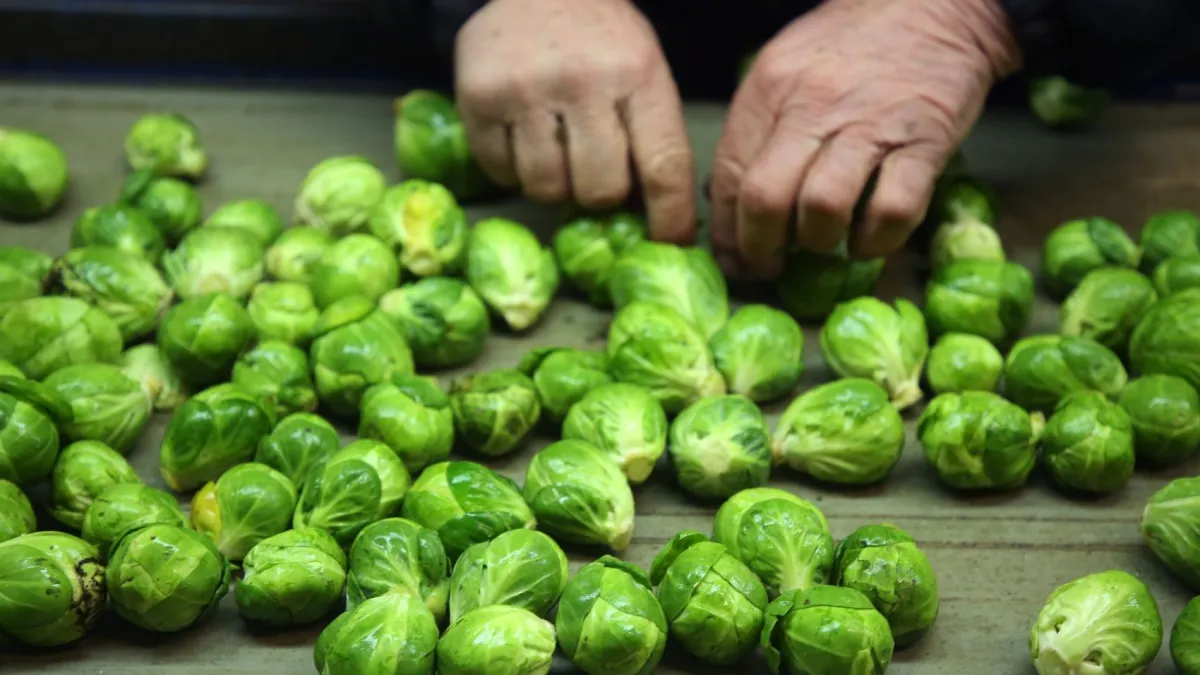
Brussels sprouts, a familiar feature of traditional Christmas dinners across the UK, are expected to be noticeably smaller this festive season after an unusually hot and dry summer affected growing conditions. Although the vegetable remains widely available, the challenging weather has slowed crop development, leaving growers with higher quantities of undersized sprouts than they would normally expect.
The impact of prolonged heat and drought has been particularly significant because sprouts require substantial amounts of water to develop properly. The vegetables are generally planted outdoors between March and early June, meaning they were already growing when the UK experienced a series of heatwaves and increasingly dry conditions during the summer. With water supplies under pressure in several regions, farmers faced difficulties providing sufficient irrigation to maintain normal crop growth.
The consequences have been felt across parts of the agricultural sector, particularly among producers of brassica vegetables. Brussels sprouts belong to the same family as cabbages, broccoli and cauliflowers, all of which depend on adequate moisture during important stages of development. Reduced access to irrigation water limited growers’ ability to protect their crops from the effects of prolonged dry weather, slowing development and affecting the size of vegetables available for harvest.

Lincolnshire, one of the UK’s important areas for brassica production, has been among the regions affected by extended periods of drought. A substantial proportion of the sprouts currently entering the market comes from the county, where growers have had to manage the effects of difficult weather conditions while maintaining supplies for retailers and consumers.
The unusual size of this year’s crop has also created a different pattern in the food supply chain. Brussels sprouts grow along a central stalk, with the vegetables developing from the bottom upwards. The largest sprouts generally form towards the lower part of the stalk, while progressively smaller ones appear towards the top. Supermarkets and other food retailers usually select medium-sized sprouts because they meet common consumer expectations and are convenient for packaging and preparation.
However, the difficult growing season has resulted in greater quantities of smaller sprouts that would ordinarily struggle to find a place in conventional retail outlets. These vegetables are now providing an opportunity for food businesses specialising in reducing food waste.
Oddbox, a low-waste food retailer known for selling fruit and vegetables that do not always meet traditional supermarket appearance standards, has reported an increase in the availability of undersized sprouts. The company says it is receiving considerably more small sprouts than usual as growers seek alternative markets for produce that larger retailers may not select.
Gavin Phelps, Oddbox’s head of sourcing, said the company would normally expect to receive smaller sprouts because growers often have limited outlets for them. This year, however, the volume has increased substantially following the challenging growing season.
The development highlights how extreme weather can affect not only the quantity of agricultural production but also the appearance and commercial value of food. Vegetables that remain perfectly suitable for consumption may become less attractive to conventional retailers simply because they do not meet preferred size or presentation standards.
For growers, finding alternative buyers can be important in reducing financial losses. Producing crops requires investment in seeds, labour, land preparation, irrigation and harvesting. When weather conditions prevent vegetables from reaching their expected size, farmers may face additional pressure to recover production costs. Markets willing to purchase smaller or irregular produce can therefore provide an important source of income while helping reduce unnecessary food waste.
Consumers may also notice differences when preparing sprouts for Christmas meals. Smaller vegetables can require slightly more attention during cleaning and peeling, raising concerns that they could be less convenient to prepare. However, Phelps has suggested that the additional preparation effort may be balanced by the fact that smaller sprouts do not usually need to be cut in half before cooking.
This could make the difference less significant than some shoppers initially expect. In fact, smaller sprouts may offer a practical alternative for households looking to prepare the traditional vegetable without spending excessive time in the kitchen.
Brussels sprouts are harvested in the UK from September through March, giving retailers and consumers access to fresh supplies throughout much of the colder season. Christmas remains particularly important for the market, with approximately a quarter of annual sprout consumption taking place during the two weeks immediately before the holiday.
The timing makes the effects of this year’s growing season especially noticeable. As households prepare festive meals, retailers must balance consumer expectations with the realities of agricultural production. Smaller vegetables may become more visible in shops and food delivery services, while suppliers work to ensure sufficient quantities reach the market during the busiest period of the year.
Despite the challenges, there are signs that public attitudes towards Brussels sprouts are changing. The vegetable has traditionally divided opinion, with some consumers criticising its bitterness and others considering it an essential part of Christmas dinner. However, changes in breeding techniques and the introduction of newer varieties have helped improve flavour and eating quality.
A YouGov survey conducted in October found that 56.4% of adults said they liked Brussels sprouts. The proportion of people who said they disliked the vegetable had also declined over the previous six years, falling from 26% to below 22%. The findings suggest that sprouts may be gradually gaining wider acceptance among consumers.
Food preparation methods have played a role in this changing perception. For many years, boiling was one of the most common ways to cook Brussels sprouts, sometimes leaving them with a strong smell and an unpleasant texture. Modern cooking techniques and the wider availability of recipes have encouraged people to experiment with different ways of preparing the vegetable.
Roasting, pickling and smashing are among the methods gaining attention as alternatives to traditional boiling. Roasting can give sprouts a crisp exterior while retaining a softer centre, while pickling offers a different flavour profile. Smashing them before cooking can also create additional surface areas for browning and crisping.
Phelps believes that greater access to recipe ideas has helped improve the vegetable’s reputation. He noted that cooking habits have changed considerably over the past two or three decades, with consumers now having more opportunities to explore different ingredients and preparation techniques.
For this Christmas, he plans to prepare sprouts in an air fryer, a method that can produce a crisp texture without requiring lengthy cooking. Such approaches may help households make the most of smaller vegetables while offering a fresh alternative to traditional festive recipes.

The experience of this year’s sprout crop also illustrates the growing vulnerability of food production to changing weather patterns. Heatwaves and drought can influence planting decisions, crop development, harvesting schedules and the availability of fresh produce. Even when harvests remain sufficient to supply consumers, changes in size and quality can affect how food moves through the market.
The UK’s agricultural industry may increasingly need to adapt to more unpredictable growing conditions. Reliable access to water, improved crop varieties and better irrigation management could become increasingly important for protecting production. At the same time, reducing food waste and creating markets for produce that does not meet conventional retail standards may help farmers manage the financial consequences of difficult seasons.
For shoppers, the smaller Brussels sprouts arriving on Christmas dinner plates will be a visible reminder of the summer weather that shaped this year’s harvest. Yet their reduced size does not necessarily mean reduced quality or flavour. With more flexible cooking methods and a growing acceptance of imperfect vegetables, the humble sprout may still retain its place at the centre of Britain’s festive dining tradition.
Related News:
 Denmark Seeks EU-Wide Ban on Fast-Growing Turbo Chickens
 Burnham unveils £65m drought aid for farmers
 UK Subsidence Claims Surge After Record-Breaking Summer
 Thames Water Revises Oxfordshire Mega-Reservoir Plan
 New UK Homes in Flood Zones Face Insurance Risk
 Experts Warn UK Food Security Is at Risk
 UK Water Firms Earn Millions From Industrial Wastewater
 UK Shoppers Urged to Avoid Hake and Coley
 UK Land Registry Plan Faces Opposition From Landowners
 UK Chancellor Moves to Scrap Gas Standing Charges
 Oat Sales Surge as Shoppers Seek Natural Appetite Control
 Aberdeen Chosen for GB Energy HQ at Marischal Square
 UK Energy Reform Could Cut Bills by £200
 Rising Costs Force Families to Rethink Days Out
 Reform UK funding: mystery billionaire revealed
 Tractor Breakdown Tests Lincolnshire Farmers
 Britons Build Emergency Supplies Amid Rising Fears
 Sycamore Gap Artwork Chosen After Public Vote
 UK rejects EV charging VAT cut amid Treasury clash
 UK Schools Struggle as Classrooms Top 40C
 London Tube Heat Reaches Dangerous Levels
 Three-Quarters of England’s Riverbanks Still Off Limits
 France Eases Cheese Rules as Drought Hits Farms
 UK Households Could Save £173 on Fixed Energy Deals
 Green Leader Targets Starmer’s Former Seat
 UK House Prices Fall as Mortgage Rates Rise
 Councils spend £125m on illegal children’s care
 UK Retailers Accused of Breaking Refund Laws
 UK Heatwaves Set to Worsen Pothole Damage, RAC Warns
 Mayors Could Gain Greater Powers Over Water Firms
 UK Rent Gap Puts Low-Income Families Under Pressure
 Labour Apprenticeship Scheme Faces Slow Start
 Norfolk Broads Housing Levy Faces Environmental Criticism
 Frome Community Loses Bid for Major Regeneration Site
 Most Popular UK Hybrids Miss Rapid Charging
 UK University Strikes Spread as Financial Pressure Grows
 Burnham Opens Door to Possible UK Return to EU
 Poundland Rescue Bid Could Protect 11,000 Jobs
 Healey urged to act as UK energy bills rise 4%
 Edinburgh Glasshouses Reopen After Major Restoration
 Badenoch Raises Prospect of 2027 UK Election
 Polanski Says Leadership Not Tied to By-election Result
 BT Broadband Pauses Raise Digital Switchover Concerns
 Bendy Elm Named UK Tree of the Year
 Britons Demand Greater Honesty on Climate Crisis
 Hanson Attacks Taylor as Australian Conservatives Clash
 Milburn Proposes Pre-Apprenticeship Route for Young People
 UK Savers Face Uncertainty as Rates Rise Above 5%
 UK Water Firms Face £107m Bill Reduction Penalties
 UK Family Linked to Offshore Gambling Licence Controversy
 Middleton Revitalisation Blueprint for UK Towns
 Older Worker Training Plan Faces Business Backlash
 MPs Urge UK to Write Off Most British Council Debt
 UK Side-Hustle Tax-Free Limit to Rise to £3,000
 Avanti West Coast Faces £70m Refund Bill
 Australia Reviews UK Visa Rules Amid Worker Influx
 UK Urges Energy Firms to Help Households Clear Debt
 UK Employers to Be Forced to Publish Job Salaries
 New Zealand’s Opportunity Party Challenges Populist Politics
 Starbucks to Create 7,500 UK Jobs in Major Expansion
 Burnham’s Christmas Homelessness Pledge Faces Uncertainty
 TUC Chief Urges Major Investment to Tackle UK Youth Jobs Crisis
 Britain Seeks Emergency Power as Wind Generation Falls
 UK Youth Face Jobs Crisis as Economy Loses Momentum
 Badenoch Unveils £36bn Tory Welfare Cuts Plan
 UK Civil Service Chief Vows Radical Whitehall Reform
 Tories Face Pension Age Rise Beyond 70, Labour Warns
 UK Water Regulator Moves to Tighten Boss Bonus Ban
 Bristol Sets Sights on Becoming UK’s First Wetland City
 Burnham Unveils Major Plan to Tackle Youth Unemployment
 Minor No-Fault Accident Sends Car Insurance Quote Soaring
 UK Unemployment Falls to 4.6% Amid Youth Jobs Crisis
 Burnham Weighs Tax Cuts to Boost Youth Employment
 London Car Use Set to Rise 10% Over Next Decade
 UK Rents Set to Rise Twice as Fast as House Prices
 Northern England Reinvents Modern Men’s Fashion
 UK Energy Bills Set to Rise 26% in January
 UK Housebuilding Faces Deepening Crisis as Projects Stall
 London Tube Strike Triggers Major Travel Disruption
 UK Children’s Hospitals Close Beds Amid NHS Cuts