Published: 01 April 2026. The English Chronicle Desk. The English Chronicle Online.
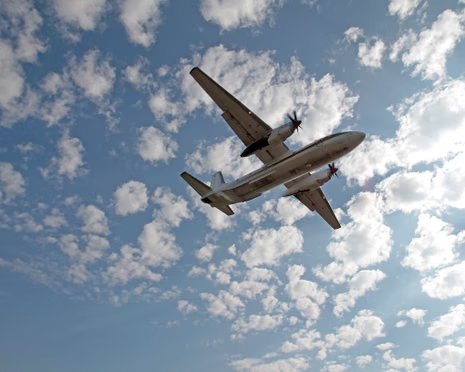
The serene coastline of the Crimean Peninsula became the site of a devastating aviation tragedy. A Russian military transport aircraft crashed into a jagged cliffside during a routine scheduled flight. Initial reports from Moscow confirm that twenty-nine people lost their lives in the sudden impact. The aircraft involved was an Antonov An-26, a workhorse of the Russian tactical transport fleet. This incident occurred late Tuesday evening as the plane navigated through the sensitive Black Sea region. Search and rescue teams worked through the night to reach the remote crash site location. They discovered the wreckage scattered across the rocky terrain near the edge of the sea. There were twenty-three passengers and six crew members on board the ill-fated military vessel. Official statements from the Russian Defence Ministry suggest that no survivors were found at the scene. The loss of life represents a significant blow to the regional military command in Crimea.
Communication with the aircraft was abruptly lost around six o’clock in the evening Moscow time. Air traffic controllers noticed the radar signal vanished without any prior distress calls or warnings. This sudden disappearance prompted an immediate emergency response from local search and rescue aviation units. The flight was conducting a standard transit mission across the peninsula when the disaster struck. Tass news agency confirmed the crash site location after several hours of intensive aerial searching. The rugged geography of the Crimean coast made the initial recovery efforts extremely difficult for teams. Experts are now focusing on recovering the flight data recorders from the charred metal debris. These devices will provide essential clues about the final moments of the flight on Tuesday. The aircraft hit the cliff with immense force, leaving very little of the fuselage intact.
Speculation regarding the cause of the crash has already begun to circulate in international media. Early assessments from the RIA news agency point toward a potential catastrophic technical failure occurring. The age of the aircraft fleet remains a point of concern for many aviation analysts. Most An-26 models were manufactured during the height of the Cold War era in Russia. While reliable, these planes require meticulous maintenance to remain safe for modern military operations today. Investigations will determine if mechanical fatigue played a decisive role in this specific regional tragedy. Weather conditions at the time of the crash are also being examined by local experts. Heavy fog or sudden wind gusts often plague the coastal cliffs of the Crimean Peninsula. Pilots must navigate these natural hazards with extreme precision during every single take-off and landing. A technical glitch during a critical flight phase could easily lead to such a disaster.

The Russian Defence Ministry has not yet released a full comprehensive report on the incident. They have promised a transparent investigation into the circumstances surrounding the loss of the plane. Families of the deceased service members are currently receiving support from the national military authorities. This crash adds another dark chapter to the safety record of the aging Antonov series. The An-26 has been a staple of Soviet and Russian aviation since the late sixties. It was designed to transport cargo and personnel over short to medium tactical distances. Despite its rugged reputation, the model has seen several high-profile accidents over the past decade. Each new crash raises questions about the long-term viability of using such vintage equipment. Global aviation databases track many incidents involving this specific type of twin-engine turboprop aircraft.
In recent years, the An-26 has been involved in multiple fatal crashes across the globe. A Ukrainian version of the plane went down in the Zaporizhzhia region during 2022. That specific accident resulted in the death of one person during a technical survey flight. Another devastating crash occurred in north-eastern Ukraine during the autumn months of the year 2020. That flight was carrying air force cadets when it crashed, killing twenty-six young people. Only one person miraculously survived that horrific fireball on the outskirts of a local town. These recurring incidents highlight the inherent risks associated with operating older generations of military planes. International safety standards continue to evolve, but military hardware often lags behind commercial aviation updates. The South Sudan crash in 2020 also claimed the lives of eight different people. Five Russian crew members were among those who perished in that remote African region.
West Africa saw a similar tragedy in 2017 when a plane crashed in Côte d’Ivoire. Four people died when that An-26 failed to land safely during a heavy rainstorm. These statistics paint a worrying picture for those tasked with flying these legendary transport planes. The Russian military relies heavily on the An-26 for logistical support in various conflict zones. It is often used to ferry supplies to remote outposts where larger planes cannot land. The versatility of the aircraft makes it difficult to replace with newer, more expensive models. However, the human cost of maintaining this aging fleet is becoming increasingly difficult to ignore. Analysts suggest that a modernization program for the transport fleet is now a high priority. Replacing these planes requires significant financial investment and time that the military may lack. The tragedy in Crimea will likely accelerate discussions regarding the safety of the entire fleet.
The geopolitical context of Crimea adds another layer of complexity to this recent aviation disaster. Russia annexed the peninsula from Ukraine back in 2014, leading to ongoing international tensions today. Military activity in the region has remained at a very high level for several years. This crash occurs against a backdrop of increased surveillance and frequent regional military exercises. International observers are watching the Russian response to this accident with a very keen interest. Any technical failure in such a sensitive area could have broader implications for military readiness. The loss of twenty-nine personnel is a tragedy regardless of the political situation in Crimea. Each individual on board had a family waiting for them to return home that evening. The community of military aviators is small and feels every loss with great personal sorrow. Tributes have begun to appear on social media for the crew and the passengers.
The English Chronicle will continue to monitor the situation as more specific details become available. Our thoughts are with the families of those who have lost their loved ones today. We remain committed to providing accurate and timely reporting on this developing international news story. The investigation into the cliffside crash is expected to last for several weeks or months. Recovering all the wreckage from the rocky shoreline will be a massive logistical undertaking. Engineers will study the engine components for signs of failure or fire before the impact. They will also look at the maintenance logs of the aircraft for any missed inspections. This thorough process is necessary to prevent similar accidents from happening in the near future. Aviation safety depends on learning from every tragedy that occurs in the skies above us. For now, the people of Crimea mourn the lives lost on that dark cliffside. The world waits for answers as the investigation begins in the shadow of the Black Sea.
Related News:
 British skier killed in La Plagne avalanche tragedy
 Mandelson apologises over Epstein ties after public scrutiny
 Friedman Uninvited From 2024 Adelaide Writers’ Week
 Starmer Challenges US Over Controversial Greenland Deal
 Spoof “Make America Go Away” Caps Rally Denmark Over Greenland
 Starmer Resists Matching Trump Amid Greenland Tensions
 Silence and Unity Mark Bondi Terror Attack Memorial
 India-EU Free Trade Deal Marks Historic Economic Shift
 Thousands Protest ICE Operations in Nationwide US Day of Action
 Concerns rise for Canberra boy amid Iran detention fears
 Anthony Albanese Must Uphold Rights for All Australians
 UK suspends study visas for four nations to curb asylum
 New Zealand Covid Response Praised Despite Lingering Scars
 Starmer Praised for Stance on Trump and Iran Conflict
 African World Cup Fans Face $15,000 Entry Bond Fee
 Diplomacy on the Brink: Pakistan’s Risky Peace Mission
 Teenage Titan: Sooryavanshi Smashes IPL Records
 Big Tech Faces Investigation Over Australia’s Social Media Ban
 Farage Shuns Truss as US Right-Wing Roadshow Hits London
 Spain Faces Backlash Over Xenophobic Chants in Egypt Draw
 Trump Facing Backlash Over Firing of Cabinet Women
 The Price of Hubris: Trump, Netanyahu, and the ‘Easy’ War
 Trump and Tehran Find Common Ground in Landmark Ceasefire
 Own an Entire Australian Town for the Price of a UK Flat
 Cyclone Maila Intensifies to Category Five Strength
 Melania Trump Denies Ties to Epstein and Ghislaine Maxwell
 Reeves Slams Trump Over Iran War Lack Of Exit Plan
 Kyiv and Odesa Mourn After Deadly Wave of Russian Strikes
 Norway’s Telenor Faces Lawsuit Over Myanmar Data Breach
 Strait of Hormuz Status Uncertain Despite Iran’s Claims
 Trump’s Presidency: A House of Cards Collapsing?
 US Forces Seize Iranian Ship Near Hormuz Blockade
 Trump Starts $166bn Tariff Refund Process
 Israeli Soldiers Jailed Over Vandalism of Lebanese Statue
 Investigation: Offshore Loans and Sanctions
 Prominent Voices Challenge Palestine Action Ban
 Cross-Border Crisis Shatters Fragile Afghan Peace
 Tragedy Near Jakarta: Train Collision Leaves 14 Dead
 NSW Police Urged Victim to Abandon Antisemitic Case
 The Burning Lens: An Iranian Artist’s Visual Resistance
 FIFA Confirms Global Ban for Benfica Star Prestianni
 The Global Battle for Control Over the Women’s Game
 Tensions Surge in the Gulf as Ceasefire Wobbles
 One Nation Candidate’s Surprising Ties to Independents
 New South Wales Wetland Rescue Legislation Passes
 US and Mexico Face Heatwave as Floods Batter South Africa
 French Patient Told Hantavirus Was Just Anxiety
 Putin Signals War End as Russian Momentum Stalls
 Romania’s Judicial Crisis: A System Under Siege
 Scepticism and tight security as Beijing braces for Trump
 Philippine Senator Flees After Days Under Senate Siege
 Alberta Separatist Bid Blocked by Canadian Court
 Big Tobacco Under Fire Over Controversial New Ad Campaign
 Court Upholds Landmark Win for Transgender Rights
 Fragile Truce Shattered as Violence Escapes Diplomatic Control
 Secrecy Down Under: Albanese Faces FoI Scandal
 Taliban Codifies Strict New Marriage and Divorce Legislation
 Tony Abbott Returns as New Liberal Party President
 Discontent grows around Putin amid war strain
 Trump Diplomacy Faces Hurdles from Tehran to Tbilisi
 Teaching Machines Right From Wrong in the Digital Age
 Oman Defies US Pressure Over Strategic Strait of Hormuz
 Ex-CIA Agent Accused of $40m Gold Theft and Fake Spy Unit
 Aukus Deal Facing Fierce Backing and Historic Criticism
 Thai Princess Bajrakitiyabha Passes Away at 47
 Tragic Loss of Australian Sprinter Jemma Stapleton
 Trump Urged to Condemn UFC Fighter Over Obama Slurs
 US Democratic Crisis Deepens as Trump Limits Mail Voting
 Russian Tanker Captain Remanded in UK Court After Channel Seizure
 US Military Pacific Boat Strike Kills Three People
 US Battles Auction of Titanic Artifacts
 Scouts Introduce Badges For AI And Digital Skills
 France Dominate Sweden as Deschamps’ New Era Takes Shape
 Trump’s Mount Rushmore Speech: A Divisive Anniversary
 Trump Swaps Planes Amid Iran Tensions
 Rotterdam Museum Honours Artist With Peanut Butter Floor
 Bangkok Nightclub Blaze Claims 30 Lives Amid Negligence Probe
 Yemen Accuses Iran of Violating National Sovereignty
 Japan Bear Hunt: Serial Fridge Raider Sparks Panic
 Houthis Strike Saudi Arabia as Middle East Tensions Rise