Published: 25 May 2026. The English Chronicle Desk. The English Chronicle Online.
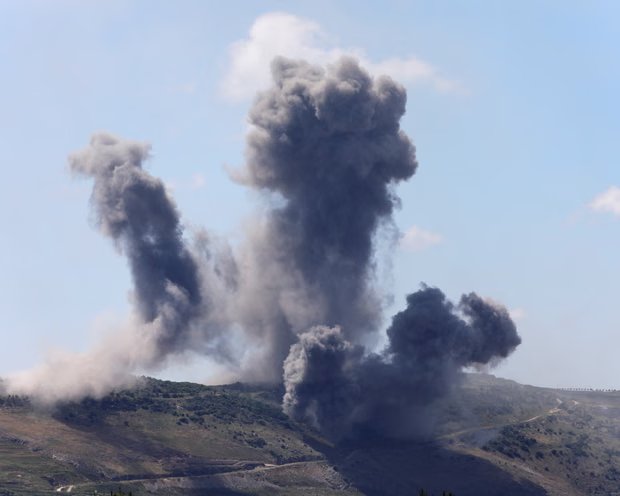
The delicate framework of regional diplomacy faced a severe test as heavy artillery and aerial bombardments echoed across the valleys of southern and eastern Lebanon on Sunday morning. These latest military actions occurred precisely one day after a devastating single air raid claimed eleven civilian lives in the southern territory. This violent escalation persists despite an official ceasefire agreement that was designed to halt the devastating conflict between Israel and Hezbollah forces. The sudden surge in hostility stands in stark contrast to optimism surrounding an imminent diplomatic breakthrough between global powers. Analysts suggest that the United States and Iran are currently approaching a historic and comprehensive peace agreement.
The weekend tragedy in the village of Sir al-Gharbiyeh highlighted the immense human cost of this enduring territorial dispute. The Lebanese health ministry confirmed that the devastating Saturday strike resulted in a catastrophic loss of innocent civilian lives. Among the dead were a young child and six women, while nine other people sustained serious physical injuries. The wounded individuals included four young children and an elderly woman who required immediate emergency medical intervention. Emergency workers spent the morning searching through the unstable concrete debris for any remaining survivors of the blast. This tragic incident has sparked widespread condemnation from local leaders who demand stricter enforcement of international laws.
The Israeli military maintained its stance that all recent operations strictly targeted active Hezbollah infrastructure and hidden weapon caches. Their high-command asserted that these defensive strikes remain necessary despite the official ceasefire that commenced last April. That initial agreement was recently extended for several additional weeks to allow diplomats time to negotiate. However, the military commanders argue that pre-emptive actions are vital to prevent imminent threats against northern citizens. They maintain that the army will continue neutralizing positions used to launch projectiles across the blue line. This operational strategy has kept the entire border region in a perpetual state of high military readiness.
Concurrently, the heavily armed group Hezbollah has sustained its own retaliatory operations against multiple targets in the region. The group launched several salvos of rockets on Sunday afternoon aimed directly at advancing Israeli ground forces. These troops were operating inside Lebanese territory, which the militant group views as a direct territorial violation. Local witnesses reported hearing the distinctive roar of rocket engines followed by distant explosions near the border. Hezbollah commanders stated that their tactical operations will persist as long as foreign troops remain positioned inland. This continuous cycle of attack and counter-attack threatens to completely unravel months of delicate international mediation.
The official National News Agency of Lebanon documented multiple distinct strikes across the southern and eastern sectors. These coordinated attacks caused widespread panic among residents who believed the ceasefire would guarantee their safety. Several locations reported significant structural damage to residential neighborhoods and vital public infrastructure projects over the weekend. Local hospitals struggled to manage the sudden influx of casualties arriving from the targeted rural districts. Many families have begun packing their essential belongings once again to flee the escalating border violence. The psychological toll on the population worsens with each subsequent reports of aerial bombardment near towns.
Some of these intense aerial raids occurred before the Israeli military could distribute official emergency evacuation notices. These critical warnings eventually covered more than a dozen vulnerable villages located throughout the eastern Bekaa valley region. The sudden nature of the strikes left many local families with almost no time to escape. Columns of dark grey smoke were seen rising above the prominent towns of Nabatieh and Zawtar. The local atmosphere remained thick with the smell of burning building materials and pulverized concrete dust. Streams of civilian vehicles choked the northern highways as families sought refuge further away from danger.
The Lebanese civil defence agency reported that its primary regional headquarters in Nabatieh was entirely demolished overnight. This crucial facility served as the main hub for emergency rescue operations across the entire southern district. Associated Press photographers captured images of brave rescue personnel desperately recovering expensive medical equipment from the ruins. Workers used manual stretchers to carefully remove vital oxygen bottles from beneath heavy fallen concrete slabs. The destruction of this facility severely hampers the local capacity to respond to future civilian emergencies. Despite the immense danger, these emergency workers refuse to abandon their critical lifesaving duties in the region.
Amidst this visible destruction, complex political shifts are happening behind closed doors across several global diplomatic capitals. Hassan Fadlallah, a prominent Hezbollah lawmaker, addressed the media regarding these rapid and significant regional transformations. Fadlallah was notably placed under strict economic sanctions by the United States government just this week. He indicated that a major agreement between Washington and Tehran might be finalized in the coming days. The lawmaker emphasised that any future stability depends entirely on securing a total halt to hostilities. This political rhetoric suggests that high-level negotiations have reached a critical and highly sensitive turning point.
According to official statements, Iran has made its broader agreement with America conditional on regional military concessions. Specifically, Tehran demands an immediate cessation of all Israeli military operations inside the sovereign borders of Lebanon. This condition highlights the deep geopolitical connections between the various factions involved in this multi-layered conflict. Hezbollah confirmed that their chief received a direct diplomatic message from the Iranian foreign minister recently. This communication highlighted a new proposal transmitted through Pakistani mediators to ensure comprehensive coverage of the region. The inclusion of Lebanon remains a non-negotiable point for the Iranian diplomatic team currently negotiating.
The Hezbollah leadership expressed cautious optimism regarding the potential outcomes of these ongoing secret international discussions. The group hopes that a finalized treaty will bring a permanent end to the current military campaign. They desire an agreement that guarantees a full and verifiable cessation of all hostile border actions. Such an outcome would allow displaced populations to return and begin the long process of reconstruction. However, past failures to maintain peace agreements have left many observers deeply skeptical of current promises. The coming days will prove decisive for the success or failure of this diplomatic initiative.
In sharp contrast, the United States Secretary of State, Marco Rubio, offered a critical assessment of the situation. Rubio explicitly accused the militant group of attempting to plunge the nation back into political chaos. He fiercely denounced what he termed a reckless attempt to undermine the democratically elected Lebanese government. The American administration believes that external actors are actively working to destabilize the fragile Mediterranean nation. Rubio reaffirmed Washington’s commitment to supporting state institutions against the influence of armed political factions. This strong rhetoric underscores the deep divisions that persist between Western powers and regional governments.
Meanwhile, Lebanese authorities have initiated direct negotiations with Israel under the close supervision of American diplomats. These official representatives have firmly insisted that their bilateral talks must remain entirely separate from other treaties. They seek a distinct solution that addresses specific border security concerns and restores national territorial sovereignty. This independent track aims to protect national interests without becoming entangled in broader geopolitical rivalries. The government faces immense pressure from citizens who demand an immediate end to foreign military interventions. Achieving this delicate balance remains the primary challenge for the current administration in Beirut.
The historical roots of this specific phase of the conflict trace back to early March of this year. Hezbollah initiated rocket attacks against Israel following the targeted killing of a senior Iranian political leader. That initial action effectively drew the nation into a wider and highly destructive regional military confrontation. Under the current ceasefire terms published by Washington, Israel retains the right to conduct defensive operations. This clause permits targeted actions against what it perceives as planned or ongoing security threats. Consequently, the interpretation of this specific clause remains a major source of disagreement between nations.
Currently, Israeli ground forces continue to operate within a self-declared security zone inside the southern border. This specific zone extends approximately six miles into Lebanese territory to prevent cross-border infiltration attempts. The ongoing presence of these foreign troops remains a highly volatile issue for local residents. It ensures that the threat of renewed full-scale conflict is always present in daily life. As diplomats argue over legal text in distant cities, the local population continues to endure hardship. The ultimate success of the proposed peace deal depends entirely on silencing the weapons permanently.
Related News:
 Capitol Attack Anniversary Sparks Deep Political Divide
 Saudi Officials Report Zubaidi Flee Before Yemen Peace Talks
 UK Targets in New York Bomb Threat Hoax: Man Jailed
 Gambia Supreme Court Hears Case to Overturn FGM Ban
 Trump targets Iran trade with 25% tariff warning
 US Senate rejects resolution limiting Trump military powers
 Gulf states warn Trump Iran strikes risk wider Middle East war
 Machado Trump medal gesture reshapes Venezuela power struggle
 Geopolitical football: Iran, Trump and the World Cup clash
 Canada-China trade gains momentum in new strategic partnership
 Syria President Declares Victory as Ceasefire Reached with SDF
 Shinzo Abe’s killer receives life sentence in Japan
 China General Under Investigation Amid Leadership Purge
 Philippines ferry disaster leaves 15 dead, dozens missing
 Cambridge Faces Scrutiny Over Arms Investment Transparency
 Epstein UAE Emails Shake British Royal Andrew’s Legacy
 Christchurch gunman seeks to vacate guilty plea
 Concerns rise for Canberra boy amid Iran detention fears
 Ukraine Sends Drone Experts to Defend US Bases in Jordan
 Abramovich Chelsea Sale Cash Faces Jersey Probe
 Yvette Cooper: UK Must Follow Principles, Not US Pressure
 Jury Rules Meta and YouTube Liable for Addictive Design
 The Woman Guarding Earth From the Threat of Asteroids
 Germany Grapples With AI Abuse Following TV Star Scandal
 Exiled Tycoon Warns of New Russian Attacks on UK Soil
 LA 2028: Millions of Affordable Olympic Tickets Announced
 Trump Slams Europe as Transatlantic Tensions Boil Over
 Inside the Deceptive Machine: A Former Producer Speaks Out
 Spain Faces Backlash Over Xenophobic Chants in Egypt Draw
 A Global Voice For Justice: Stephen Lewis Dies At Age 88
 Hope and Fear as Iranians Flee Across the Turkish Border
 Reform UK Pledges To Halt Visas Over Reparations Demands
 US and Iran Agree to Two-Week Provisional Ceasefire
 Starmer visits Gulf as US and Iran agree ceasefire
 Gaza Child Arrives in UK for Life-Changing Care
 Pakistan Brokers Historic Peace Deal Amid Rising Tensions
 UK Holds Firm on Strait of Hormuz Amid Trump Pressure
 Trump Signals Hope for New Iran Talks as Ceasefire Fades
 Reeves Slams Trump Over Iran War Lack Of Exit Plan
 US and Iran Pursue Extension of Ceasefire via Pakistan
 Trump’s Islamabad Gamble: The High Stakes of a New Iran Deal
 Ian Katz to Step Down as Channel 4 Content Chief
 The General’s Gambit: Pakistan’s New Role in Global Peace
 Mexico, Spain and Brazil call for Cuba dialogue amid crisis
 Pakistan’s Ambitious Bid for Middle East Peace
 Israeli Soldiers Jailed Over Vandalism of Lebanese Statue
 Trump Weighs Sending Afghan Allies to the Congo
 Pentagon Shakes Up Navy Leadership Amid Hormuz Blockade
 Trump Threatens UK With Big Tariff Over Tech Tax
 Prominent Voices Challenge Palestine Action Ban
 Security Scrutiny After Washington Shooting Incident
 Merz Criticises US Approach in Iran Conflict
 UK Envoy Sparks Controversy Over Special Relationship Claims
 Ukraine Urges UK to Seize Russian Oil Tankers
 US Calls Australia Media Law “Foreign Extortion”
 The Billionaire’s Secretary and the £1m Fraud
 Ukraine strikes Tuapse as oil disaster worsens
 Brewing Tension: Taiwan Baristas Rebrand for World Stage
 Tensions Emerge in Netanyahu-Trump Alliance
 Mission to the World’s Edge: A Heroic Rescue in Tristan
 US and Mexico Face Heatwave as Floods Batter South Africa
 Mexico’s Missing: State Complicity in a Growing Crisis
 French Patient Told Hantavirus Was Just Anxiety
 The Long Way Home: Australia’s High-Stakes Virus Mission
 Putin Signals War End as Russian Momentum Stalls
 Romania’s Judicial Crisis: A System Under Siege
 Lee Lai Makes History with Landmark Stella Prize Victory
 Philippine Senator Flees After Days Under Senate Siege
 Alberta Separatist Bid Blocked by Canadian Court
 Canadian Court Blocks Alberta Independence Referendum Bid
 Big Tobacco Under Fire Over Controversial New Ad Campaign
 Bolsonaro Son Tape Scandal Sparks Massive Brazil Backlash
 Court Upholds Landmark Win for Transgender Rights
 Liberal Senator Criticises Immigration Rhetoric
 Senate Moves to Restrict Trump’s War Powers on Iran
 ICC Arrest Warrant Threat Sparks West Bank Retaliation
 Taliban Codifies Strict New Marriage and Divorce Legislation
 Tony Abbott Returns as New Liberal Party President
 Tulsi Gabbard exits after turbulent intelligence tenure
 Discontent grows around Putin amid war strain