Published: 03 June 2026. The English Chronicle Desk. The English Chronicle Online.
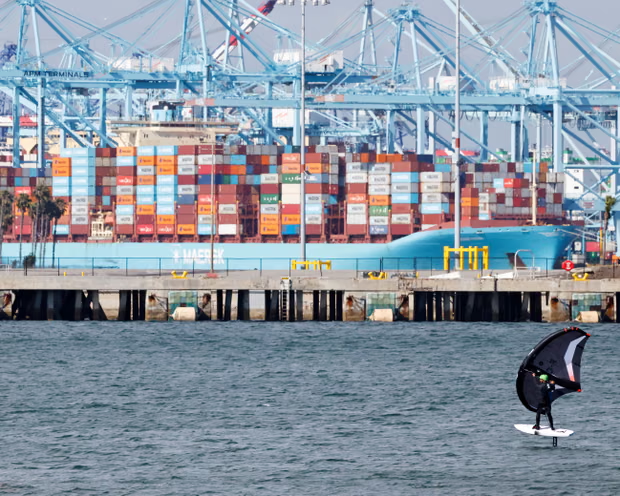
The international trading landscape has faced another massive shock wave from Washington this week. Donald Trump has threatened to impose fresh tariffs on sixty different nations across the globe. These new levies will range between ten percent and twelve and a half percent. This aggressive strategy targets major economic partners including the United Kingdom and the European Union. Canada, Australia, Japan, and China are also facing these unexpected and severe trade penalties. The official reason given by Washington focuses on alleged failures to prevent forced labour. However, global analysts view this as an attempt to revive his signature protectionist policies.
This dramatic move comes after several significant legal defeats for the current American administration. The United States Supreme Court ruled in February that previous global tariffs were completely illegal. Those historical duties had been introduced under the banner of a national Liberation Day initiative. Trump quickly responded to that judicial defeat by implementing a ten percent flat tariff. Yet the United States Trade Court found that secondary measure completely unlawful last month. Those broad levies remain active only because an official appeal process is currently underway. This latest forced labour strategy allows the administration to bypass those strict judicial limits.
The European Union has reacted with immediate anger and deep disappointment to this announcement. European officials stated they expect Washington to fully respect the existing transatlantic trade agreement. That historic deal was officially signed by both global powers just last July. European representatives argue that these stealth tariffs clearly violate the true spirit of cooperation. They maintain that the sudden introduction of unilateral trade penalties undermines international economic trust. The European Commission has made it clear that unilateral economic escalation remains entirely unhelpful. This escalating tension could trigger a destructive retaliatory trade dispute across the Atlantic Ocean.
The American administration is utilizing specific domestic legislation to justify these controversial economic measures. The proposed duties are the direct result of intense investigations using Section 301. This powerful legal tool comes directly from the historic United States Trade Act of 1974. American investigators compiled a massive ninety-eight page document detailing global supply chain vulnerabilities. The comprehensive report evaluated the specific labour laws and import bans of sixty individual nations. It concluded that almost every single major trading partner has failed to protect commerce. Only six specific territories were found to have adequate legal frameworks against forced labour.
According to the official American report, those six territories include Canada and the European Union. Ecuador, Indonesia, Mexico, and Pakistan were also cleared of having insufficient statutory prohibitions. However, the White House has still targeted Canada and Europe for immediate penalties. Washington claims that the Canadian government has failed to actively enforce its existing laws. Meanwhile, the European Union faces penalties because its comprehensive forced labour ban is delayed. That across-the-board European prohibition will not officially come into effect until December 2027. Therefore, both crucial Western trading allies are still facing the threat of immediate tariffs.
The United States Trade Representative has strongly defended this aggressive expansion of trade policy. Ambassador Jamieson Greer delivered a stern warning to international partners earlier this morning. He stated that the failure of major trading allies to address forced labour remains unacceptable. Greer argued that this failure forces American workers to compete on an unlevel playing field. The ambassador emphasized that Washington will no longer tolerate this massive global economic disparity. He insists that every trading partner must take immediate responsibility for its supply chains. This rhetoric signals a highly confrontational approach to international commerce from the White House.
The sudden threat of trade disruption will deeply unsettle close international partners of America. Prime Minister Keir Starmer has worked exceptionally hard to build strong ties with Washington. British diplomats have consistently tried to contain the financial costs of an unpredictable presidency. This latest policy announcement represents a massive challenge to those careful diplomatic containment strategies. Experts always predicted that Trump would seek alternative routes to advance his economic agenda. He has remained obsessed with protective trade barriers as national security tools for decades. The American president previously promised to use economic penalties in a much more powerful way.
The proposed financial penalties vary slightly depending on the specific country under Washington scrutiny. The United Kingdom, Canada, Mexico, Taiwan, and the European Union face ten percent tariffs. This lower tier reflects countries that have established at least partial regulatory frameworks. Meanwhile, a higher levy of twelve and a half percent targets several other nations. This more severe penalty applies directly to China, Japan, India, and South Korea. Brazil and Switzerland will also face this higher economic penalty under the new proposal. Furthermore, these measures come as Washington threatens a separate twenty-five percent levy on Brazil.
The international community has pointed out that these new tariffs face a delay. They will not take effect immediately and must undergo public comment and review. This procedural delay offers a brief window for intense diplomatic negotiations and legal challenges. Public hearings regarding these controversial Section 301 measures will begin in early July. This timeline gives businesses and foreign governments a chance to voice their serious concerns. Many international corporations are already preparing to lobby Washington against these disruptive economic barriers. The global economy could suffer severe disruption if these measures are fully implemented.
The European Commission has reaffirmed its strong commitment to eliminating global forced labour systems. However, European officials consider these newly proposed American trade penalties to be entirely unjustified. The bloc intends to defend its commercial interests while upholding the July trade agreement. That existing arrangement established a fifteen percent tariff baseline for most industrial global goods. Europe expects the United States to fully respect those mutually agreed upon parameters. European trade experts warn that breaking this agreement could destabilize billions in annual commerce. The coming months will test the resilience of the Western economic alliance completely.
The British government has also issued an official response to the escalating situation. A spokesperson stated that the United Kingdom has already tackled forced labour decisively. British officials highlighted robust domestic legislation, including the landmark Modern Slavery Act of 2015. The government confirmed it continues to engage regularly with the current American administration. British negotiators have clearly explained the strong domestic actions being taken against modern slavery. They insist that the preferential access enjoyed by British businesses must remain completely secure. The spokesperson emphasized that there is currently no change to the British tariff rate.
Global markets are watching this unfolding situation with an increasing amount of deep anxiety. Supply chain experts warn that these wide-ranging duties could fuel renewed international inflation. Consumers around the world might face higher prices for electronics, vehicles, and clothing. The inclusion of traditional close allies like Canada and Britain complicates the geopolitical landscape. Many economists believe that protectionist walls ultimately damage the nations that construct them. However, Washington seems completely determined to alter the traditional rules of globalized trade. Businesses worldwide must now prepare for a prolonged era of intense commercial uncertainty.
Related News:
 Canada-China trade gains momentum in new strategic partnership
 India-EU Free Trade Deal Marks Historic Economic Shift
 Keir Starmer meets Xi to strengthen UK-China economic relations
 UK Experts Raise Alarm Over Machinery Export to Armenian Firm
 Caffè Nero Warns Coffee Prices May Rise Again
 Abramovich Chelsea Sale Cash Faces Jersey Probe
 Stocks rise as Trump offers Iran peace plan
 US Military Weighs Perilous Moves to Reopen Hormuz
 IMF Predicts Global Economic Crisis Due to Gulf Unrest
 Manila Transport Crisis: Fuel Costs Hit Breaking Point
 Trump Slams Europe as Transatlantic Tensions Boil Over
 Trump Issues Stark Warning After Strike On Iran’s Largest Bridge
 Middle East Conflict Sparks Global Food Price Surge
 Albanese Flies to Singapore to Bolster Fuel Security
 US and Iran Agree to Two-Week Provisional Ceasefire
 Norwegian Group Eyes South Yorkshire Steel Revival
 Ian Katz to Step Down as Channel 4 Content Chief
 Middle East Conflict Risks UK Food Supply Chains This Summer
 Cost of Conflict: UN Warns of Lost Lives in Iran War
 BP Profits Surge Amidst Middle East Conflict Crisis
 Ukraine Urges UK to Seize Russian Oil Tankers
 US Calls Australia Media Law “Foreign Extortion”
 Oil Prices Surge Above $120 Amid Iran Blockade Fears
 Europe’s AI Sector Faces Sovereignty Crisis Over US Deals
 Trump Offers EU Independence Day Deadline For Trade Deal
 US Cities See 42% Drop in Canadian Visits Under Trump 2.0
 High Stakes in Beijing as Trump and Xi Meet Amid Global Turmoil
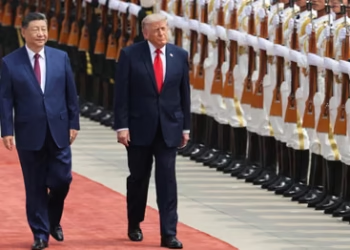 Trump and Xi Convene in Beijing for Historic High-Stakes Summit
 Big Tobacco Under Fire Over Controversial New Ad Campaign
 Rubles and Resilience: How Russia-China Border Towns Thrive
 UK Urged to Build EU Rejoin Consensus, Says Miliband
 Cash Registers Stall Japan’s Promised Food Tax Relief
 Reeves Faces Setback as Labour May Miss Homes Target
 Trump’s UK Ambassador Urges North Sea Drilling to Strengthen US Ties
 Ryanair Chief UK Economy ‘Doomed’ Under Labour
 M&S Profits More Than Halve After Cyber-Attack
 Millionaires group urge Reeves to introduce wealth tax to ‘lift kids out of poverty’
 From Lego to Pokémon: How Adults Are Driving UK Toy Market Growth
 Starmer Says Labour’s Economic Plan Needs Years to Deliver
 Saudi Officials Report Zubaidi Flee Before Yemen Peace Talks
 US Senate rejects resolution limiting Trump military powers
 Gulf states warn Trump Iran strikes risk wider Middle East war
 Shinzo Abe’s killer receives life sentence in Japan
 China General Under Investigation Amid Leadership Purge
 US Dollar Hits Four-Year Low Amid Market Turmoil
 UK New Car Discounts Near £6,000 as Prices Are Slashed
 BT Names New Openreach Chief Amid Major Fibre Expansion
 UK Job Vacancies Hit Five-Year Pandemic Low
 UK Youth Unemployment Surges Amid Tax Changes
 Strong Rebound for UK Housing Market Sees 6% More Homes
 Oil Prices Surge Above $100 Amid Iran War
 Charity Watchdog Takes Control of Learning Disability Care Home
 Russia: The Unforeseen Winner of the Iran Conflict
 Spain Faces Backlash Over Xenophobic Chants in Egypt Draw
 Reform UK Pledges To Halt Visas Over Reparations Demands
 Starmer visits Gulf as US and Iran agree ceasefire
 Green Light for Britain’s Electric Future in Somerset
 Pakistan’s Ambitious Bid for Middle East Peace
 Israeli Soldiers Jailed Over Vandalism of Lebanese Statue
 Prominent Voices Challenge Palestine Action Ban
 Merz Criticises US Approach in Iran Conflict
 Lords Demand Larger Fiscal Buffers for UK
 UK Envoy Sparks Controversy Over Special Relationship Claims
 Capitalism ‘Suicidal’, Warns Petro at Climate Summit
 The Billionaire’s Secretary and the £1m Fraud
 Ukraine strikes Tuapse as oil disaster worsens
 US to Escort Trapped Ships Through the Strait of Hormuz
 UK Electric Car Sales Surge Amid Rising Iran Conflict Fears
 US Awaits Iran Reply on New Ceasefire Proposal
 US and Mexico Face Heatwave as Floods Batter South Africa
 Putin Signals War End as Russian Momentum Stalls
 Romania’s Judicial Crisis: A System Under Siege
 Philippine Senator Flees After Days Under Senate Siege
 High Street Crisis: Fears Grow Over Post Office Closures
 Court Upholds Landmark Win for Transgender Rights
 ICC Arrest Warrant Threat Sparks West Bank Retaliation
 Oil Markets Face ‘Red Zone’ Threat Amid Iran Crisis
 Tony Abbott Returns as New Liberal Party President
 Belfast Approves Pilot Extension of Sunday Trading Hours
 Discontent grows around Putin amid war strain