Published: 04 June 2026. The English Chronicle Desk. The English Chronicle Online.
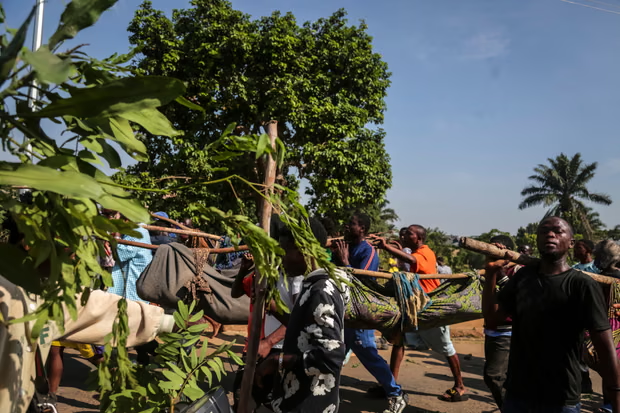
The delicate balance of humanitarian relief and regional security has collapsed once again within the Democratic Republic of the Congo. Recent reports from social media and verified international networks paint a devastating picture of eastern Congo today. Innocent civilians find themselves caught between the terror of rebel violence and a deadly disease outbreak. Over thirty individuals have lost their lives during brutal assaults executed by prominent militia forces. These coordinated attacks occurred in the volatile territory surrounding the major trading town of Beni. The area represents a crucial strategic hub for medical teams fighting a recent Ebola outbreak. This sudden surge in violence has severely disrupted international efforts to contain the lethal virus. Health workers now face the impossible task of treating patients while avoiding active gunfire. The intersecting crises have created a profound humanitarian disaster that demands immediate global attention.
Early on Wednesday morning, a series of coordinated raids shattered the fragile peace of local communities. Heavily armed fighters launched simultaneous assaults on three vulnerable villages located just outside of Beni. The targets included the peaceful settlements of Matété, Mamuli, and the remote outpost of Kitoho. Witnesses described scenes of absolute chaos as attackers moved swiftly through the residential streets. Initial reports confirm that at least ten people were brutally murdered during these morning raids. Local community leader Isaac Kavalami provided a grim assessment of the immediate aftermath. He confirmed that rebels deliberately torched numerous family homes and vital civilian motorcycles. Furthermore, an unknown number of innocent villagers were forcibly abducted during the chaotic retreat. The community now grapples with intense grief alongside the agonizing uncertainty of missing relatives.
Independent security analysts have confidently attributed these atrocities to the notorious Allied Democratic Forces. This brutal militia group maintains strong ideological and operational ties to the Islamic State network. The group has historically used the dense forests of the eastern Congo to launch campaigns. Their operations consistently target vulnerable civilian populations to assert dominance and destabilize regional authority. This latest wave of killings marks a significant escalation in their ongoing campaign of terror. The timing of the attacks has proven particularly disastrous for regional health infrastructure. Medical teams were just beginning to establish effective quarantine protocols within these specific villages. Now, those essential medical frameworks have been completely destroyed by the sudden rebel incursions. The local population is left without physical security or access to life-saving medical treatment.
The broader statistical reality of the current Ebola outbreak remains deeply alarming to international observers. Health authorities have officially recorded three hundred and forty-four active cases across the region. The virus has already claimed sixty lives within North Kivu, South Kivu, and Ituri. These three provinces have long suffered from systemic underdevelopment and persistent political instability. The current medical emergency represents the seventeenth Ebola epidemic since the virus was discovered. In 1976, scientists first identified the hemorrhagic fever near the Congo River basin. Decades of experience have taught health officials that community trust is vital for containment. However, persistent physical insecurity completely undermines the ability of doctors to build that trust. Families are understandably more concerned with surviving armed raids than reporting early fever symptoms.
The violence reached a horrifying crescendo just before midnight on Saturday inside Beni itself. This significant urban center has been placed under strict military administration since May 2021. Despite the heavy presence of government soldiers, rebels managed to infiltrate the city limits. The attackers utilized extreme violence, beheading several victims and shooting others at point-blank range. This brutal display triggered widespread panic throughout the densely populated neighborhoods of the city. Hundreds of terrified residents fled their beds and ran directly into the surrounding bush. The darkness of the night compounded the confusion as families became separated during the flight. Morning light revealed that more than twenty additional civilians had been killed overnight. Dozens of residents remain unaccounted for, leaving families to fear the absolute worst.
Mumbere Sivya, a resident of the Ngandi neighborhood, shared his harrowing personal experience. He recalled preparing for bed when the distant screams of neighbors echoed through the night. He immediately recognized the distinct sounds of an active assault by the rebel militia. Without hesitation, he fled into the dark forest to preserve his own life. Returning the next morning, he discovered the decapitated bodies of his close neighbors. Such intense psychological trauma has become a defining feature of daily life in Beni. Civil society organizations estimate that the militia has killed ten thousand civilians since 2014. This staggering loss of life highlights the chronic inability of the state to protect citizens. The population feels entirely abandoned by both local authorities and international peacekeeping forces.
The Allied Democratic Forces operate as a highly sophisticated network of insurgents and bandits. The group originated in Uganda but has expanded its deadly footprint deep into Congolese territory. Ugandan authorities have also accused the organization of committing severe atrocities across the shared border. In response to the weekend assault, the military governor issued a deeply troubling statement. He revealed that three confirmed Ebola patients fled their isolation wards during the panic. These infected individuals escaped from a specialized treatment center located in central Beni. Their current whereabouts remain entirely unknown to the medical teams tasked with tracking them. This development introduces a terrifying variable into an already complex public health crisis.
The flight of infected individuals dramatically increases the probability of rapid, unmonitored viral transmission. Albert Lusenge, a prominent civil society activist, expressed the profound bitterness felt by residents. He noted that while Ebola is deadly, it does not decapitate its victims. Lusenge has tragically lost twenty members of his own extended family to rebel violence. He argues that convincing traumatized people to focus on health measures is nearly impossible. When survival from gunfire is a daily struggle, virus prevention becomes a secondary priority. Furthermore, the mass movement of displaced people naturally accelerates the geographic spread of disease. As thousands flee into new villages, they may unknowingly carry the virus with them. Social distancing and quarantine protocols are completely impossible to maintain during a frantic escape.
Historical precedents indicate that military solutions alone have failed to neutralize this persistent threat. Large-scale government offensives launched between 2005 and 2014 yielded very few lasting security results. A renewed joint military campaign involving both Congolese and Ugandan armies began in late 2021. This coalition continues to track rebel cells across North Kivu and Ituri provinces. However, these operations often trigger retaliatory violence against the softest targets available. Reagan Miviri, a researcher at the Ebuteli thinktank, explained this tragic cycle of violence. He noted that civilian massacres serve as a cruel military deterrent for the rebels. Whenever the army strikes their jungle strongholds, the militia responds by slaughtering nearby villagers. This strategy aims to pressure the government into halting its current military offensives.
Furthermore, the rebels effectively utilize the dense equatorial terrain to evade sophisticated government surveillance. They move through the thick jungle in small, highly mobile, and independent operational units. These fragmented groups are incredibly difficult to detect through aerial reconnaissance or satellite imagery. Miviri observed that joint military operations primarily focus on clearing areas near the Ugandan border. Consequently, rebels are pushed deeper into Congolese territory where vulnerable villages lack adequate protection. The current insecurity threatens to revive deep-seated community mistrust toward international medical personnel. During the major Ebola outbreak between 2018 and 2020, widespread misinformation caused severe unrest. That previous epidemic ultimately claimed nearly twenty-three hundred lives amidst shifting conflict lines.
Healthcare providers are increasingly reluctant to enter zones where active rebel groups operate freely. The World Health Organization has loudly echoed these serious concerns on the global stage. Director General Tedros Adhanom Ghebreyesus recently emphasized that severe insecurity is crippling the medical response. He warned the international community that effective patient isolation requires a baseline of peace. Building necessary community trust is completely impossible while bombs are falling on local hospitals. The central government in Kinshasa has officially condemned the recent killings in the strongest terms. The ministry of communication reaffirmed that defeating the militia remains an absolute national priority. However, until words translate into security on the ground, the dual nightmares will continue. The people of the eastern Congo remain locked in a desperate struggle for survival.
Related News:
 Saudi Officials Report Zubaidi Flee Before Yemen Peace Talks
 UK Targets in New York Bomb Threat Hoax: Man Jailed
 Gambia Supreme Court Hears Case to Overturn FGM Ban
 Trump targets Iran trade with 25% tariff warning
 US Senate rejects resolution limiting Trump military powers
 Gulf states warn Trump Iran strikes risk wider Middle East war
 Machado Trump medal gesture reshapes Venezuela power struggle
 Geopolitical football: Iran, Trump and the World Cup clash
 Canada-China trade gains momentum in new strategic partnership
 Syria President Declares Victory as Ceasefire Reached with SDF
 Shinzo Abe’s killer receives life sentence in Japan
 China General Under Investigation Amid Leadership Purge
 Philippines ferry disaster leaves 15 dead, dozens missing
 Cambridge Faces Scrutiny Over Arms Investment Transparency
 Concerns rise for Canberra boy amid Iran detention fears
 Ukraine Sends Drone Experts to Defend US Bases in Jordan
 Abramovich Chelsea Sale Cash Faces Jersey Probe
 Yvette Cooper: UK Must Follow Principles, Not US Pressure
 Jury Rules Meta and YouTube Liable for Addictive Design
 Saudi Arabia Urging US to Keep Up Iran Attacks
 The Woman Guarding Earth From the Threat of Asteroids
 Exiled Tycoon Warns of New Russian Attacks on UK Soil
 LA 2028: Millions of Affordable Olympic Tickets Announced
 Trump Slams Europe as Transatlantic Tensions Boil Over
 Inside the Deceptive Machine: A Former Producer Speaks Out
 Spain Faces Backlash Over Xenophobic Chants in Egypt Draw
 A Global Voice For Justice: Stephen Lewis Dies At Age 88
 Hope and Fear as Iranians Flee Across the Turkish Border
 Reform UK Pledges To Halt Visas Over Reparations Demands
 US and Iran Agree to Two-Week Provisional Ceasefire
 Starmer visits Gulf as US and Iran agree ceasefire
 Pakistan Brokers Historic Peace Deal Amid Rising Tensions
 Trump Signals Hope for New Iran Talks as Ceasefire Fades
 US and Iran Pursue Extension of Ceasefire via Pakistan
 Trump’s Islamabad Gamble: The High Stakes of a New Iran Deal
 The General’s Gambit: Pakistan’s New Role in Global Peace
 Mexico, Spain and Brazil call for Cuba dialogue amid crisis
 Pakistan’s Ambitious Bid for Middle East Peace
 Israeli Soldiers Jailed Over Vandalism of Lebanese Statue
 Trump Weighs Sending Afghan Allies to the Congo
 Pentagon Shakes Up Navy Leadership Amid Hormuz Blockade
 Trump Threatens UK With Big Tariff Over Tech Tax
 Prominent Voices Challenge Palestine Action Ban
 Security Scrutiny After Washington Shooting Incident
 Merz Criticises US Approach in Iran Conflict
 UK Envoy Sparks Controversy Over Special Relationship Claims
 Ukraine Urges UK to Seize Russian Oil Tankers
 US Calls Australia Media Law “Foreign Extortion”
 The Billionaire’s Secretary and the £1m Fraud
 Ukraine strikes Tuapse as oil disaster worsens
 Brewing Tension: Taiwan Baristas Rebrand for World Stage
 Tensions Emerge in Netanyahu-Trump Alliance
 Mission to the World’s Edge: A Heroic Rescue in Tristan
 US and Mexico Face Heatwave as Floods Batter South Africa
 Mexico’s Missing: State Complicity in a Growing Crisis
 French Patient Told Hantavirus Was Just Anxiety
 The Long Way Home: Australia’s High-Stakes Virus Mission
 Putin Signals War End as Russian Momentum Stalls
 Romania’s Judicial Crisis: A System Under Siege
 Lee Lai Makes History with Landmark Stella Prize Victory
 Philippine Senator Flees After Days Under Senate Siege
 Alberta Separatist Bid Blocked by Canadian Court
 Canadian Court Blocks Alberta Independence Referendum Bid
 Big Tobacco Under Fire Over Controversial New Ad Campaign
 Bolsonaro Son Tape Scandal Sparks Massive Brazil Backlash
 Court Upholds Landmark Win for Transgender Rights
 Tragedy in the Maldives: Inside the Deep Sea Rescue
 Liberal Senator Criticises Immigration Rhetoric
 Senate Moves to Restrict Trump’s War Powers on Iran
 ICC Arrest Warrant Threat Sparks West Bank Retaliation
 Uefa Transforms Men’s Major Tournament Qualification
 Taliban Codifies Strict New Marriage and Divorce Legislation
 Tony Abbott Returns as New Liberal Party President
 Tiger Escape Shatters Peace in Germany
 Tulsi Gabbard exits after turbulent intelligence tenure
 Discontent grows around Putin amid war strain
 Trump Diplomacy Faces Hurdles from Tehran to Tbilisi
 Teaching Machines Right From Wrong in the Digital Age
 Trump Faces Legal Blow Over Global Tariffs
 Washington Brokerage Sparking Hope Amid Regional Firestorms